

Dark Wood Upholstered Stool
A dark wood upholstered stool brings warmth and tactile comfort to a room, ranging from compact footrests to grand piano seats.
Dark Wood Upholstered Stool
A dark wood upholstered stool combines solid timber frames with textile or leather seating surfaces, fulfilling roles from dressing table seats to piano benches. When exploring a dark wood upholstered stool, buyers encounter diverse formats including revolving music seats, gout stools, and low footrests.
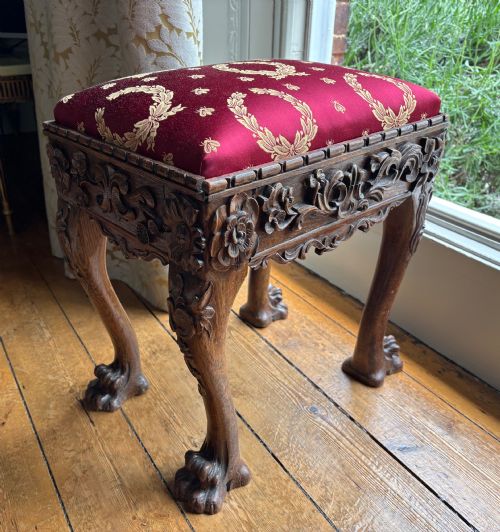
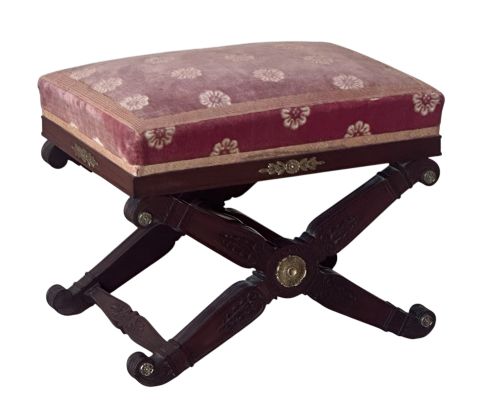
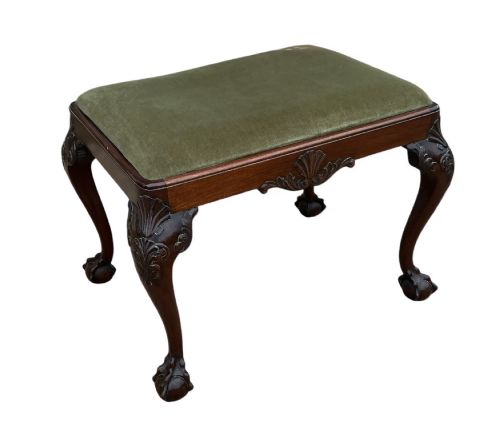
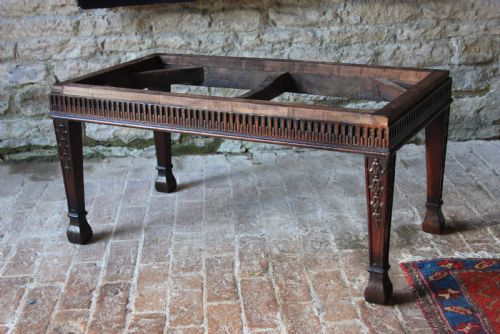
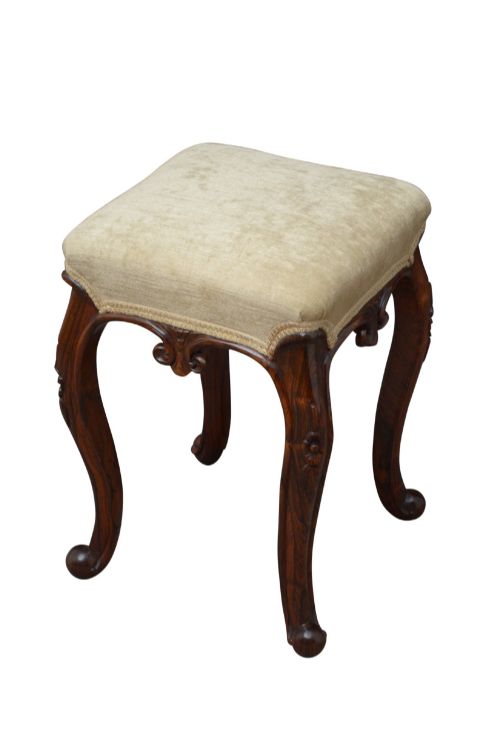
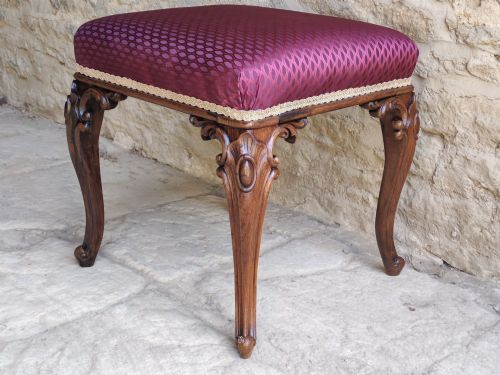
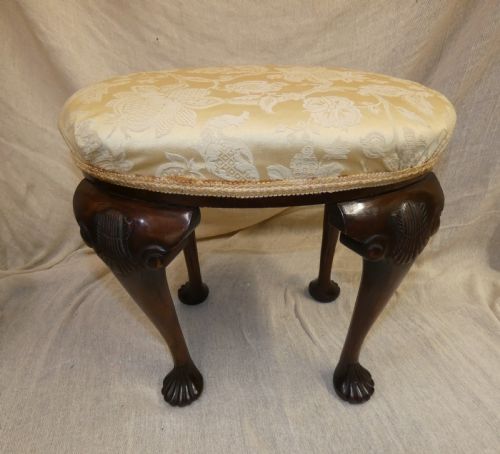
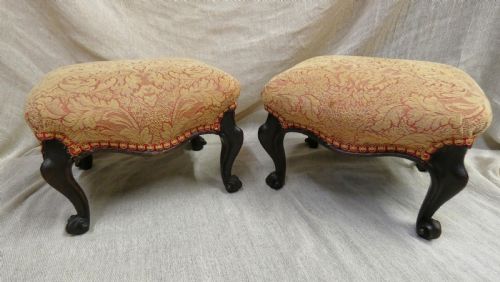
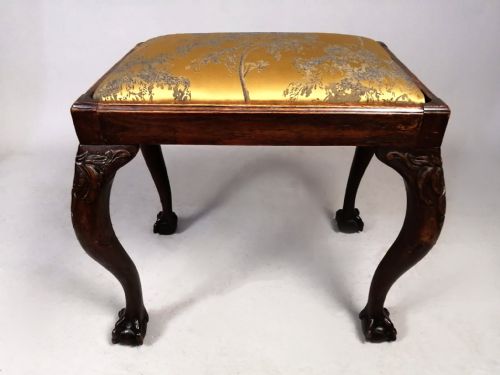
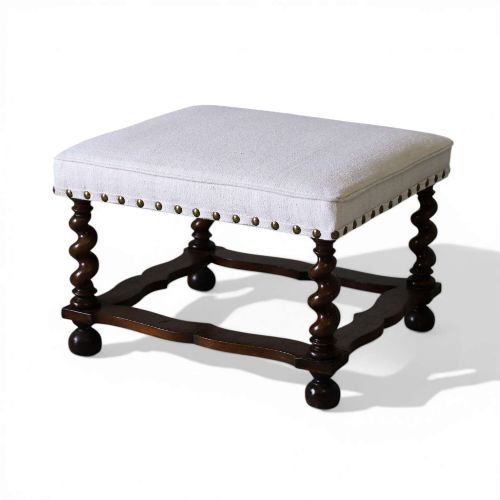
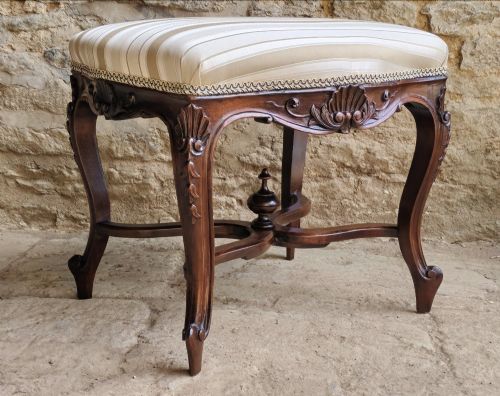
The selection spans centuries of cabinetmaking, featuring Georgian, Victorian, and Edwardian pieces alongside later revivals. Common iterations include mahogany and rosewood frames resting upon cabriole legs, X-frames, or barley-sugar supports.
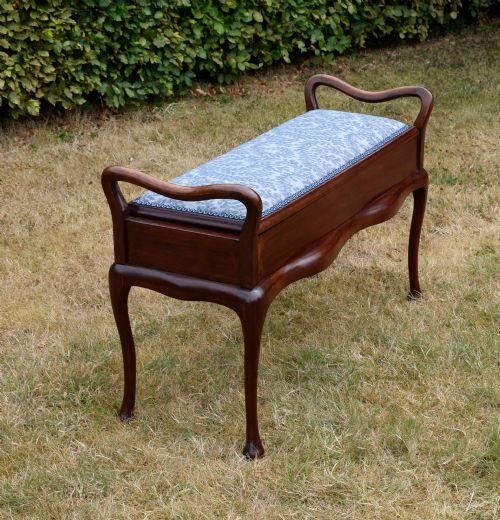
Makers adapted these forms for specific domestic tasks, producing adjustable piano stools, duet benches, and low footstools with needlework or tapestry covers. Origin styles range from English regional cabinetwork to Anglo-Indian and Moorish designs.
Timbers and upholstery techniques
Craftsmen shaped these frames from dense hardwoods, predominantly utilising mahogany, rosewood, walnut, and elm. Selected timbers often received dark stains or polished finishes to accentuate the natural grain.
Upholstery methods involved webbing, stuffing, and securing fabric or leather over padded foundations. Decorative elements frequently included carved cabriole legs, brass fittings, oyster veneering, and pearl inlay.
Listings feature mahogany, rosewood, walnut, and exotic hardwoods across Victorian, Georgian, and Edwardian periods.
Distinctions in construction and material integrity
Quality rests upon the crispness of timber carving, the structural stability of the frame joints, and the selection of cabinet wood. Superior examples display refined proportions, undamaged show wood, and meticulous joinery.
The integrity of the original mechanism matters in adjustable piano stools and revolving seats. Finer pieces retain authentic upholstery materials, hand-carved details, and secondary timbers appropriate to their stated period.
Charles Nosotti·Liberty
The Dark Wood Upholstered Stool Glossary
- Cabriole leg
- A furniture leg that curves outward at the knee and tapers inward toward the foot, often ending in a pad or claw shape. This profile draws inspiration from animal limbs and appears frequently on 18th and 19th-century seating.
- Gout stool
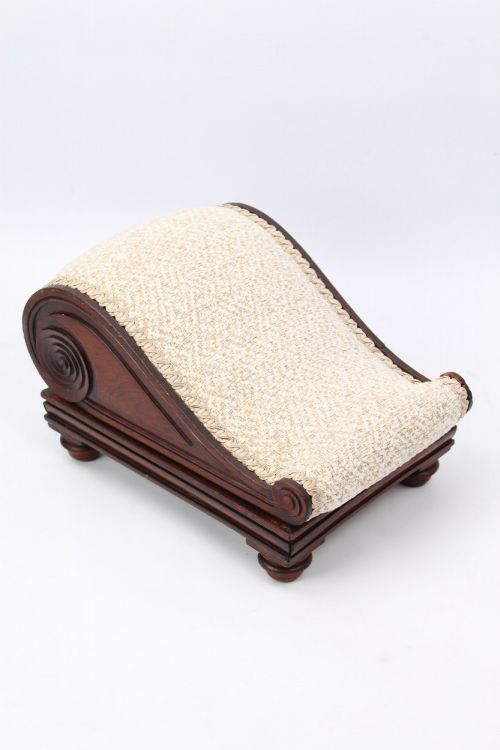
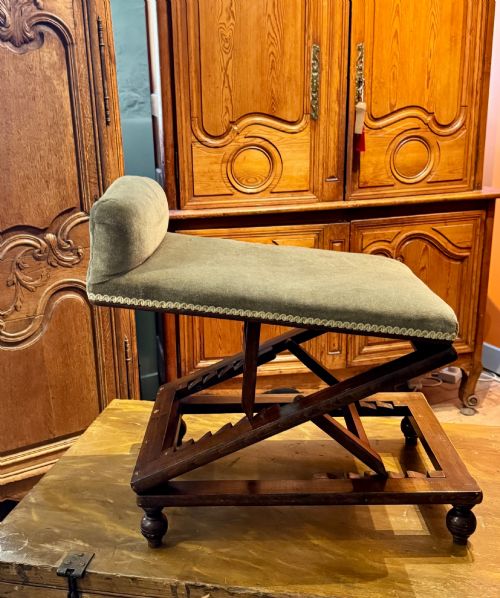
- An adjustable footrest designed to elevate and support a foot afflicted by gout or stiffness. These pieces usually feature a mechanism to alter the angle of the rest.
- Oyster-veneering
- A decorative technique using thin slices cut transversely from small branches to create circular or oval patterns resembling oyster shells. It appears prominently on late 17th-century and revival furniture.
- Revolving piano stool
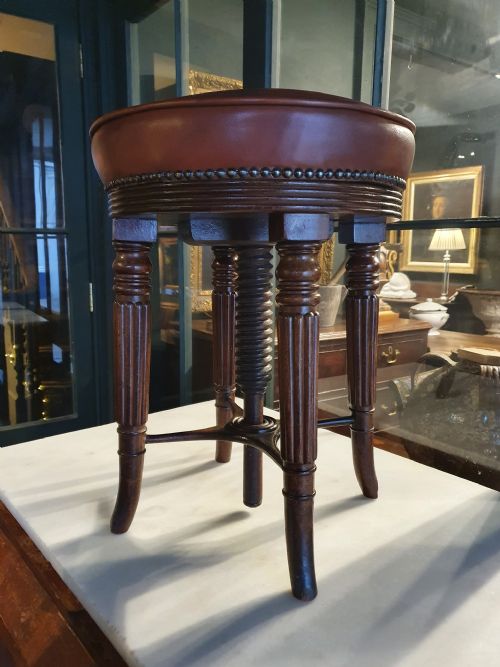
- A seat featuring a threaded spindle that allows the user to adjust the height by spinning the top. They were standard accessories for keyboard instruments in Victorian and Edwardian parlours.
- X-frame
- A structural support formed by two intersecting diagonal members shaped like the letter X. This geometric base underpins many classical and revival stools.
Dark Wood Upholstered Stool: Frequently Asked Questions
How do I identify a piano stool?
Piano stools typically feature circular seats, adjustable height mechanisms using wooden screws, or long rectangular proportions designed for two players.
Many examples include revolving tops or under-seat compartments once used for storing sheet music.
What is a gout stool?
A gout stool is a specialised medical footrest featuring an adjustable sloping platform.
Victorian versions often incorporate stained beech or mahogany frames with hinged mechanisms to change the angle of elevation.
Are these stools comfortable for daily use?
Most pieces provide firm support suited to dressing tables, pianos, or occasional seating rather than deep lounging.
Their upholstered pads range from simple horsehair stuffing to later sprung constructions.
How do I distinguish 19th-century styles?
Nineteenth-century seating shifts from heavy rosewood and mahogany proportions in the Victorian era to lighter Arts and Crafts or Edwardian interpretations.
Detailing such as hand-carved cabriole legs, needlework covers, and mechanical adjustments help anchor the piece to a specific decade.