


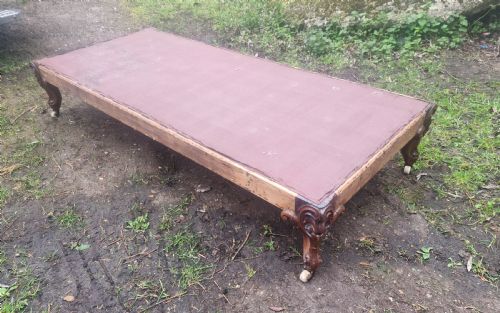


Upholstered Rosewood Footrest
An upholstered rosewood footrest brings rich grain and solid timber to a room, offering low seating that dates from Georgian to Victorian times.
Upholstered Rosewood Footrest
When you search for an upholstered rosewood footrest, you encounter low timber stools and ottomans designed to support the feet or serve as short seats. Most examples found here belong to the Victorian and Regency periods, spanning the nineteenth century.
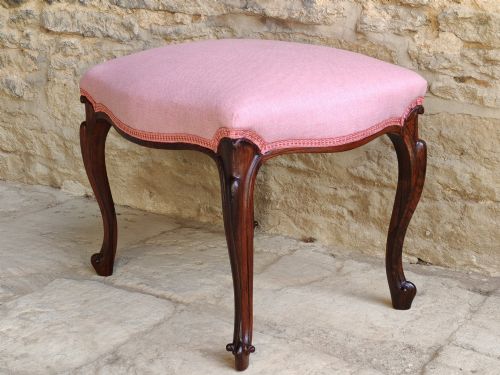
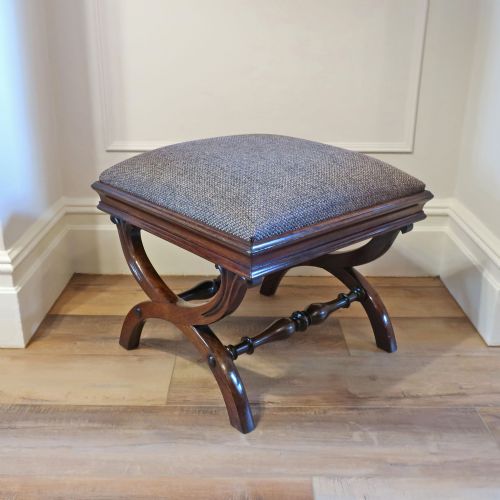
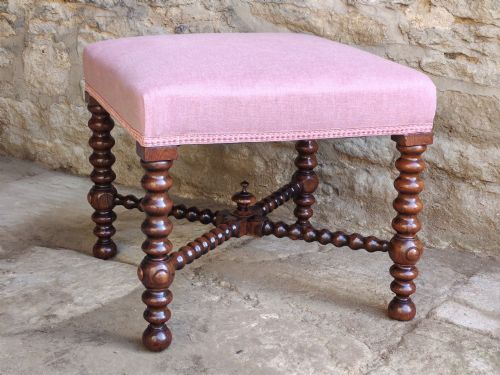
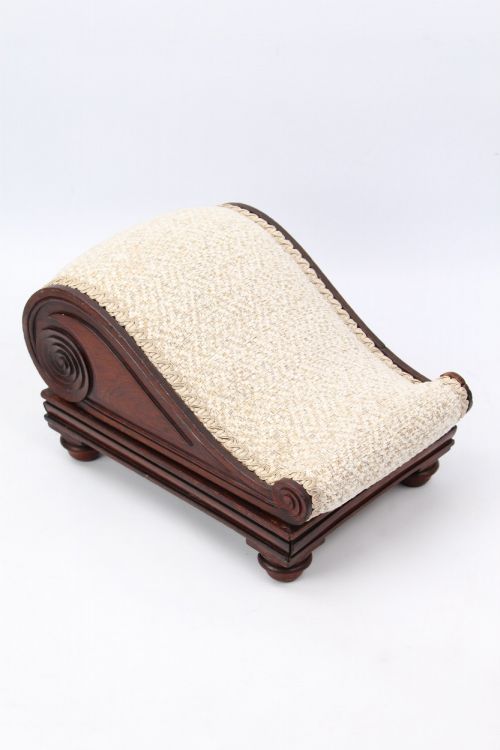
The forms vary from simple bobbin leg stools and oval shapes to carved dressing stools and X-framed designs. You will also meet occasional pairs and larger centre stools intended for living spaces and dressing rooms.
How they were made
The primary timber used across these pieces is dense rosewood, sometimes accompanied by related hardwoods, shaped into cabriole or turned supports. Carved details frequently ornament the frames, showing the craftsmanship of nineteenth century cabinet makers.
Original and later coverings utilise woven fabric, textile, and tapestry, occasionally finished with ceramic elements or brass details. Many pieces retain timber frames ready for fresh upholstery.
Upholstered Rosewood Footrest Retail Price Guide 2026
Typical asking prices for upholstered rosewood footrest among the pieces listed under this phrase on Sellingantiques today, from the lower quarter to the upper quarter. They describe what is for sale here now, not the wider market.
The listings span from Georgian examples through Regency and Victorian periods, utilising rosewood, timber, brass, and tapestry.
What varies in quality
Quality rests in the crispness of the timber carving and the architectural balance of the frame, whether the legs are cabriole, bobbin turned, or formed in an X-shape. Finer examples show thoughtful proportions and rich timber grain.
The integrity of the underlying rosewood frame and the preservation of carved decorative motifs dictate the standing of a piece. Simpler utilitarian stools differ from elaborately carved dressing and centre pieces.
The Upholstered Rosewood Footrest Glossary
- Rosewood
- A dense, heavily figured timber valued for its deep colour and dark grain patterns. It forms the structural and visual basis for these nineteenth century stools.
- Cabriole leg
- A furniture leg that curves outward and then tapers inward, ending in a pad or foot. This stylistic choice appears frequently on Victorian examples.
- X-frame
- A structural base formed by intersecting diagonal timbers that cross to support the seat. This configuration provides distinct architectural presence.
- Bobbin leg
- A turned wooden furniture leg resembling a string of spools or bobbins. This vernacular turning style dates mid-century pieces.
- Tapestry
- A heavy woven textile often used for historic seat coverings. It introduces pictorial or geometric patterns to the top of the stool.
Upholstered Rosewood Footrest: Frequently Asked Questions
How do I date a rosewood footstool?
Dating relies on stylistic clues in the timber frame, such as Regency turning, Victorian cabriole curves, or later bobbin legs. The integration of carved motifs aligns pieces with specific decades of the nineteenth century.
Examining the construction methods and the nature of the rosewood timber further clarifies whether a piece originates from the Georgian era or the late Victorian period.
Can I reupholster an antique footrest?
Many rosewood stools arrive ready for new fabric, allowing you to select textiles that suit your interior. Upholstering preserves the historic timber frame while updating the surface.
Working with traditional materials ensures the piece maintains its character during the reupholstering process.
What is the difference between a footstool and an ottoman?
Footstools generally provide a compact surface for resting feet, while ottomans often offer larger proportions suitable for casual seating as well. Both share low profiles.
In historic listings, these terms frequently overlap depending on the specific scale and framing of the piece.