
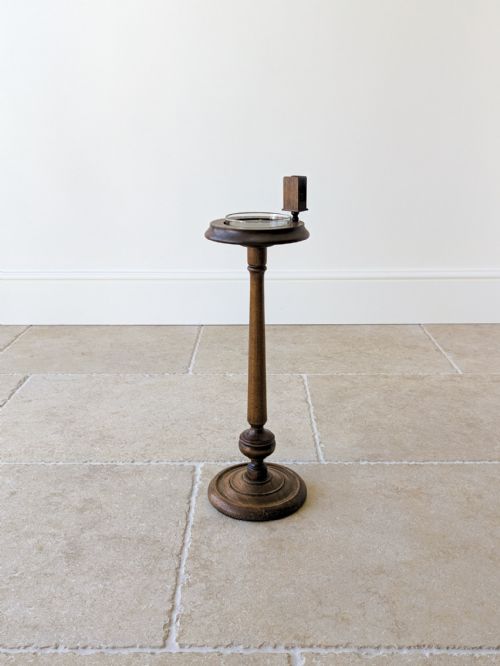

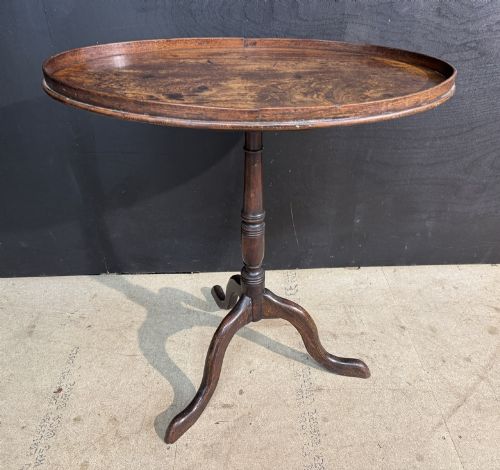
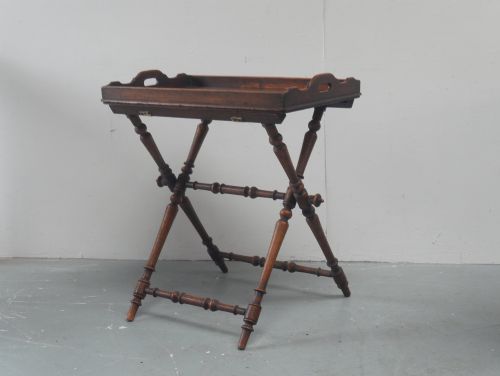
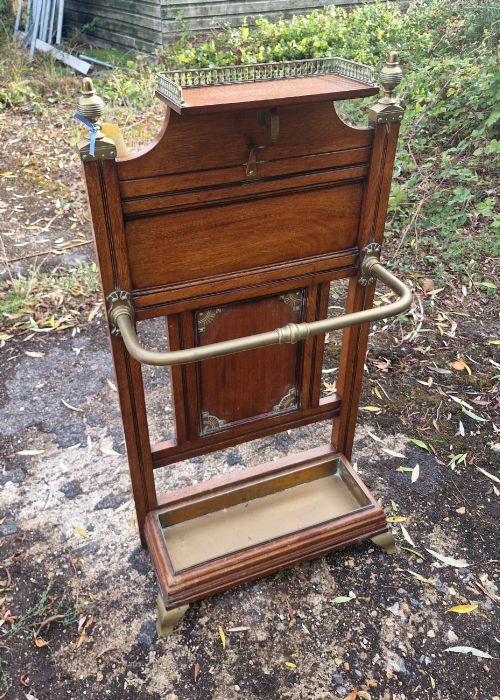
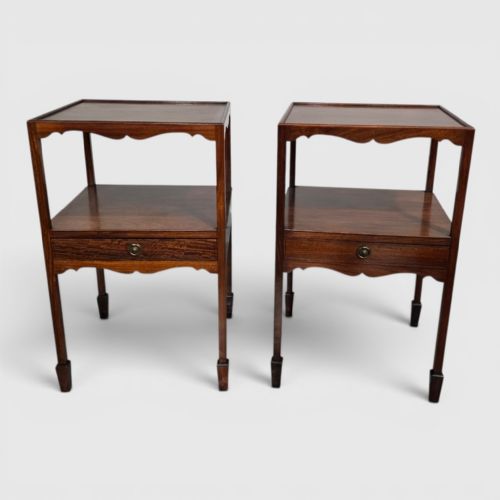

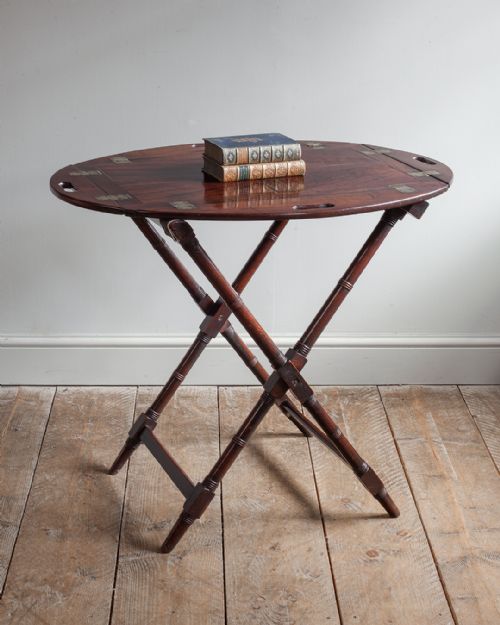
Dark Wood Tray Stand
These dark wood tray stand pieces offer a practical surface lifted from the floor, combining solid timber with folding frames or sturdy supports.
Dark Wood Tray Stand
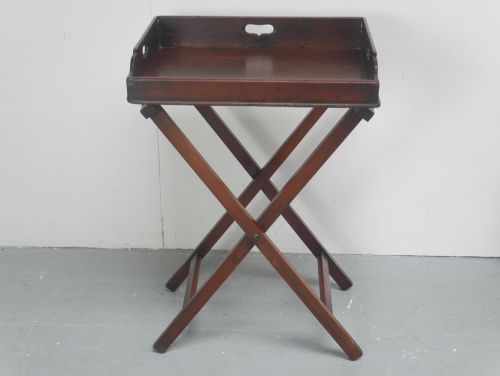
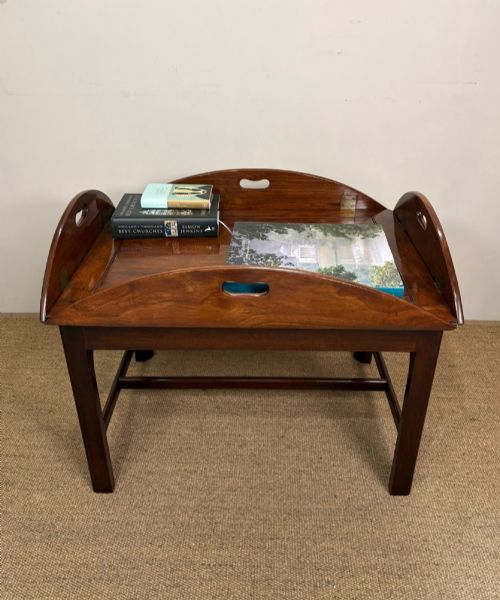
A dark wood tray stand is typically encountered as a folding butler's tray from the Georgian, 19th Century, or Edwardian periods, designed to lift a removable timber tray onto a stable X-frame or table base.
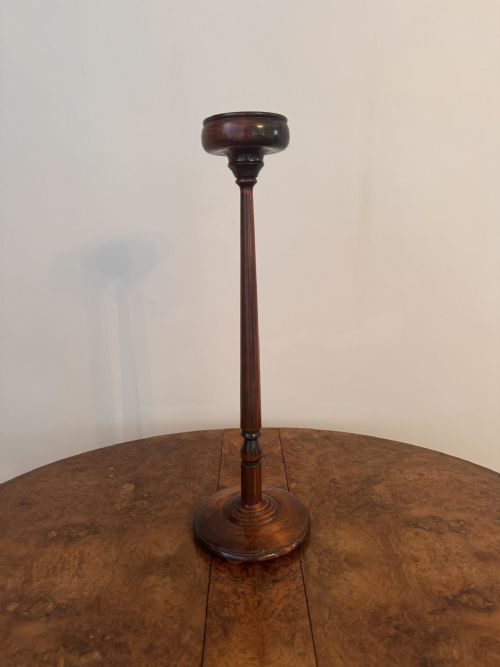
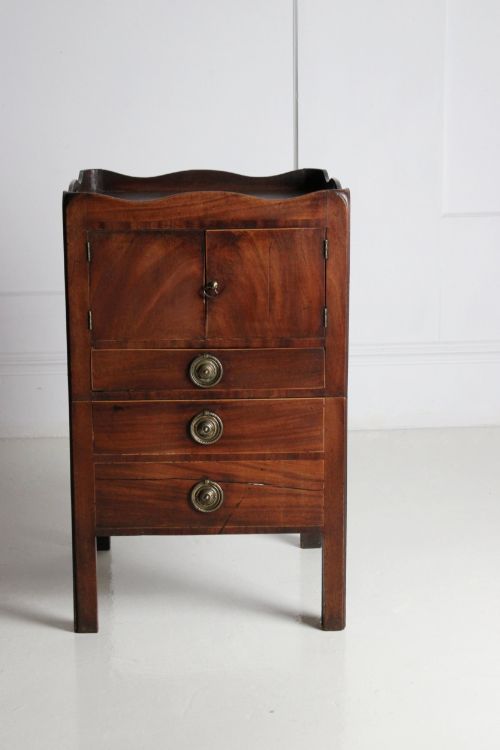
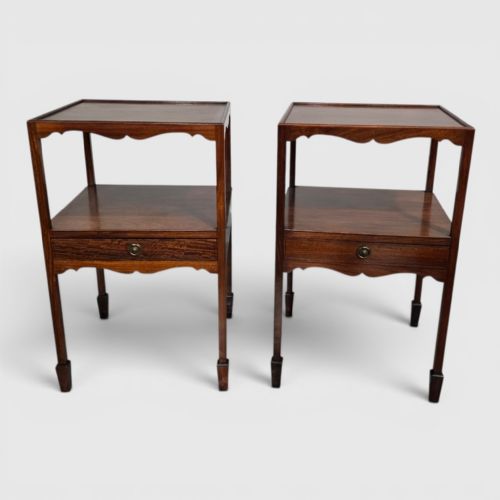
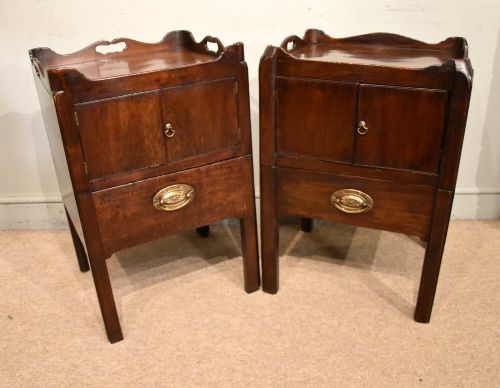
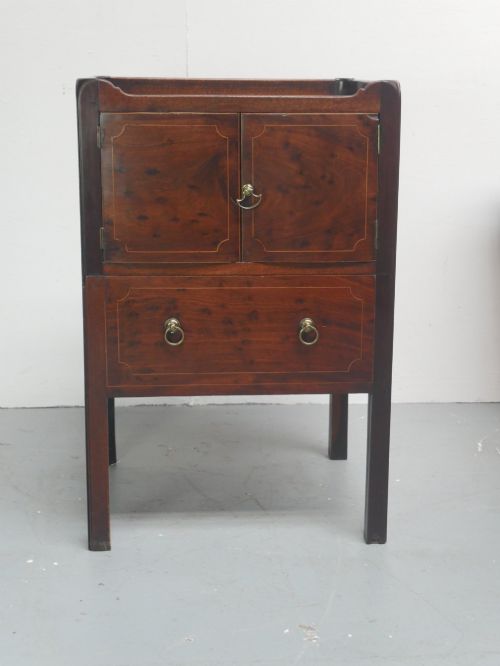
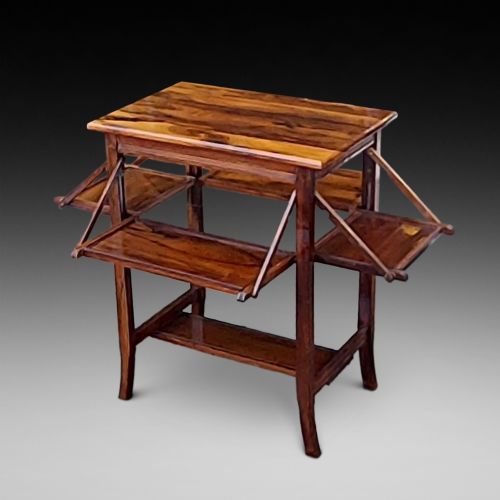
The selection ranges across mahogany, oak, and rosewood forms, taking the shape of side tables, occasional tables, and tray tables alongside umbrella and stick stands.
Makers and craftsmen produced these items for domestic use in serving, holding drinks, or receiving walking sticks near a hallway entrance.
How they were made
Construction relies heavily on dense timbers such as mahogany, oak, rosewood, and coromandel wood, chosen for their durability and grain pattern.
Metal elements like brass fitments, cast iron weights, and copper tops appear alongside glass inserts, secured with traditional joinery to support heavy everyday use.
Listings feature mahogany, oak, rosewood, and coromandel wood across Georgian, Victorian, and Edwardian periods.
What varies in quality
Quality rests on the selection of timber figures, such as Cuban mahogany or figured rosewood, and the crispness of carved details rather than general wear.
The engineering of folding mechanisms and the precise fit of removable trays into their stands distinguish simpler workshop output from finer cabinet work.
Shoolbred
The Dark Wood Tray Stand Glossary
- Butlers tray
- A shallow wooden tray with hinged or cutout sides designed to be lifted off its folding support frame. It allowed servants to carry refreshments between rooms before placing the tray on a dedicated stand.
- Tilt top table
- A table featuring a mechanism that allows the wooden top to pivot vertically when not in use. This saved floor space in smaller period rooms.
- Dumb waiter
- A multi-tiered freestanding serving stand used to hold dishes and drinks during meals. These pieces typically feature stacked circular trays on a central column.
- Umbrella stand
- A hall furnishing created to hold wet walking sticks and umbrellas. They often incorporate metal drip pans to protect flooring from moisture.
Dark Wood Tray Stand: Frequently Asked Questions
How do I use a tray stand today?
These pieces function well as side tables or portable serving surfaces in living areas and bedrooms. The removable tray top allows you to carry items easily.
Foldable versions store flat when not in use, offering flexible placement in smaller modern spaces.
What is the difference between a butler's tray and a dumb waiter?
A butler's tray consists of a portable surface resting on a separate folding or fixed stand. You lift the tray away from the base entirely.
A dumb waiter is a permanent multi-tiered stationary stand featuring fixed circular trays stacked vertically on a central pillar.
How can I tell the period of the wood?
Earlier Georgian and 18th-century pieces often utilise dense Cuban mahogany with deep patination and hand-cut joinery. Later Victorian and Edwardian examples show machine assistance and alternative timbers like rosewood or oak.
Examining the underside of the tray and the construction of the stand reveals the methods used by period workshops.
Are stick stands meant for hallways?
These items were designed for entrance halls to catch dripping water and mud from walking sticks and umbrellas. They include metal or ceramic trays at the base to protect wooden floors.
Placing them in a modern hallway preserves their original domestic function.