




Dark Wood Towel Rack
A dark wood towel rack brings practical utility and rich timber tones into a bedroom or bathroom.
Dark Wood Towel Rack
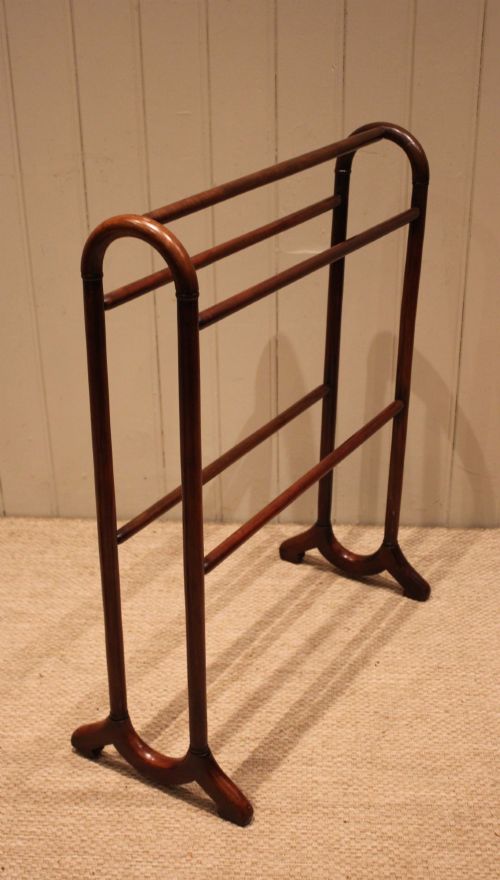
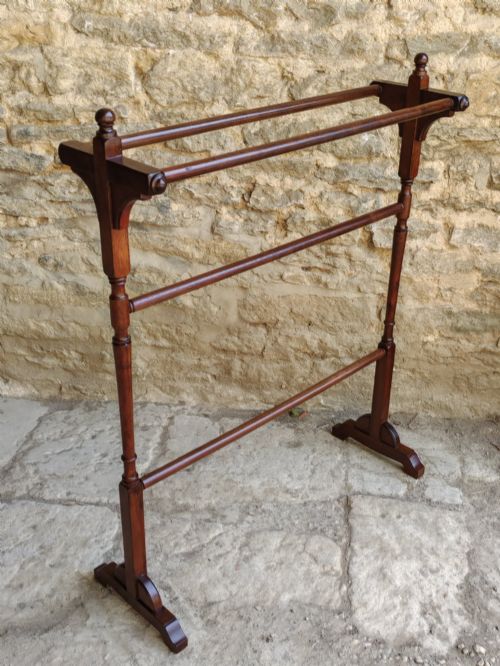
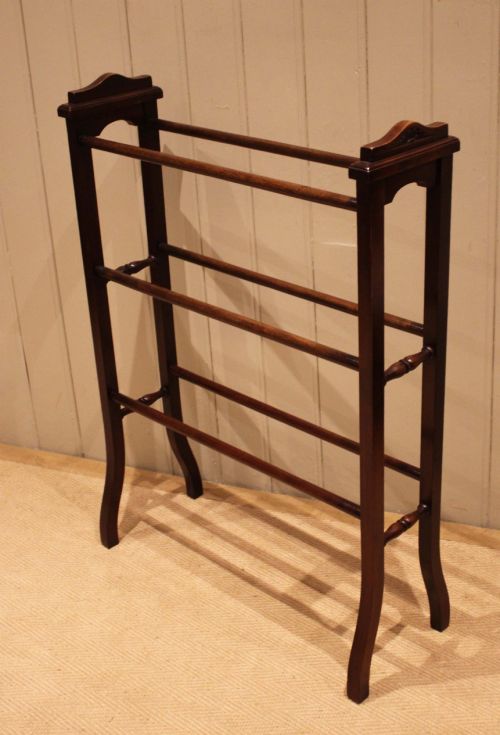
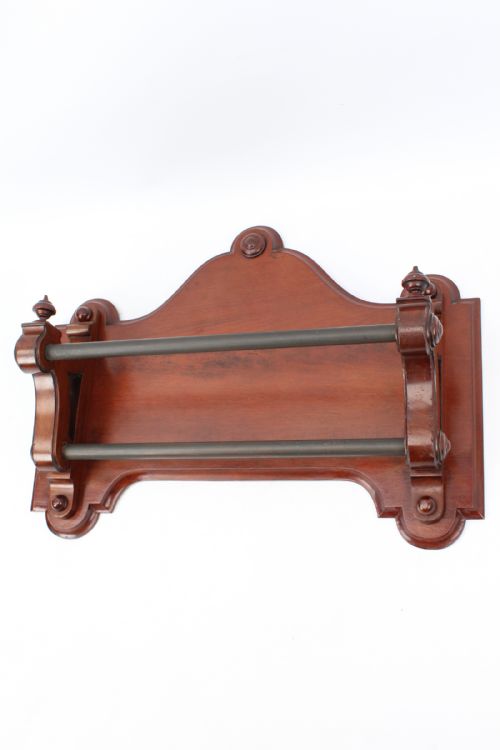
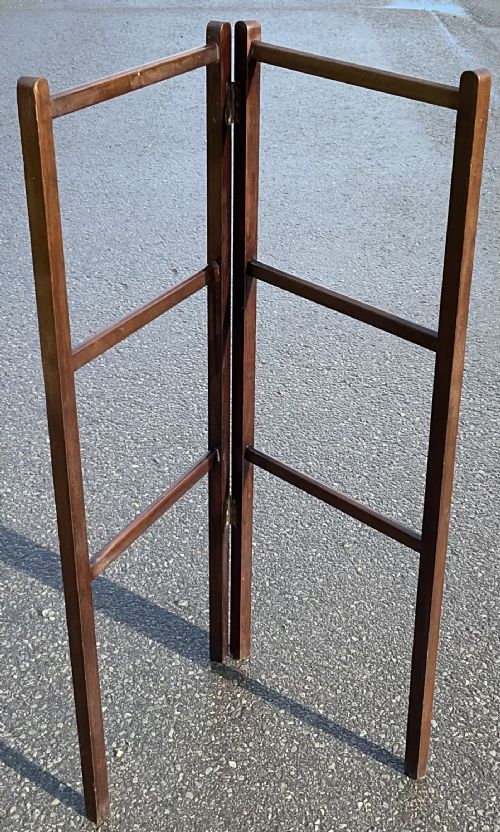
A dark wood towel rack is a functional furnishing designed for hanging and drying linens, appearing in forms such as standing rails, folding rails, hanging double rails, and clothes racks. These items emerge across the Victorian, Edwardian, and William IV periods, alongside Chinese Qing Dynasty pieces.
Buyers browsing this selection most frequently encounter Edwardian and Victorian mahogany towel rails, alongside occasional walnut and lacquered wood examples. The inventory spans straightforward domestic washstand accessories to grander architectural clothes horses and hall stands.
Stonework and metalwork are largely absent, with the focus falling squarely on timber construction and functional joinery designed for daily domestic service in nineteenth and early twentieth-century homes.
Materials and construction methods
Cabinetmakers constructed these pieces primarily using mahogany, walnut, elm, and hardwood, frequently shaping the timber to bear the weight of damp textiles. Some examples incorporate satinwood inlay or brass fittings to accent the primary dark wood structure.
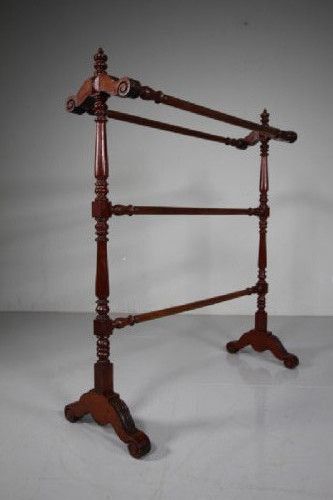
Construction techniques range from simple pegged joints on folding domestic rails to carved ornamentation on Victorian Gothic Revival and Chinese Qing Dynasty pieces. Lacquered wood surfaces and carved details demonstrate the diverse workshop traditions spanning these periods.
Dark Wood Towel Rack Retail Price Guide 2026
Typical asking prices for dark wood towel rack among the pieces listed under this phrase on Sellingantiques today, from the lower quarter to the upper quarter. They describe what is for sale here now, not the wider market.
The listings here encompass pieces spanning the 1850s through to the Edwardian era, constructed primarily in mahogany, walnut, and elm.
Assessing quality in dark wood towel racks
Quality rests in the selection of the timber and the rigidity of the frame, where denser hardwoods and substantial mahogany scantlings offer superior stability under load. Finely turned uprights and tight joinery distinguish utilitarian washstand pieces from more ambitious cabinetmaking.
The presence of decorative elements such as satinwood inlay, brass hardware, or deliberate carving elevates the piece beyond basic utility. Condition of the polish and the original integrity of the rails separate well-preserved examples from heavily weathered survivors.
The Dark Wood Towel Rack Glossary
- Mahogany
- A durable, reddish-brown tropical hardwood prized for its stability and fine grain. Cabinetmakers utilised it extensively for domestic furniture throughout the nineteenth century.
- Edwardian
- A stylistic period spanning the reign of King Edward VII, noted for lighter proportions and refined adaptations of earlier Georgian and Regency designs.
- Gothic Revival
- An architectural and decorative style drawing inspiration from medieval forms, characterised in these pieces by pointed arches, heavy mouldings, and structural vigor.
- Clothes horse
- A freestanding folding frame used for airing or drying garments and linens indoors. They provide multiple horizontal bars for efficient textile storage.
Dark Wood Towel Rack: Frequently Asked Questions
Where should I place a towel rack?
These pieces suit bedrooms, dressing rooms, or bathrooms where textiles require airing or display. Their narrow footprints allow them to stand against walls without dominating the room.
Ensure the surrounding environment avoids excessive moisture fluctuations that might stress nineteenth-century timber polish and joinery over time.
How do I care for mahogany timber?
Maintain the wood surface by dusting regularly with a soft, dry cloth and avoiding silicone-based polishes. Occasional application of a suitable wax helps preserve the natural sheen of the timber.
Keep the piece away from direct heat sources and strong sunlight to prevent the dark wood finish from drying out or fading.
Are folding rails sturdy enough for daily use?
Most period folding and standing rails were engineered specifically for daily domestic service and remain robust when handled with care. The tight construction of the original hinges and joints determines how well they bear weight.
Checking that the feet remain level on the floor prevents unnecessary strain on the side uprights during use.
What is the difference between Victorian and Edwardian pieces?
Victorian examples generally display heavier proportions, darker finishes, and sometimes Gothic Revival ornamentation. Edwardian items tend toward lighter forms and simpler mahogany framing.
Both eras maintained a focus on functional utility, but the later period favoured slightly more restrained domestic silhouettes.