




Edwardian Freestanding Towel Rail
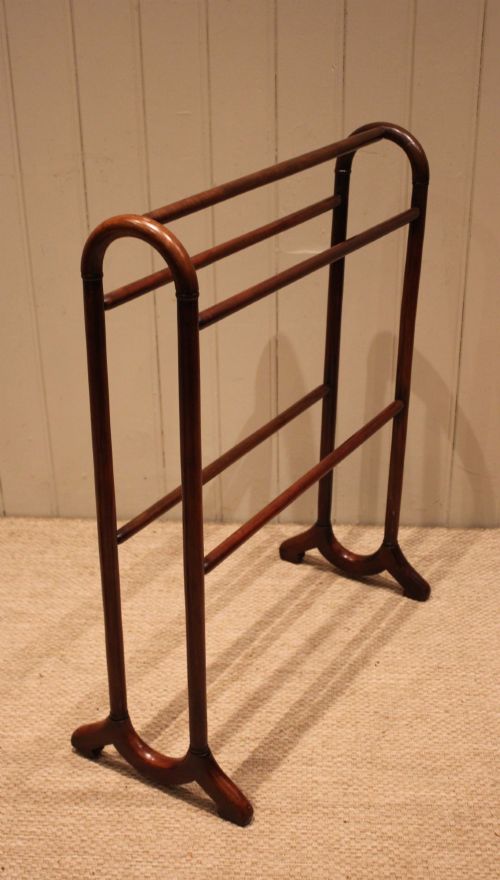
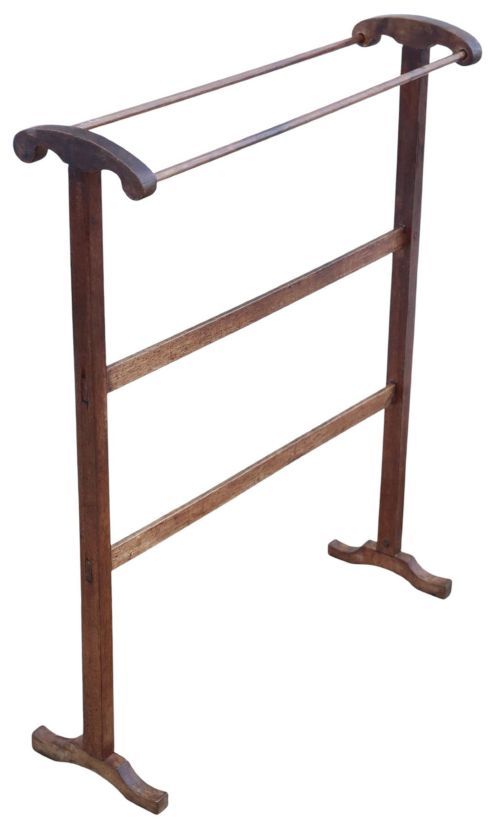
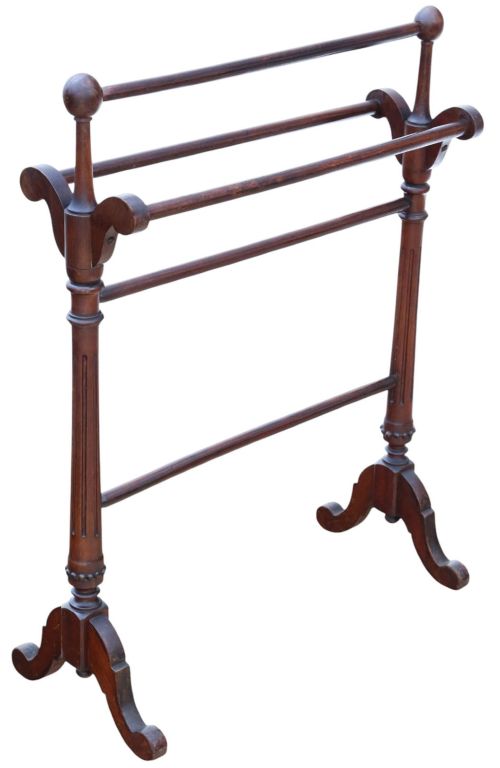
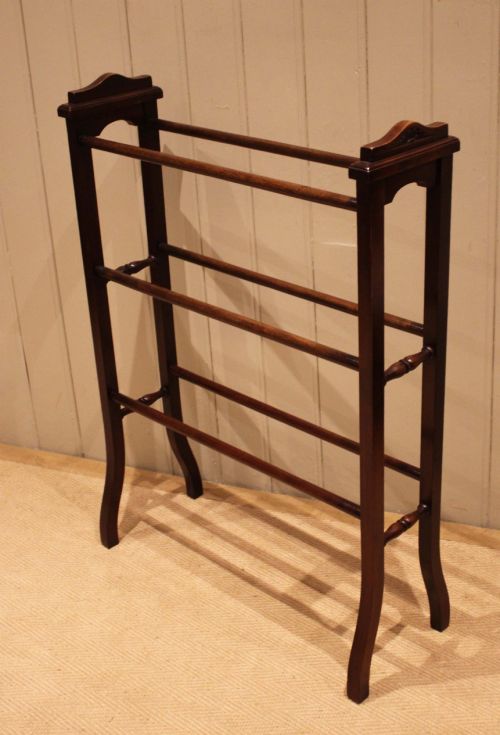
An Edwardian freestanding towel rail is a practical bedroom accessory designed to dry linens, crafted mainly in mahogany.
Edwardian Freestanding Towel Rail
An edwardian freestanding towel rail provides portable hanging space for household linens, serving as a functional item in bedrooms and dressing rooms. The selection includes examples spanning from the nineteenth century into the edwardian period, alongside occasional pieces from the victorian and regency eras.
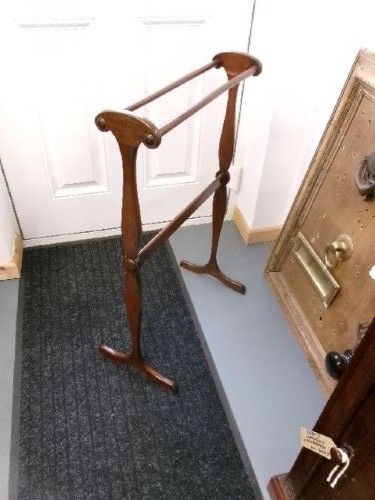
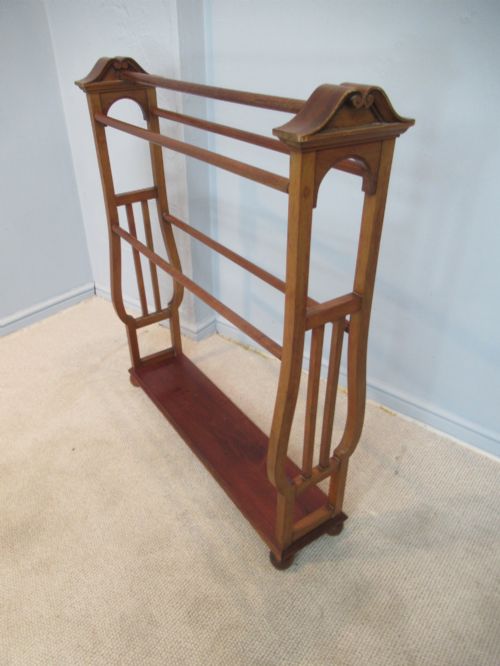
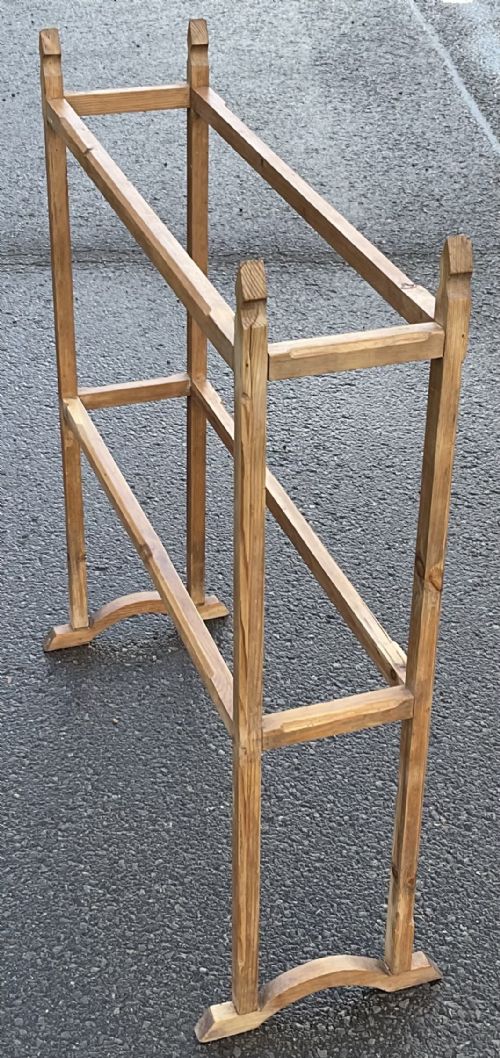
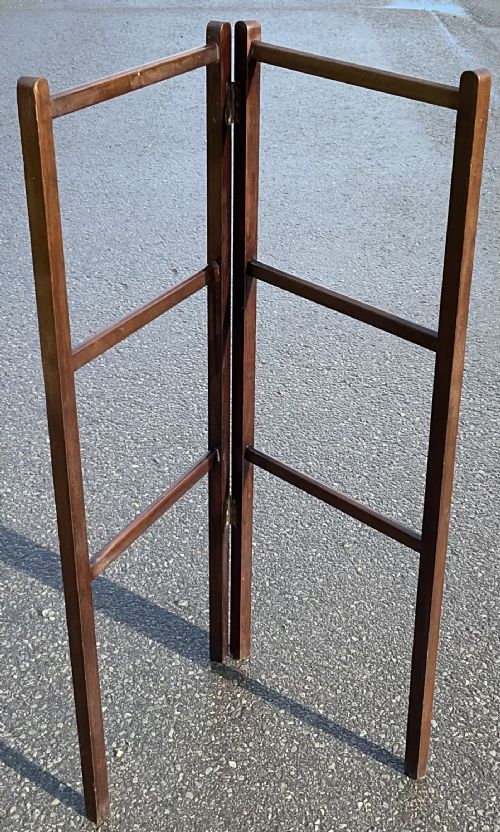
Mahogany forms the primary timber for these edwardian freestanding towel rail examples, accompanied by oak, walnut, pine, and ebonised wood. Most specimens take the form of standing towel rails and airers, featuring multiple horizontal bars for hanging garments and towels.
Buyers will find folding designs alongside fixed standing frames, often constructed with three to five rails to maximise hanging capacity. The style reflects domestic utility of the period, ranging from plain country house pine to inlaid mahogany framework.
How they were made
Makers utilised solid timbers such as mahogany, oak, and walnut, frequently shaping the wood into turned uprights and horizontal rails. Pine served for simpler utility items, whilst boxwood inlay decorated more refined edwardian pieces.
Construction relied on traditional joinery methods to ensure stability under damp laundry, joining side frames with sturdy crossbars and feet. Brass fittings occasionally appear on hinges or structural joints, adding both durability and visual contrast to the wood.
Edwardian Freestanding Towel Rail Retail Price Guide 2026
Typical asking prices for edwardian freestanding towel rail among the pieces listed under this phrase on Sellingantiques today, from the lower quarter to the upper quarter. They describe what is for sale here now, not the wider market.
The inventory spans the nineteenth century through the edwardian era, incorporating arts and crafts and regency style influences.
What varies in quality
The choice of timber dictates much of the distinction, with dense mahogany and figured walnut commanding greater presence than utilitarian pine. Finishes range from simple wax polish to ebonised surfaces, reflecting the original workshop intention and cost.
Subtleties in construction, such as the inclusion of inlaid boxwood detail or five-bar framing rather than simple three-rail formats, separate standard utility items from finer domestic furnishings.
The Edwardian Freestanding Towel Rail Glossary
- Ebonised wood
- Timber treated with a dark stain or finish to imitate ebony, popular for decorative effect in nineteenth-century furnishings.
- Inlay
- A technique where contrasting materials like boxwood are set into the surface of a primary timber to create decorative patterns.
- Standing towel rail
- A portable wooden frame with horizontal rails designed to hold towels without requiring wall attachment.
- Arts and Crafts
- A design movement prioritising traditional craftsmanship and honest construction using materials like oak.
Edwardian Freestanding Towel Rail: Frequently Asked Questions
Where were towel rails used?
These pieces sat primarily in bedrooms, dressing rooms, and nurseries to hold and air household linens.
Their portable nature allowed servants or residents to move them near fires or open windows as required.
How do I clean the wood?
Maintenance requires only a soft cloth and occasional application of traditional beeswax to preserve the timber finish.
Avoid excessive moisture, which can damage the polish and grain of older woods like mahogany and pine.
Can they hold damp towels?
Historic rails accommodate damp linens, though modern users often prefer them for display or dry towel storage.
Prolonged contact with heavy wet items may affect antique finishes if moisture is left sitting on the timber.
How do I date the wood?
Dating relies on observing timber choices, construction techniques, and stylistic clues such as inlay or ebonising.
Edwardian and victorian examples often show distinct joinery methods compared to earlier regency items.