



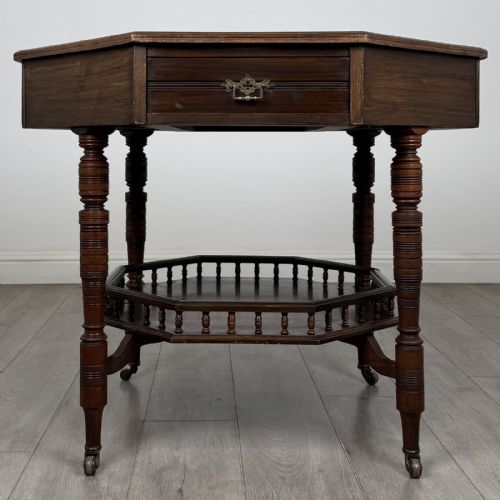
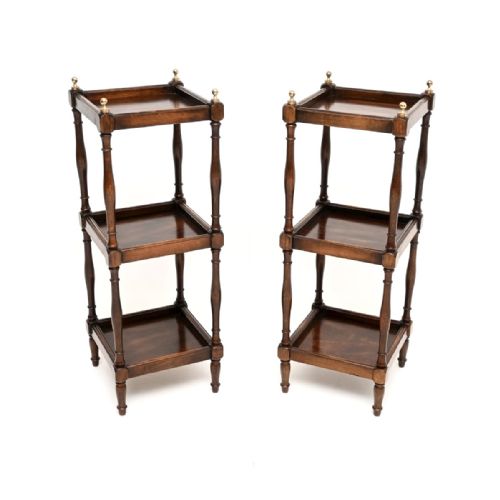
Dark Wood Tier Shelf
A dark wood tier shelf brings functional display and rich timber grain to an interior, drawing on Regency, Victorian, and Edwardian forms.
Dark Wood Tier Shelf
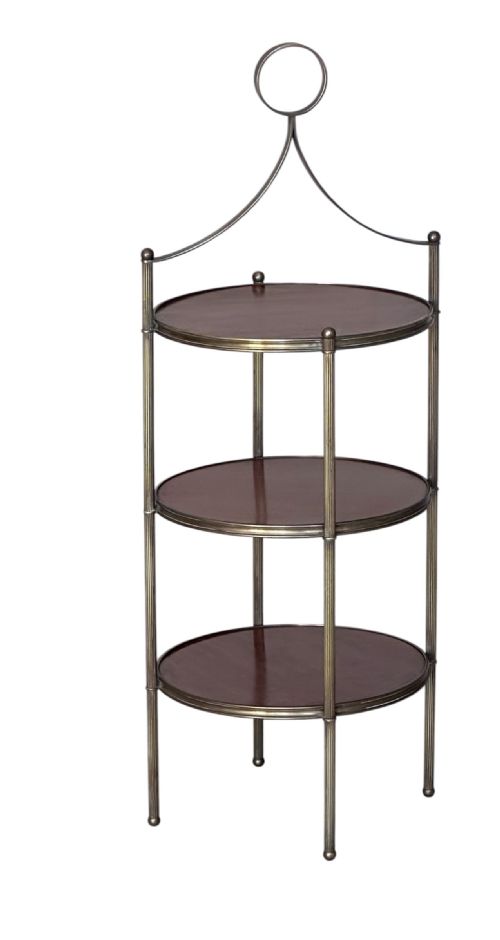
A dark wood tier shelf encompasses multiple stacked levels designed for books, display pieces, or storage across a room or wall. Buyers seeking a dark wood tier shelf encounter various configurations, from corner units and hanging shelves to freestanding bookcases and étagères.
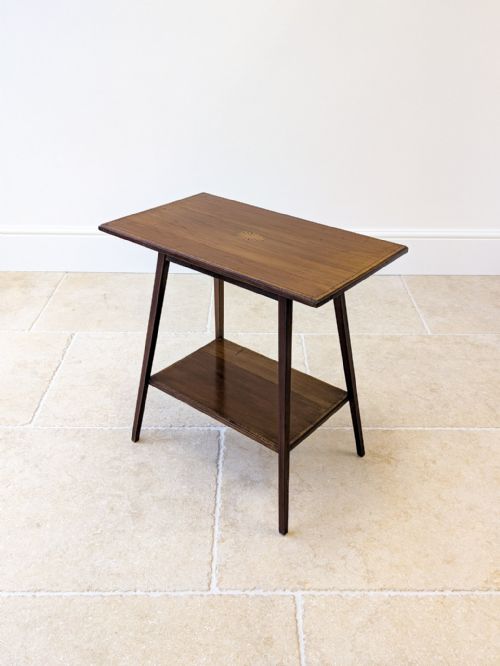
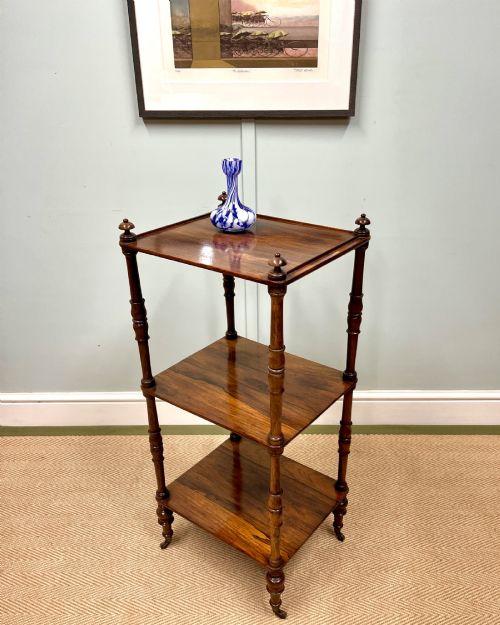
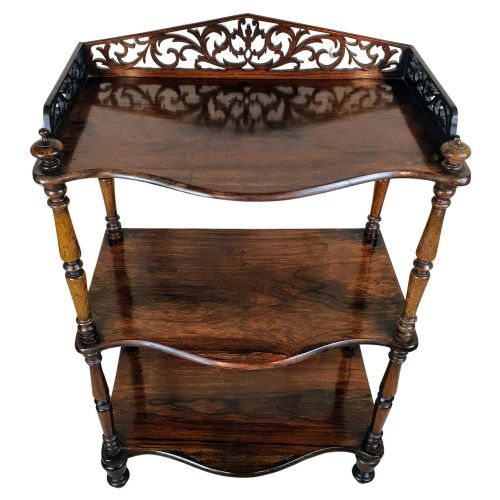
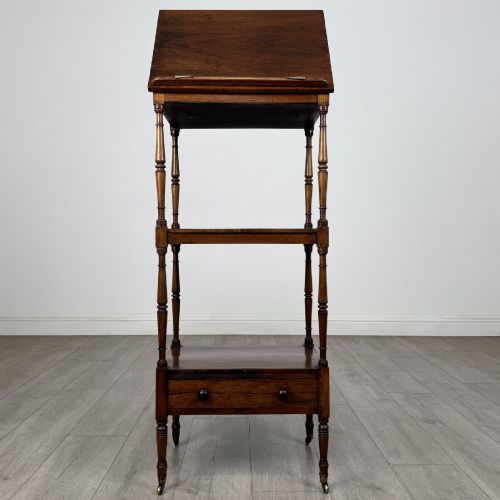
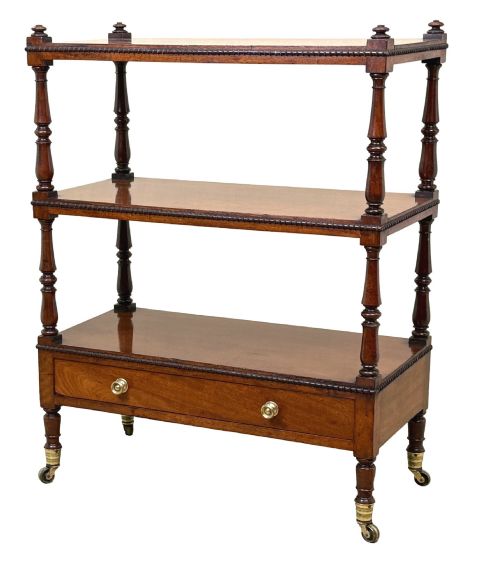
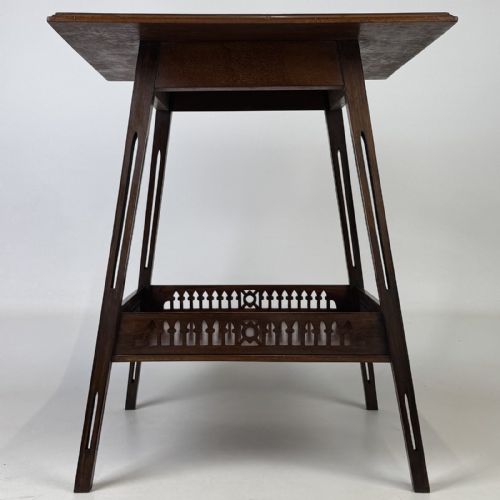
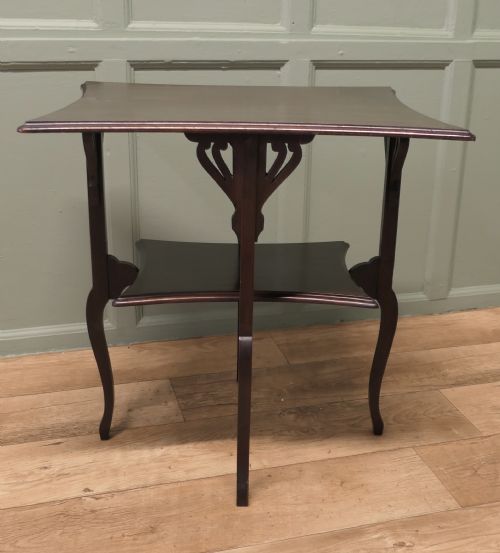
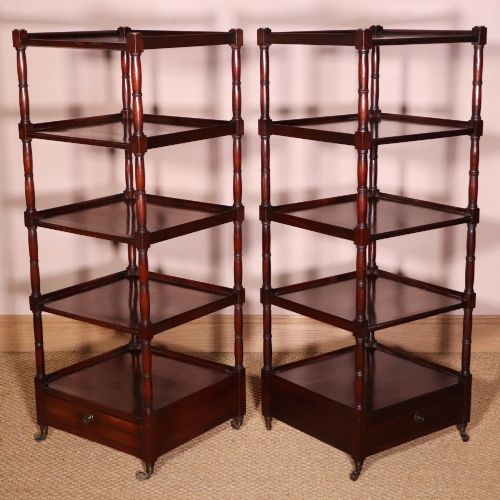
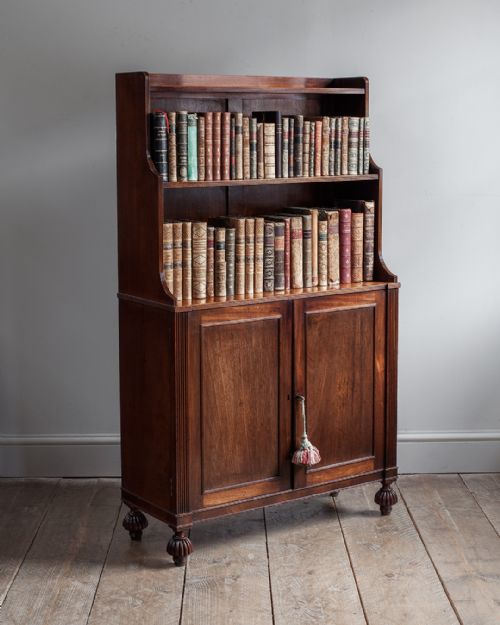
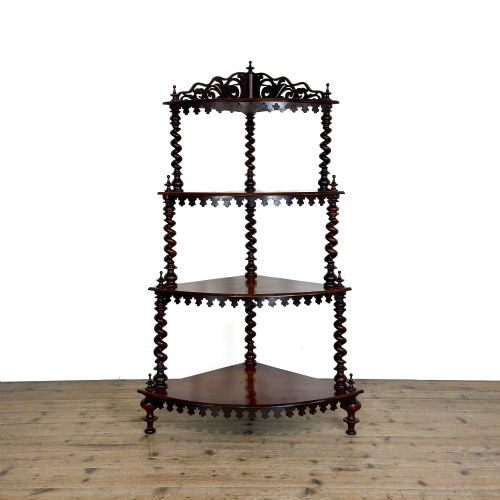
The selections span the nineteenth century into the early twentieth century, showing periods such as Victorian, Regency, and Edwardian. Forms range from multi-tiered what-nots and waterfall bookcases to side tables with bookshelf bases and corner cabinets.
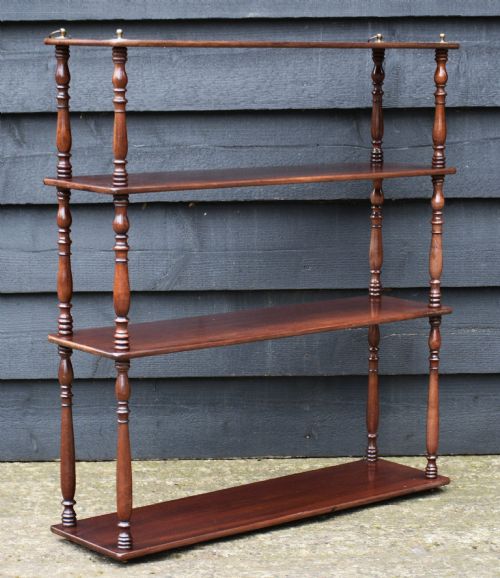
Originating in domestic settings for organised display, these pieces appear in mahogany, rosewood, walnut, and padauk. They serve distinct placement needs, functioning as wall-mounted hanging units, corner space fillers, or central standing furniture.
Materials and construction methods
Cabinet makers utilised dense timbers such as mahogany, rosewood, and walnut to construct sturdy upright supports and horizontal shelves. These woods were often polished to a deep lustre, highlighting natural grain patterns.
Additional detailing involved brass hardware, boxwood inlay, and ormolu mounts, alongside specialised turning techniques like barley twist supports and bobbin turnings. Structural assembly prioritized stability across multiple tiers, whether secured to walls or built as freestanding floor units.
Dark Wood Tier Shelf Retail Price Guide 2026
Typical asking prices for dark wood tier shelf among the pieces listed under this phrase on Sellingantiques today, from the lower quarter to the upper quarter. They describe what is for sale here now, not the wider market.
Listings feature eighteenth- and nineteenth-century styles, including Regency, Victorian, Edwardian, and George III pieces.
Assessing quality and craftsmanship
Quality rests on the selection of timber, where tightly grained mahogany or richly figured rosewood elevates the piece above standard domestic builds. The crispness of carved details, such as inlaid marquetry or turned spindle supports, marks superior workshop production.
Proportion and structural integrity define the higher tiers of craftsmanship, ensuring multi-tiered shelves remain balanced and secure under weight. Original surfaces and patination distinguish pieces that retain their integrity from those altered over time.
Globe Wernicke·Robert Strahan·E.W Godwin
The Dark Wood Tier Shelf Glossary
- Whatnot
- A piece of furniture consisting of multiple open shelves for displaying small objects or books. It typically stands on vertical supports and dates predominantly to the nineteenth century.
- Étagère
- A French term for an open tiered piece of furniture used for display. These often feature decorative supports and multiple levels.
- Waterfall bookcase
- A shelving unit where each lower shelf is deeper than the one above it, creating a stepped profile resembling a cascade. This design became popular during the Regency and Victorian periods.
- Padauk
- A heavy tropical hardwood known for its deep reddish-brown colour. It was utilised in Anglo-Indian and nineteenth-century cabinet making for durability and rich tone.
Dark Wood Tier Shelf: Frequently Asked Questions
What is a whatnot shelf?
A whatnot is an open tiered shelving unit designed to hold ornaments, books, or decorative items. Originating in the eighteenth century, it evolved into various multi-tiered forms during the Regency and Victorian periods.
These pieces stood in parlours and drawing rooms to display collections and everyday items, offering both vertical storage and decorative presence.
How do I hang wall shelves safely?
Hanging wall shelves requires identifying wall studs or utilising appropriate heavy-duty fixings suited to the specific wall type. Because period timbers like mahogany and walnut add substantial weight, secure anchoring is essential.
Check the fixing points on the back of the wooden frame before mounting to ensure the structure can support the intended display load.
Where should I place a corner whatnot?
A corner whatnot fits into unused room angles, utilising vertical space without obstructing traffic flow. They work effectively in smaller rooms or transitional areas like hallways.
Pairing a corner unit with matching period furniture helps unify the layout of the interior space.
What distinguishes a Regency shelf from a Victorian one?
Regency shelving tends to feature restrained classical lines, lighter proportions, and simpler turned supports reflecting early nineteenth-century neoclassical tastes. Victorian pieces often display heavier timbers, more elaborate carvings, and varied turning styles like barley twist.
Examining the wood grain, joinery methods, and decorative motifs helps identify the specific period of manufacture.