

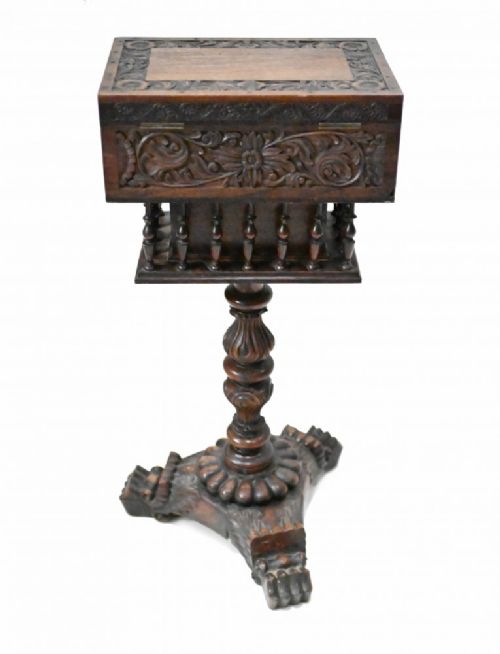


Dark Wood Tea Caddy
These dark wood tea caddy examples are fine miniature storage chests built to protect precious dried leaves, offering rich timber tones and period craftsmanship.
What a dark wood tea caddy is
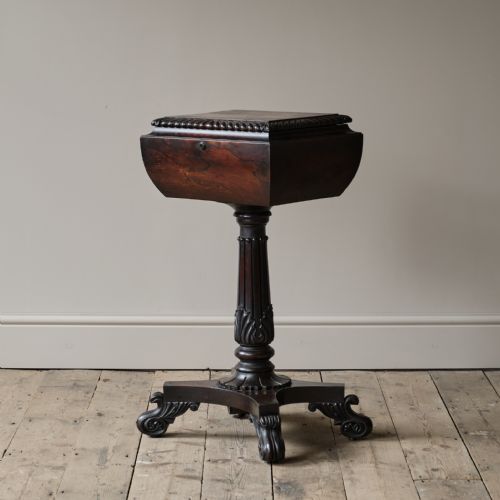
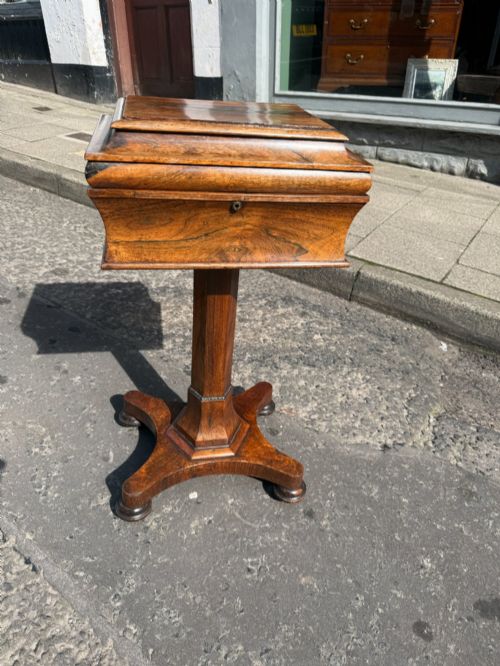
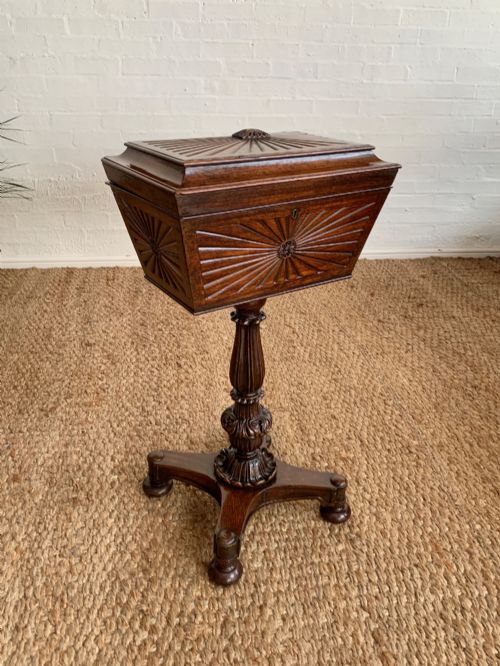
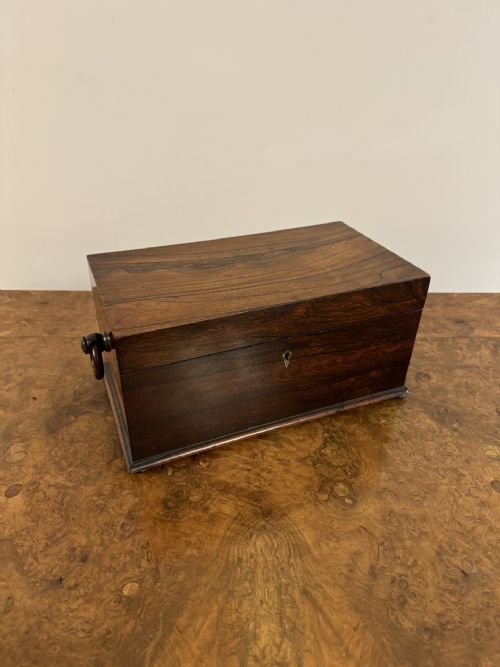
A dark wood tea caddy is a lidded box designed to keep expensive loose leaves dry and secure in the formal rooms of past centuries. Most pieces found here belong to the Georgian, Regency, and Victorian eras, taking forms such as the classic box or the freestanding teapoy.
The assortment on this page relies heavily on rich tropical timbers like rosewood, mahogany, and coromandel wood. Alongside standard rectangular boxes, shoppers frequently encounter sophisticated sarcophagus shapes resting on bun feet or bracket bases.

How they were made
Cabinetmakers constructed these caddies using dense hardwoods such as mahogany and dark rosewood, often enhancing the surfaces with contrasting veneers. Inlaid decoration in satinwood, bone, mother-of-pearl, and brass adds geometric or floral detail directly into the timber lids and panels.
Many examples incorporate fitted interior compartments with wooden lids or glass mixing bowls alongside metal mounts, hinges, and escutcheons. The joinery combines tight box construction with fine parquetry and stringing executed by hand.
Retail Price Guide 2026
Typical UK retail prices for dark wood tea caddy, calculated from the Sellingantiques database of over a million retail prices indexed since 2003. This retail price guide relies exclusively on Sellingantiques data; no external sources or auction records are used, so the figures do not describe the wider market.
Current listings feature pieces spanning the Georgian, Regency, and Victorian eras, utilising rosewood, mahogany, coromandel wood, and satinwood.
What varies in quality
Superior examples separate themselves through the richness of the timber grain, particularly choice cuts of figured rosewood or coromandel wood. The precision of the contrasting satinwood and brass inlay demonstrates the maker's skill and elevates the piece above standard utilitarian boxes.
The architectural ambition of the form also dictates the tier of the object, moving from simple rectangular containers to sculptural sarcophagus shapes with intricate parquetry and original interior fittings.
The Dark Wood Tea Caddy Glossary
- Sarcophagus form
- A distinct burial-vault box shape featuring a domed or peaked lid that tapers inward toward the base, highly popular during the Regency period. This silhouette gives a substantial, architectural presence to small tabletop boxes.
- Teapoy
- A larger freestanding tea container raised on a pillar or legs, serving the same leaf-storage purpose as a smaller caddy. These larger pieces often double as small decorative tables in period interiors.
- Parquetry
- A geometric mosaic of wood veneers arranged in repeating patterns across the exterior surfaces. It creates visual depth through contrasting tones of light satinwood against dark rosewood.
- Escutcheon
- A small decorative metal plate surrounding the keyhole on the front of the box. It protects the surrounding wood from wear and adds a polished brass accent to the dark timber.
Frequently Asked Questions
What is a dark wood tea caddy?
A dark wood tea caddy is a historical storage box built from dense timbers like mahogany or rosewood to preserve expensive loose tea leaves.
These pieces date from the Georgian, Regency, and Victorian periods, featuring lidded compartments inside for different tea varieties.
How were tea caddies used?
Tea was an extremely valuable commodity in past centuries, so the master of the house kept the leaves locked away inside these caddies.
The host would unlock the box to measure out the leaves for guests in the drawing room during formal social gatherings.
What is the difference between a caddy and a teapoy?
A tea caddy is a compact box designed to sit upon a table or sideboard for easy access during tea service.
A teapoy is a much larger version supported by its own central pillar and feet, standing independently on the floor.