



Dark Wood Screen
A dark wood screen divides a room or shields a hearth, bringing architectural weight and rich grain into an interior.
Dark Wood Screen
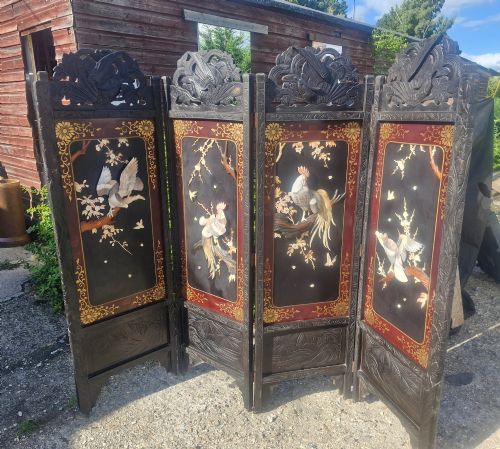
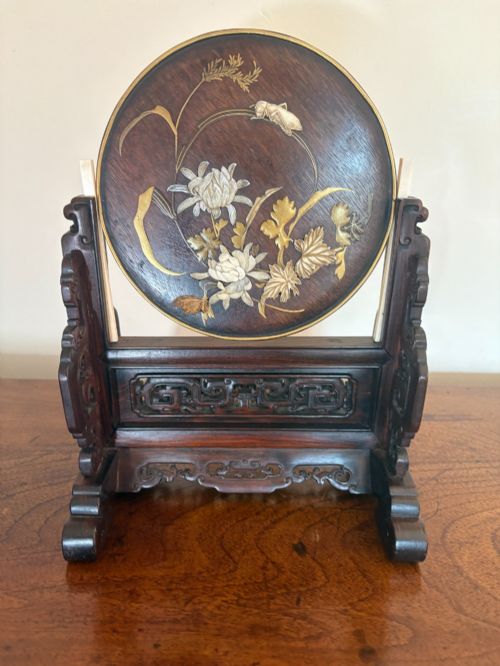
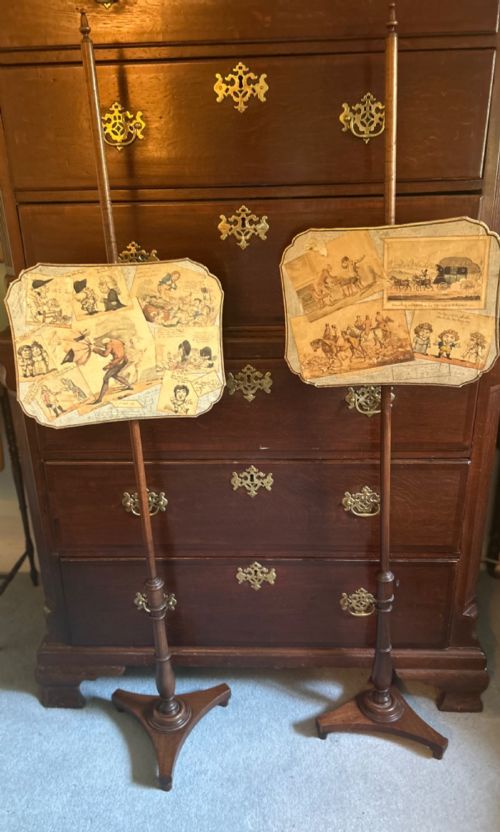
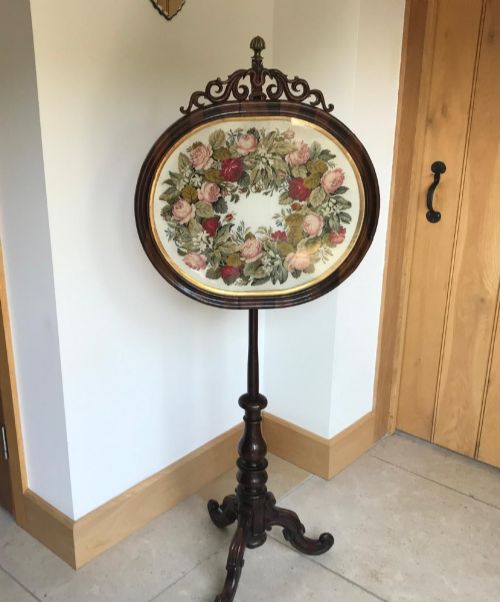
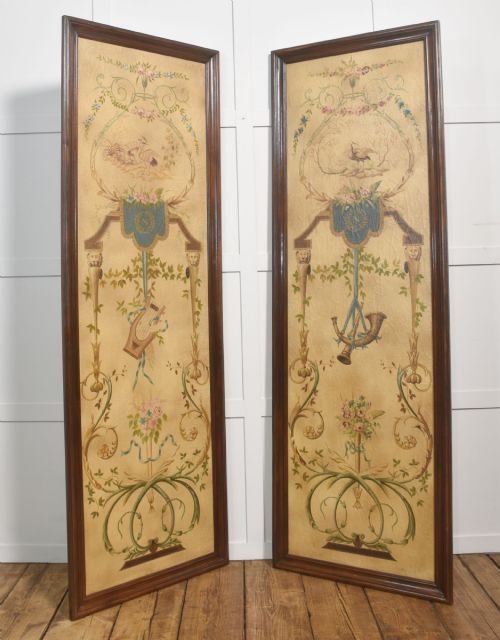
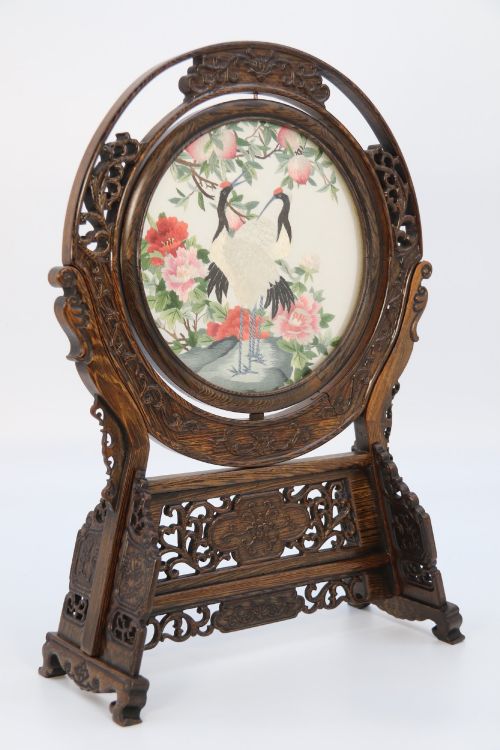
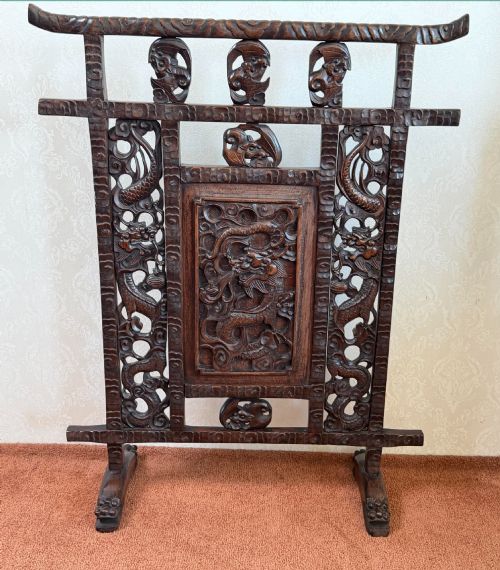
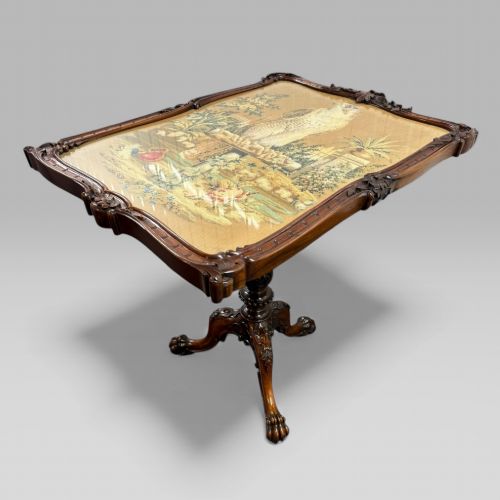
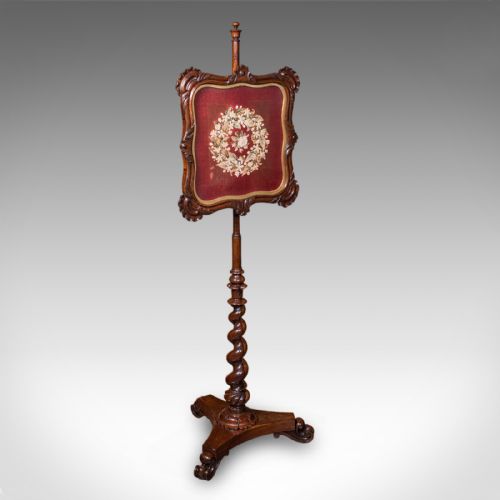
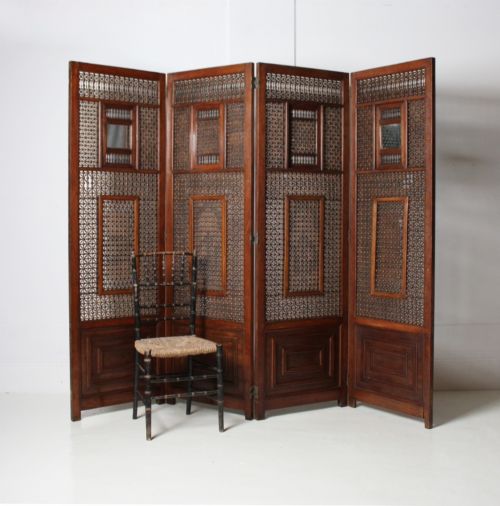
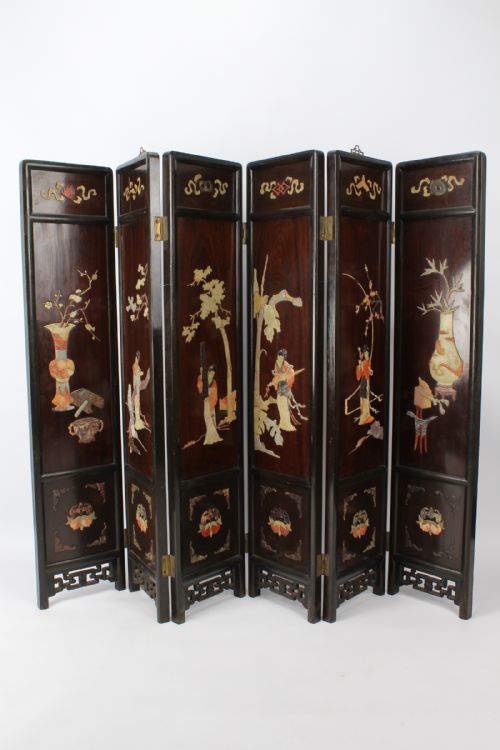
A dark wood screen encompasses several distinct forms, from upright pole screens and cheval designs placed before hearths to large folding room dividers and small table screens. You will frequently encounter Victorian rosewood pole screens alongside Chinese hardwood panels and multi-fold Japanese lacquered examples.
The materials span dense timbers like mahogany, rosewood, and oak, often paired with intricate textiles, needlework, silk embroidery, or carved bone. These pieces originate from diverse periods including the Georgian, Regency, and William IV eras, alongside Qing Dynasty and Meiji Period workshops.
Materials and Construction
Cabinetmakers utilised dense hardwoods such as rosewood, mahogany, and goncalo alves to build stable frames, mounting them on tripod bases or hinged folds. Joinery required precision to support heavy panels, whether a tilt-top mechanism on a pole screen or multiple folding hinges on a room divider.
Decorative elements involve skilled hand-carving directly into the timber, complemented by applied details like embossed brass, chased metal, or lacquered surfaces. Textile panels rely on hand-stitched needlework, tapestry, and double-sided silk embroidery stretched securely within the wooden frames.
Evaluating Craftsmanship and Detail
Quality rests in the crispness of the timber carving and the stability of the structural joints, distinguishing refined cabinetwork from utilitarian carpentry. Superior examples display carefully selected grain patterns and robust hinges or adjustable brass pole mechanisms that operate smoothly.
The artistic merit of the integrated panel elevates the piece, whether through finely executed needlepoint, intricate Shibayama bone inlay, or double-sided silk embroidery. Original elements remaining intact without later alterations command greater appreciation from collectors.
Gillows
The Dark Wood Screen Glossary
- Pole screen
- An adjustable fireside screen mounted on a vertical wooden pole with a tripod base, designed to deflect heat from the face. The central panel typically slides up and down.
- Cheval screen
- A freestanding floor screen featuring a vertically pivoting panel held within a stable floor-standing frame. This form allows the screen angle to be adjusted easily.
- Shibayama
- A Japanese craft technique involving the application of inlaid materials such as bone, ivory, shell, and coral onto wood or lacquer grounds. It creates high-relief decorative imagery.
- Needlework
- Hand-stitched textile work utilising yarn or thread on canvas, frequently seen mounted within the wooden frames of fire screens and room dividers. It often depicts floral or heraldic motifs.
- Mashrabiya
- An architectural wooden screen made of turned bobbins fitted together in geometric patterns, commonly utilised in traditional Middle Eastern joinery for privacy and ventilation.
Dark Wood Screen: Frequently Asked Questions
What is a pole screen?
A pole screen is a slender antique furniture piece featuring an adjustable vertical shield mounted on a tripod stand. It was placed near a fireplace to protect a person's face from the intense radiant heat of the open fire.
The panel could be slid up or down the pole to find the correct height. Many examples display detailed needlework or painted panels framed in rosewood or mahogany.
How do you use a room divider?
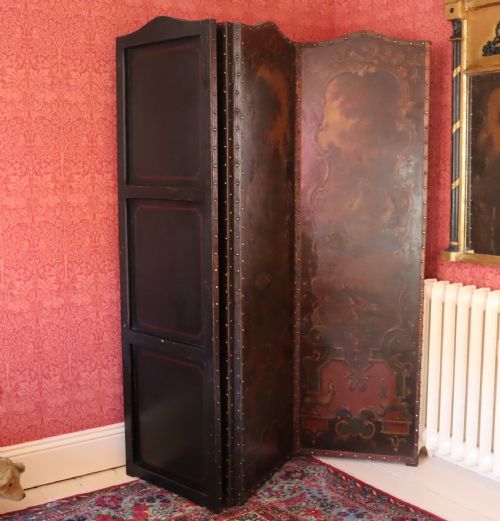
A folding room divider creates private zones within large spaces or conceals areas of a room. Multi-fold panels stand independently in a zigzag configuration.
They function well in modern interiors to section off home offices or to add architectural texture against a plain wall. Ensure the hinges move freely before placing them in a permanent position.
What is a table screen?
A table screen is a small decorative panel mounted on a supportive wooden stand for display on a desk, cabinet, or table. These often feature intricate Chinese silk embroidery or carved hardwood.
Unlike large floor screens, their purpose is purely ornamental rather than functional. They highlight miniature craftsmanship and delicate decorative techniques.
How do I date an antique screen?
Dating relies on observing timber types, construction methods, and decorative styles characteristic of specific periods like the Regency or Victorian eras. Hand-cut joints and original textile panels offer strong chronological clues.
Comparing the turning of the wood and the style of any carved motifs against known period examples helps narrow down the decade of manufacture. Hardware such as brass screws and hinges also provides useful evidence.