



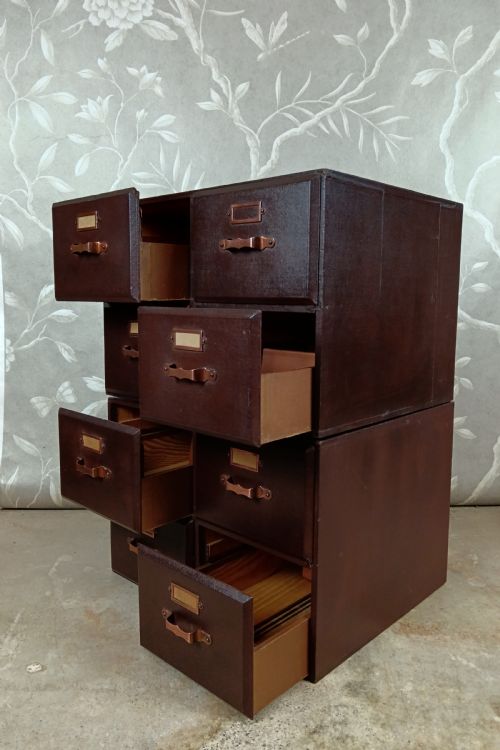
Dark Wood Office Cabinet
A dark wood office cabinet brings solid construction and practical workspace storage, drawing on Victorian and Edwardian craftsmanship.
Dark Wood Office Cabinet
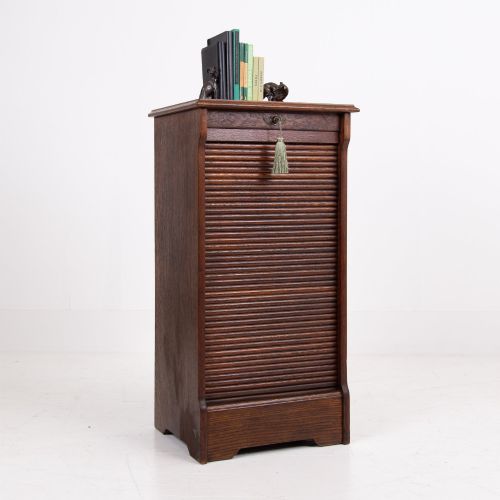
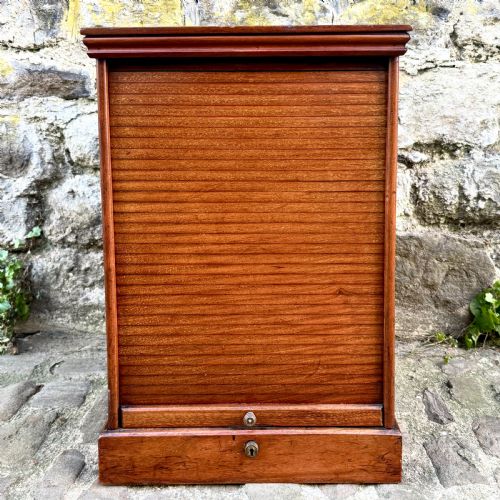
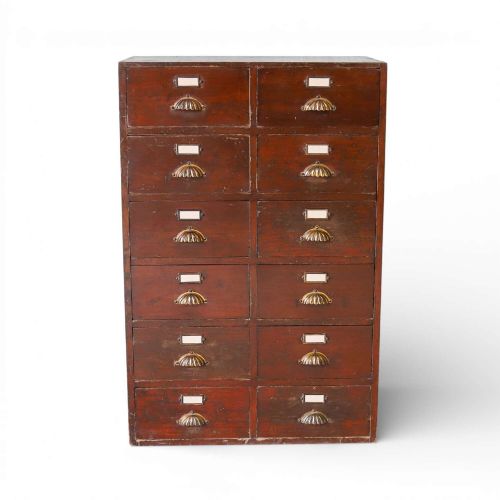
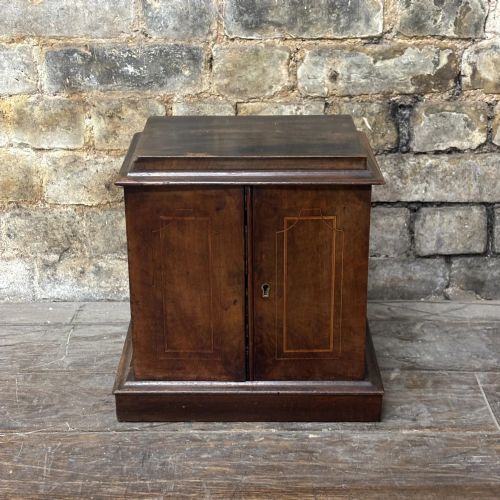
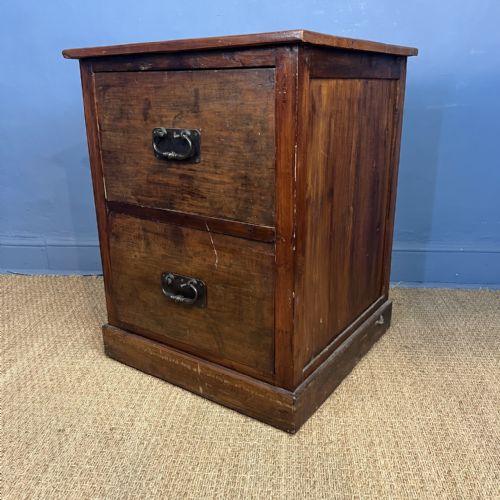
A dark wood office cabinet encompasses functional workspace furniture built primarily during the Victorian and Edwardian eras, extending into the nineteen thirties. These pieces serve practical filing and storage needs through forms such as multi-drawer banks, tambour door units, and Davenport desks.
Buyers encounter frequent examples in oak and mahogany, often featuring modular stacking designs or sliding slats. The selection bridges formal institutional furnishings and compact domestic workspace pieces from the late nineteenth and early twentieth centuries.
How they were made
Cabinetmakers utilised dense timbers such as mahogany, oak, walnut, and rosewood for structural durability. Surfaces often show polished finishes that highlight the natural grain of the wood.
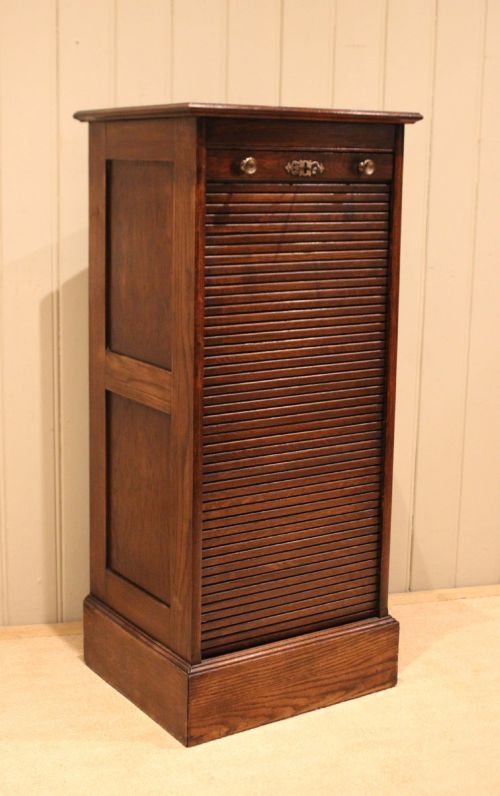
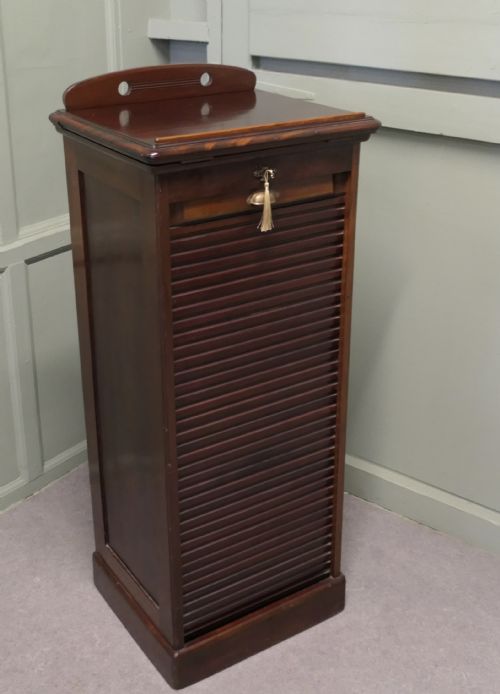
Hardware components incorporate brass for handles, label holders, and pulls. Tambour doors rely on individual wooden slats attached to flexible backing fabric to slide smoothly around curved tracks.
Some Victorian desks arrive with hidden pop-up compartments designed to keep private correspondence safely tucked away from prying eyes.
What varies in quality
The standard of timber selection and joinery defines the upper tier of production. Dense hardwoods and robust drawer construction indicate superior workshop standards.
The retention of original hardware, such as brass label holders and shell pulls, distinguishes fine examples. Intricate mechanisms like operating tambour doors or pop-up desk compartments reflect higher original execution.
The Dark Wood Office Cabinet Glossary
- Tambour
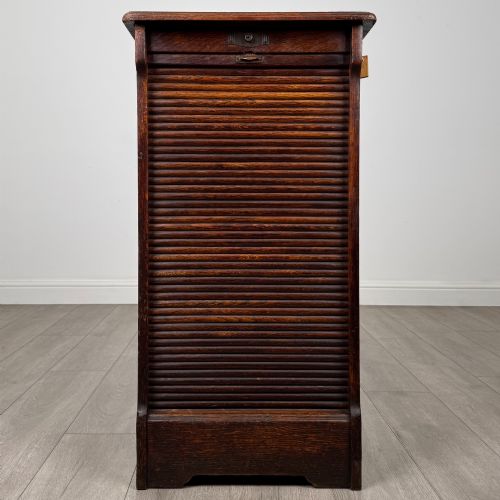
- A flexible sliding door made from narrow strips of wood glued to canvas. This mechanism allows the door to slide around a curved corner to conceal interior shelving or files.
- Davenport
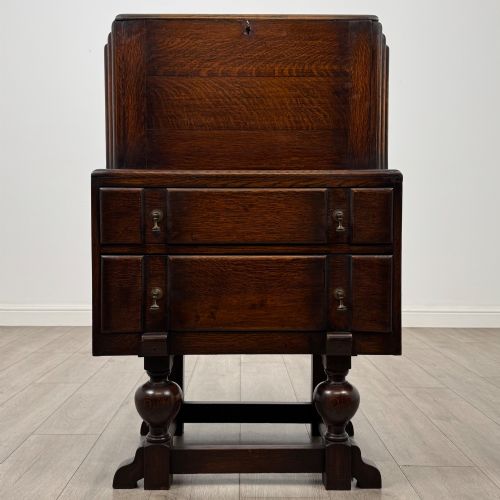
- A small compact writing desk featuring a sloping desktop and drawers opening to the side. These pieces often incorporate hinged compartments for stationery.
- Bank of drawers
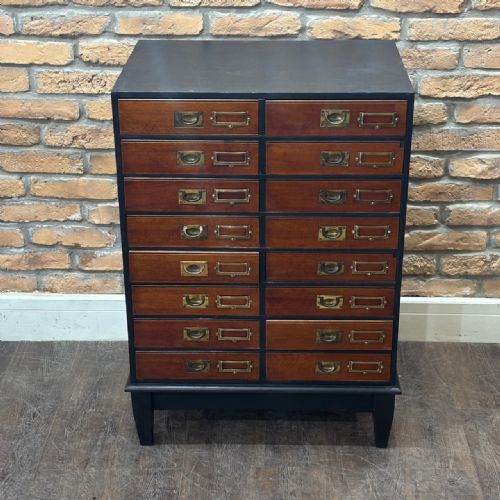
- A chest or cabinet containing multiple shallow drawers intended for sorting documents or cards. They frequently feature brass label holders for cataloguing.
- Bureau bookcase
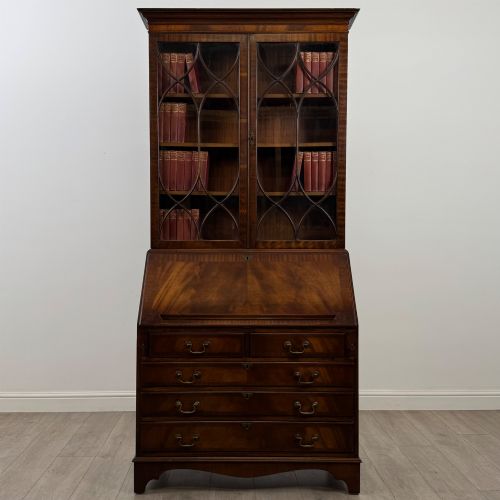
- A combination furniture form featuring a sloping desk flap above or below enclosed shelving. These units provide both writing space and display storage.
- Modular stacking
- Sectional furniture built in tiers that can be stacked independently. This design allowed offices to expand their storage capacity vertically.
Dark Wood Office Cabinet: Frequently Asked Questions
How do I identify an Edwardian cabinet?
Edwardian pieces typically date from the early twentieth century and often utilise oak or mahogany. They frequently feature clean architectural lines influenced by contemporary revival styles.
Look for functional hardware like brass label holders and tambour doors designed for office use. These details separate them from heavier Victorian designs.
What is a tambour door?
A tambour door consists of narrow wooden slats mounted onto canvas backing. This construction lets the door curve around the side of a cabinet.
Cabinetmakers used this mechanism to save space in busy offices where traditional swinging doors proved impractical.
Where were multi-drawer cabinets used?
These cabinets served in banks, libraries, and administrative offices for sorting correspondence and index cards. Workshops and schools also utilised multi-drawer units for inventory.
Their robust construction in oak and mahogany allowed them to withstand heavy daily institutional use.
How do I care for a rosewood desk?
Keep rosewood and mahogany furniture away from direct sunlight and heat sources to prevent the wood from drying out. Dust the polished surfaces regularly with a soft cloth.
Apply occasional wax polish formulated for antique wood to maintain the finish without building up residue.