


Dark Wood Music Storage
These dark wood music storage pieces span centuries of craftsmanship, offering practical elegance for organising sheet music and periodicals.
Dark Wood Music Storage
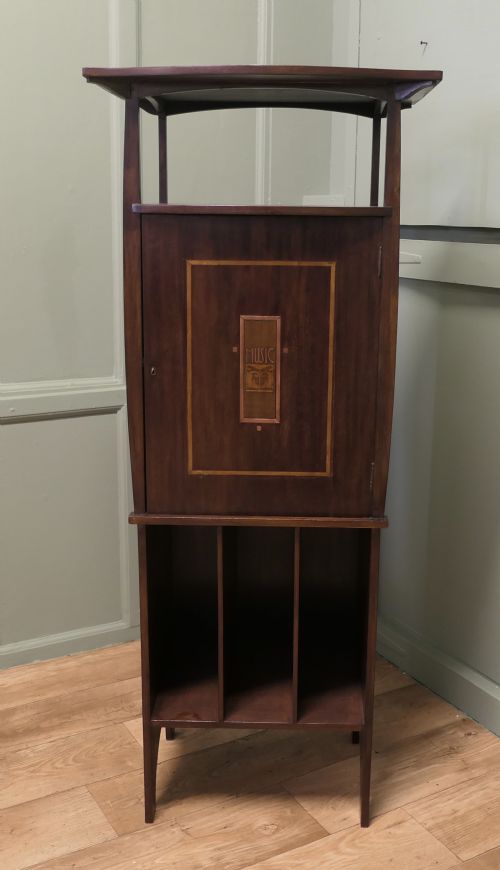
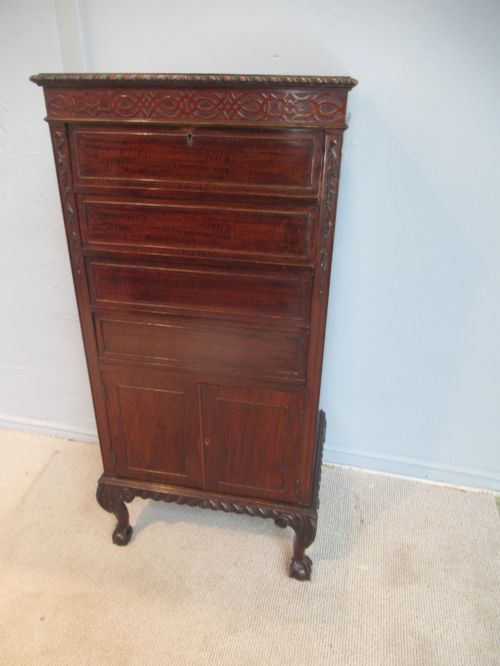
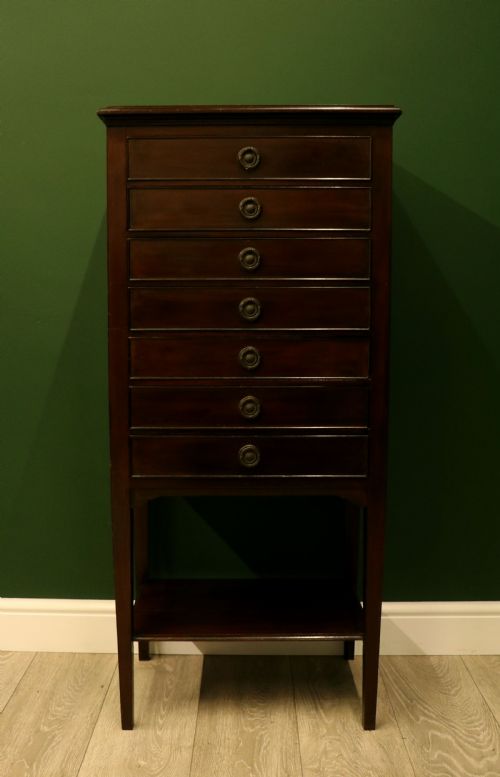
When you search for dark wood music storage, you encounter a specialised selection of antique furniture designed specifically to hold sheet music, folios, and periodicals. The inventory ranges from compact table-top models to substantial floor-standing cabinets.
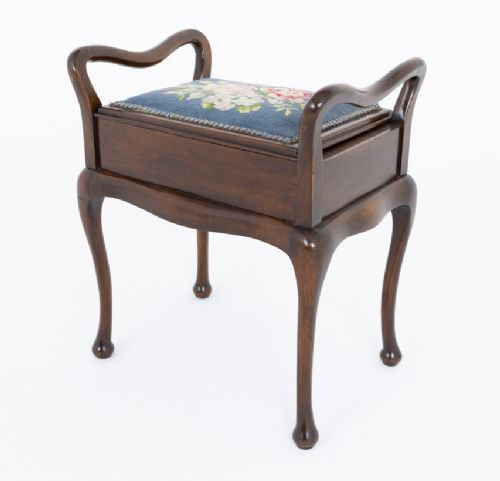
The most common forms on this page include music cabinets, canterburys, and piano stools. These items serve both functional and decorative roles in period interiors.
Originating from periods such as the Georgian, Victorian, and Edwardian eras, these pieces reflect the domestic musical habits of past households. Cabinets typically feature drop fronts or internal shelving, while canterburys offer divided vertical sections.
Materials and construction methods
Makers utilised dense timbers such as mahogany and rosewood as the primary structural materials for these dark wood music storage items. These hardwoods provided both the necessary strength and a rich natural grain.
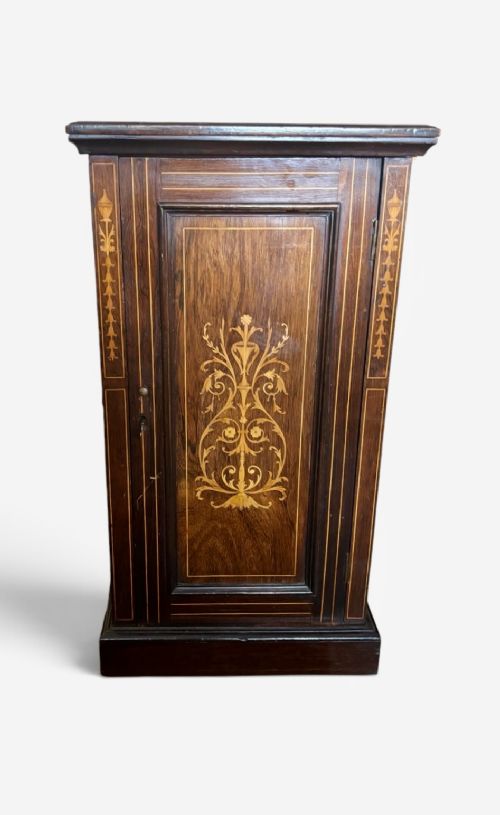
Decoration was frequently applied through contrasting wood inlay, satinwood, and ebony banding. Brass fittings, glass panels, and mirror inserts also appear on selected examples to enhance the decorative finish.
Distinctions in quality and execution
The distinction between standard pieces and exceptional examples rests upon the refinement of the timber and the precision of the cabinetwork. Finer items exhibit superior choice veneers and intricate marquetry or inlay work.
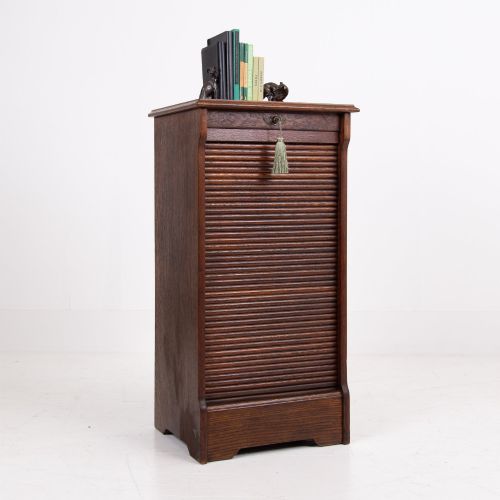
Hardware selection and internal arrangement further differentiate the grade of a piece. Original brass handles, smoothly operating tambour doors, and well-executed division work indicate higher standards of workshop production.
GM Elwood·JS Henry
The Dark Wood Music Storage Glossary
- Canterbury
- A low stand with divided sections, originally designed for holding sheet music or newspapers. These pieces often include a carrying handle and small castors.
- Tambour door
- A flexible door constructed from narrow vertical strips of wood glued to a canvas backing. This mechanism slides along a track to conceal interior shelving.
- Marquetry
- Decorative veneer work forming pictures or patterns by using thin pieces of wood and other materials. It requires high skill to execute on curved or flat cabinet surfaces.
- Folio cabinet
- A specialised piece of furniture intended for the flat storage of large paper sheets and musical scores. These typically contain wide, shallow drawers.
- Satinwood
- A durable, yellowish timber native to India and Ceylon, frequently employed for contrasting inlay work on dark mahogany and rosewood furniture.
Dark Wood Music Storage: Frequently Asked Questions
What is a music cabinet?
A music cabinet is a dedicated piece of furniture built to hold sheet music, scores, and folios in an orderly fashion. They typically stand upright with internal shelves or drop-down drawers.
These items became common in Victorian and Edwardian parlours as home piano playing gained popularity. Their compact footprints allowed them to fit neatly beside upright pianos.
How do I use a canterbury?
A canterbury functions as an open rack for sorting magazines, newspapers, and sheet music into upright vertical divisions. The integrated carrying handle allows the stand to be moved easily around a room.
In modern interiors, they work well beside a reading chair or sofa to hold current periodicals and books.
How do I date a mahogany cabinet?
Dating a mahogany cabinet involves examining the construction methods, drawer linings, hardware styles, and overall aesthetic design. Georgian pieces display different proportions and joinery compared to later Victorian or Edwardian equivalents.
Secondary woods inside the piece and the type of finish also provide reliable clues regarding the period of manufacture.
Are piano stools adjustable?
Many period piano stools feature mechanism-driven seats that allow the player to adjust the height for optimal seating posture. These mechanisms usually involve a revolving top screw or a side-mounted wooden handle.
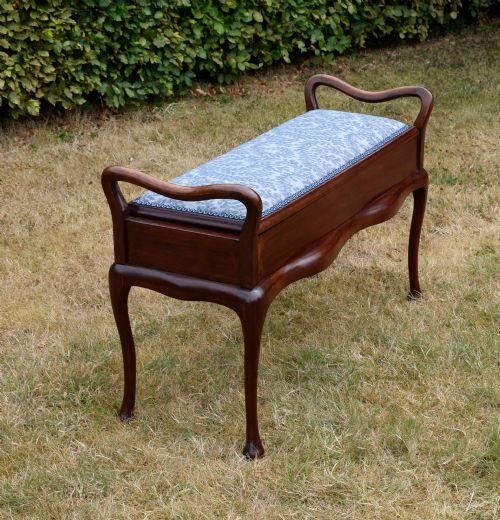
Hinged seat versions also exist, lifting to reveal a concealed compartment for storing immediate sheet music selection.