


Dark Wood Music Rack
A dark wood music rack organises folios and scores in the drawing room, holding centuries of paper within sturdy mahogany and rosewood frames.
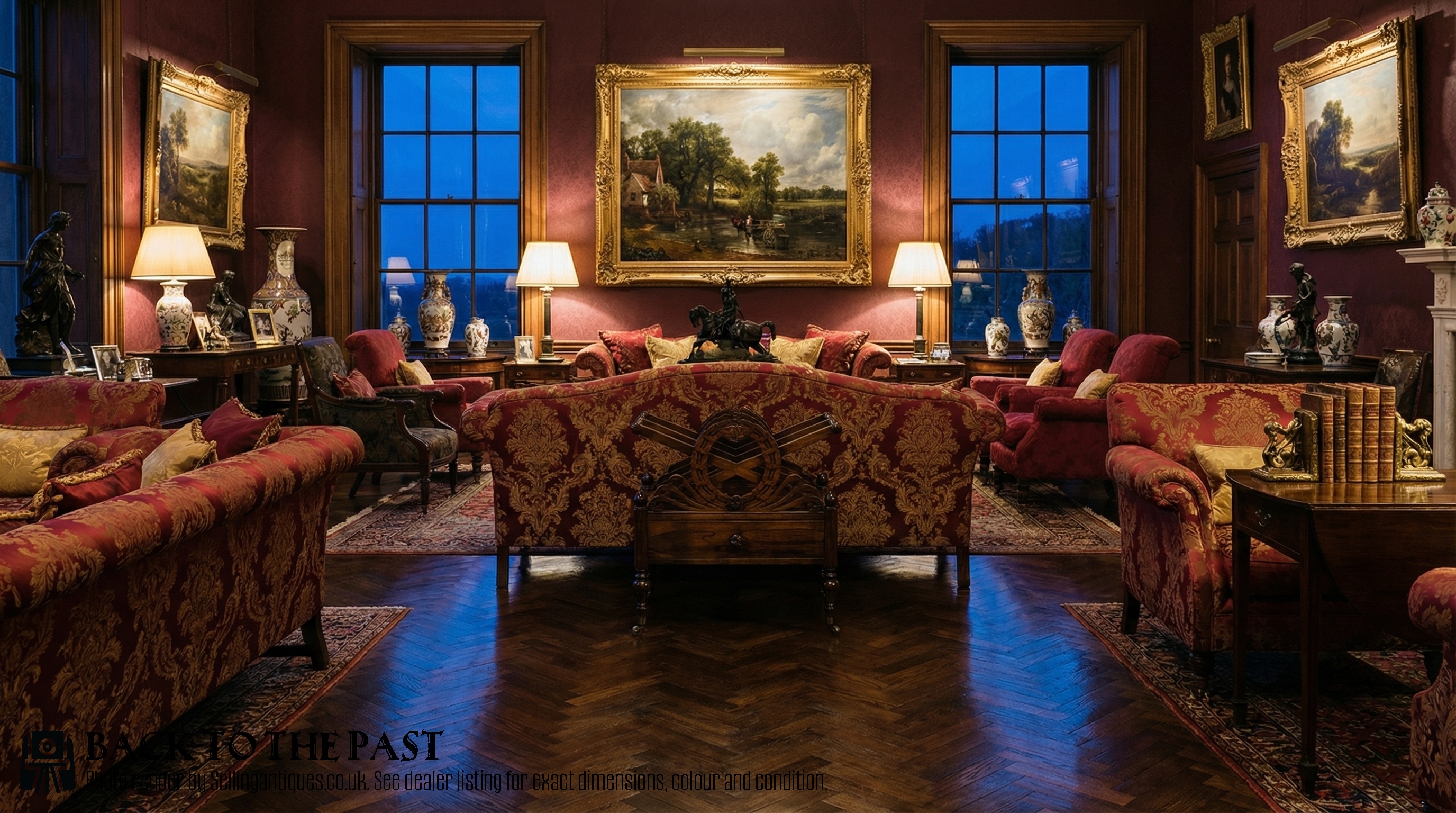
Dark Wood Music Rack
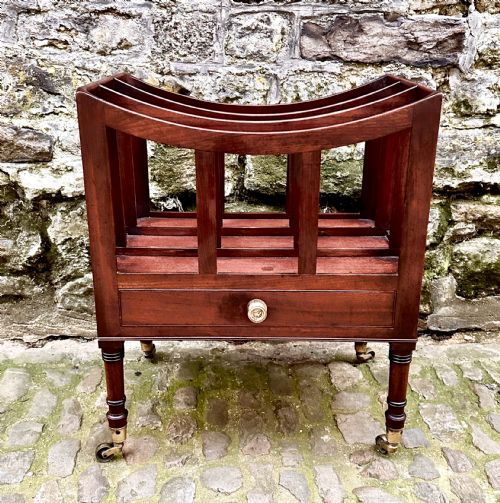
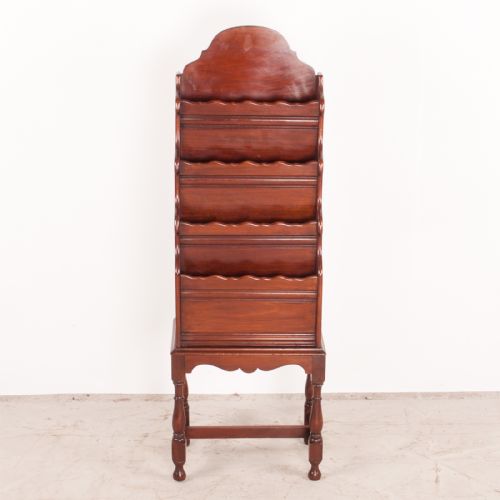
When you search for a dark wood music rack, you encounter pieces designed to hold sheet music, folios, and periodicals within compartmentalised wooden frames. These include freestanding canterburys, music stands, and magazine racks from the Georgian, Regency, William IV, and Victorian periods.
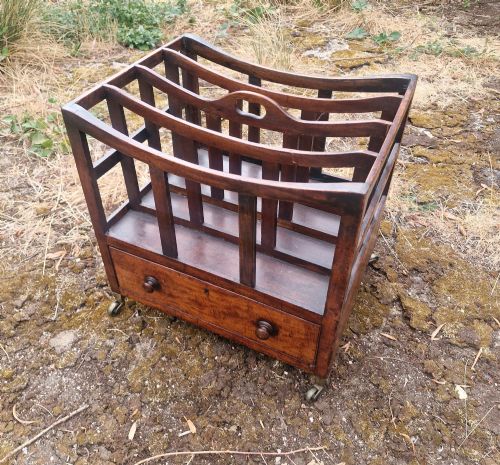
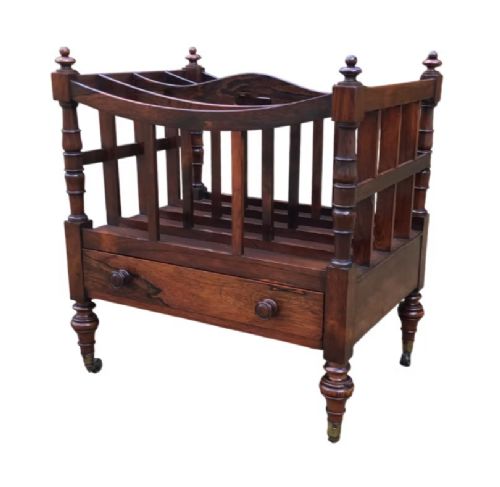
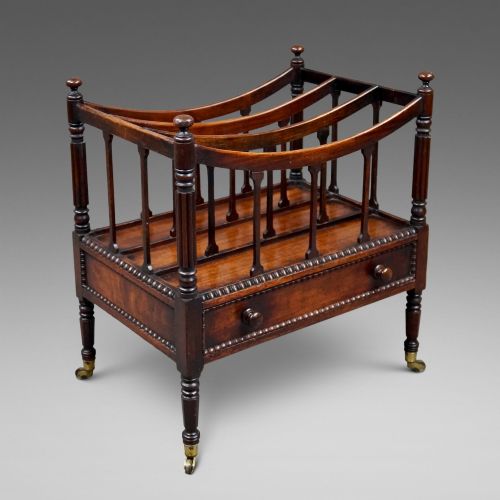
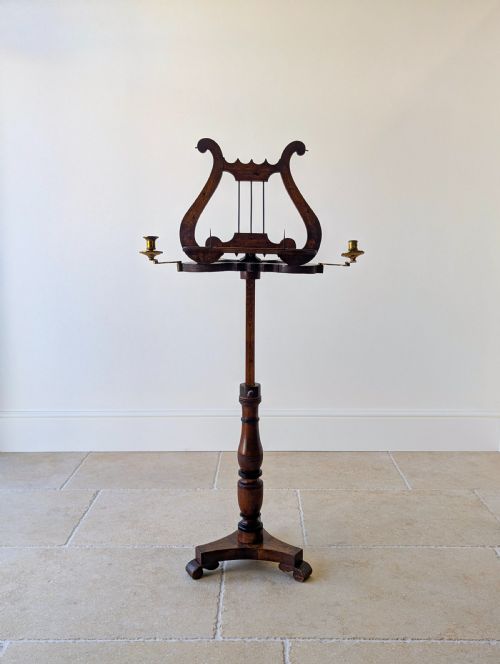
The most common form on this page is the canterbury, a low freestanding stand with slatted divisions for holding scores or newspapers below. You also find adjustable music stands and duet stands designed for holding open sheets while musicians play.
The woods utilised are predominantly mahogany and rosewood, often complemented by brass castors, inlay, and occasional ebony banding. Pieces originate from the 18th, 19th, and early 20th centuries, spanning styles from George III through to Edwardian production.
What varies in quality
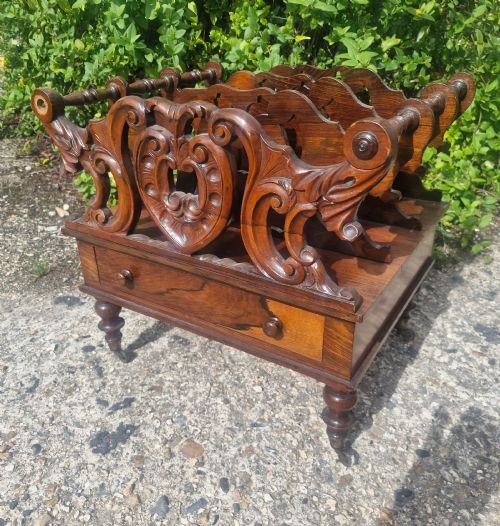
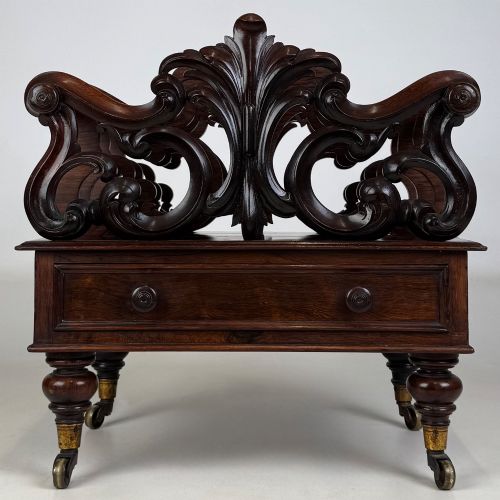
The quality of a dark wood music rack is evident in the selection of the timber grain, particularly the rich figuring found in high-grade rosewood and mahogany. Superior examples display crisp hand-carving, such as lyre motifs or Prince of Wales feathers, rather than simple moulded edges.
Structural integrity separates standard utilitarian pieces from exceptional cabinet work, seen in the sturdiness of the slatted divisions and the smooth operation of integrated lower drawers. The presence of original brass castors and fine banding details further elevates the standing of an individual piece.
Carved Prince of Wales feathers top one rosewood stand, offering a royal nod to your daily newspaper delivery.
The Dark Wood Music Rack Glossary
- Canterbury
- A low freestanding stand fitted with upright divisions, originally designed to hold sheet music and portfolios beneath a handle. These pieces often feature a drawer at the base.
- Lyre-form
- A decorative framework shaped like an ancient musical instrument, frequently utilised for the central support or music rest of a stand. This motif appears often in Regency pieces.
- Bandings
- Thin strips of contrasting timber inlaid around the edges of tabletops or shelves to create a decorative border. Ebony banding is commonly found on Georgian mahogany pieces.
- Whatnot
- A multi-tiered set of open shelves used for displaying or storing books, music, and small objects. Some Canterbury forms incorporate this upper shelving structure.
Dark Wood Music Rack: Frequently Asked Questions
What is the difference between a canterbury and a music stand?
A canterbury is a low, compartmented floor stand designed primarily for storing and transporting sheet music or folios between rooms.
In contrast, a music stand holds open scores at a reading height for performance, often featuring adjustable angles or dual ledges for players.
How were these racks used in historic homes?
These pieces sat beside pianos, reading chairs, or writing desks in the drawing room to keep current newspapers and music sheets close at hand.
Servants and family members used the carrying handles to move the racks across the floor as seating arrangements shifted throughout the day.
How do I identify a Regency period piece?
Regency pieces often display classical architectural influences, dark rosewood grains, and distinctive brass fittings like ring handles and turned leg castors.
Details such as boat-shaped troughs and carved lyre supports help distinguish this early nineteenth-century aesthetic from later Victorian designs.
Can these stands hold modern magazines?
The slatted divisions and internal troughs are dimensioned to accommodate traditional paper folios, periodicals, and modern publications alike.
While historic paper sizes match the original spacing well, you should check the width of the divisions if you intend to store oversized modern volumes.