


Carved Music Canterbury
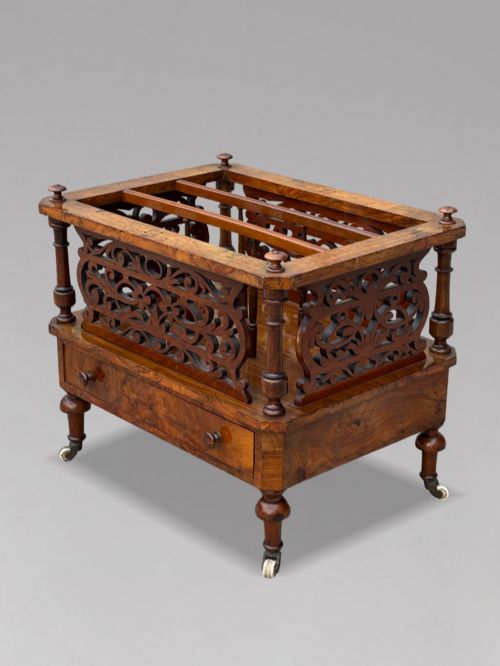
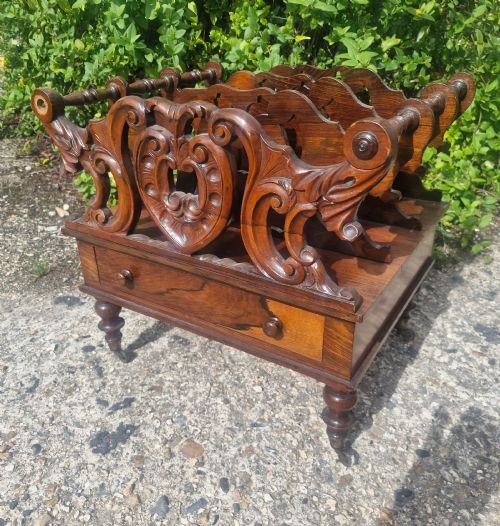
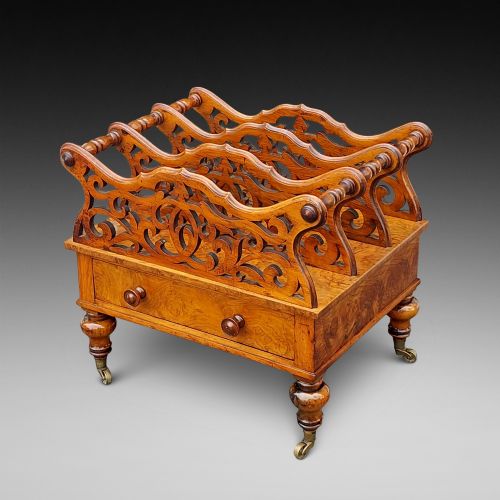
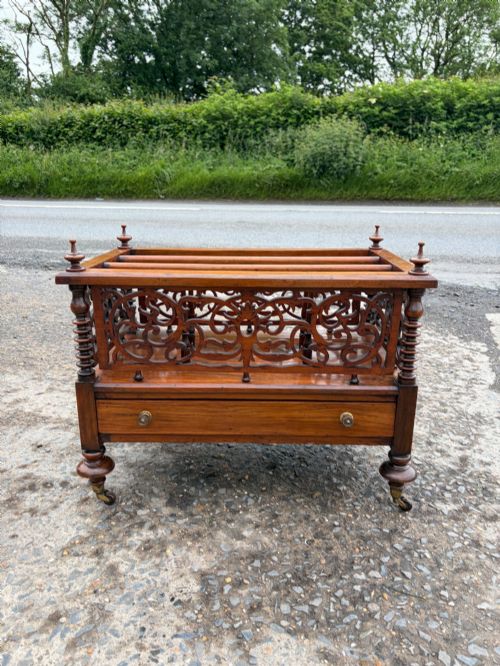
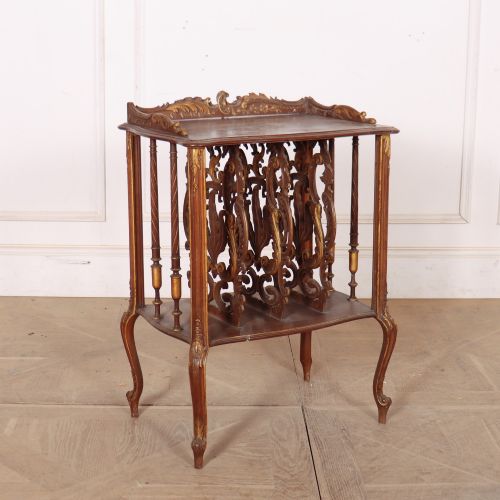
A carved music canterbury organises sheet music and periodicals with deep structural divisions and turned supports.
Carved Music Canterbury
A carved music canterbury is a compartmented stand designed to hold sheets, folios and periodicals in a drawing room or music room. Most examples found here date from the nineteenth century, spanning the Regency, William IV and Victorian eras, alongside later Edwardian pieces.
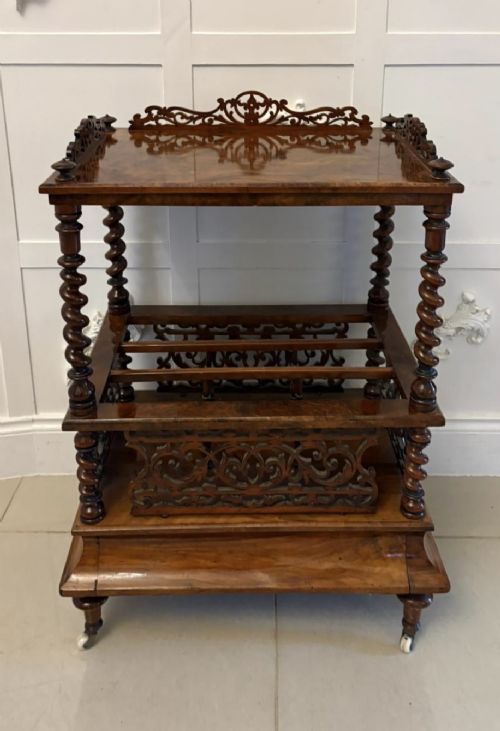
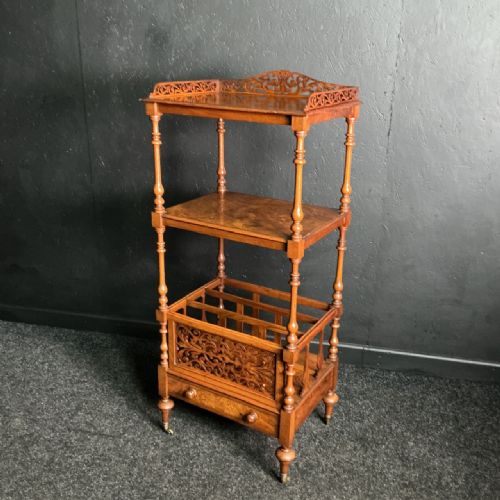
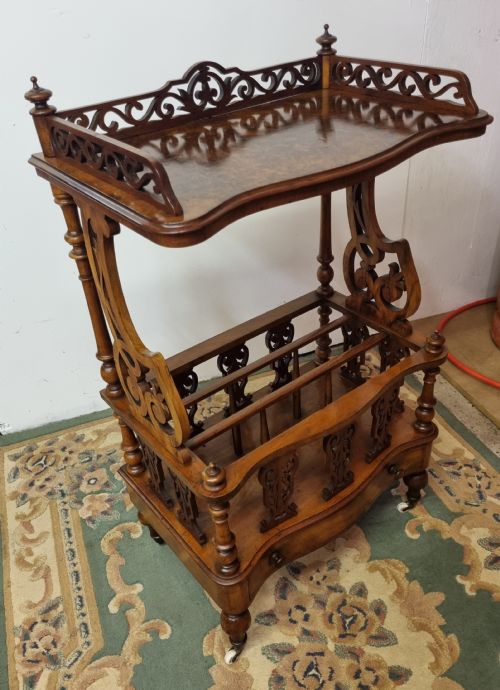
The form typically combines vertical slatted partitions for paper storage with low drawers below and turned or carved uprights. Variants merge the traditional rack with occasional tables, lamp tables or combined whatnot shelving.
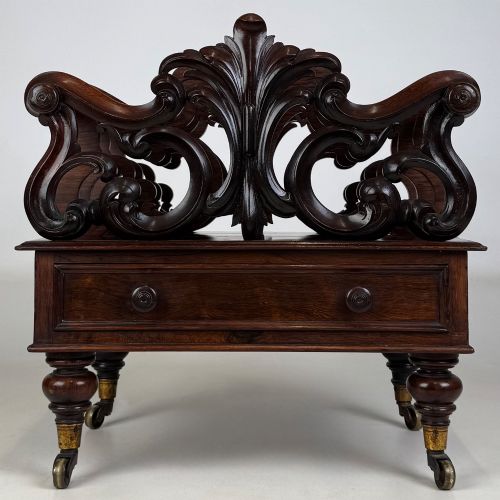
Makers utilised timber varieties including walnut, burr walnut, rosewood and mahogany, often enriched with boxwood inlay, serpentine shaping or applied carvings such as Prince of Wales feathers.
Materials and construction
Cabinet makers constructed these stands primarily from dense hardwoods like rosewood and mahogany during the Regency period, shifting toward figured walnut and burr walnut in the high Victorian decades. Timber selection dictated the structural integrity of the slender upright dividers and partition slats.
Decorative embellishments relied on contrasting veneers, boxwood stringing, ceramic castors, brass mounts and hand-carved details. Surfaces received French polishing to highlight the natural grain patterns of the wood.
Structural joints involved traditional cabinetry techniques to support the weight of stacked paper and occasional drawer units without warping the base platform.
Listings feature woods such as walnut, rosewood, satinwood and mahogany across Regency, Victorian and Edwardian periods.
Judging quality and design
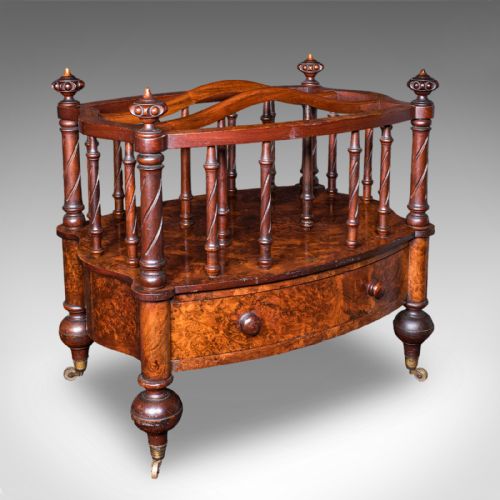
The distinction between standard production pieces and superior examples rests on timber selection and timber figuring. Burr walnut and well-figured rosewood with intricate inlay command greater visual presence than plain mahogany.
Execution of carved details, such as serpentine shaping, turned spindles and applied ornament, separates workshop standards. Refined proportions in the height of the dividers and the integration of functional drawers or work tops elevate the piece above utilitarian racks.
Henry Ogden and Son
The Carved Music Canterbury Glossary
- Canterbury
- A low stand with vertical partitions for holding music sheets, newspapers or magazines, often fitted with a drawer or castors.
- Burr walnut
- A highly figured timber veneer taken from the wart or growth on a walnut tree, prized for its swirling grain patterns.
- Whatnot
- An open set of multi-tiered shelves used for displaying ornaments, which is frequently combined with a music stand or lower rack.
- Serpentine shape
- A undulating curved line seen on the edges or front aprons of furniture tops and shelves, popular during the Victorian period.
- Aesthetic Movement
- A late nineteenth-century design style emphasising artistic visual qualities over heavy historical revivalism.
Carved Music Canterbury: Frequently Asked Questions
What is a music canterbury used for?
These stands held sheet music, folios, newspapers and periodicals near a piano or within a formal drawing room.
The vertical partitions kept paper organised and upright while allowing easy access for musicians during performances.
How do I date a canterbury?
Dating relies on timber choice, decorative styles and construction methods visible across the piece. Regency examples lean toward rosewood and mahogany with restrained lines, while Victorian items frequently feature burr walnut and ornate serpentine shaping.
Edwardian pieces show lighter proportions and simplified forms.
Are music canterburys sturdy enough for daily use?
Most stands utilise dense hardwoods designed to support the substantial weight of stacked paper without structural failure.
Care should be taken when moving them, particularly if fitted with original brass castors.
What is the difference between a canterbury and a whatnot?
A traditional canterbury focuses on partitioned storage slots for paper with an optional lower drawer. A whatnot consists primarily of stacked display shelves.
Many nineteenth-century examples combine both functions into a single piece.