


Dark Wood Music Holder
A dark wood music holder unites the functional needs of the parlour with the rich grain of mahogany, rosewood, and walnut.
Dark Wood Music Holder
When you search for a dark wood music holder, you encounter a specialised grouping of furniture designed to organise scores, folios, and reading material in the home. These pieces emerge predominantly from the Georgian, Regency, William IV, and Victorian eras.
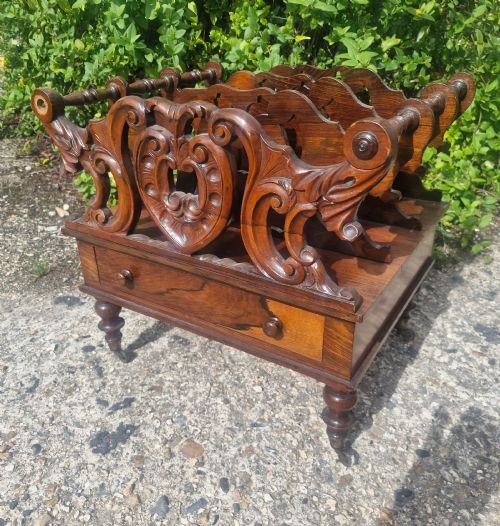
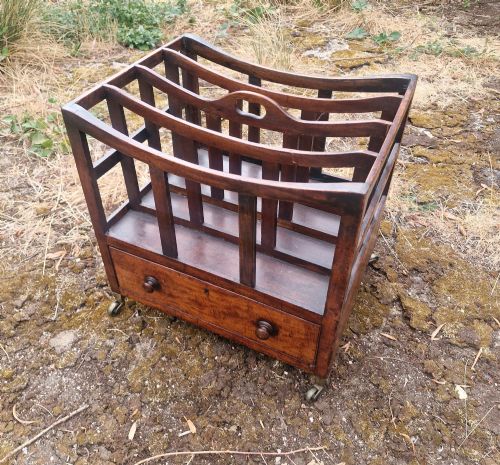
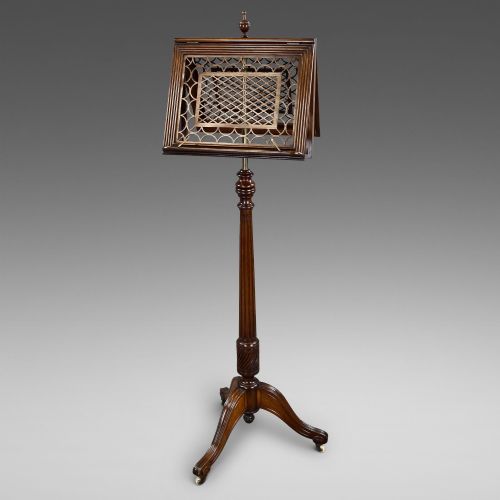
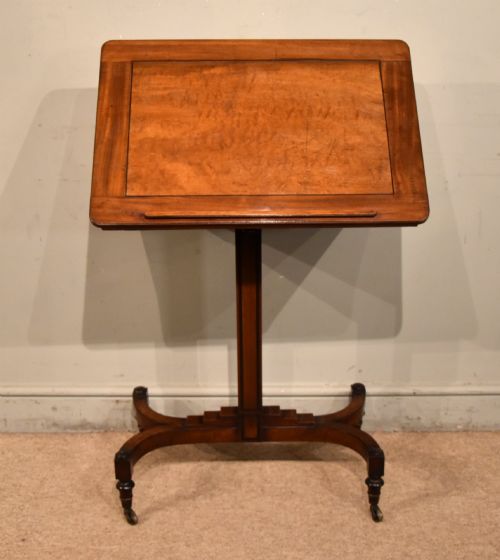
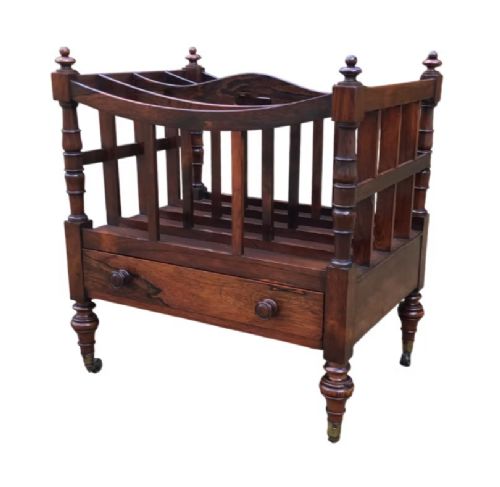
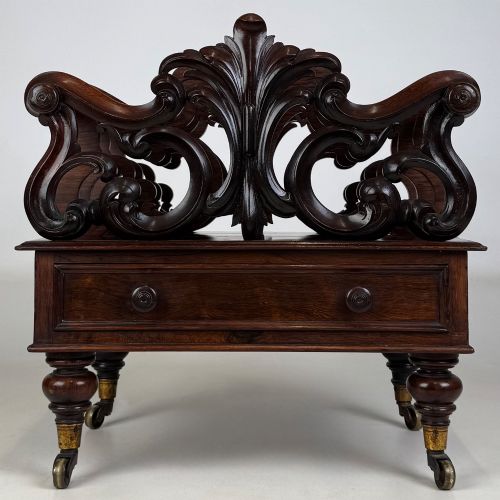
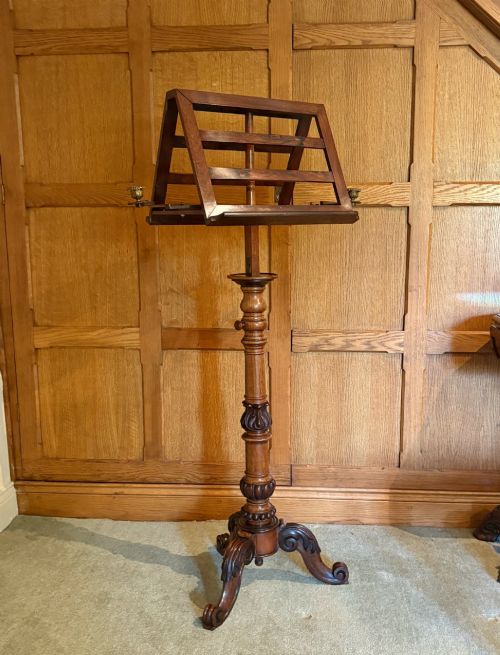
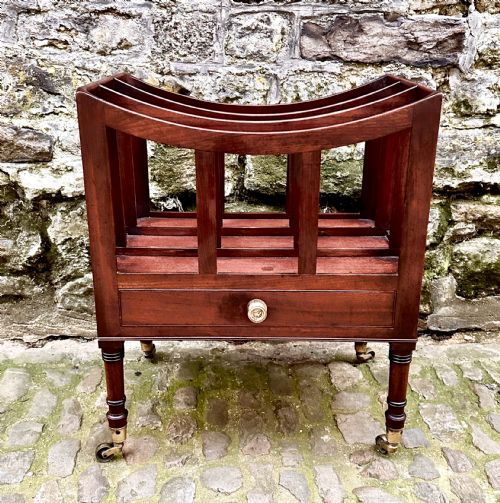
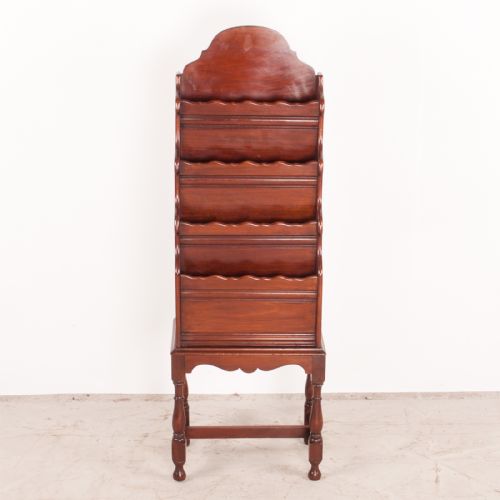
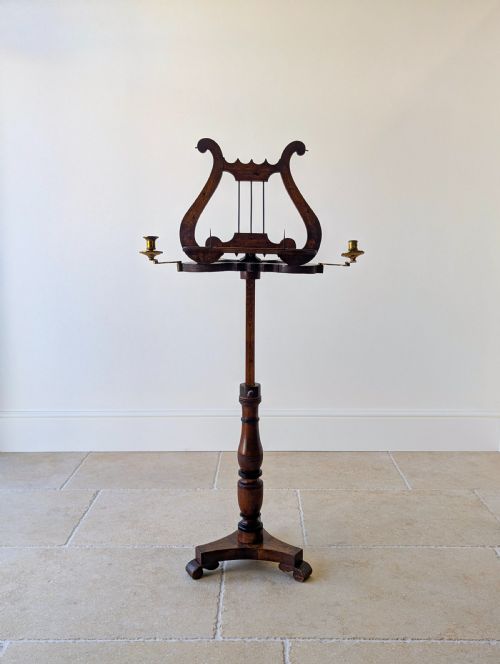
The most common form you will meet on this page is the Canterbury, a low stand featuring slatted partitions for sheet music or magazines, frequently mounted on castors and occasionally fitted with a drawer below. Alongside these stand various adjustable music stands, duet stands, and reading tables.
Origins span the nineteenth century and the Edwardian period, uniting utilitarian function with cabinet-making traditions that favoured dense, dark timbers. Each piece reflects the domestic musical life of its period, whether utilised for evening piano practice or holding daily newspapers in the reception room.
Materials and construction
Cabinet-makers relied heavily on mahogany and rosewood, selecting them for their deep natural colour and ability to take a fine polish. Walnut, goncalo alves, and inlaid details appear across various pieces to provide contrast and decorative richness.
Structural integrity depended on turned wooden supports, fretted woodwork, and brass fittings such as adjustable screws and castors. Joinery techniques allowed for folding actions in reading tables and stable pillar-and-tripod bases for freestanding stands.
Listings feature mahogany, rosewood, and walnut across nineteenth-century forms.
Markers of quality
Quality rests upon the selection of timber and the crispness of carved or turned details, such as lyre-form supports or carved Prince of Wales feathers. Dense, well-figured rosewood and richly patinated mahogany distinguish superior examples.
Mechanical execution defines the worth of adjustable stands and reading tables, where smooth brass ratchets and screw mechanisms must operate reliably. The integration of structural drawers and fine division slats further elevates the piece.
GILLOWS
The Dark Wood Music Holder Glossary
- Canterbury
- A low stand with vertical divisions designed originally for sheet music and later for newspapers and magazines. It often incorporates a drawer at the base and small castors for movement across carpets.
- Duet stand
- A music stand configured to hold open scores for two performers simultaneously, often featuring an adjustable reading ledge.
- Gonçalo alves
- A dense exotic hardwood with striking contrasting grain patterns, utilised in high-status nineteenth-century pieces.
- Lyre-form
- A decorative motif shaped like an ancient musical lyre, frequently employed in the central supports of music stands and canterburys.
- Whatnot
- A set of open shelves standing upon pillars, sometimes combined with a Canterbury base to hold books and music together.
Dark Wood Music Holder: Frequently Asked Questions
What is a Canterbury used for?
A Canterbury served as a dedicated stand for holding sheet music near a piano or music room. Over time, families also utilised them to keep newspapers and periodicals tidy in the parlour.
Today, they function similarly in domestic spaces, offering partitioned storage for magazines, vinyl records, or large folios while maintaining a compact footprint.
How do I date a music stand?
Dating relies on observing the prevailing style, timber choices, and mechanical hardware of the piece. Regency and Georgian examples often show lighter mahogany with classic reeded legs, whereas Victorian pieces frequently employ darker rosewood with heavier carvings.
Hardware provides another clue, as hand-cut brass screws and early castors differ distinctly from later manufactured components. Comparing the joinery methods helps narrow the decade of manufacture.
What is the difference between a music stand and a reading table?
A music stand is designed primarily to hold open scores at an angled ledge, often adjustable in height and tilt for a standing or seated musician. Many feature a central pillar with tripod feet.
A reading table incorporates a flat or adjustable surface intended for books, portfolios, or writing materials, sometimes including pull-out flaps or drawers for accessories.
Are these pieces suitable for modern homes?
These items adapt well to contemporary interiors due to their compact scale and functional storage capabilities. A Canterbury fits neatly beside a sofa or desk to hold current reading matter.
Freestanding music stands occupy minimal floor space while providing a display surface for art books or sheet music. Their dark wood tones integrate easily with both traditional and modern decorative schemes.