
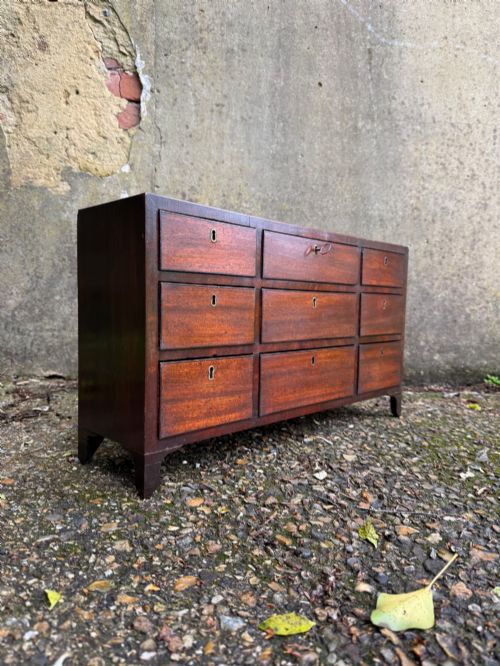


Dark Wood Miniature Drawers
Dark wood miniature drawers are scaled-down furnishings crafted to hold small treasures, prized for their compact craftsmanship and period detail.
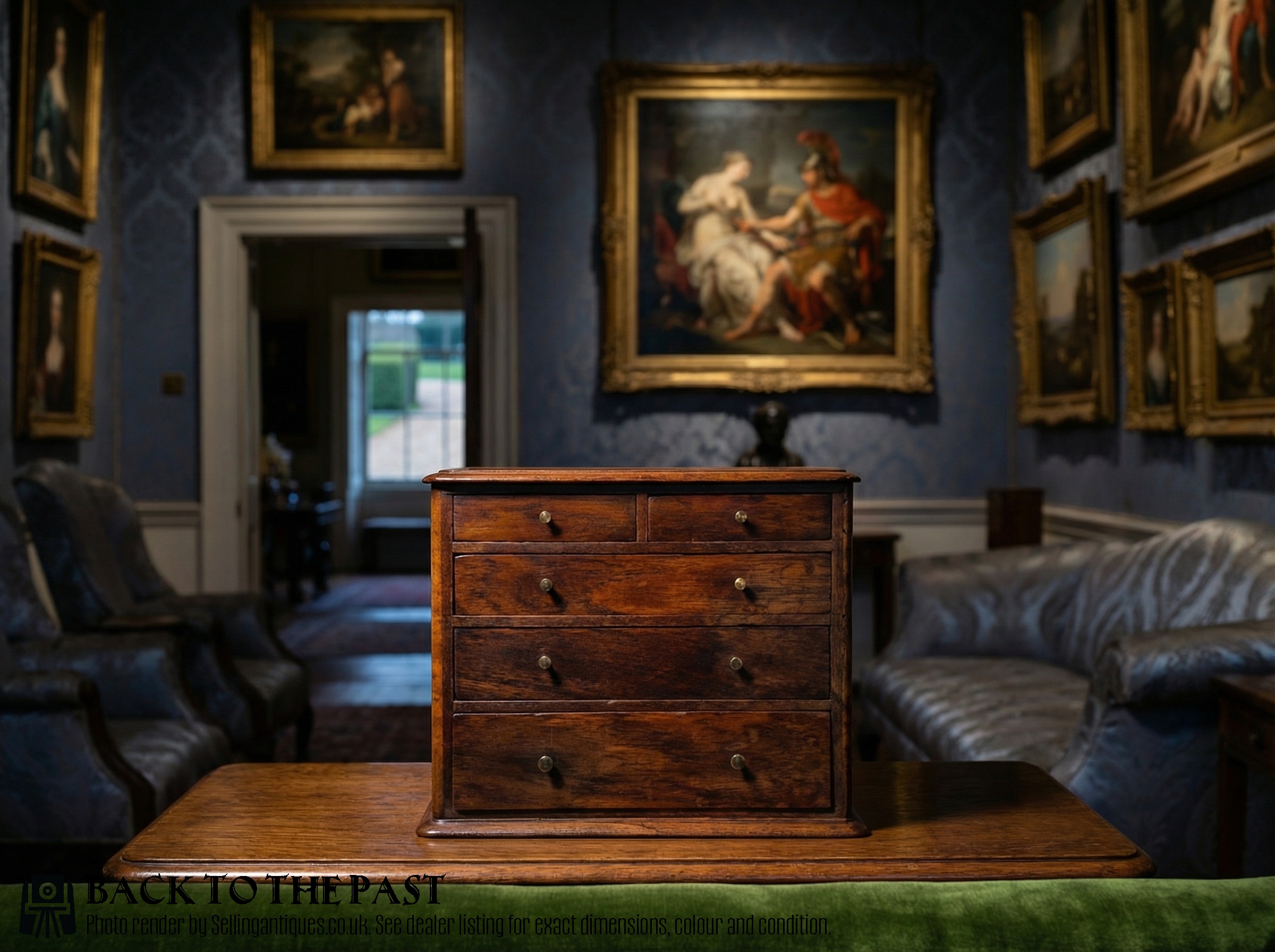
Dark Wood Miniature Drawers
Dark wood miniature drawers encompass small-scale chests, collector cabinets, and apprentice pieces originating from the eighteenth and nineteenth centuries. These items serve specialised storage purposes while mirroring the architectural styles of larger period furniture.
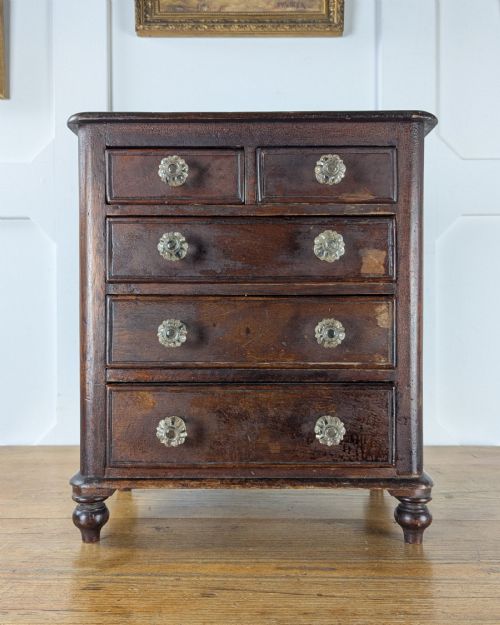
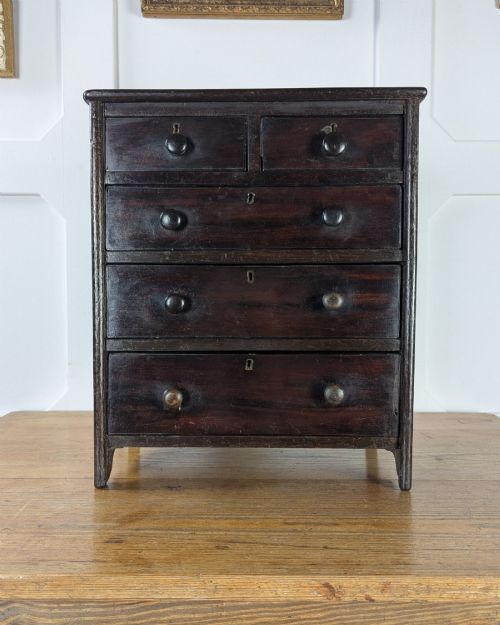
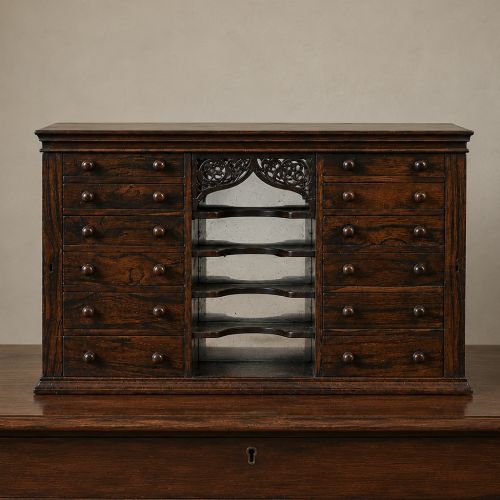
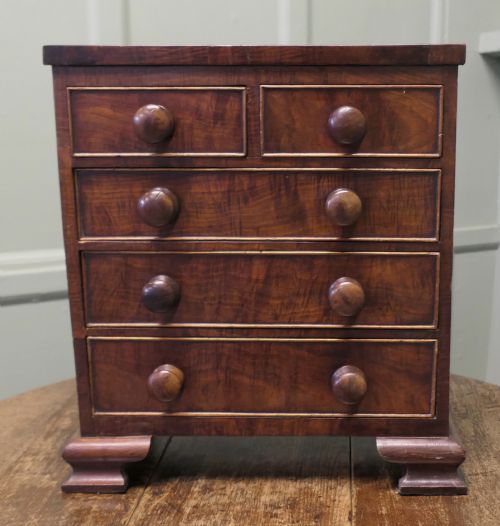
The pieces on this page heavily feature mahogany, oak, and rosewood forms spanning Victorian, Georgian, and Regency eras. Buyers frequently encounter apprentice pieces, miniature bowfront chests, and table-top collector cabinets within this selection.
Materials and Construction
Cabinet makers utilised dense hardwoods such as mahogany and oak, frequently incorporating contrasting boxwood stringing or brass fittings. These materials provided the structural integrity required for fine, small-scale joinery.
Surfaces often display polished patinas developed over centuries, reflecting traditional finishing techniques applied by period craftsmen. Construction methods mirror full-sized cabinetry, employing dovetailed joints and turned feet.
Several miniature chests include secret compartments designed to outsmart wandering hands.
Determinants of Quality
Superior examples distinguish themselves through proportional harmony and the refinement of timber selection. The alignment of wood grain across drawer fronts and the subtlety of brass hardware indicate higher craftsmanship.
Condition of the polished surface and integrity of the internal drawer construction dictate the standing of a piece. Fine specimens maintain original feet, handles, and backboards without intrusive structural alterations.
The Dark Wood Miniature Drawers Glossary
- Apprentice piece
- A small-scale item created by a trainee craftsman to demonstrate mastery of joinery techniques before admission to a trade guild. These objects typically replicate standard furniture forms in miniature proportions.
- Bowfront
- A furniture front that curves outward in a convex shape across the central section. This styling appears frequently on nineteenth-century miniature chests.
- Coffer bach
- A small Welsh oak coffer or chest traditionally used for storing linen or valuables. The term translates from Welsh as little coffer.
- Wellington chest
- A tall, slender chest of drawers secured by a locking side flap that fastens over the drawer edges. This form sometimes incorporates mirrored backing or specialised internal compartments.
- Patina
- The deep, lustrous surface sheen developed on antique wood through age, handling, and repeated waxing. It serves as an indicator of genuine period surface evolution.
Dark Wood Miniature Drawers: Frequently Asked Questions
What were miniature drawers used for?
Period users employed these small chests to store jewellery, documents, or specialised collections such as microscope slides. They functioned as portable storage items for valuable personal belongings.
Craftsmen also produced them as demonstration pieces to exhibit technical skill to prospective clients or guild examiners.
How do I identify an apprentice piece?
Apprentice pieces often display meticulous attention to detail on a reduced scale, mirroring full-sized furniture designs from the Georgian or Victorian eras. They reflect authentic period construction methods, including hand-cut dovetails and traditional timber framing.
Makers built these items to test complex woodworking techniques, resulting in varied proportions and distinctive regional styles.
Where should I place these cabinets?
These compact chests suit placement on tables, desks, or sturdy sideboards where their fine joinery remains visible. Their small footprint allows them to integrate easily into existing room layouts.
Owners should keep them away from direct heat sources and strong sunlight to protect the aged hardwood surfaces and polished patinas.
How do I distinguish Georgian from Victorian pieces?
Georgian examples often feature simpler, classical proportions with mahogany or oak construction, frequently displaying bracket feet or subtle stringing. They date from the eighteenth to early nineteenth century.
Victorian pieces tend to incorporate heavier mouldings, turned feet, or varied exotic woods like rosewood, reflecting industrial-era manufacturing shifts.