

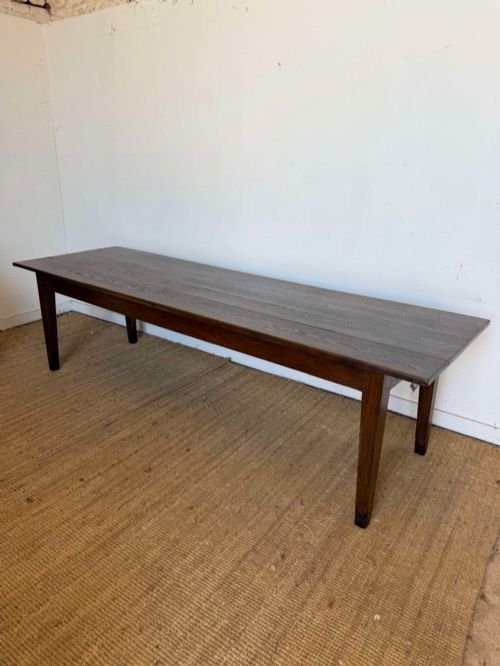
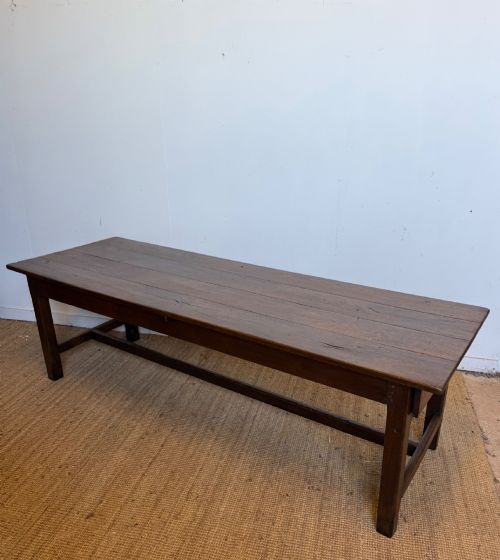
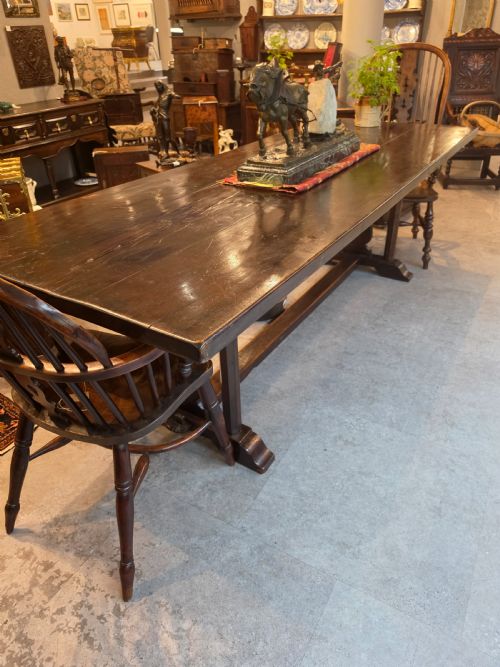
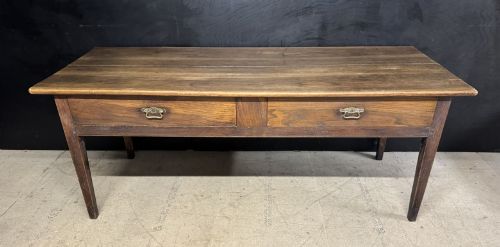
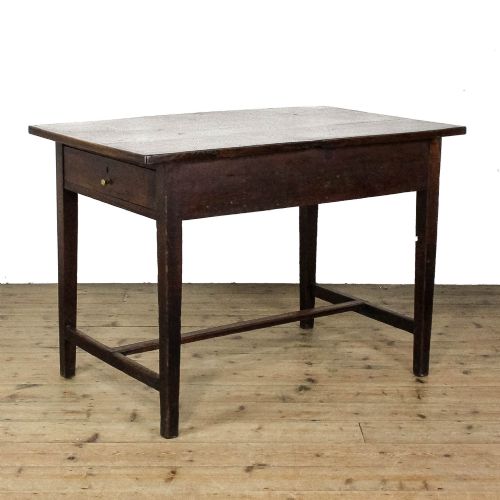
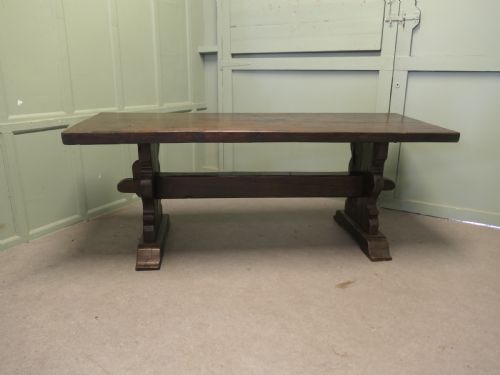
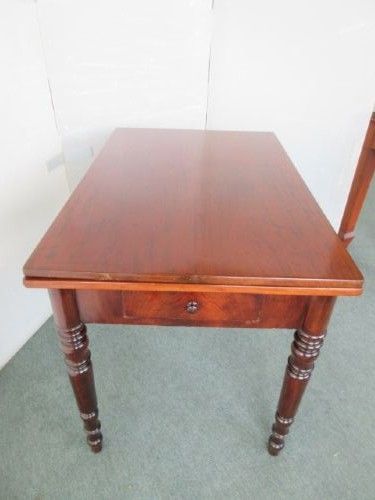
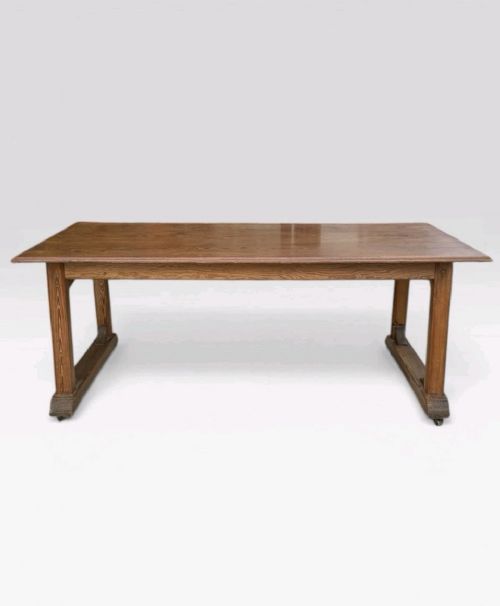
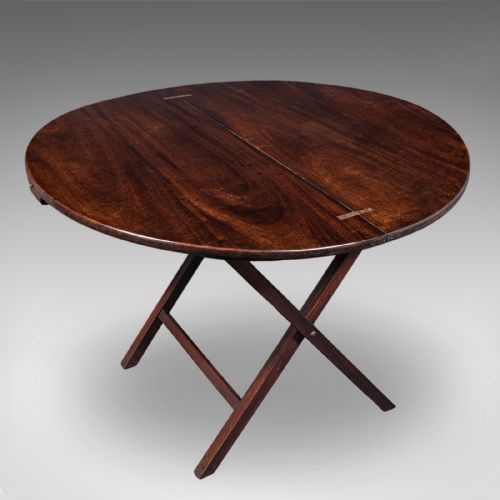
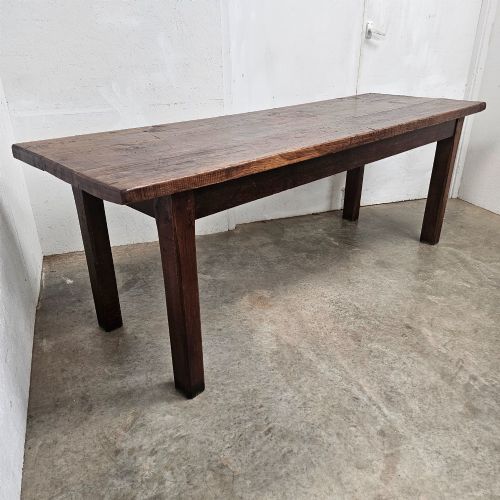


Dark Wood Kitchen Table
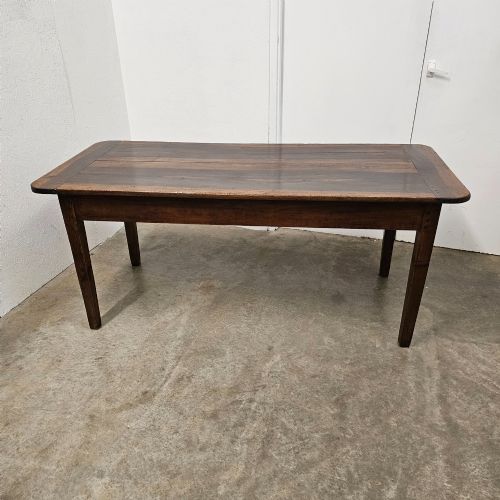
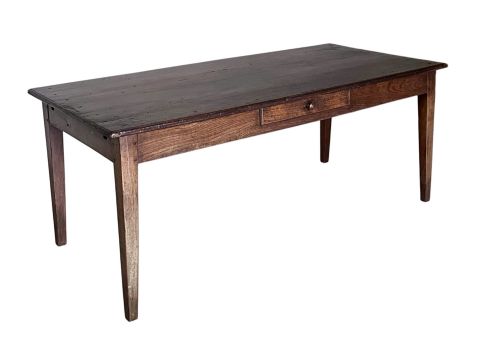
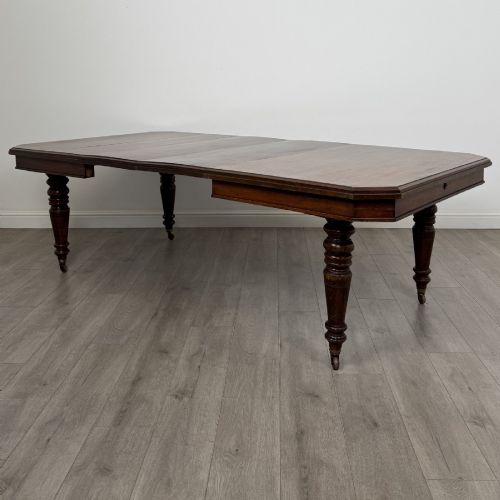
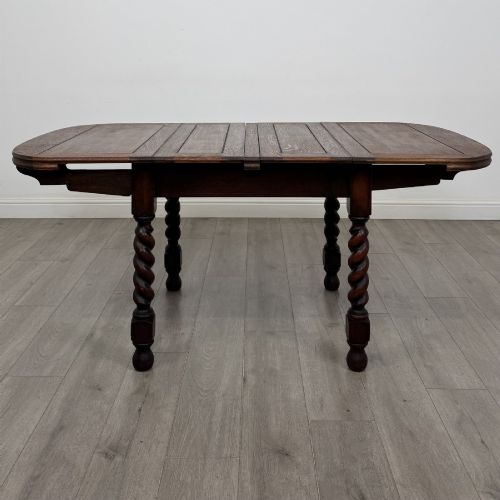
A dark wood kitchen table anchors a room with natural grain and honest utility.
Dark Wood Kitchen Table
A dark wood kitchen table serves as the working heart of a home, built for daily meals and heavy preparation work. When searching for a dark wood kitchen table, buyers encounter sturdy pieces designed for practical service across centuries.
The selections span utilitarian workbenches, refectory designs, and country farmhouse styles originating from English, French, and Spanish traditions. Oak, chestnut, and mahogany provide the primary surfaces, shaped into trestle, gateleg, and draw-leaf formats.
Earlier examples date from the seventeenth and eighteenth centuries, while nineteenth-century variations bring heavier proportions and functional drawers or pot-shelves. These tables carry the marks of hard domestic use, from scoring to deep patination.
Materials and construction
Makers utilised solid timbers including oak, elm, mahogany, chestnut, and walnut to build tables capable of withstanding constant pressure. Thick planks form the tops, often supported by robust legs connected by stretchers or trestle bases.
Joinery relied on traditional pegging and mortise and tenon methods to ensure rigidity without metal fasteners. Iron and brass hardware appears selectively on hinges, drawer pulls, and folding mechanisms.
Surfaces received simple wax or oil finishes that deepened the tone of the wood over generations of cleaning and contact. Secondary woods like pine appear in structural framing beneath primary hardwood tops.
Dark Wood Kitchen Table Retail Price Guide 2026
Typical asking prices for dark wood kitchen table among the pieces listed under this phrase on Sellingantiques today, from the lower quarter to the upper quarter. They describe what is for sale here now, not the wider market.
Tables recorded as bread prep retain flour dust trapped deep within the grain from nineteenth-century kitchens.
What determines quality
The integrity of the timber forms the primary distinction, with thick, single-board plank tops commanding greater regard than multi-board assemblies. The density and grain pattern of the oak, mahogany, or chestnut dictate the tactile and visual weight of the piece.
Construction methods reveal the intent of the original maker, visible in the tightness of the joinery and the survival of original stretchers and aprons. Unaltered timber surfaces retain the patination built up through decades of domestic friction.
Proportion and scale separate standard utility items from grander country house examples, particularly where turned legs, barley twists, or carved details add architectural interest without compromising stability.
Trussant And Cie
The Dark Wood Kitchen Table Glossary
- Refectory table
- A long, narrow dining table traditionally used in communal dining halls and later adapted for domestic kitchens. These pieces rely on low stretchers to stabilise long spans of timber.
- Gateleg table
- A drop-leaf table with hinged legs that swing out to support the raised leaves. This design allows the table to expand for dining and contract for storage.
- Draw-leaf table
- An extending table featuring two hidden leaves stored beneath the main top that pull out to lengthen the surface. This mechanism provides extra capacity without requiring separate storage leaves.
- Bread prep table
- A heavy-working table designed for kneading dough and food preparation, often featuring an unvarnished wood top and utilitarian drawers. These surfaces show deep scoring from daily culinary tasks.
- Pot-shelf
- An open lower tier fitted between the legs of a side or serving table. This shelf provided storage for heavy cookware and earthenware.
Dark Wood Kitchen Table: Frequently Asked Questions
How do I clean an antique wooden table?
Dust the surface regularly with a dry cloth and apply a quality beeswax periodically to nourish the dry timber. Avoid commercial silicones and excess water, which can damage the historic patination.
Treat spills immediately by blotting rather than wiping to prevent moisture penetration into the grain. Gentle care preserves the natural lustre built up over centuries of use.
Are these tables suitable for daily family use?
Solid hardwood construction makes these tables exceptionally durable for everyday meals, homework, and food preparation. Centuries of previous domestic service prove their structural resilience.
Use coasters and placemats to protect the historic finish from heat and moisture marks. Embracing existing dents and marks allows new wear to blend naturally with the old.
How can I tell an 18th century table from a 19th century one?
Earlier eighteenth-century pieces often feature wider single-board planks, hand-carved details, and pegged joinery executed entirely by hand. Timber selection tends toward native oak, chestnut, and elm with deep, unforced patination.
Nineteenth-century examples frequently introduce mechanical aids like draw leaves, factory-cut screws, or harder tropical woods like mahogany. Proportions also shift toward heavier farmhouse or industrial workshop formats.
Do antique kitchen tables wobble?
A well-constructed antique table should stand firmly on level floors, though timber can shift slightly with humidity changes. Original stretchers and pegged joints generally maintain stability across the frame.
Minor movement can often be addressed by adjusting the placement or checking old joinery pins. Professional conservation can secure loose joints without replacing original elements.