
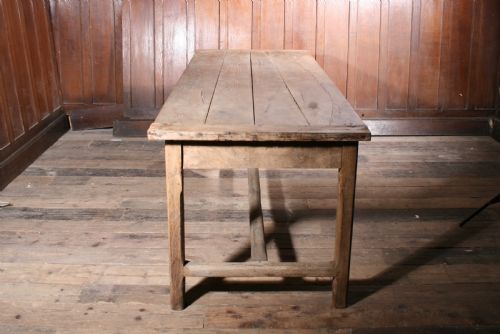
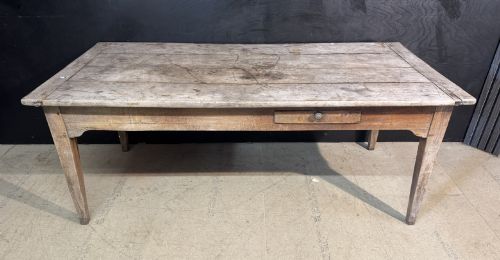
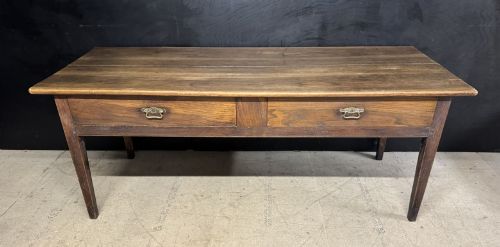
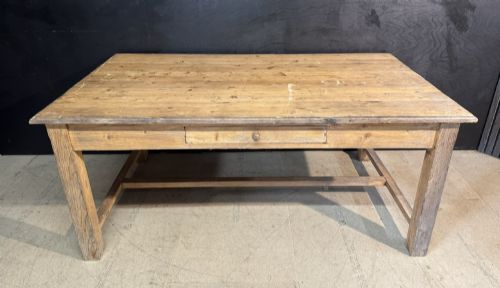
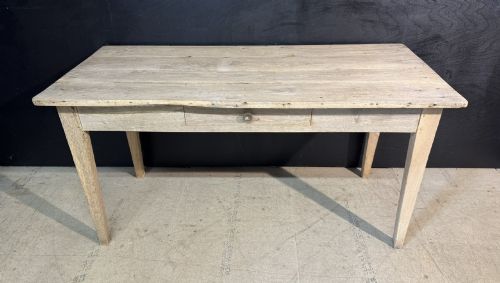
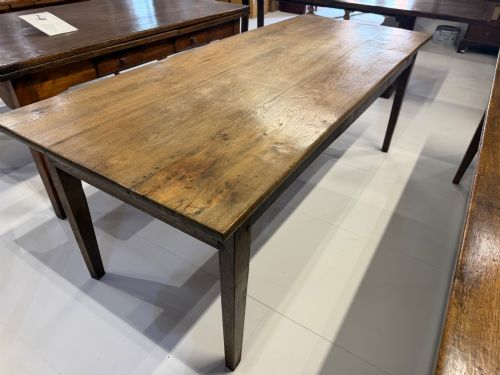
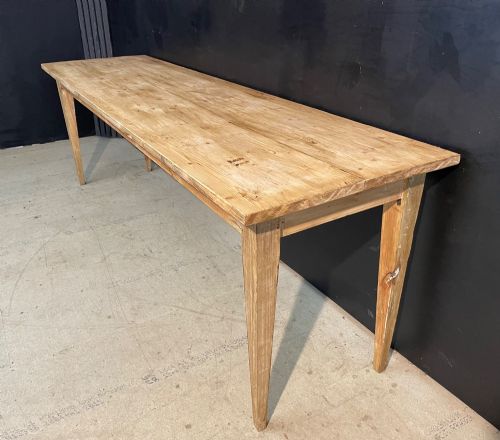
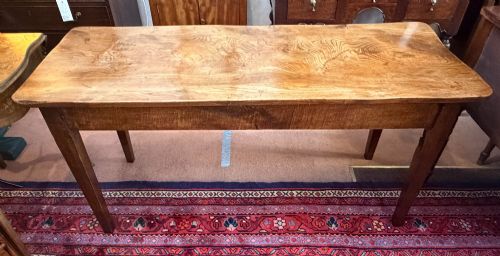
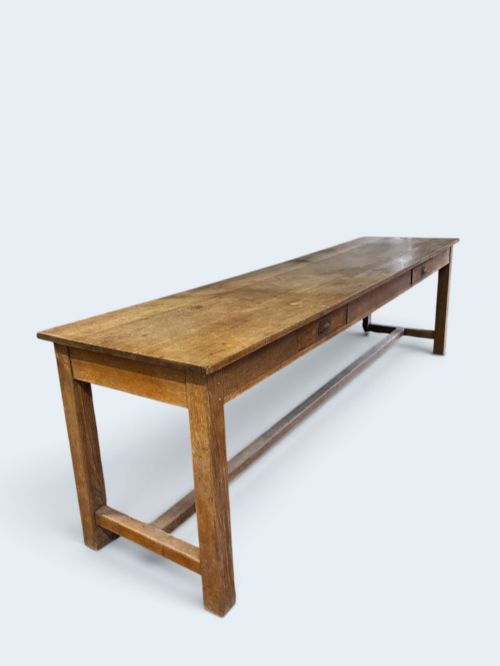
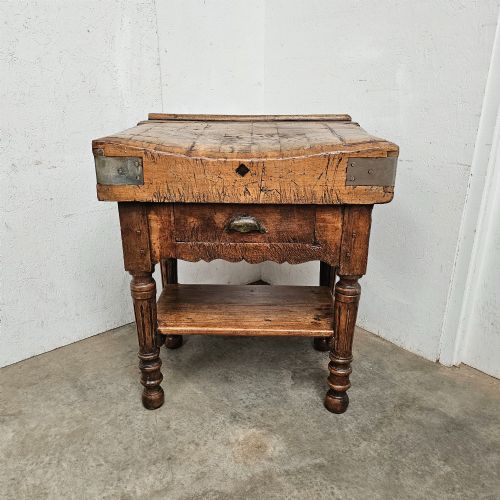
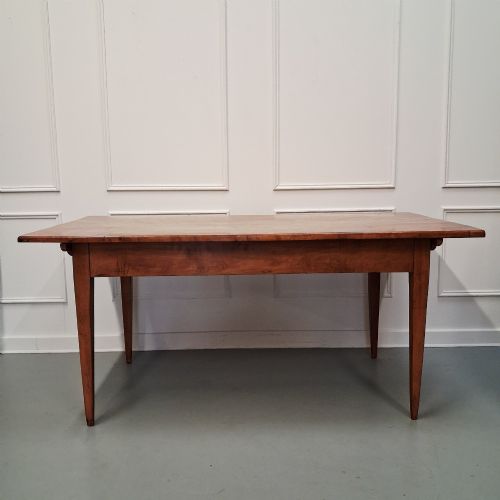
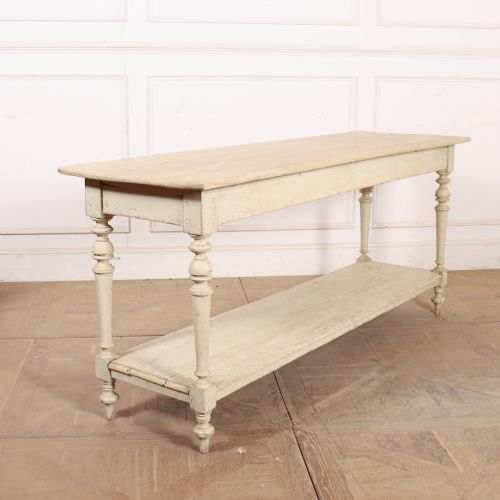
Rustic French Prep Table
A rustic french prep table brings practical warmth and time-worn character to a kitchen, offering a sturdy workspace shaped by generations of domestic use.
Rustic French Prep Table
A rustic french prep table encompasses utilitarian workspace forms designed for daily domestic and culinary tasks, from kitchen tables and butchers blocks to drapers and pastry tables. These practical pieces emerge predominantly from the nineteenth century, reflecting regional French provincial traditions and country house practicalities.
What varies in quality in a rustic french prep table
Quality rests in the integrity of the timber selection, such as dense solid oak, richly grained fruitwood, or thick scrubbed pine, and the honesty of its wear. Superior examples show thoughtful proportion, harmonious proportions, and original structural timber without unnecessary modern intervention.
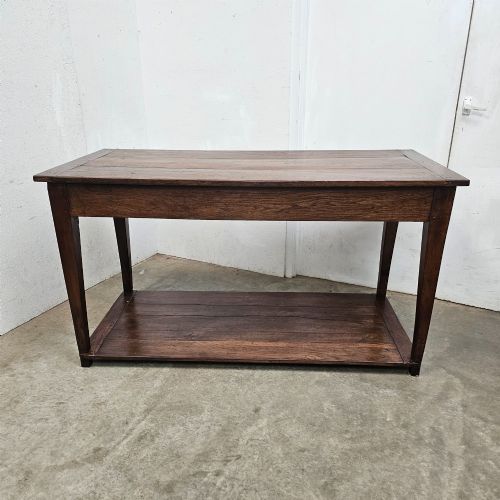
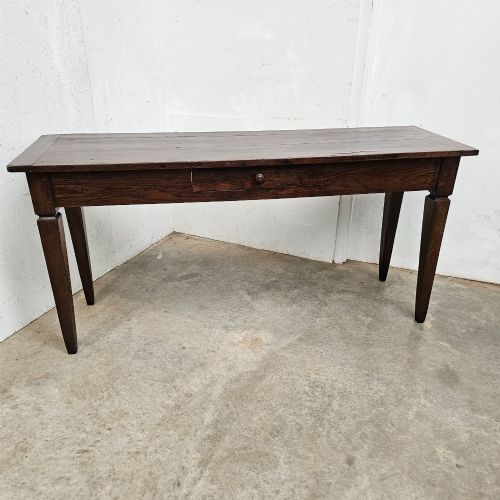
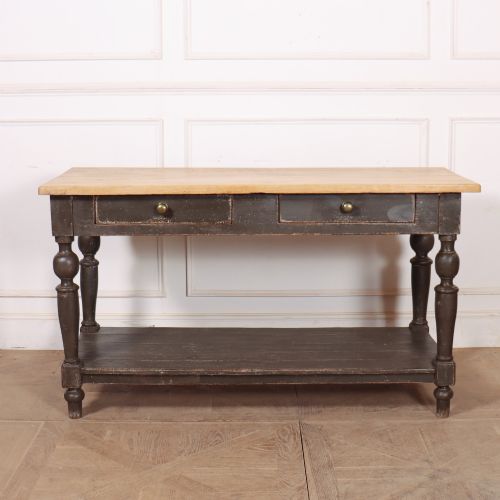
The sophistication of the base construction also dictates distinction, whether featuring tapered legs, decorative turnings, or solid pot-shelves. Finer pieces retain authentic patination built up through decades of genuine service, distinguishing straightforward utilitarian work from later copies.
The inventory spans the nineteenth century, incorporating regional forms from Alsace alongside classic French provincial styles.
The Rustic French Prep Table Glossary
- Drapers table
- A long, narrow work table traditionally used for folding textiles, characterised by generous length and often lower storage shelves. These make exceptional kitchen islands or serving counters.
- Butchers block
- A thick-topped heavy chopping table designed for meat preparation, usually constructed from end-grain or heavy timber blocks set upon a sturdy wooden base.
- Scrub-top
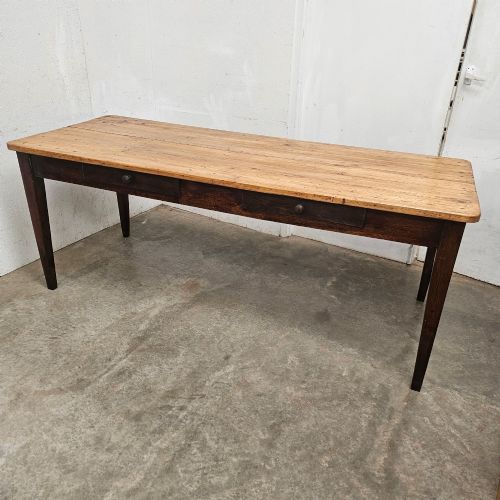
- A plain wooden tabletop left unpolished and scrubbed clean with water and sand over generations, producing a pale, weathered texture.
- Charcuterie prep table
- A specialised work table featuring a cool marble insert or top, historically utilised for preparing cured meats and pastries in warm kitchens.
- Pot-shelf
- A lower open shelf built between the legs of a table to hold heavy pots, pans, and utilitarian kitchen vessels.
- Provincial
- Denoting items originating from the French regions outside Paris, displaying local craftsmanship, practical utility, and native timbers.
Rustic French Prep Table: Frequently Asked Questions
What is a rustic french prep table used for today?
These tables serve primarily as central kitchen islands, food preparation stations, or serving consoles in modern open-plan living spaces. Their durable surfaces handle daily cooking tasks while adding historical warmth to a room.
Beyond the kitchen, their generous dimensions and practical drawers make them suitable writing desks or hallway console tables. They provide ample surface area combined with authentic rustic charm.
How do I clean and maintain a scrubbed pine top?
Regular cleaning requires simply warm water and mild soap applied with a stiff brush, following the natural grain of the wood. Avoid harsh chemical cleaners that strip the historic character from the timber.
Allow the wood to dry naturally after washing to prevent warping. Periodically addressing minor spills promptly keeps the historic pine surface looking healthy and authentic.
Are these tables suitable for modern kitchens?
Their practical utility makes them ideal additions to contemporary kitchens, providing reliable workspaces and valuable lower storage. The mix of timeworn wood and marble inserts bridges historic charm and modern functionality.
Because they originate from diverse regional traditions, varying lengths and heights accommodate different kitchen layouts. They introduce organic texture against sleek modern cabinetry.
What is the difference between a drapers table and a farmhouse table?
Drapers tables are traditionally longer and narrower in proportion, originally designed for measuring and cutting fabric with lower tiers for storage. Farmhouse tables generally offer a wider surface intended primarily for family dining and general kitchen work.
Both share robust nineteenth-century construction methods using native woods like pine and oak. Drapers tables often feature multiple small drawers suited to smaller kitchen implements.