

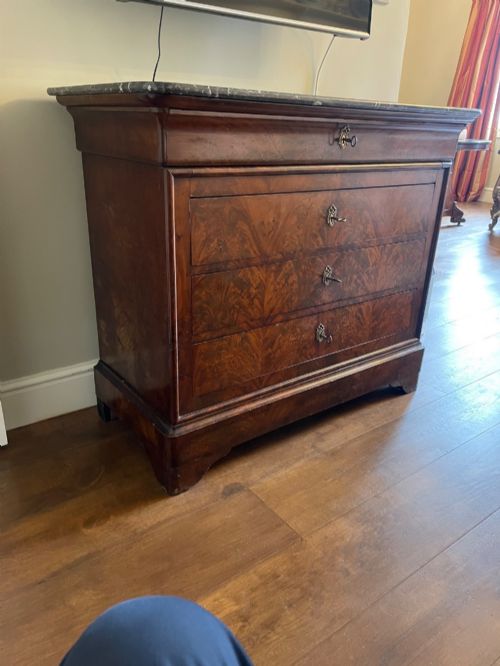
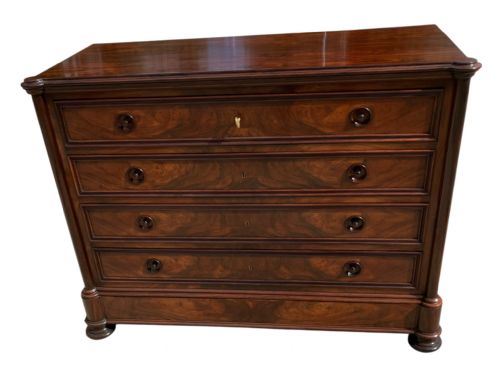
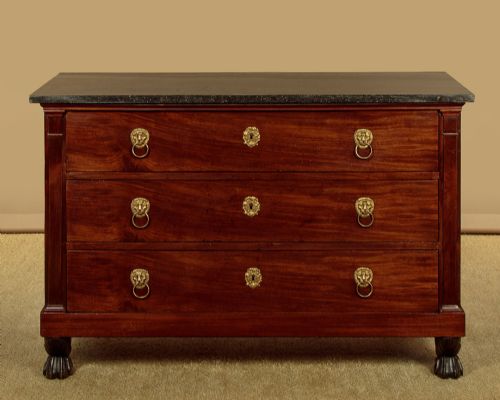
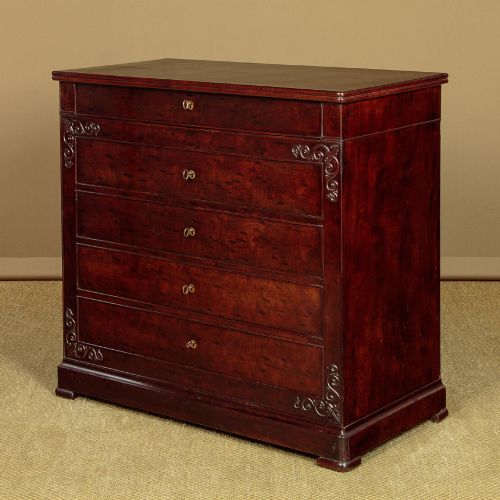


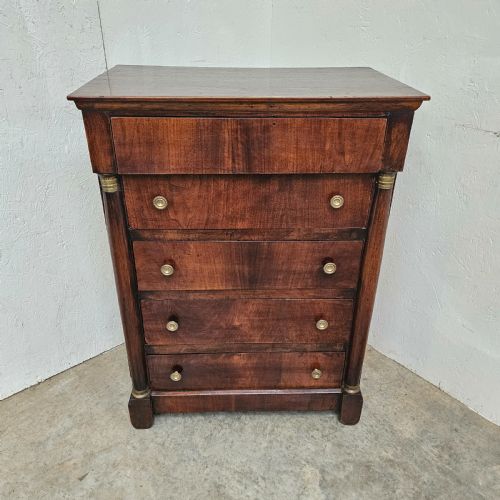


Dark Wood French Commode
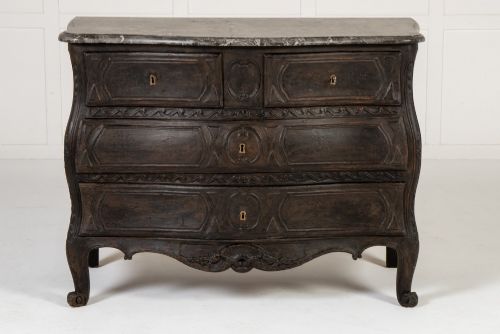
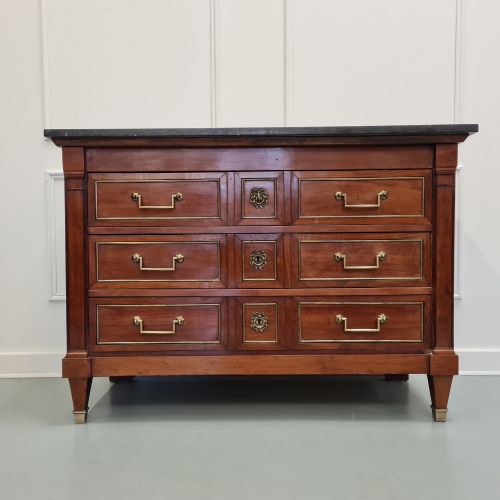
These dark wood french commode pieces offer heavy timbers and marble tops, bringing continental storage to any room.
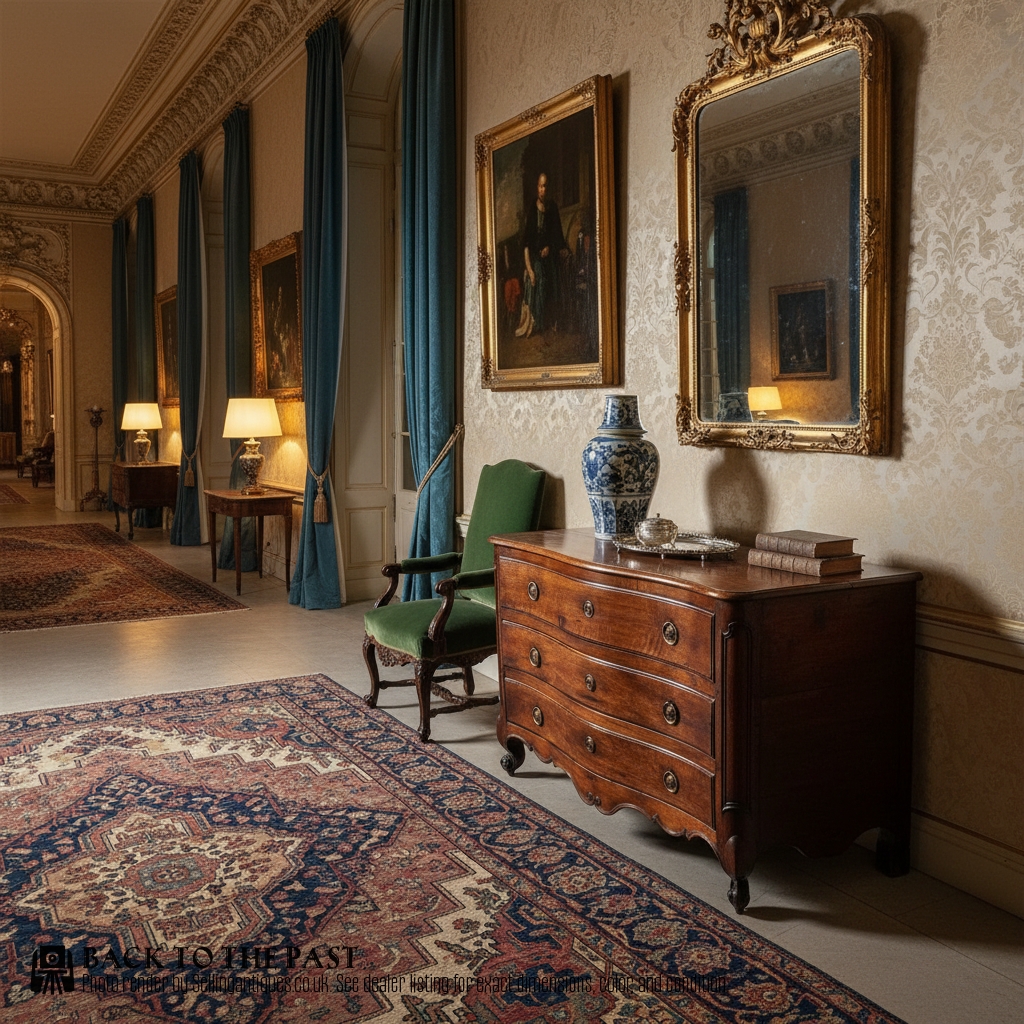
Dark Wood French Commode
A dark wood french commode is a substantial continental chest of drawers, often topped with marble and built for serious storage. Buyers searching this phrase will find a range of forms, from robust eighteenth-century serpentine designs to later nineteenth-century revival pieces.
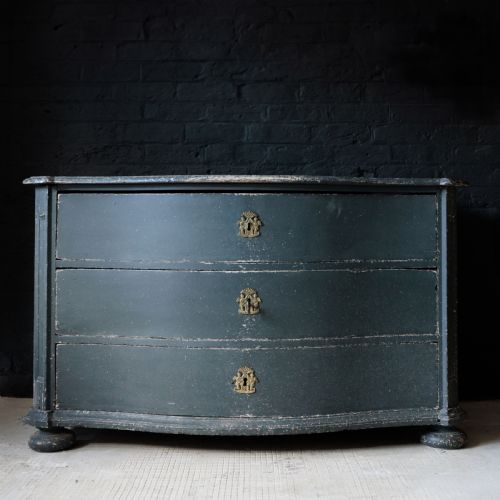
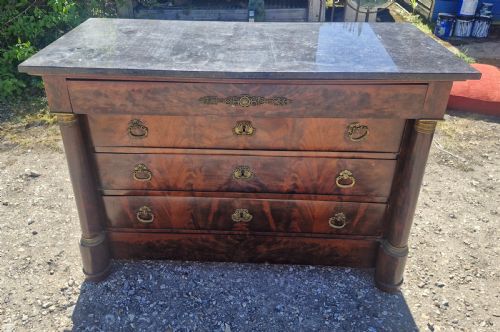
The selection on this page relies heavily on nineteenth-century examples alongside earlier eighteenth-century items and later twentieth-century painted variations. These chests appear primarily as mahogany, rosewood, or oak forms, frequently accompanied by brass or ormolu mounts.
Alongside standard chests of drawers, the offerings extend to side cabinets, display cabinets, and bedside tables. Styles stretch across French provincial, Empire, Louis Philippe, and various revival movements, showing how domestic storage evolved across the centuries.
How they were made
Construction relies on solid timbers like mahogany, rosewood, oak, and palisander, sometimes built over a secondary wood carcase. Surfaces are polished to a deep finish or occasionally painted, depending on the period and regional workshop traditions.
Heavy stone slabs, particularly marble and faux marble, form the upper surfaces of many pieces, resting directly on the wooden frame. Cast brass and ormolu mounts provide decorative accents around keyholes, drawer pulls, and feet.
Dark Wood French Commode Retail Price Guide 2026
Typical asking prices for dark wood french commode among the pieces listed under this phrase on Sellingantiques today, from the lower quarter to the upper quarter. They describe what is for sale here now, not the wider market.
Object types include chests of drawers, side cabinets, display cabinets, and bedside tables in styles ranging from Empire to provincial.
What varies in quality
The distinction between ordinary and superior pieces rests on the choice of timber and the precision of the cabinetwork. Fine examples utilise dense rosewood, mahogany, or figured veneers applied with care to serpentine or bombe carcases.
Hardware and mounts also signal standard; finely cast ormolu and substantial brass fittings elevate a commode far above those with simple stamped metal. The integration of thick marble slabs and the execution of dovetail joints further separate workshop output.
The Dark Wood French Commode Glossary
- Commode
- A low chest of drawers or cabinet originating in France during the seventeenth century. It functions primarily as a bedroom or salon storage piece.
- Serpentine
- A furniture front or top shaped with a curving contour, turning outward at the centre and inward at the ends or vice versa. This silhouette requires advanced woodworking skill.
- Ormolu
- Gilded bronze used for decorative mounts and furniture hardware. It adds bright metallic contrast to dark wooden surfaces.
- Bombe
- A swollen, convex shape used on the sides and fronts of furniture, particularly popular in eighteenth-century pieces. It creates a bold, rounded profile.
- Marquetry
- The art of applying pieces of veneer to a structure to form decorative patterns and pictures. Makers utilise various coloured woods to achieve tonal depth.
Dark Wood French Commode: Frequently Asked Questions
What is a french commode?
A french commode is a traditional chest of drawers designed in continental Europe, typically featuring decorative hardware and substantial timber construction.
These pieces served primarily as domestic storage for clothing and linens in bedrooms and salons.
How do I date a commode?
Dating relies on examining the timber species, construction methods, hardware style, and overall silhouette. Eighteenth-century pieces often display hand-cut dovetails and bombe shapes.
Later nineteenth-century examples frequently follow Louis revival styles or incorporate machine-sawn components alongside marble tops.
Where should I place a commode?
These chests work well in hallways, living rooms, and bedrooms where deep drawer storage is useful. Their decorative marble tops and polished wood surfaces allow them to function as display areas for lamps and ornaments.
Ensure the room has stable humidity to protect antique wood and veneer.
What are the common woods used?
Makers utilised dense hardwoods such as mahogany, rosewood, palisander, and oak for these cabinets. Some examples feature painted wood finishes rather than exposed grain.
Secondary woods were often used internally for drawer linings and carcase frames.