

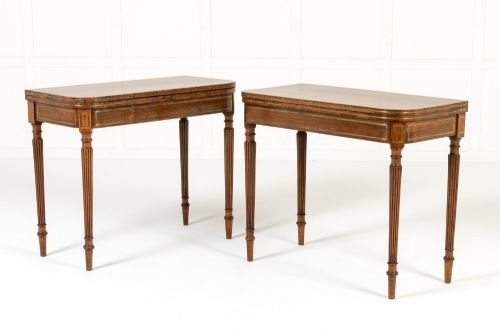
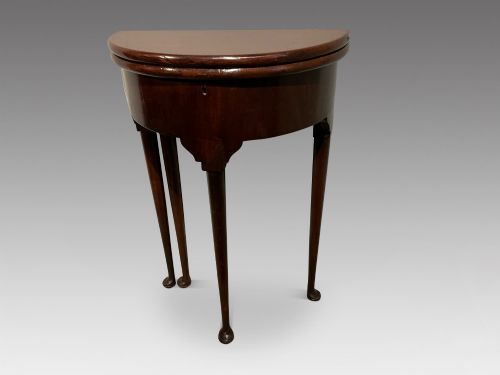
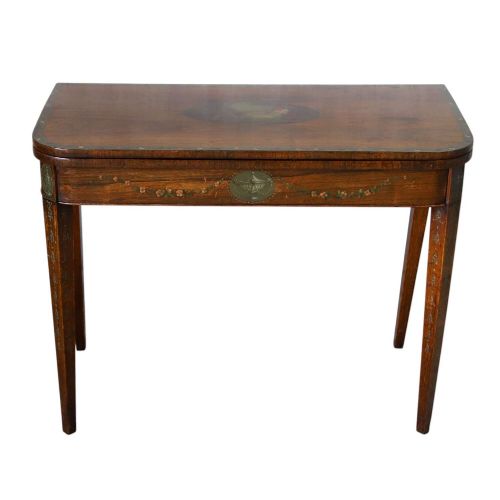
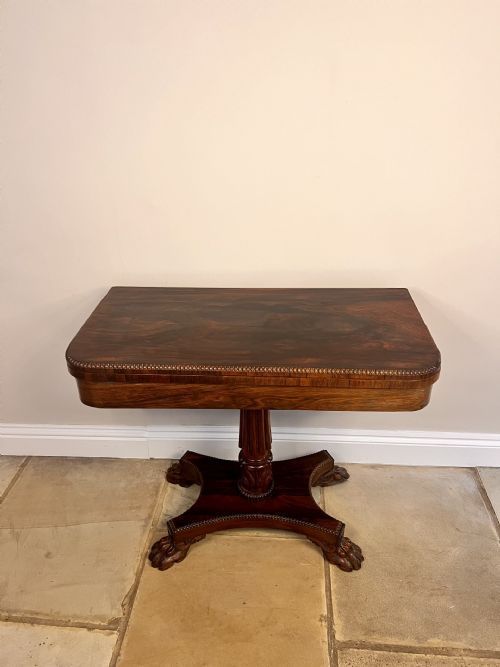
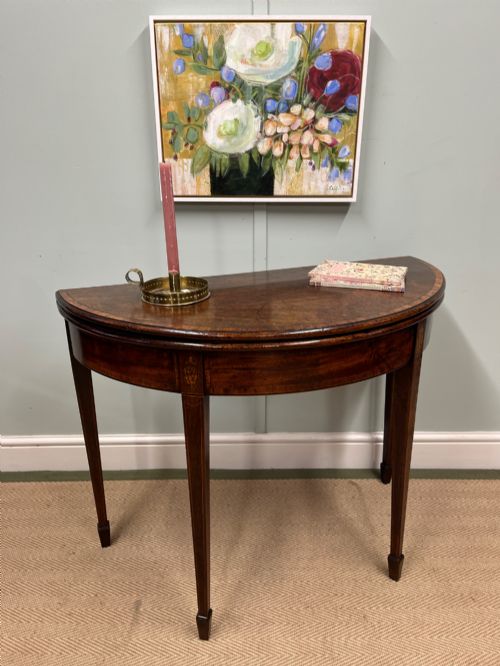
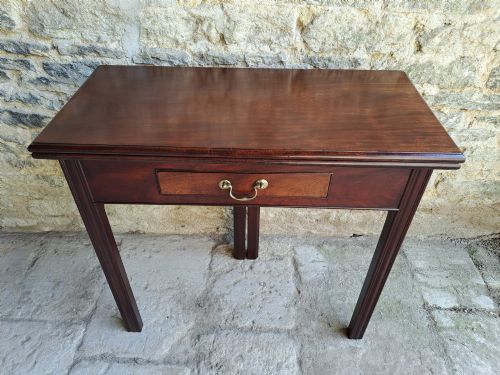
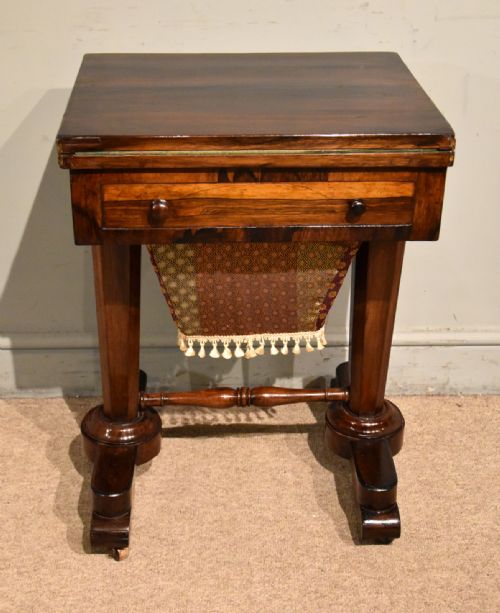


Dark Wood Foldover Table
A dark wood foldover table offers clever multi-purpose furniture that expands from a compact console into a surface for cards, tea or dining.
Dark Wood Foldover Table
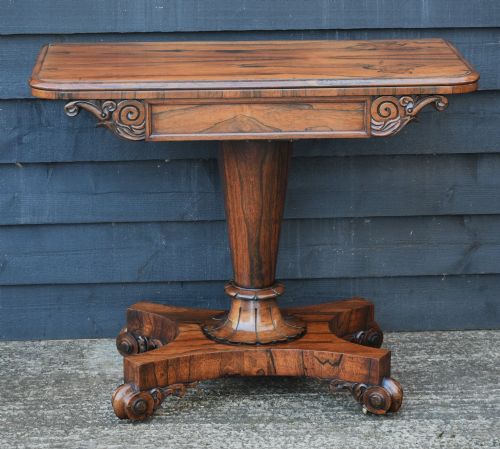
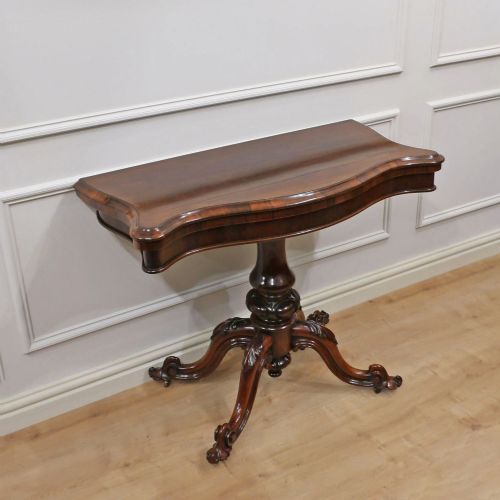
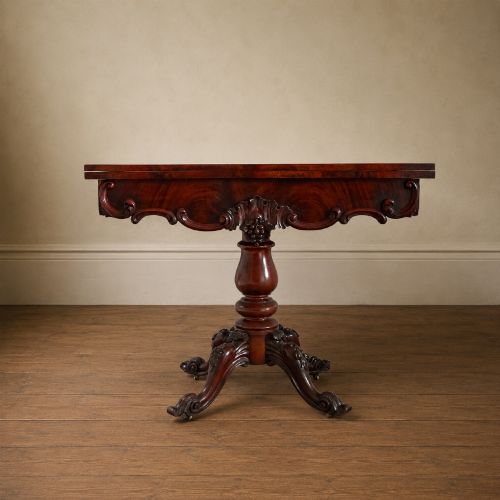
A dark wood foldover table serves as a versatile item designed to adapt its footprint to the room, functioning closed against a wall or open for activity. The pieces grouped under this dark wood foldover table search span several eras, predominantly featuring Georgian, Regency, William IV, and Victorian periods.
The primary forms found here include card tables, tea tables, and games tables, alongside occasional and console variants. Most examples utilise rich timbers such as mahogany, Cuban mahogany, and rosewood, often complemented by clever pivoting or hinged tops that reveal concealed storage wells or baize-lined playing surfaces.
Materials and construction
Cabinet makers utilised dense, durable timbers like mahogany and rosewood, frequently selecting figured grain patterns to create striking visual movement across the turnover top. Solid woods and fine veneers provided stability for the hinged mechanisms required to support the pivoting leaves.
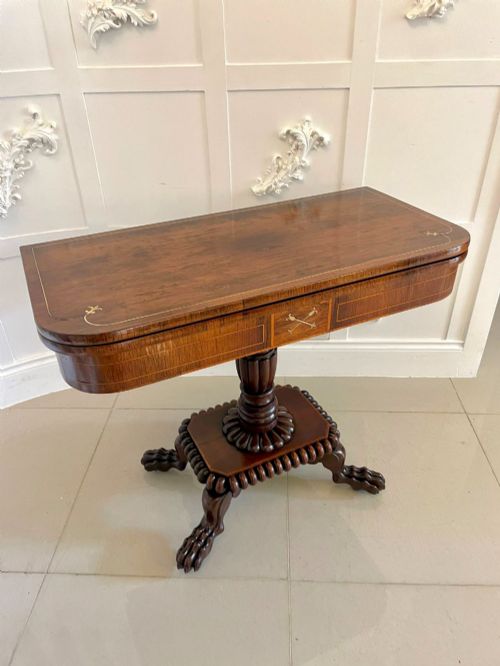
Decorative embellishments relied on precision craftsmanship, incorporating brass inlay, ormolu mounts, and delicate wood inlay alongside carved supports like lyre bases. These materials were shaped during the eighteenth and nineteenth centuries using traditional joinery to ensure the folding top remained level and secure.
Some card tables hide secret compartments beneath their rotating tops, perfect for losing your winnings from an evening of whist.
Distinguishing quality in older tables
The distinction between standard examples and superior pieces rests upon the selection of timber and the crispness of carved or inlaid details. Tables featuring highly figured Cuban mahogany or meticulously fitted brass inlay against rich rosewood demonstrate greater workshop investment.
Structural integrity of the folding mechanism and the proportion of the supporting pedestal or legs define the refinement of the piece. Master makers ensured that the pivoting leaf sat flush and true in both closed console and open table positions.
George Bullock
The Dark Wood Foldover Table Glossary
- Foldover table
- A multi-purpose piece featuring a hinged top that doubles in surface area when unfolded. This design allows the furniture to function as a narrow wall console when closed.
- Turnover top
- A table top constructed from two matching sections hinged together to rotate and fold flat. It typically conceals a well for storing playing pieces or stationery underneath.
- Card table
- A specialist surface designed for evening gaming, frequently lined with green baize or felt. These tables often incorporate clever folding leaves to save space during the day.
- Tea table
- A domestic surface created to hold tea service equipment during the eighteenth century. They frequently feature rectangular or serpentine tops supported on slender legs.
- Demilune table
- A half-moon shaped furniture piece designed to sit flush against a wall. When paired with a matching piece or fitted with a foldover leaf, it forms a full circular table.
Dark Wood Foldover Table: Frequently Asked Questions
How did people use a dark wood foldover table historically?
These tables sat neatly against a parlour or drawing room wall when closed, serving as a decorative console for ornaments or candles. When guests arrived, the hinged top flipped open to create a stable surface for card games, tea drinking, or writing.
The clever design allowed households to maximise living space without sacrificing utility. Owners could quickly clear away gaming equipment or tea services by folding the top back down and returning the table to the perimeter of the room.
What is the difference between a card table and a tea table?
Card tables typically feature an interior lined with baize, felt, or leather to deaden the sound of dice and prevent playing cards from slipping. They often include small corner indents for holding wooden or metal gaming counters.
Tea tables focus on a polished wooden surface designed to display ceramic tea services safely. While both share the foldover mechanism, tea tables generally lack the specialised gaming wells found beneath card table tops.
How can I tell a Regency table from a Georgian one?
Georgian pieces, particularly those from the eighteenth century, tend to showcase sober mahogany construction with restrained carving like ball and claw or bracket feet. The lines are often clean, architectural, and grounded in classical proportions.
Regency examples from the early nineteenth century introduce exotic rosewood timbers, bold brass inlay, and distinctive pedestal supports such as lyres or polished columns. These later pieces often reflect a theatrical revival of Greek and Roman design motifs.
Where should I place a foldover table in a modern home?
A folded table works exceptionally well in an entrance hall, narrow landing, or behind a sofa as a slim console surface. Placing it against a wall displays the figured mahogany or rosewood grain of the top leaf without taking up excessive floor space.
When hosting guests, you can pull the table into the centre of the room and unfold the leaf to create an impromptu dining or desk space. Ensure the piece sits on level flooring so the hinged joint remains supported when opened.