

Dark Wood Entry Table
A dark wood entry table grounds a hallway with rich timber and practical surface space.
Dark Wood Entry Table
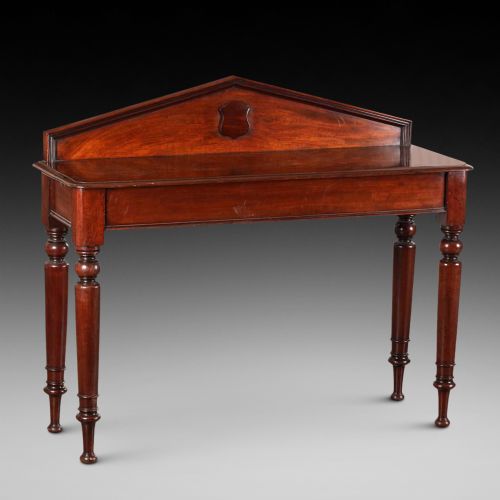
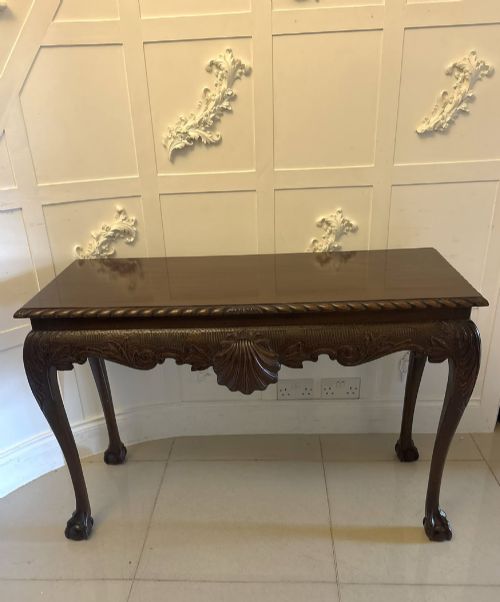
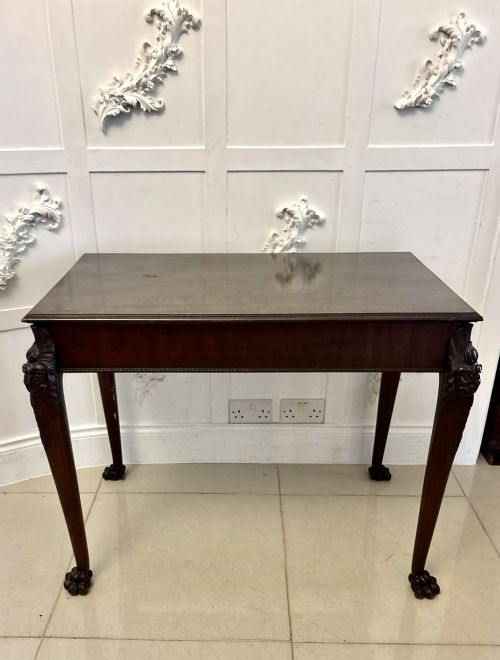
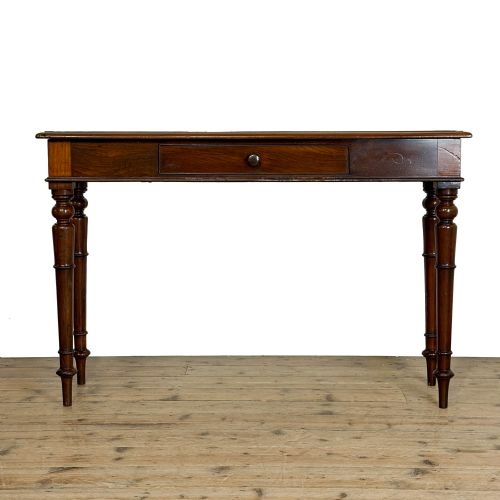
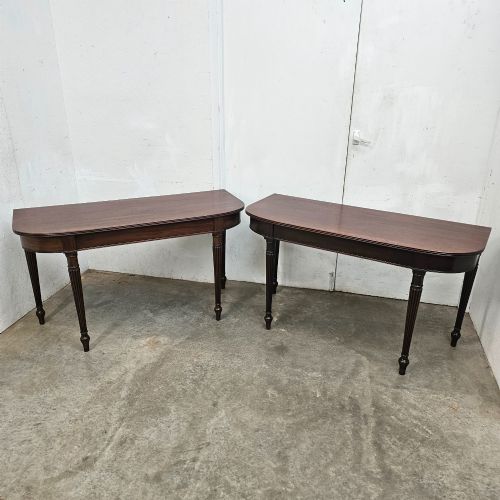
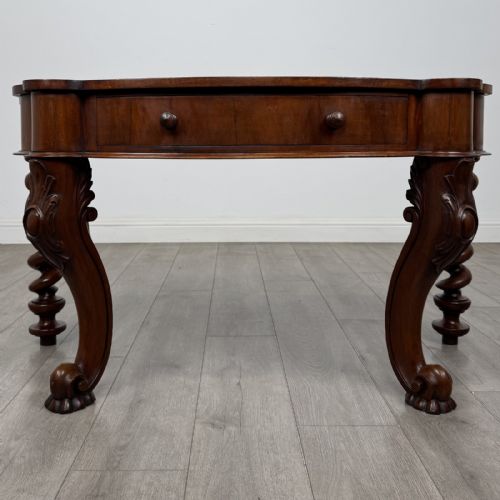
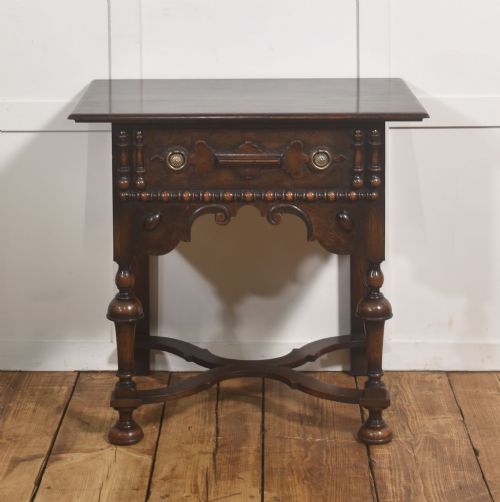
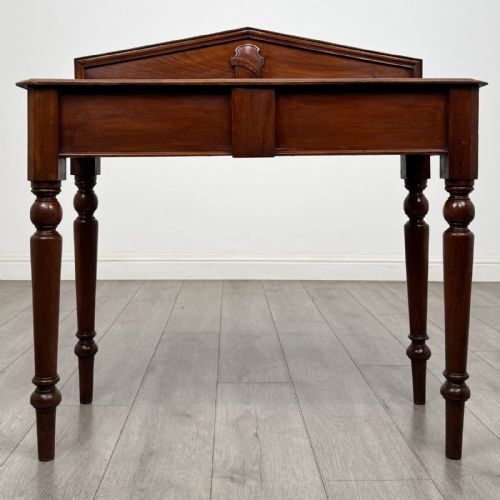
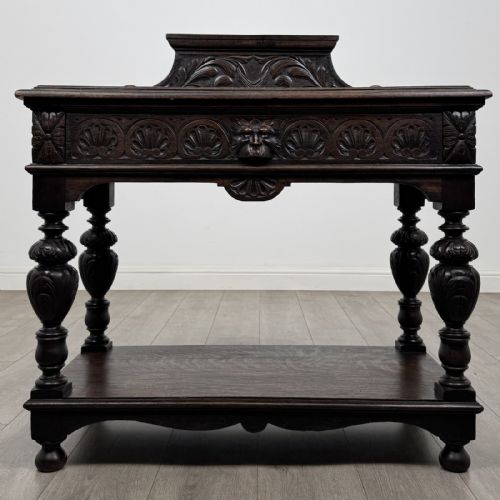
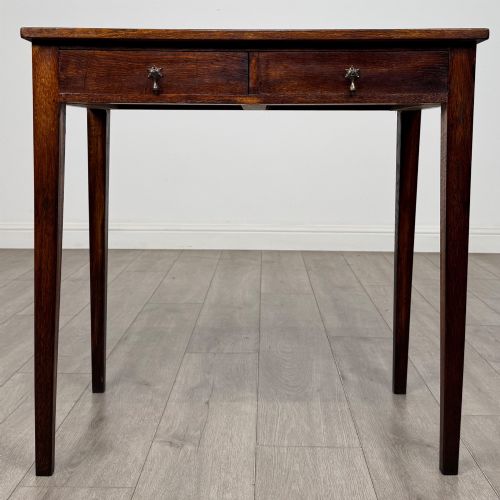
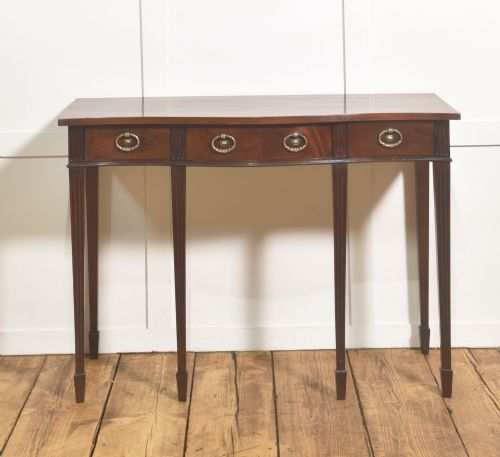
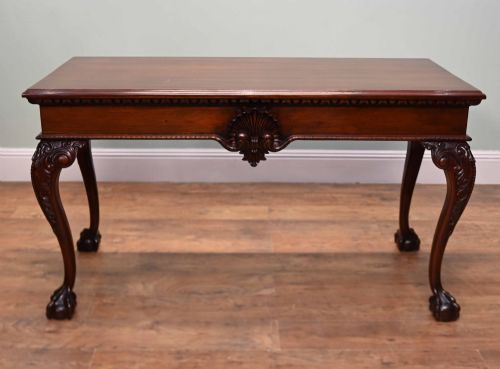
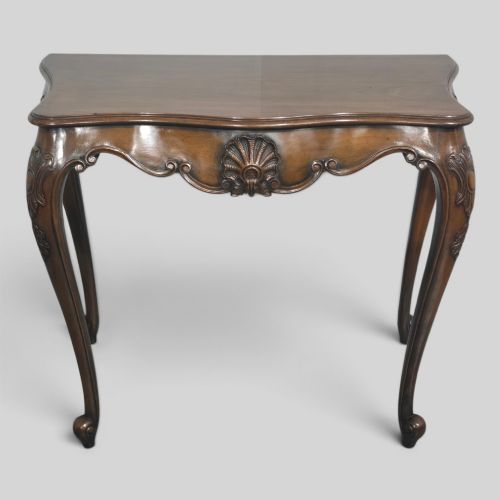
A dark wood entry table serves as a functional and decorative focal point for a hallway or reception space. These pieces arrive in various forms across the listings, primarily as console tables, side tables, hall tables, and pier tables. They emerge from periods spanning the Georgian era through the Victorian period, Edwardian years, and into the twentieth century.
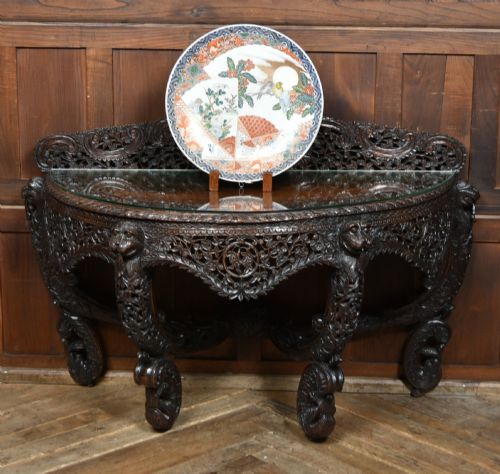
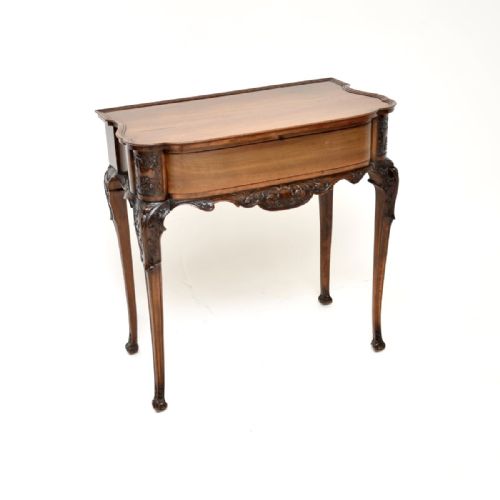
The most common version met on this page is the nineteenth-century mahogany console table, often featuring carved detailing or a serpentine front. Pieces also appear in oak, walnut, rosewood, and padauk, drawing on styles such as Regency, Gothic Revival, and Anglo-Indian design. Formats range from narrow side tables to large marble-topped console tables with mirror backs.
How they were made
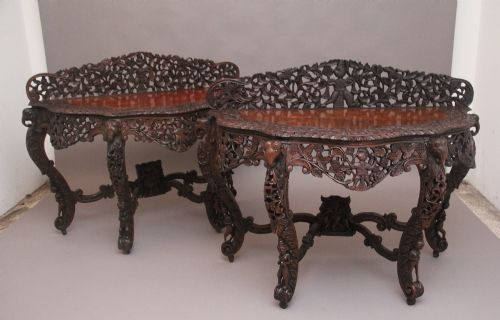
Cabinetmakers constructed these tables using dense timbers such as mahogany, oak, walnut, and rosewood, frequently incorporating decorative brass hardware. Many examples display elaborate hand-carving, particularly within Victorian and Anglo-Indian pieces featuring intricate floral or architectural motifs. Turning techniques produce structural elements like triple barley twist legs, while specialist joinery shapes serpentine fronts and demi-lune profiles.
Surface treatments unite timber construction with contrasting materials, notably inset white or grey marble slabs on console and pier tables. Glass elements occasionally appear in supporting mirror backs, while pitch pine and padauk provide alternative structural foundations. Construction methods reflect the prevailing cabinetmaking standards of the Georgian, Regency, and Victorian eras.
Dark Wood Entry Table Retail Price Guide 2026
Typical asking prices for dark wood entry table among the pieces listed under this phrase on Sellingantiques today, from the lower quarter to the upper quarter. They describe what is for sale here now, not the wider market.
Object forms span console tables, hall benches, pier tables, and side tables fitted with marble, glass, and brass.
What varies in quality
The calibre of a dark wood entry table rests primarily on the choice of timber and the ambition of its carving. Figured mahogany, rich rosewood, and dense walnut command attention through deep grain patterns that simpler hardwoods lack. Hand-carved mouldings executed with crisp depth distinguish superior workshops from mechanical production.
Integration of secondary materials dictates another tier of distinction. Fitted marble tops and mirrored backs require precise joinery to support heavy stone without distorting the timber frame. Proportions also govern quality, as narrow, shallow profiles designed for hallways demand careful structural balance.
Gillows·Druce and Co
The Dark Wood Entry Table Glossary
- Console table
- A table designed to stand against a wall, frequently secured to it with brackets or resting on front legs. These tables often feature decorative fronts and marble surfaces.
- Serpentine front
- A furniture front curved in a wave shape, convex in the centre and concave at the ends. This contour requires skilled carpentry to shape timber accurately.
- Demi-lune
- A half-moon shape used for table tops and frames. It allows the furniture to sit flat against a hallway wall while projecting minimally.
- Pier table
- A low table designed to stand against the wall space between two windows. They frequently incorporate marble tops and matching mirror backs.
Dark Wood Entry Table: Frequently Asked Questions
What is a dark wood entry table used for?
These tables provide a stable surface in hallways and reception spaces for holding everyday items like keys or correspondence. They also display decorative objects such as lamps or vases against a wall.
Their narrow profile ensures they fit into transitional spaces without obstructing movement through the doorway.
How do I identify a Victorian hall table?
Victorian examples often feature darker timbers like mahogany and rosewood combined with substantial carving or barley twist legs. They frequently date from the mid to late nineteenth century and may include marble tops.
Look for the heavier proportions and revival styles typical of nineteenth-century British cabinetmaking.
Where should I place a console table?
A console table belongs against a flat wall in an entrance hall, corridor, or reception room. Because many versions are shallow or semi-circular, they occupy minimal floor space while drawing the eye.
Pairing them with a wall mirror or hall stand creates a cohesive arrangement near the front door.
How do I care for antique timber furniture?
Protect the wood by keeping the table away from direct heat sources and strong sunlight, which can dry out timber and fade polish. Dust regularly with a soft, dry cloth.
Apply traditional wax polish sparingly to maintain the lustre of the mahogany, oak, or walnut grain.