




Gothic Entry Table
These gothic entry table pieces bring architectural presence to a hallway, offering sturdy surfaces shaped by nineteenth-century revival craftsmanship.
Gothic Entry Table
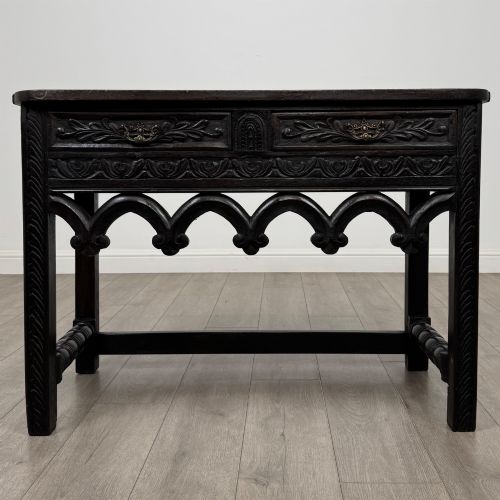
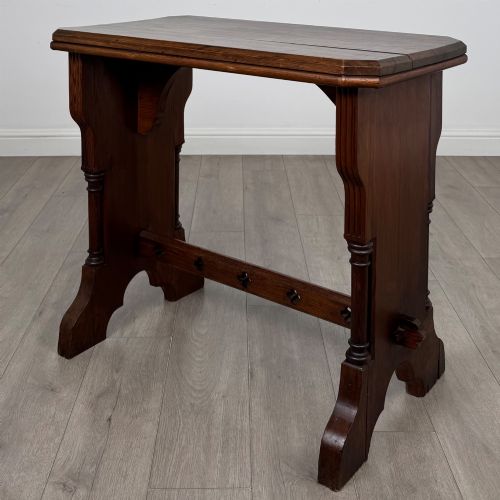
A gothic entry table selection gathers nineteenth-century console tables, side tables, hall tables, and centre tables alongside related benches and hall stands. These pieces belong primarily to the Victorian period, with specific dates spanning from 1870 to 1900.
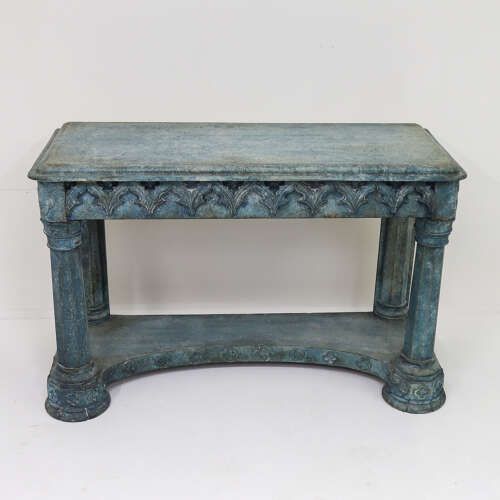
Buyers meet forms shaped by Gothic Revival, Jacobean Revival, and Victorian Renaissance Revival aesthetics. The assortment ranges from narrow freestanding pitch pine tables to imposing painted consoles and carved oak centre tables.
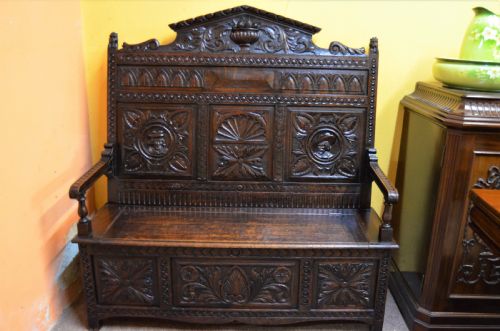
Hall tables and console tables dominate the functional forms designed for entrance spaces. Alongside these stand carved oak monks benches, hall seats, and hall stands that serve similar utilitarian roles.
How they were made
Makers built these pieces primarily using oak and pitch pine, often employing timber or painted wood for specific decorative finishes. Selected examples incorporate brass, fabric, and glass elements.
Construction relies heavily on traditional carpentry, demonstrated by carved detailing found across oak hall tables and monks benches. Surface treatments vary between honey oak finishes, painted wood, and natural timber grains.
Gothic Entry Table Retail Price Guide 2026
Typical asking prices for gothic entry table among the pieces listed under this phrase on Sellingantiques today, from the lower quarter to the upper quarter. They describe what is for sale here now, not the wider market.
Listings feature items exclusively from the Victorian period, spanning the decades between 1870 and 1900.
What varies in quality
Quality rests in the depth and sharpness of the carving across the timber framework. Deeper relief work on oak surfaces separates standard items from superior pieces.
Material selection dictates the visual weight of the furniture, distinguishing honey oak and painted consoles from plain pitch pine variants. The ambition of the revival design, whether strict Gothic or mixed Renaissance, guides the character of each piece.
The Gothic Entry Table Glossary
- Gothic Revival
- An architectural and decorative style drawing inspiration from medieval design. It shapes the pointed arches and structural motifs seen on these tables.
- Console Table
- A wall-mounted or freestanding table designed for placement in a hall or entryway. These forms often feature narrow proportions to suit circulation spaces.
- Monks Bench
- A dual-purpose seating furniture piece with a folding back that converts into a table. Victorian examples frequently utilise carved oak.
- Pitch Pine
- A durable softwood utilised during the nineteenth century for furniture construction. It provides a distinct grain pattern visible on side tables.
Gothic Entry Table: Frequently Asked Questions
Where should I place a hall table?
These tables suit narrow entranceways, corridors, and reception areas where surface space is required without blocking passage. Their modest depths allow them to sit flat against hallway walls.
Parks of this form often serve as a drop point for correspondence and keys while establishing a strong architectural tone upon entering the home.
How do I identify a Victorian gothic table?
Look for structural references to medieval architecture, such as pointed arches, quatrefoils, and heavy turned or chamfered legs. These details appear frequently on pieces dated between 1870 and 1900.
The use of dark or honey-finished oak and pitch pine further marks the material preferences of the Victorian revival period.
What is the difference between a console and a side table?
Console tables historically anchor against a wall, sometimes featuring two front legs with rear brackets, though nineteenth-century versions often stand freely. Side tables are strictly freestanding pieces designed to be accessed from multiple edges.
Both forms provide practical surfaces in entrance halls, though consoles tend towards more decorative architectural facades.
How do I care for nineteenth-century oak furniture?
Maintain the timber by dusting regularly with a dry cloth and avoiding excessive moisture. Keep revival pieces away from direct heat sources to prevent timber splitting.
Occasional application of appropriate wax feeds the oak and preserves the natural finish of the wood over time.