




Dark Wood Entry Chair
A dark wood entry chair meets visitors with stern dignity, offering a solid seat carved from mahogany, oak or walnut.
Dark Wood Entry Chair
A dark wood entry chair serves as formal hall seating, spanning hall chairs, benches, settles and hall benches. These pieces originate across the eighteenth and nineteenth centuries, including Georgian, Regency, Victorian and William IV periods.
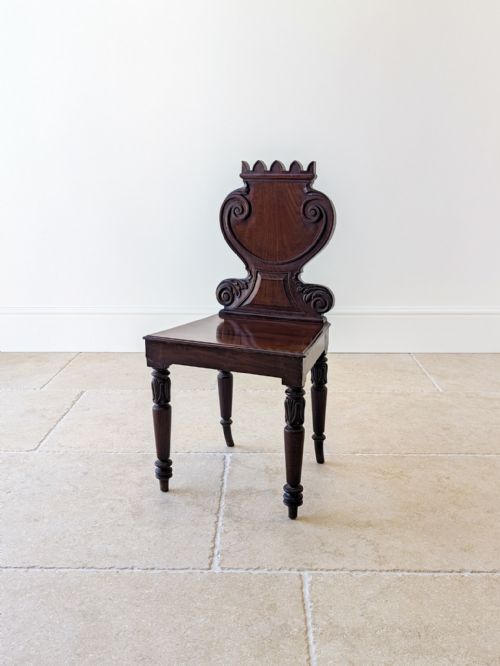
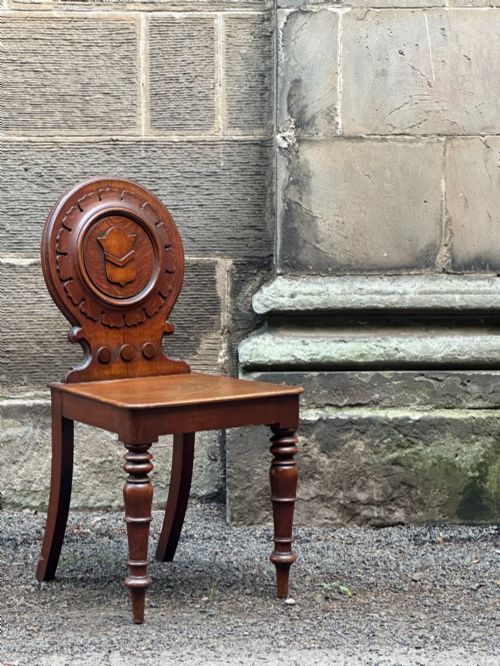
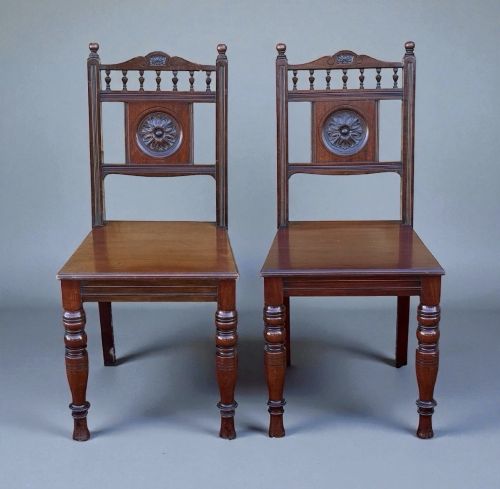
Mahogany and oak dominate the selection, shaped into forms from simple carved wooden seats to sculptural shield backs and brass-inlaid Regency designs. Buyers most frequently encounter nineteenth-century mahogany hall chairs bearing carved details or panelled backs.
Origins stretch from British workshops to Irish, Scottish, French and Italian makers, reflecting regional tastes in heavy dark timbers. Their primary function was utility in grand entrances, law chambers and reception areas rather than prolonged comfort.
How they were made
Cabinetmakers utilised dense timbers such as mahogany, oak and walnut, selecting them for structural strength and deep natural grain. These woods were turned, carved by hand and occasionally accented with brass inlay or intricate wood inlay.
Construction relied on solid timber joints, with seats often carved from a single thick plank of wood to endure heavy hallway traffic. Carvers applied relief work, including shield backs, shell motifs and Prince of Wales feathers directly into the solid wood.
Listings feature pieces spanning the Georgian, Regency, William IV and Victorian periods, constructed primarily in mahogany and oak.
What varies in quality
The depth and crispness of the hand carving separate standard production from superior pieces, particularly on shield backs and crest rails. Sharp, deeply undercut relief work indicates skilled workmanship rather than mechanical repetition.
The choice of timber grain and the selection of matched sets elevate certain examples above single chairs. Figured mahogany and well-figured oak display superior natural patterning that enhances the formal appearance of the hallway.
Gillows
The Dark Wood Entry Chair Glossary
- Hall Chair
- A rigid wooden seat placed in an entrance hall for temporary use rather than lounging. These pieces usually feature solid wood seats and decorative carved backs displaying family crests or monograms.
- Shield Back
- A chair back shaped in the outline of a heraldic shield, popular during the Georgian period. This design allowed carvers to incorporate central cartouches or Prince of Wales feathers.
- Sgabello
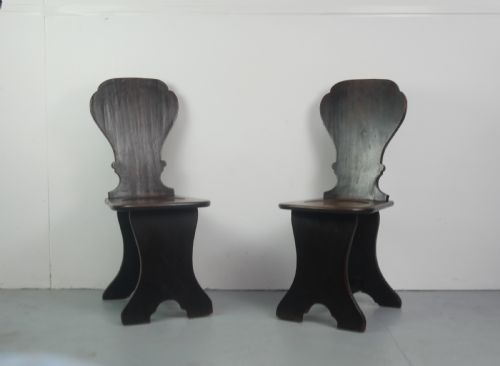
- A Renaissance style of wooden chair featuring a box-like base or trestle supports instead of four legs. Originating in Italy, these early forms present striking sculptural profiles.
- Settle
- A wooden bench with high panelled backs, solid arms and often a storage box beneath the seat. They stood in draughty halls to block cold air from doorways.
- Regency
- A British design period spanning the early nineteenth century defined by classical restraint and archaeological influence. Pieces from this era frequently incorporate brass inlay and sculptural symmetry.
Dark Wood Entry Chair: Frequently Asked Questions
What is a dark wood entry chair?
A dark wood entry chair is a rigid wooden seat designed for a hallway, reception room or landing. These pieces are typically constructed from mahogany, oak or walnut with solid wooden seats and carved backs.
They were originally placed in grand entrances for visitors or staff to wait upon. Their compact, upright forms ensure they occupy minimal floor space while making a formal visual statement.
Where were hall chairs placed?
Hall chairs stood along the walls of grand entrance halls, corridors, stair landings and law chambers. They acted as practical furniture for guests removing outer garments or waiting for admittance.
Because they were meant for brief use, upholstery was generally omitted in favour of carved wooden boards. This kept the furniture hygienic and resilient against heavy foot traffic and changing weather.
How do I date a hall chair?
Dating relies on examining the timber species, construction methods and stylistic motifs relative to known design periods. Georgian and Regency pieces show classical proportions and fine mahogany grain, while Victorian examples often feature heavier carved decoration.
Tool marks on the underside of the seat and the method of joining the legs to the frame provide further clues. Comparing the carved crest to documented patterns helps narrow down the decade of manufacture.
Are hall chairs comfortable?
Hall chairs are exceptionally firm because they were constructed entirely from solid wood without padding or upholstery. Their upright backs and rigid seats were engineered for posture rather than relaxation.
Living with one today means treating it as an accent piece or occasional seat. Many owners utilise them in pairs flanking a console table or beneath a hallway mirror.