
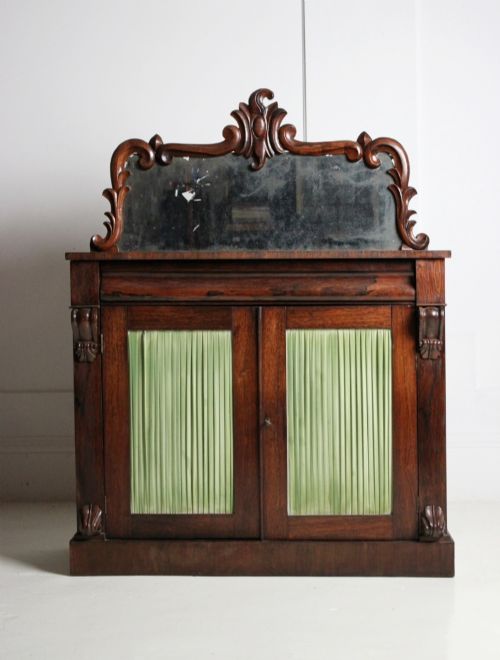
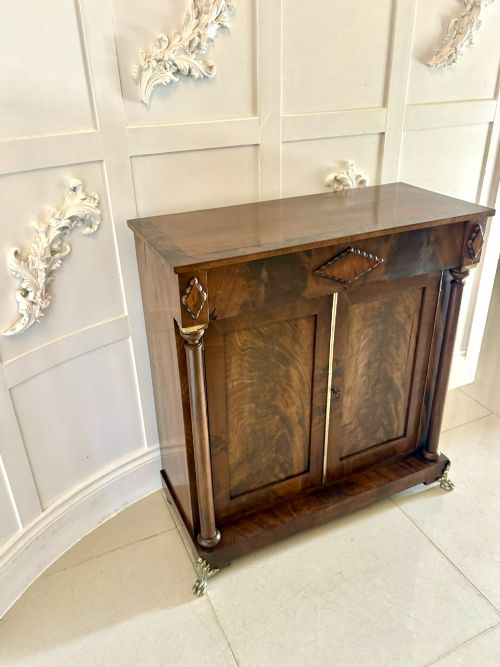
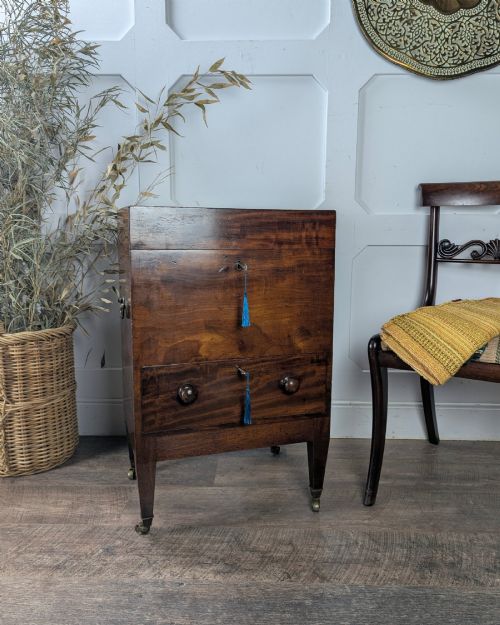
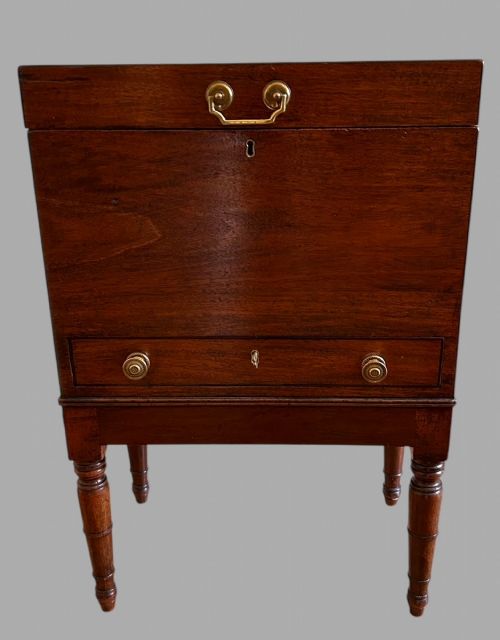
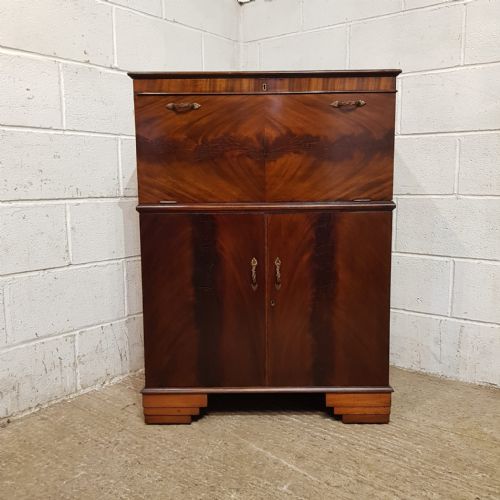
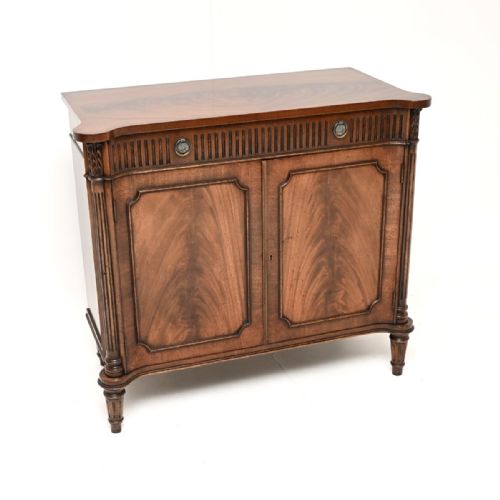
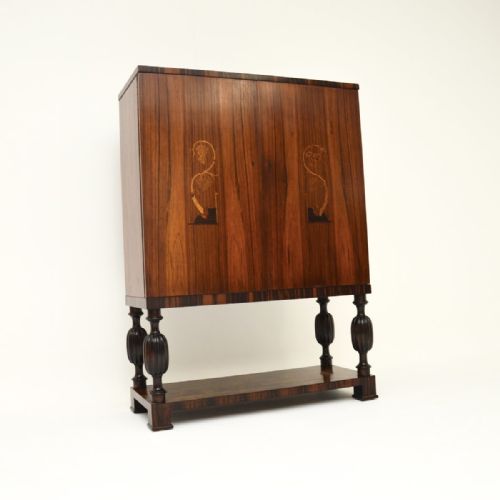
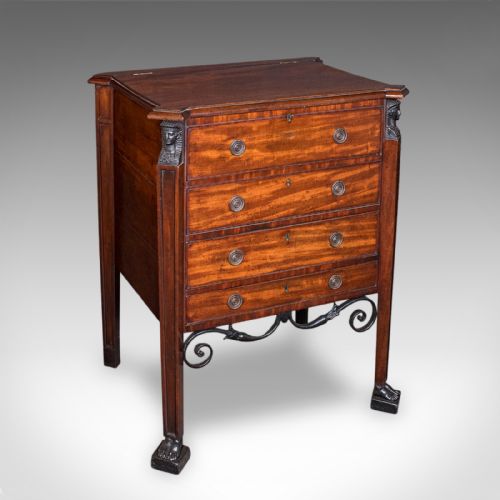
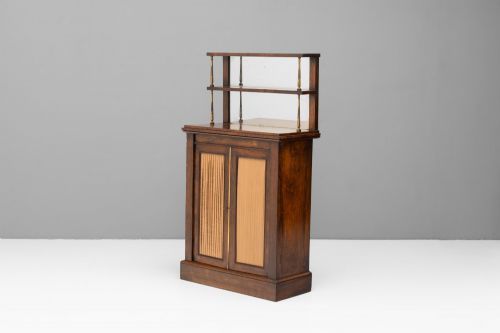
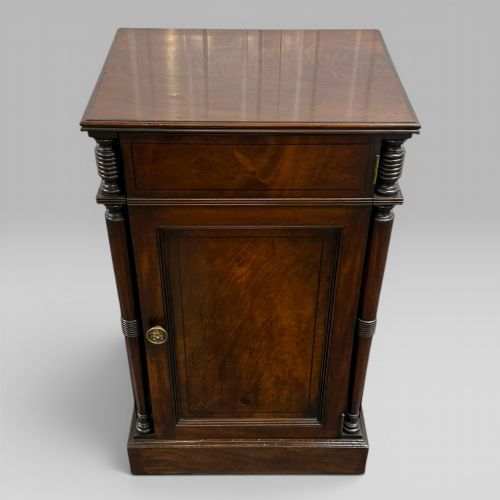
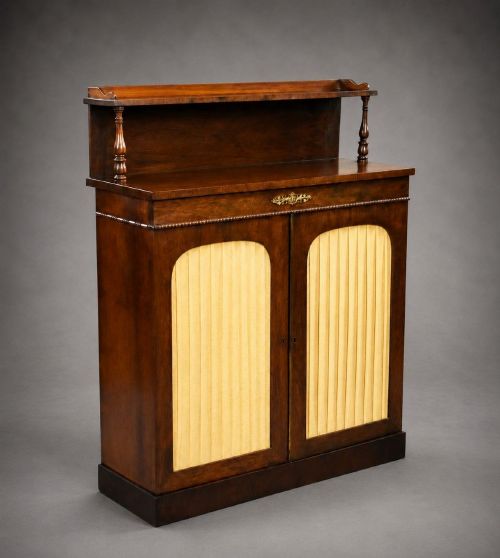
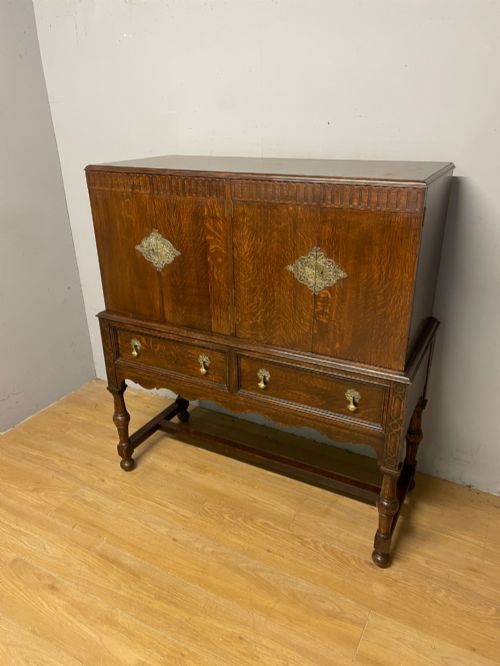


Dark Wood Drinks Cabinet
A dark wood drinks cabinet brings serious presence to a room, offering clever storage for bottles and glassware with unmistakable period character.
Dark Wood Drinks Cabinet
When you search for a dark wood drinks cabinet, you encounter a varied selection of antique and vintage forms designed for storing and serving alcohol. These range from formal Georgian and Regency cellarettes and wine coolers to Victorian chiffoniers and cocktail cabinets from the 1920s and 1930s.
The pieces on this page lean heavily towards mahogany, rosewood, and oak, reflecting the traditional preferences of cabinet makers across the eighteenth, nineteenth, and early twentieth centuries. Side cabinets, cocktail chests, and metamorphic designs appear frequently alongside dedicated wine coolers.
Buyers will find that Victorian and Georgian examples dominate the selection, bringing substantial timber forms and period detailing into modern interiors. Art Deco and later vintage pieces also feature, offering specialised compartments for entertaining.
Materials and construction methods
Construction relies upon solid timbers and decorative veneers such as flame mahogany, figured mahogany, and rosewood, often mounted on sturdy oak or walnut carcases. Brass hardware, including handles, hinges, and campaign mounts, provides functional contrast to the dark polished surfaces.
Cabinet makers employed traditional joinery techniques, cabinet doors, and occasional glass glazing to protect contents while displaying them. Carved details, inlay work, and polished finishes highlight the natural grain of the woods used throughout these centuries.
Several cabinets conceal surprising metamorphic actions, transforming ordinary tables into fully equipped private cocktail bars with a single hidden pull.
Assessing quality and craftsmanship
Quality in these pieces is dictated by the selection of timber veneers, such as richly figured flame mahogany or rosewood, and the crispness of any applied carving or inlay. Superior examples display seamless joins, balanced proportions, and well-executed internal fittings designed for bottle and glass storage.
The distinction between standard utility items and exceptional pieces rests in the integration of specialised mechanisms, such as metamorphic actions or fitted interiors, alongside the original condition of the polished wood surface.
Gillows·Holland and Sons·Reno Wahl Iversen·Dyrlund
The Dark Wood Drinks Cabinet Glossary
- Cellarette
- A lockable container or cabinet designed to hold bottles of wine and spirits, often fitted with internal partitions. These portable or freestanding pieces were essential dining room furnishings in the Georgian and Regency periods.
- Chiffonier
- A low sideboard or cabinet featuring shelves and enclosed cupboards, frequently used in nineteenth-century interiors. They evolved from simpler sideboards to become staple display and storage units in rosewood and mahogany.
- Metamorphic
- Describing furniture that transforms from one form into another, such as a table converting into a bar or drinks cabinet. These clever designs utilised hidden hinges and sliding sections popular in the early twentieth century.
- Demi Lune
- A half-moon shape used for the profile of small side cabinets and console tables. This silhouette allowed cabinets to sit flush against a wall while offering surface space.
- Veneer
- A thin layer of highly figured wood, such as flame mahogany or rosewood, applied over a stable secondary timber base. This technique allowed cabinet makers to showcase dramatic grain patterns without using solid scarce woods throughout.
Dark Wood Drinks Cabinet: Frequently Asked Questions
What is a cellarette?
A cellarette is a specialised furniture piece built to store bottles securely, often featuring internal dividers and lining. They were kept near the dining table to allow hosts to serve wine without fetching it from the cellar.
Over time, these functional containers evolved into decorative side pieces and cabinets, incorporating rich mahogany and rosewood finishes that matched the principal furniture of the room.
How do I style a cocktail cabinet?
A vintage cocktail cabinet serves as a focal point in a living room or dining space, combining enclosed bottle storage with display surfaces for glassware. Positioning the cabinet against a neutral wall allows the dark wood grain to stand out.
Keep the serving surface clear or styled with period bar accessories to maintain the functional aesthetic intended by the original designers of the 1920s and 1930s.
Are these cabinets suitable for modern bottles?
Most antique drinks cabinets and wine coolers accommodate standard bottle sizes within their fitted interiors, though very tall or wide modern bottles may require careful placement. Georgian and Victorian pieces often feature dedicated compartments designed for older bottle dimensions.
Reviewing the internal configuration helps ensure the cabinet meets your specific storage requirements for modern glassware and spirits.
How do I tell Victorian from Georgian pieces?
Georgian cabinets from the eighteenth and early nineteenth centuries typically display restrained classical proportions, understated bracket feet, and solid mahogany or veneer construction. The decorative focus remains on fine timber grain and subtle brass fixtures.
Victorian pieces from the mid to late nineteenth century often introduce heavier carving, richer rosewood finishes, glazed doors, and more exuberant revival styles influenced by Gothic or Renaissance tastes.