
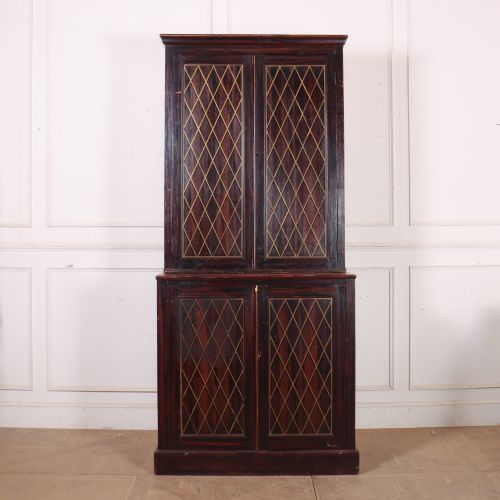
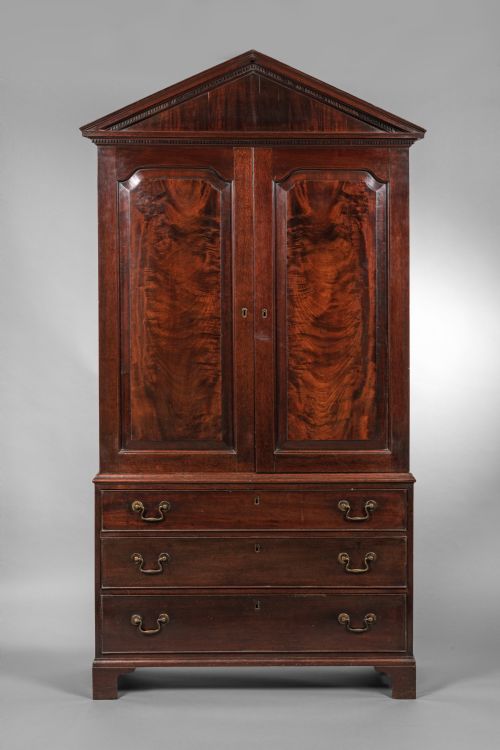

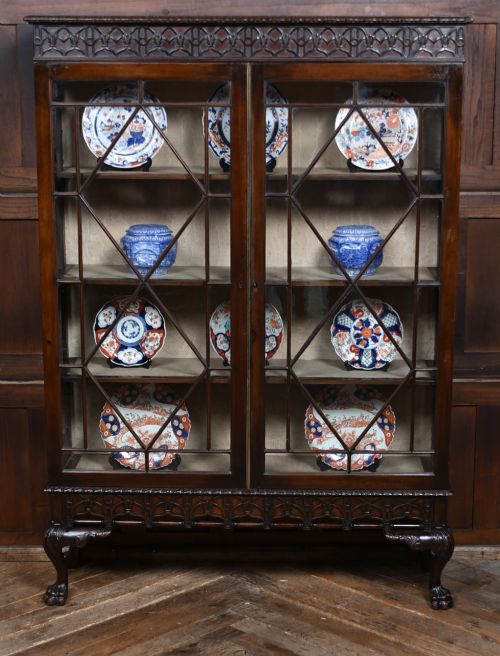
Dark Wood Double Cupboard
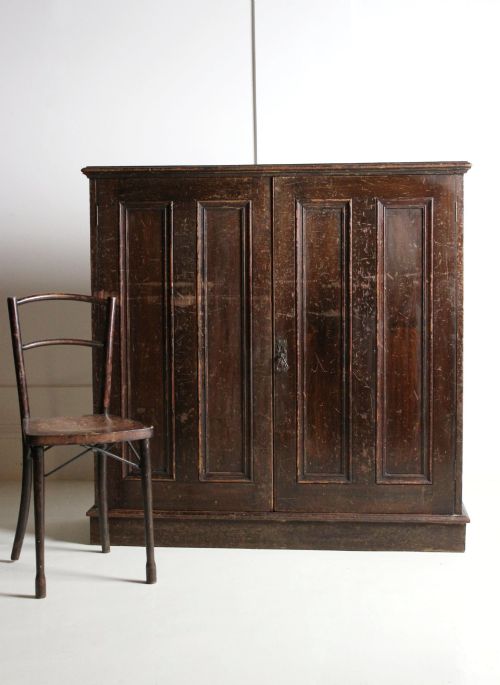
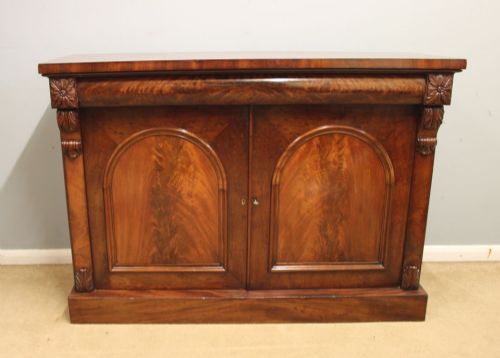
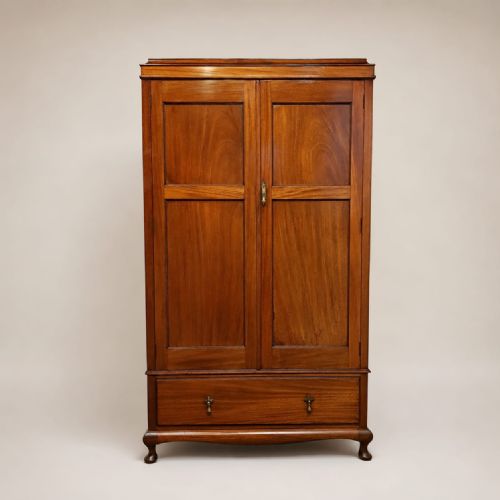
A dark wood double cupboard brings generous enclosed storage to a room through rich mahogany, oak, or rosewood surfaces.
Dark Wood Double Cupboard
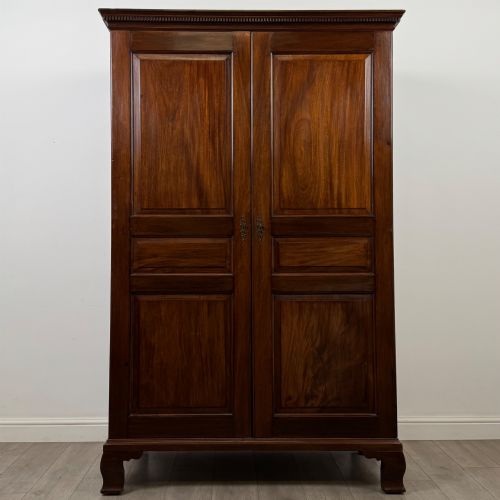
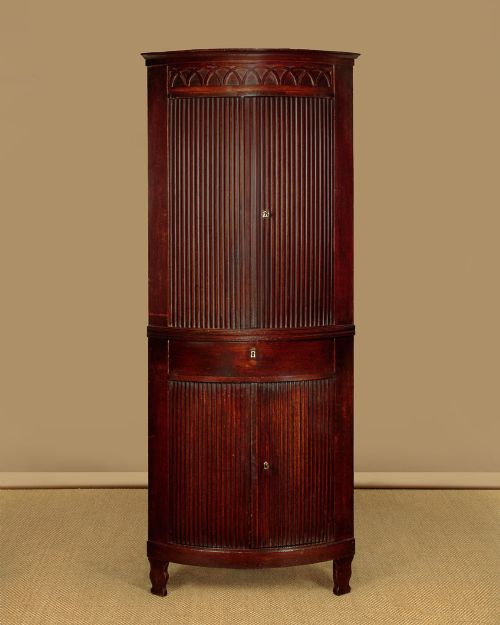
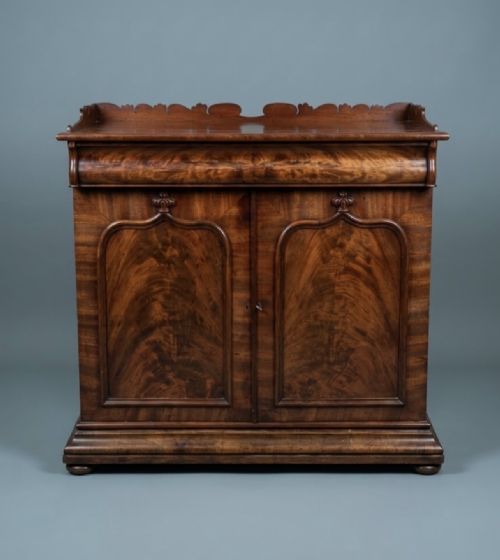
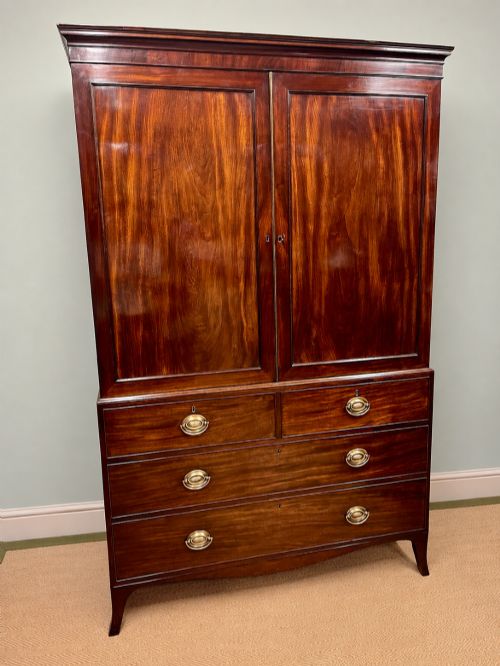
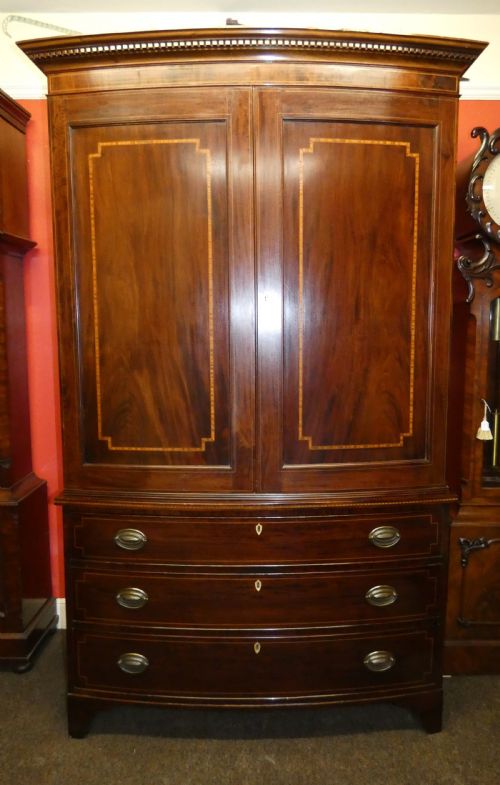
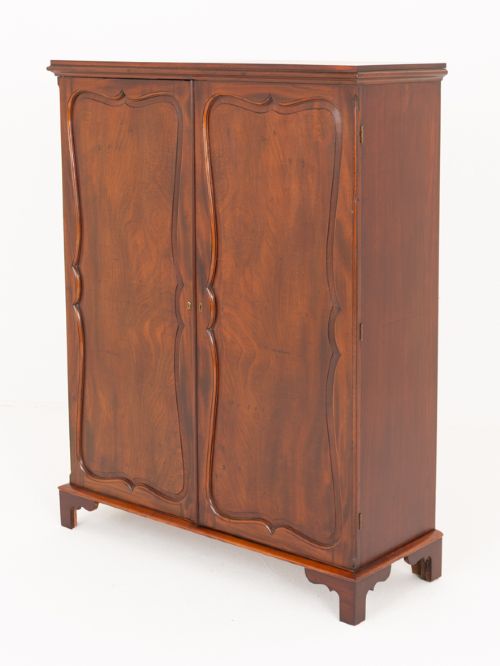
A dark wood double cupboard is a substantial storage piece built across the eighteenth, nineteenth, and early twentieth centuries in forms such as linen presses, wardrobes, side cabinets, and corner units. These pieces provide two doors opening to interior shelving, hanging space, or press slides, designed to anchor a living room, hall, or bedroom.
The versions most frequently met on this page are mahogany and oak pieces dating from the Georgian and Victorian eras, often featuring panelled double doors. Makers built these cupboards to stand firmly against walls or fit neatly into corners, utilising figured veneers and solid timbers to create practical storage with a strong visual presence.
How they were made
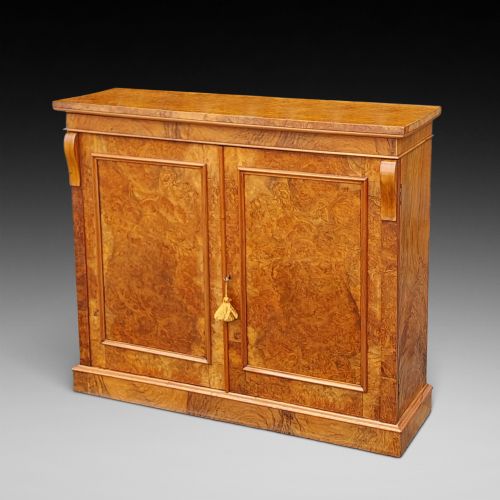
Cabinet makers constructed these cupboards using solid timbers like oak, mahogany, and rosewood, frequently applying flame mahogany veneer or burr walnut to door panels for visual depth. Structural frames relied on traditional joinery, while secondary woods were used for interior shelves and drawer linings.
Metal hardware such as brass escutcheons, hinges, and locks secured the double doors, alongside glass panels in glazed bookcase or display variants. Surface finishes were built up with traditional polishes that highlighted the grain and colour of the timber over decades of use.
An eighteenth-century housekeeper's cupboard likely guarded preserves and linen with a key that doubled as a badge of domestic authority.
What varies in quality
The quality of a dark wood double cupboard rests on the selection of timber and the precision of the cabinet work, particularly in how flame veneers or solid mahogany boards are matched across the two doors. Superior examples display thoughtful grain alignment, finely cut mouldings, and original brass hardware that remains tight in its mountings.
Internal construction reveals the maker's hand just as clearly as the exterior facade, distinguishing standard utility pieces from finer parlour or chamber furniture. Well-made cupboards retain sturdy internal shelving, smoothly running drawers within linen sections, and solid backboards without warping or crude alterations.
Howard & Son's Berners Street
The Dark Wood Double Cupboard Glossary
- Linen press
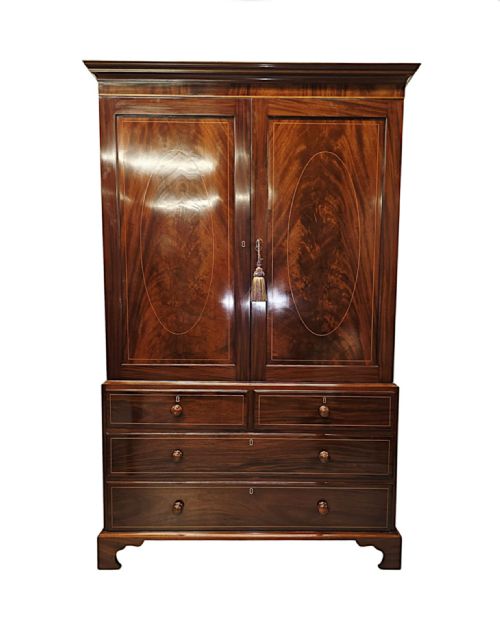
- A tall cupboard featuring upper doors enclosing sliding trays for textiles, positioned above a base section with wider storage drawers. These pieces became central to bedroom organisation in Georgian and Victorian homes.
- Corner cabinet
- A fitted or freestanding storage unit built with an angled footprint to occupy the corner of a room, often constructed in single or double height formats. They frequently display arched interiors or glazed upper doors for china.
- Chiffonier
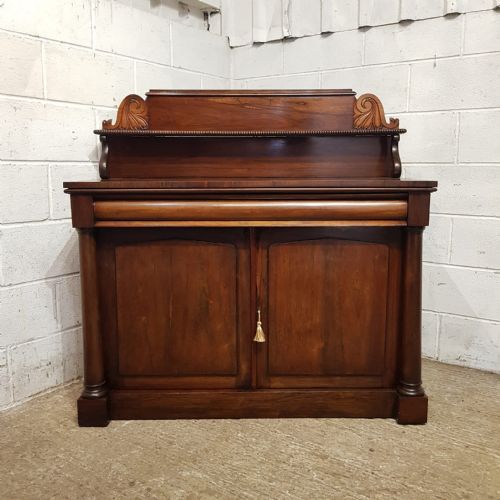
- A low sideboard or cabinet developed during the nineteenth century, typically featuring panelled doors below a shelved superstructure. They served as serving surfaces and enclosed storage in dining and drawing rooms.
- Flame mahogany veneer
- A decorative sheet of timber sliced from the point where branches join the main trunk, producing a rippling, flame-like grain pattern. Cabinet makers laid this veneer over solid foundational woods to create striking door fronts.
- Escutcheon
- A protective plate surrounding the keyhole of a cabinet door or drawer, usually cast in brass. These details range from simple geometric shapes to ornate engraved designs that match the period style.
Dark Wood Double Cupboard: Frequently Asked Questions
What is a linen press?
A linen press is a tall double cupboard designed to store folded textiles on interior sliding trays, usually set above a base fitted with larger drawers.
These pieces offered substantial bedroom storage before fitted closets became common in domestic architecture.
How do I date a cupboard?
Dating relies on observing timber choices, construction methods, hardware styles, and overarching design characteristics from periods like the Georgian or Victorian eras.
Examining secondary woods, hand-cut dovetails, and lock mechanisms helps establish the likely decade of manufacture.
Where should I place it?
A double cupboard suits large hallways, dining rooms, or bedrooms where substantial enclosed storage is required without cluttering the floor space.
Corner variants fit snugly into unused room angles, while flat-backed cabinets anchor long walls effectively.
Are these pieces solid wood?
Many examples combine solid primary timbers like mahogany or oak with secondary woods for internal components and decorative veneers on the exterior doors.
Cabinet makers used veneers to display striking grain patterns such as flame mahogany or burr walnut across large flat surfaces.