
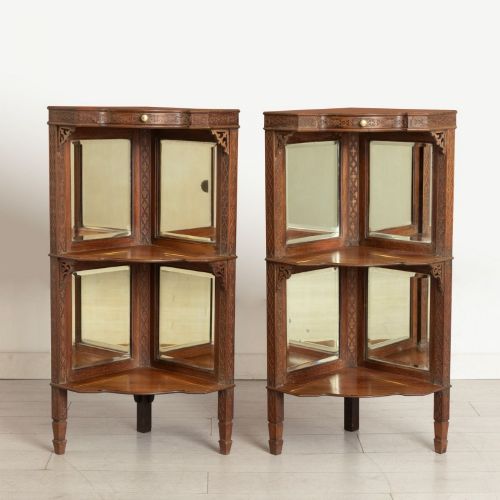
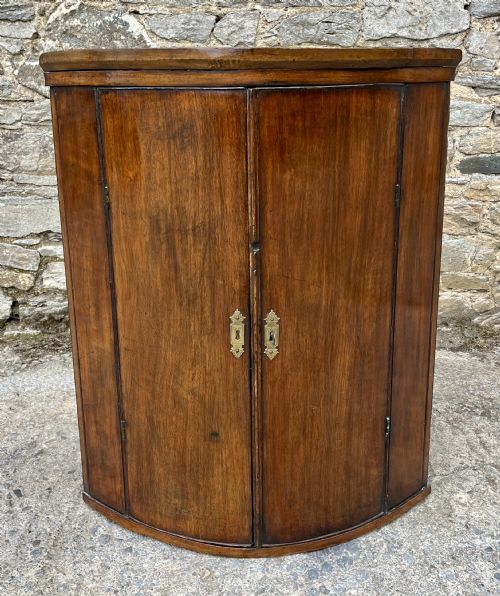
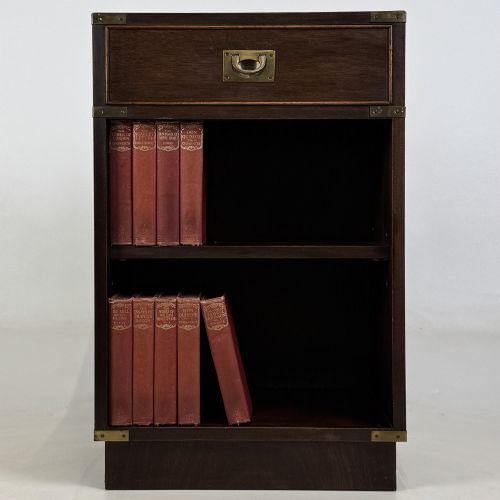
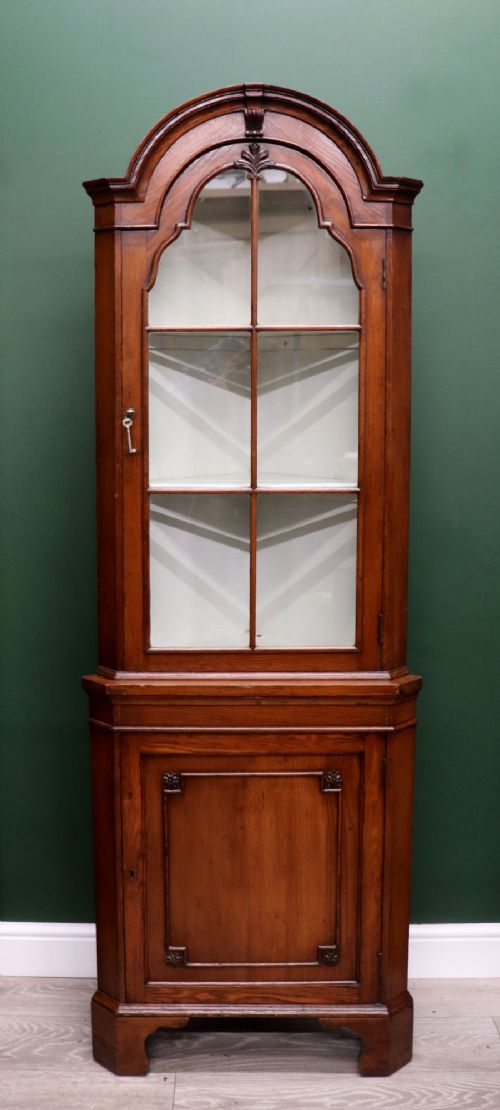
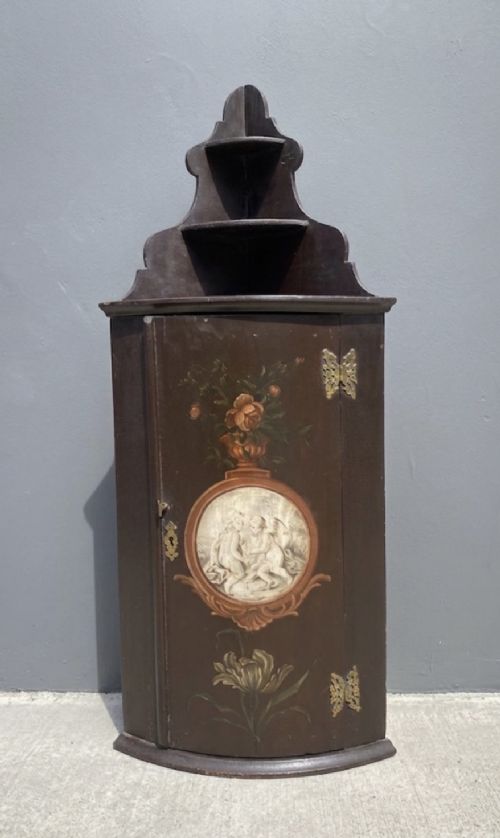

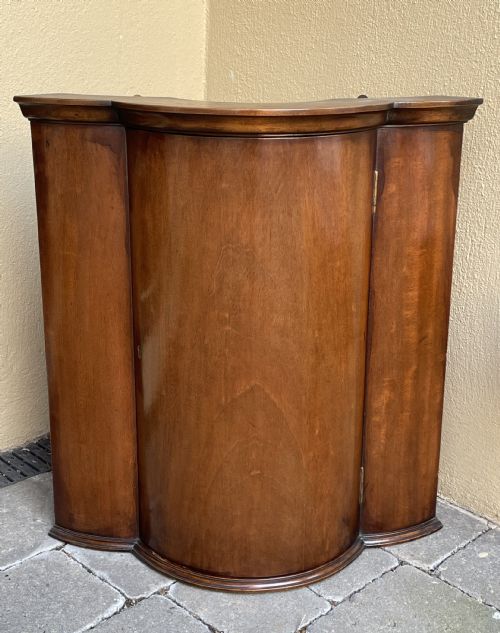

Dark Wood Corner Unit
A dark wood corner unit makes intelligent use of neglected room space while bringing rich timber grain into the interior.
Dark Wood Corner Unit
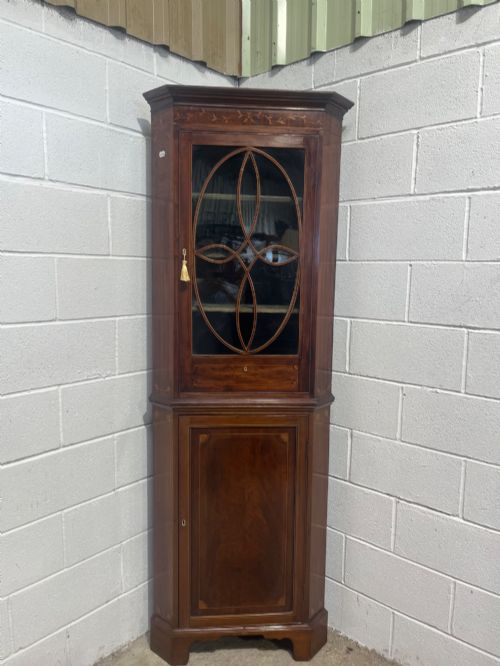
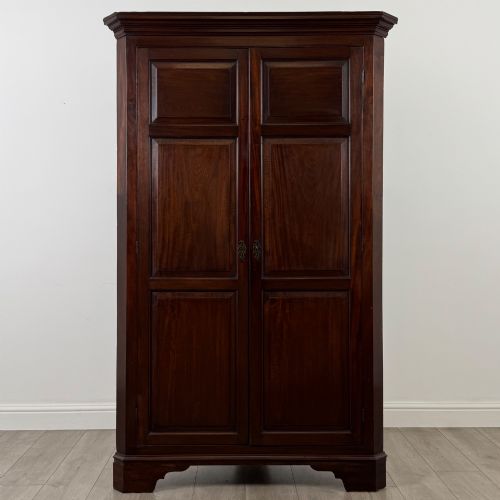
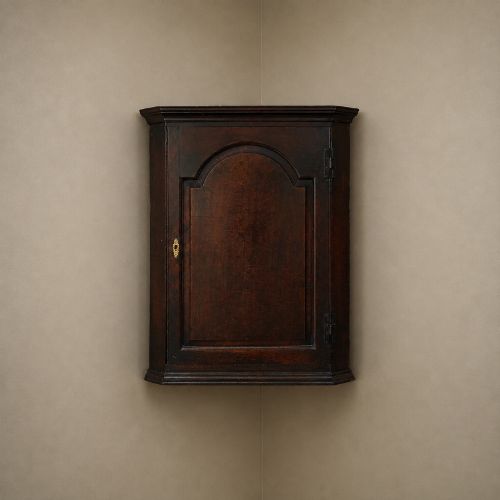
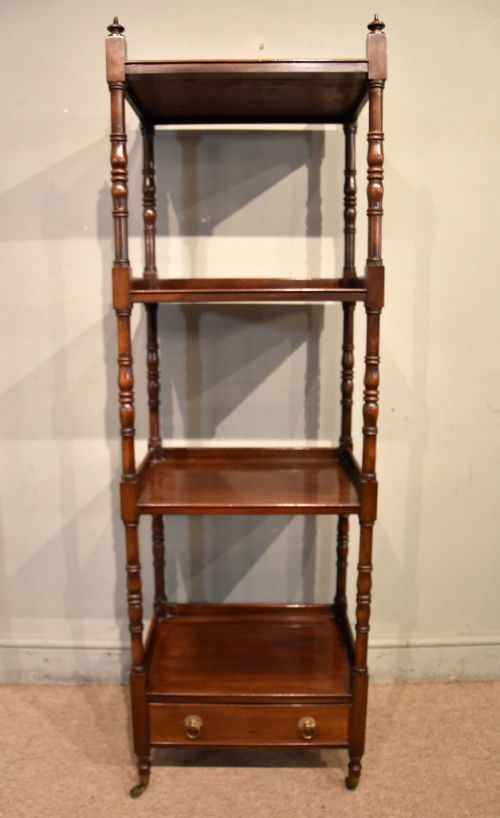
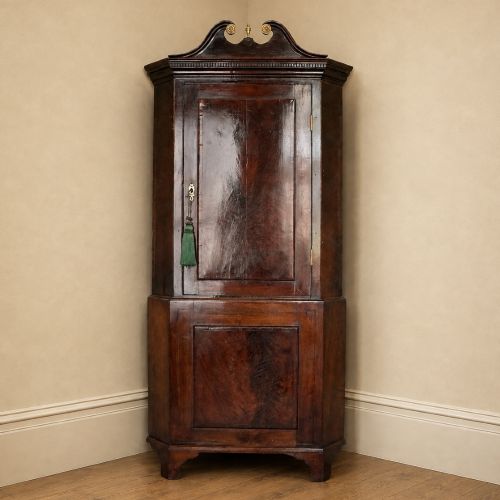
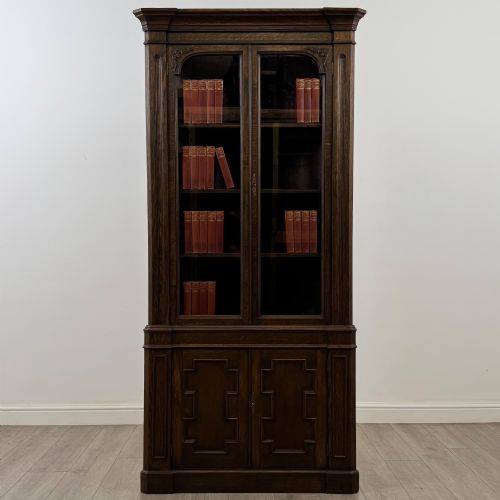
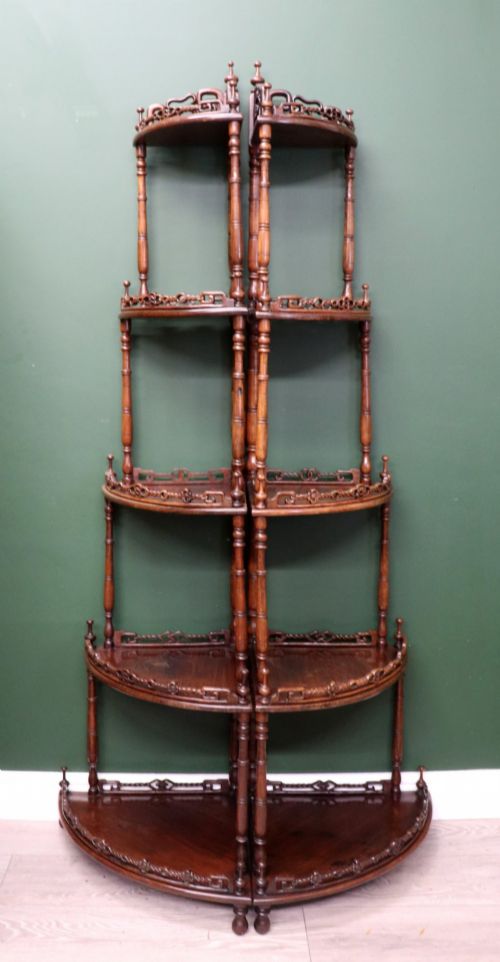
A dark wood corner unit is primarily found in forms such as hanging cupboards, floor-standing cabinets, and tiered whatnots designed to fit snugly into room angles. These pieces emerge predominantly from Georgian and Victorian periods, alongside Edwardian and later revivals.
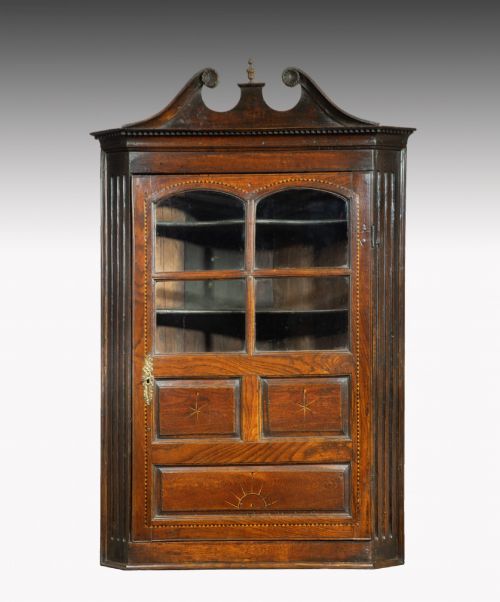
Buyers seeking a dark wood corner unit encounter everything from small oak wall-hanging cupboards with panelled doors to large freestanding mahogany display cabinets and multi-tiered shelves. The selection encompasses utilitarian pine storage alongside refined walnut and rosewood exhibition pieces.
Materials and construction
Makers built these pieces using dense hardwoods such as mahogany, oak, walnut, and rosewood, frequently incorporating contrasting lighter timbers like satinwood for inlay work and decorative detailing. Brass hardware, including hinges, escutcheons, and handles, appears regularly across the periods.
Construction techniques include panelled joinery for cupboard doors, broken arch pediments on taller cabinets, and tiered vertical supports for open whatnots and etageres. Timber surfaces are finished to display natural grain patterns, occasionally enhanced by painted treatments or delicate marquetry.
One exceptional Victorian teak example arrived from Ceylon as a veranda gin cabinet, proving that corner storage travelled across the empire.
Distinguishing quality
Simpler pine or oak cupboards intended for utility contrast with sophisticated freestanding or wall-hanging cabinets attributed to notable firms, where cabinetmakers applied meticulous attention to structural proportion and surface finish.
Edwards and Roberts·Goodhall Lamb and Heighway
The Dark Wood Corner Unit Glossary
- Whatnot
- An open, multi-tiered piece of freestanding furniture used for displaying ornaments or books. Examples range from four to six tiers supported by slender turned columns.
- Marquetry
- Decorative veneer work forming intricate patterns or pictures using various coloured woods. It appears frequently on Edwardian cabinet doors.
- Escutcheon
- A protective plate surrounding a keyhole, commonly cast in brass. These details help anchor the period style of the cabinet.
- Etagere
- A set of open shelves for displaying small objects, similar in function to a whatnot. These units often utilise slender vertical supports and corner footprints.
Dark Wood Corner Unit: Frequently Asked Questions
How do I install a hanging corner cupboard?
Hanging cupboards require secure fixing to solid wall studs or masonry behind the plaster to support the weight of dense timbers like mahogany and oak.
Because these units bear considerable load when filled with ceramics or glassware, professional installation ensures the cabinet remains level and secure within the room angle.
Where should I place a corner unit in a room?
These units fit directly into unused room intersections, making them practical solutions for smaller spaces or awkward layouts.
Floor-standing cabinets anchor a room corner visually, while wall-hanging versions free up valuable floor area below.
How do I distinguish Georgian from Victorian pieces?
Georgian pieces tend to display restrained classical proportions, solid mahogany or oak construction, and architectural elements like broken pediments.
Victorian and later variations often introduce bolder decorative detailing, exotic veneers like burr walnut and rosewood, or multi-tiered open formats.