


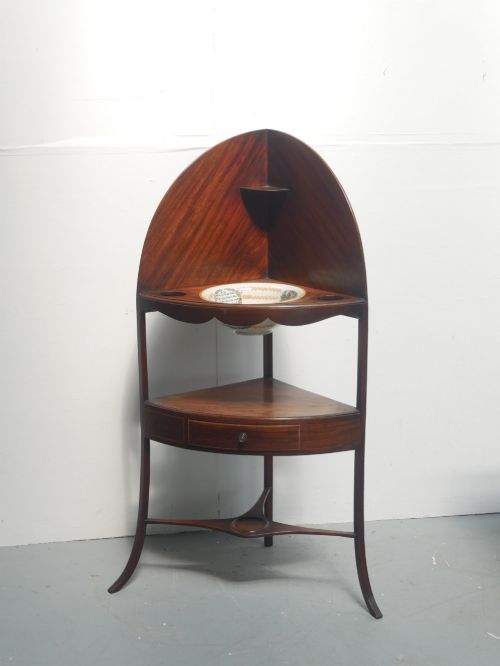

Dark Wood Corner Stand
These dark wood corner stands are practical room-fillers designed to use neglected angles, most frequently seen in mahogany from the Georgian and Victorian periods.
Dark Wood Corner Stand
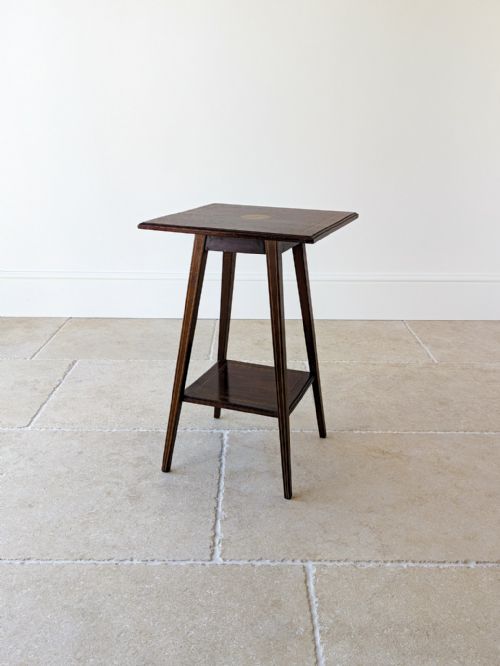
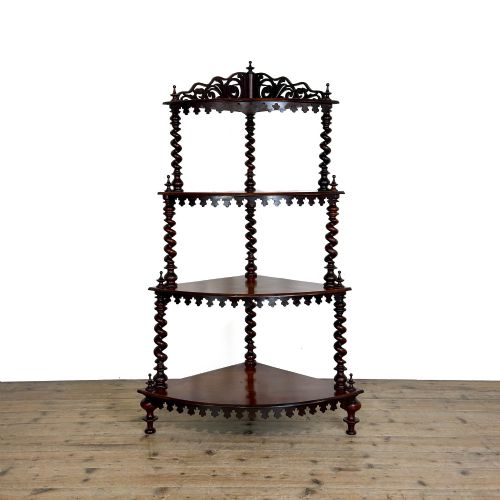
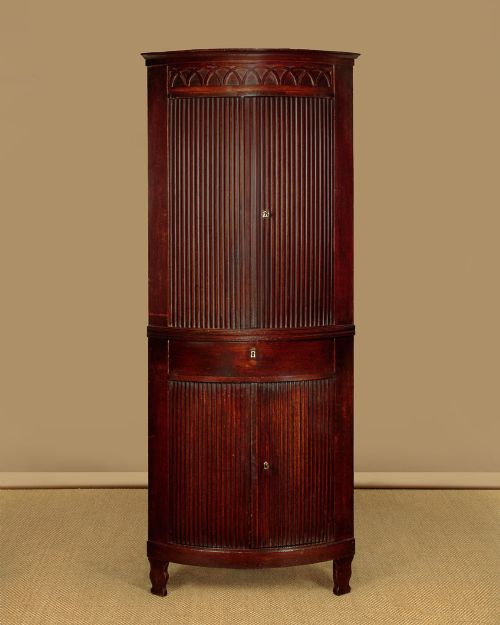
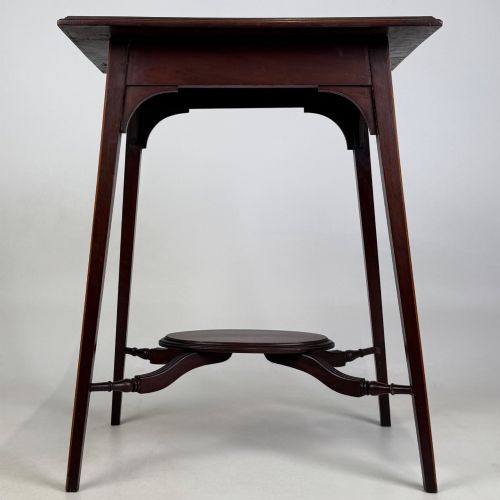
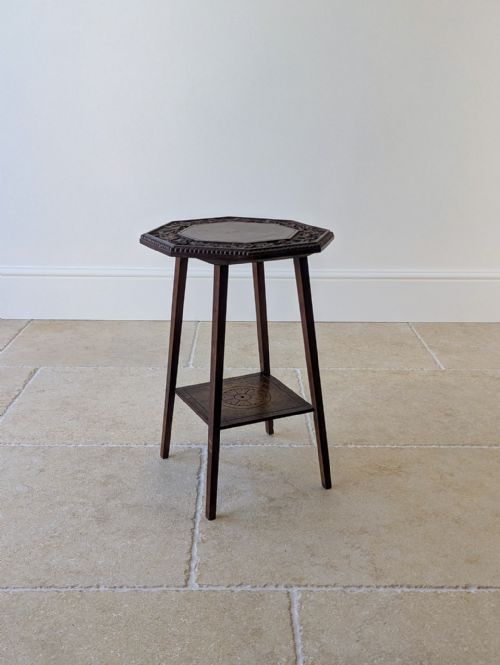
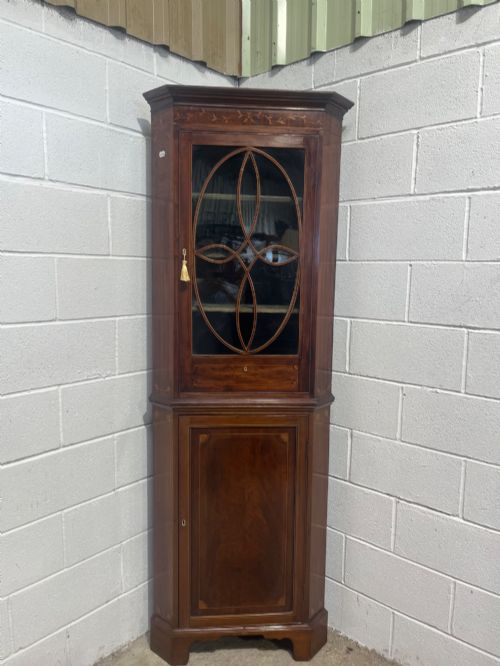
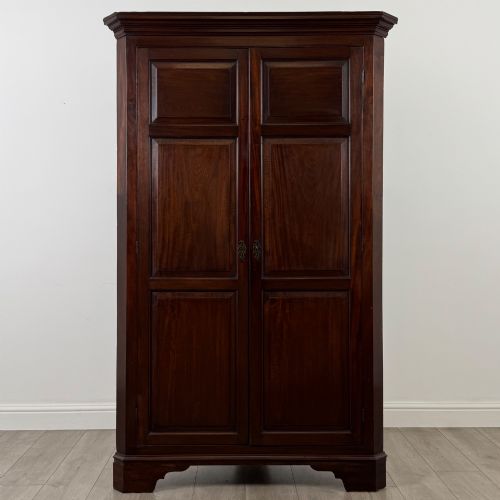
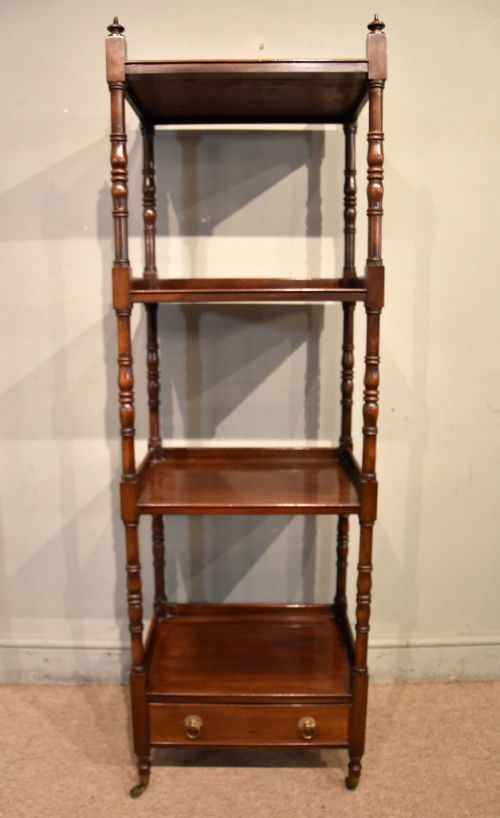
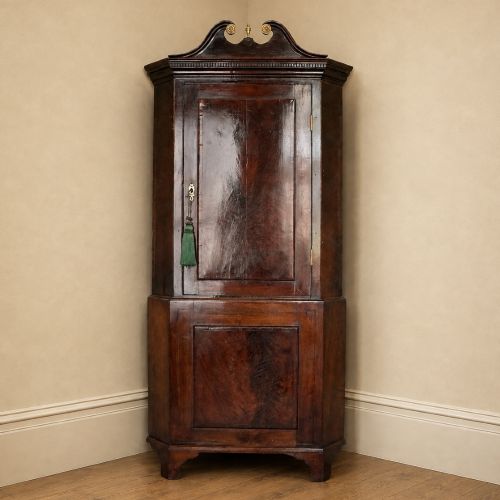
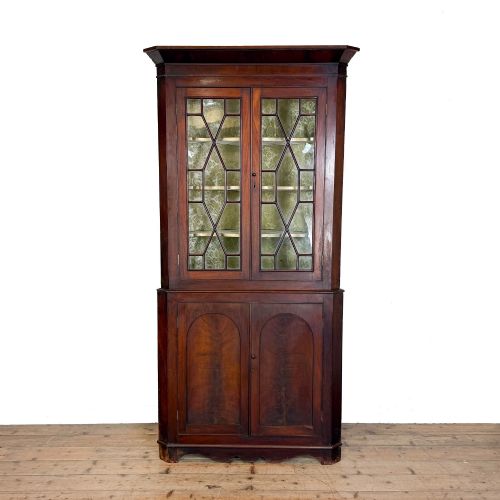
A dark wood corner stand is a functional item of furniture built to fit neatly into the right angle of a room, taking up minimal floor space while providing surface area or storage. When searching for this phrase, buyers encounter various forms designed for different domestic tasks, including corner cupboards, tiered whatnots, washstands, and display cabinets.
The pieces appearing on this page span several centuries, with the 19th century and the Victorian era providing the highest volume of items. Alongside these, 18th-century Georgian examples and later Edwardian designs appear, constructed primarily in rich timbers like mahogany, walnut, and oak.
What varies in quality
The distinction between ordinary and superior pieces rests on the choice of timber and the precision of the cabinetmaker's hand. Selection of highly figured mahogany or burr walnut veneer elevates a piece significantly beyond standard straight-grained equivalents.
Refinement in secondary details marks out better work, such as crisply carved mouldings, well-fitted panel doors that maintain their alignment, and harmonious proportions in multi-tiered structures like whatnots and floor-standing cupboards.
Listings span the 18th, 19th, and early 20th centuries, covering Georgian, Victorian, Edwardian, and Arts & Crafts styles.
Liberty & Co·Edwards & Roberts
The Dark Wood Corner Stand Glossary
- Whatnot
- A piece of furniture consisting of multiple open shelves for displaying ornaments or books. They typically feature three to six tiers supported by slender upright posts.
- Corner cupboard
- A cabinet specifically constructed with a triangular or angled footprint to fit flush into the corner of a room. These units often feature glazed or panelled single doors.
- Washstand
- A specialised table or cabinet designed to hold a wash basin and pitcher, often fitted with shelf tiers or splashbacks. Many surviving examples date from the Georgian and Victorian periods.
- Barley twist
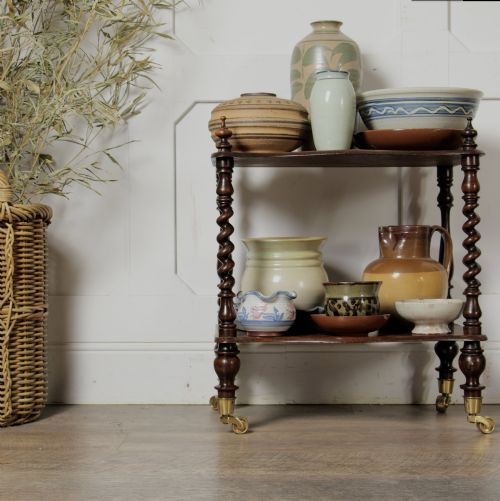
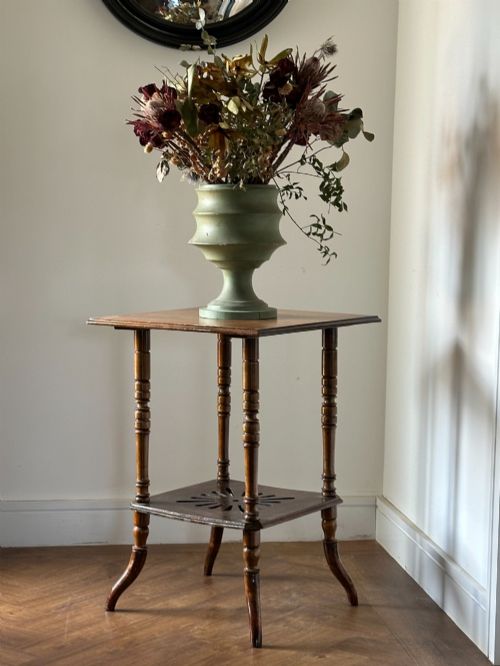
- A decorative turning technique resembling a spiralling rope or barley sugar stick. This form is commonly found on the vertical columns of Victorian stands and whatnots.
- Burr walnut
- A specialised wood veneer taken from the burl growth of a walnut tree, producing swirling, highly decorative grain patterns. It is typically reserved for exhibition-quality furniture.
Dark Wood Corner Stand: Frequently Asked Questions
What is a dark wood corner stand used for?
These stands serve multiple domestic purposes depending on their specific form, functioning as display surfaces, enclosed storage cupboards, or specialised washstands. Their angled design allows them to occupy unused room corners efficiently.
Tiered versions hold books and ornaments, while enclosed cupboards conceal household items, making them adaptable additions to living spaces, hallways, and dining rooms.
How do I identify a Georgian corner stand?
Georgian pieces, typically dating from the 18th century, display classical proportions and restrained use of decorative carving. They frequently appear as standing corner cupboards or washstands in solid mahogany.
Construction details on these older pieces include hand-cut dovetails and pegged joints, reflecting the prevailing cabinet-making standards of the period before mass production.
Are all these stands made of mahogany?
While mahogany is the most common timber seen across the listings, makers also utilised other dark woods including oak, walnut, rosewood, and ebonised wood.
Each material imparts a distinct visual weight and grain pattern, with oak appearing frequently in Arts and Crafts pieces and walnut dominating high-end Victorian furniture.