




Dark Wood Chinese Pedestal
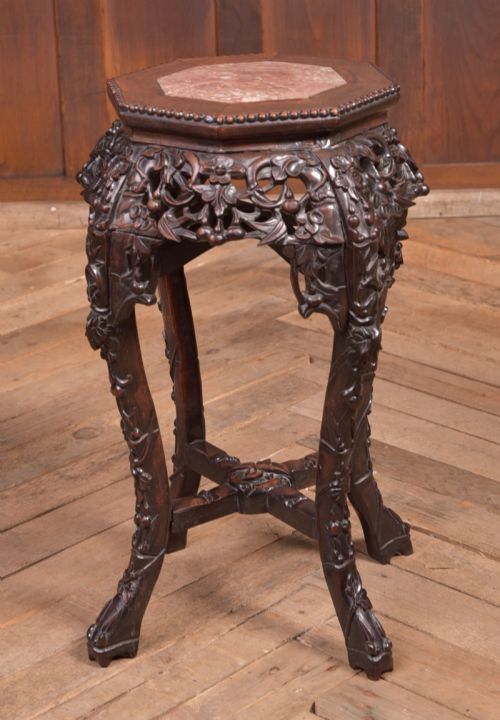
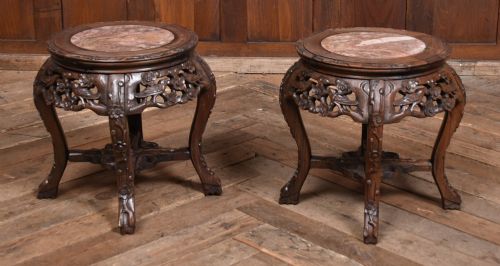
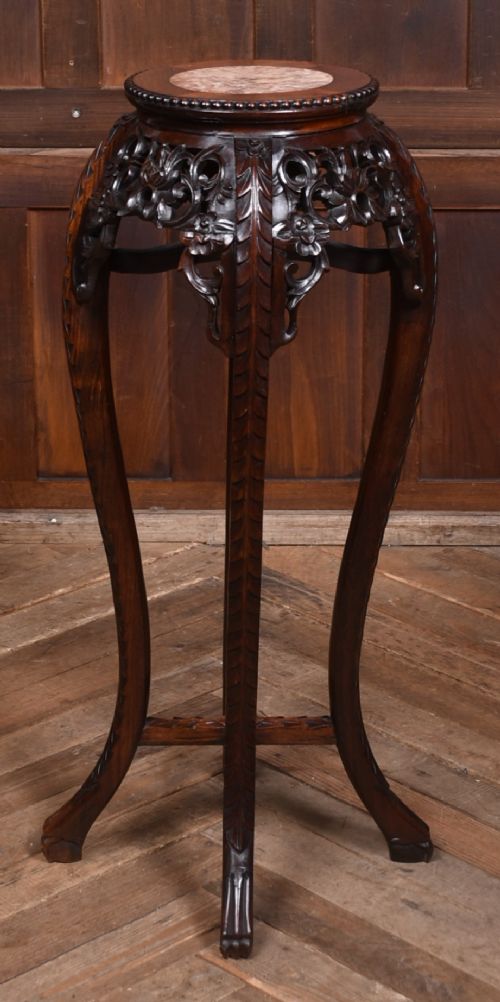
These dark wood chinese pedestal items bring carved plant stands and jardiniere tables into a room to hold heavy pottery and vases.
Dark Wood Chinese Pedestal
A dark wood chinese pedestal is a dedicated display stand built to elevate urns, pots, and vases within a interior space. The selection centres on plant stands, jardiniere stands, and vase stands originating from the nineteenth century and the Edwardian era.
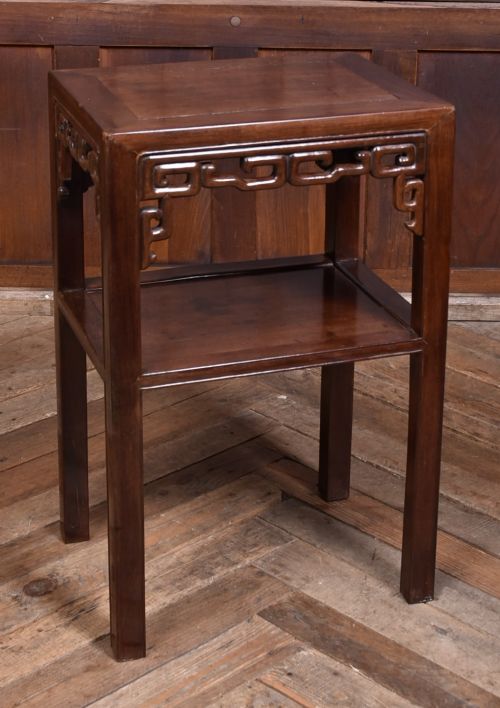
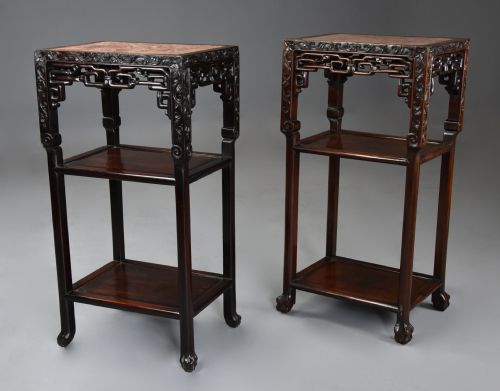
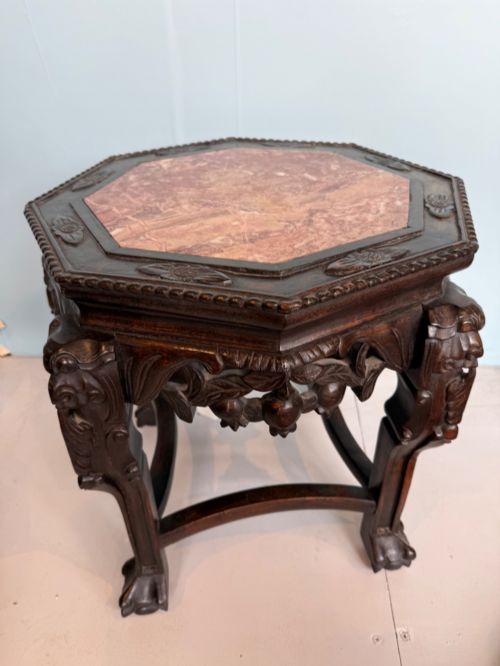
Most examples found here date from the Victorian period through to about nineteen ten, spanning the late Qing Dynasty and Chinese Export traditions. Forms range from round pot stands and square torchère columns to two-tier hongmu pedestals and octagonal occasional tables.
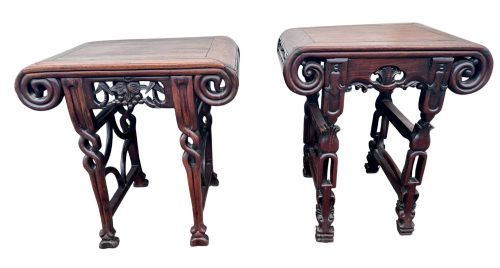
These items serve as functional display platforms rather than large furniture, though the range includes side tables, desks, and low stools alongside tall pedestals. The construction reflects traditional Asian woodworking adapted for Western domestic interiors during the nineteenth century.
Materials and construction
Makers utilised dense Asian timbers such as rosewood, padouk, hongmu, and general carved hardwood. These heavy woods provide the structural strength needed to support weighted ceramic vessels without tipping.
Many stands incorporate inset marble tops, particularly rouge marble, set flush into the wooden frame to provide a cool, flat surface for damp plant pots. Brass elements and detailed hand carving complete the construction of these traditional forms.
Victorian plant stands doubled as impromptu seats for very small guests when the drawing room ran out of chairs.
Variations in quality
The standard of carving distinguishes the work, moving from crisp, deep undercut floral motifs to simpler, shallower surface decoration. Timber selection also dictates grade, with dense figured padouk and heavy hongmu sitting above standard mixed hardwoods.
Structural integrity and the quality of the marble inset define the build. Well-fitted marble slabs that sit level within the timber rebate and joints that remain rigid without movement separate superior pieces from standard examples.
The Dark Wood Chinese Pedestal Glossary
- Jardiniere stand
- A low or medium pedestal specifically designed to hold a ceramic flower pot or plant container. These stands often feature inset marble tops to protect the wood from moisture.
- Padouk
- A heavy, durable reddish-brown tropical hardwood utilised in nineteenth-century Chinese furniture making. It finishes to a smooth polish and resists warping.
- Hongmu
- A traditional Chinese term for dense red hardwoods used in fine furniture production. The wood possesses a natural dark lustre that deepens with age.
- Torchère
- A tall, slender stand or pedestal originally intended to hold a candle or lamp. In Asian export pieces, the form translates into elevated vase and plant columns.
- Qing Dynasty
- The last imperial dynasty of China, spanning from sixteen forty-four to nineteen twelve. Pieces from the late nineteenth century reflect the traditional craftsmanship of this era.
Dark Wood Chinese Pedestal: Frequently Asked Questions
What is a Chinese pedestal used for?
These pieces function primarily as elevated display stands for heavy ceramic vessels, urns, and potted plants. Their sturdy construction holds heavy weight while raising the displayed object to eye level.
In period interiors, they also served as occasional tables, lamp stands, or side tables in reception rooms.
How do I identify a Qing Dynasty stand?
Late nineteenth-century pieces often display traditional Chinese carving motifs, such as prunus blossom, dragons, or key-fret borders executed in dense hardwoods. The joinery typically employs traditional Asian techniques without modern metal fasteners.
Makers utilised regional timbers like hongmu and padouk, frequently pairing them with inset marble tops designed for practical use.
Why do many stands have marble tops?
Marble insets provide a durable, waterproof surface that resists water rings and soil stains from damp flower pots and jardinières. This practical feature allowed owners to place living plants directly onto polished wooden furniture without causing damage.
The stone also adds structural weight to the base, improving stability for tall or top-heavy arrangements.
How do I care for antique hardwood furniture?
Maintain these pieces by dusting with a dry, soft cloth and avoiding direct sunlight or strong heat sources that can dry out dense tropical timbers. Natural waxes can be applied sparingly to nourish the wood surface when needed.
Keep marble insets clean with a damp cloth, ensuring moisture does not seep into the surrounding wooden rebate.