

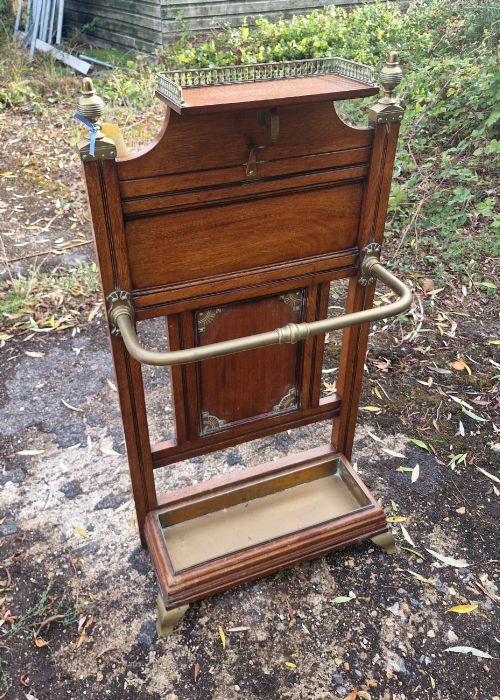


Dark Wood Cane Stand
These dark wood cane stand examples organise hall spaces with practical timber forms from the nineteenth and early twentieth centuries.
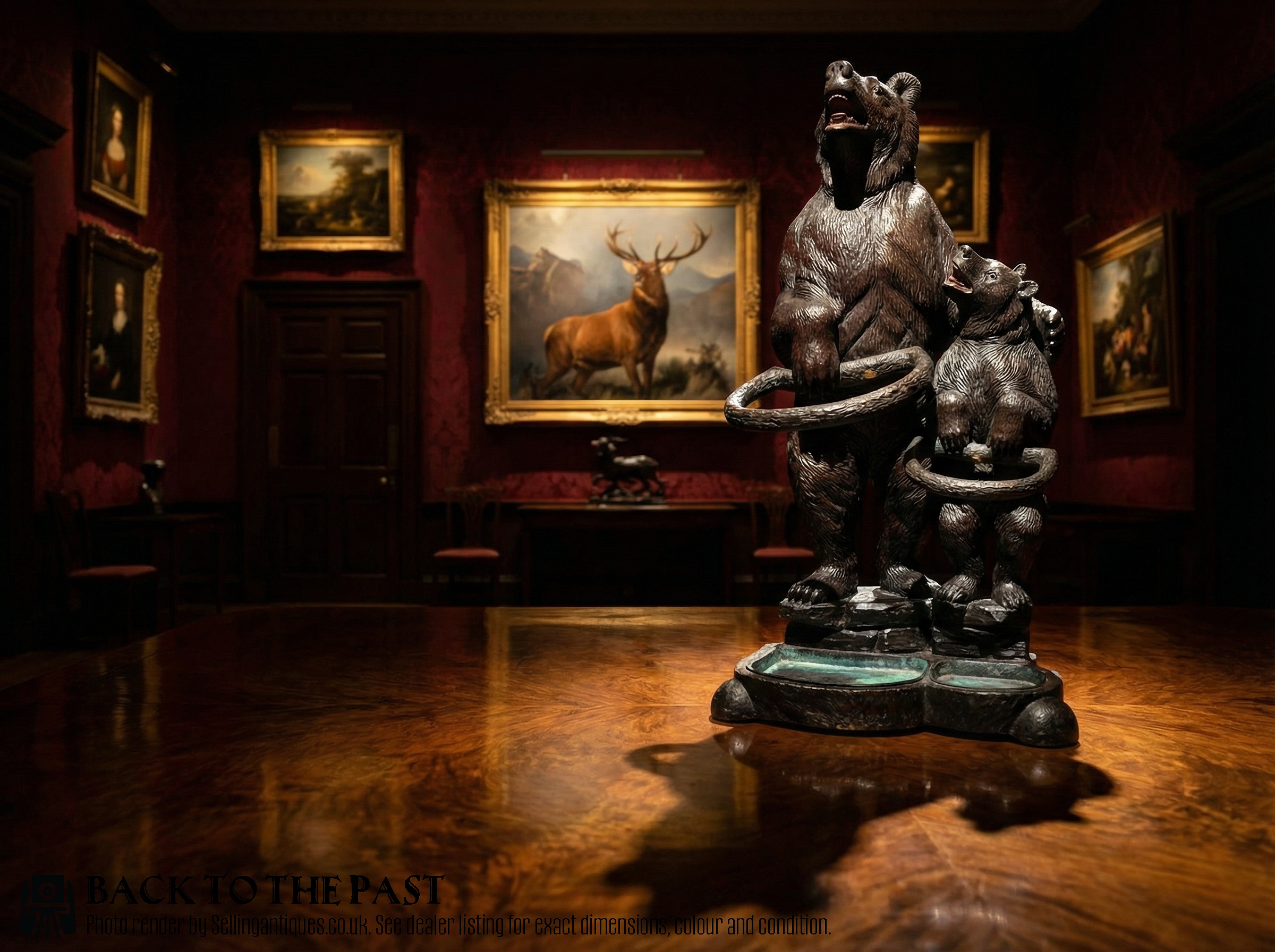
Dark Wood Cane Stand
A dark wood cane stand is a hall furnishing designed to hold walking sticks, canes and umbrellas. When exploring dark wood cane stand options, buyers encounter Victorian and Edwardian examples made from oak, mahogany and walnut.
The most common versions on this page are mahogany and oak hall stands from the late nineteenth century. These pieces range from simple country house umbrella stands to elaborately carved Black Forest bear designs.
Many of these stands incorporate metal elements such as brass mounts or cast iron trays to catch rainwater from wet umbrellas. Formats vary from compact single stands to large hall furniture pieces with integrated stick compartments.
Materials and Construction
Cabinetmakers utilised dense timbers like mahogany, oak and walnut for structural durability in busy entrance halls. These woods were turned, carved or joined to create robust frames capable of supporting heavy walking sticks and damp umbrellas.
Decorative detailing on these stands relies on traditional woodworking techniques including relief carving, barley twist turnings and applied bergere panels. Metal components such as brass mounts and cast iron inserts were integrated to protect the wooden bases from moisture.
Listings feature pieces spanning the 19th Century, Victorian and Edwardian periods, constructed from oak, mahogany, walnut and Lindenwood.
Assessing Quality
Quality in a dark wood cane stand rests upon the depth of the carving and the selection of timber. Stands featuring figural Black Forest carvings or detailed Arts and Crafts joinery demonstrate superior craftsmanship compared to plain utility pieces.
The choice of secondary materials also distinguishes the range. Higher quality examples utilise heavy brass mounts and original metal drip trays, whereas simpler versions rely on basic construction without decorative hardware.
Shoolbred
The Dark Wood Cane Stand Glossary
- Black Forest
- A nineteenth-century style of wood carving originating from the German region, known for realistic animal figures such as bears holding stick stands.
- Bergere
- A woven cane panel used as a decorative insert within wooden frames.
- Barley Twist
- A type of woodturning shaped in a helical spiral resembling a twisted rope.
- Drip Tray
- A metal base insert placed at the bottom of a stand to catch water from umbrellas.
Dark Wood Cane Stand: Frequently Asked Questions
What is a dark wood cane stand?
A dark wood cane stand is a hall furnishing designed to hold walking sticks, canes and umbrellas.
These pieces typically date from the Victorian and Edwardian periods and are constructed from timbers like oak, mahogany and walnut.
How do I care for a wooden stick stand?
Keep the wood nourished with appropriate wax and ensure that metal drip trays are regularly emptied and dried.
Preventing prolonged contact with moisture protects the timber base from water staining and rot.
What styles are common in these stands?
Common styles include Victorian country house designs, Arts and Crafts oak frames and intricately carved Black Forest bear motifs.
Turned columns and barley twist supports frequently appear alongside brass mounts and metal inserts.
How do I date a cane stand?
Dating relies on identifying timber choices, construction methods and stylistic markers associated with specific periods like the Victorian or Edwardian eras.
Makers' marks or retail labels, when present, also help establish the date of manufacture.