

Dark Wood Bowfront Drawers
Dark wood bowfront drawers bring curved fronts and rich timber tones to a room, offering practical storage with Georgian and Regency elegance.

Dark Wood Bowfront Drawers
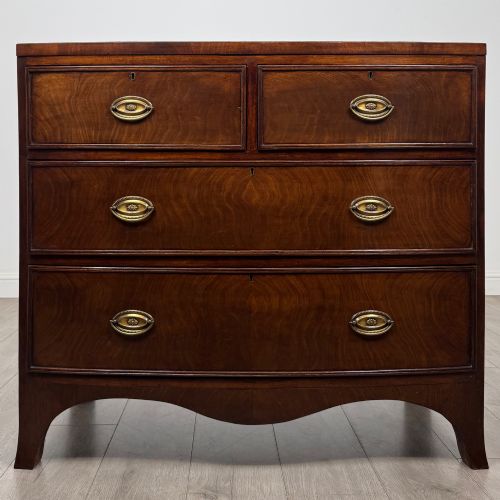
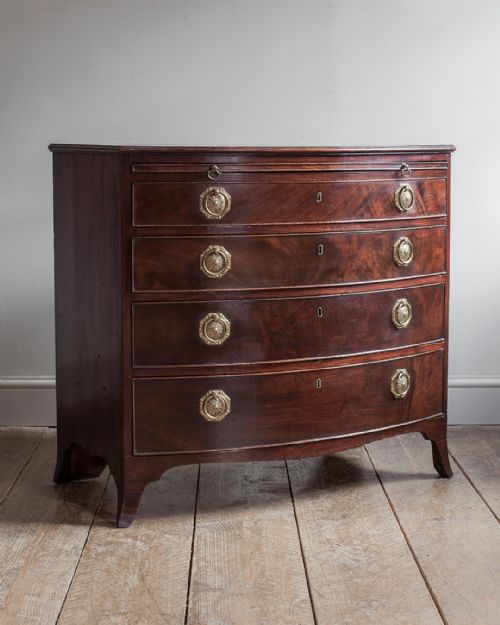
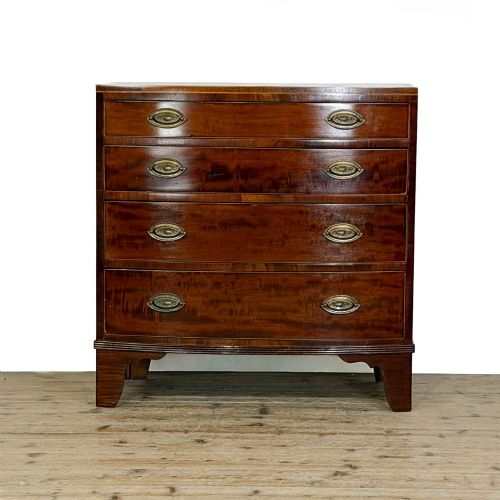
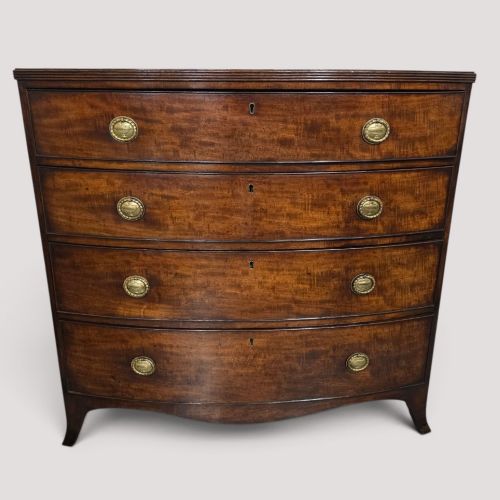
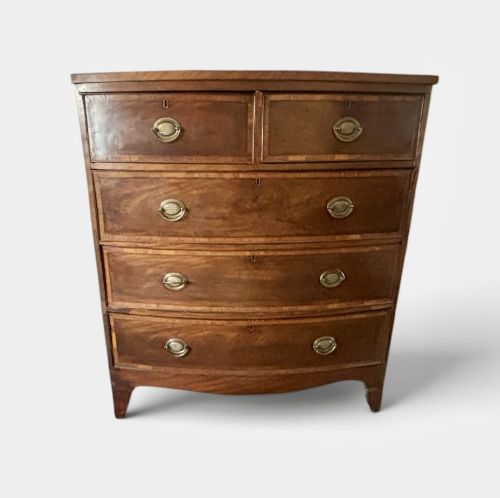
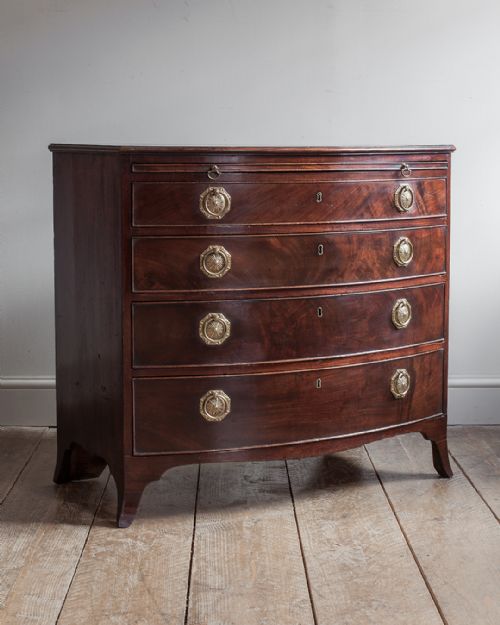
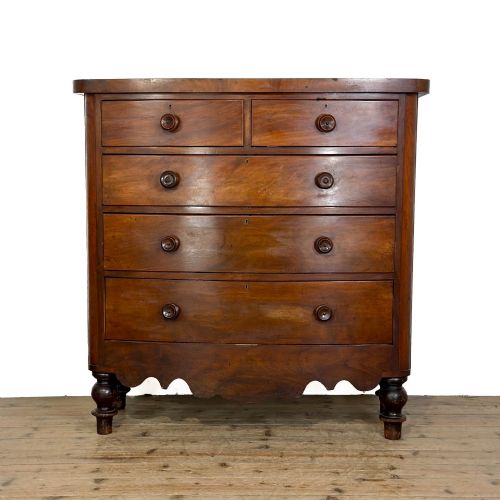
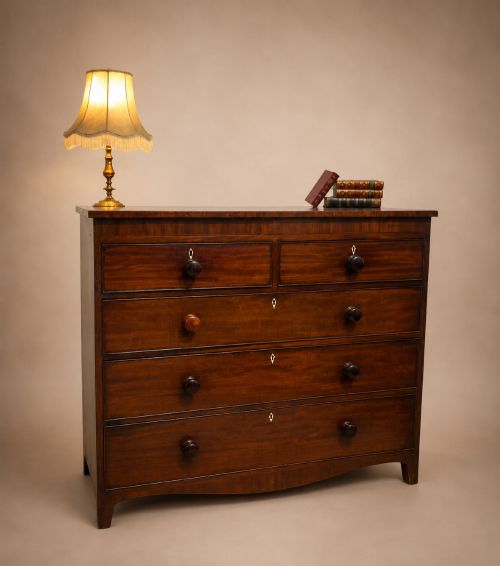
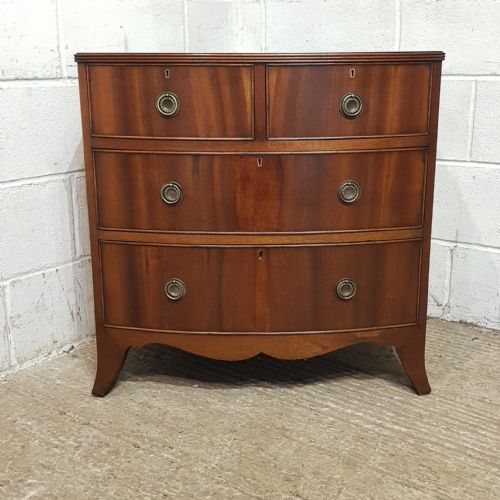
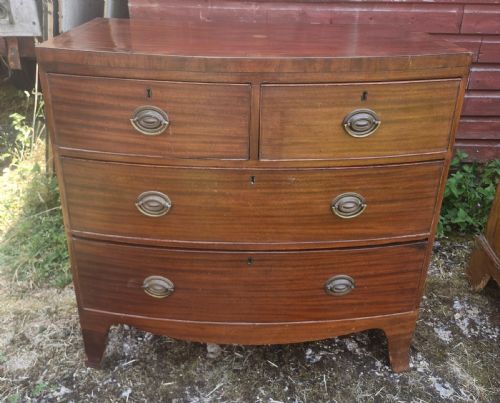
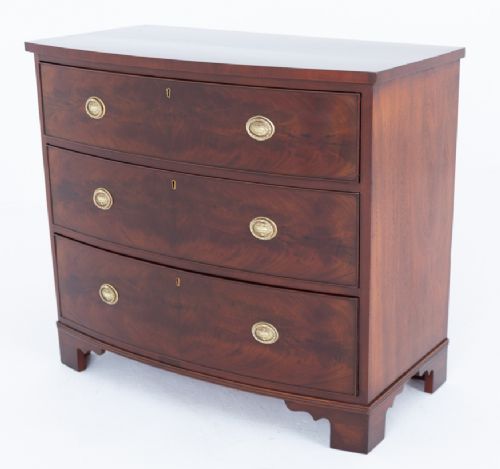
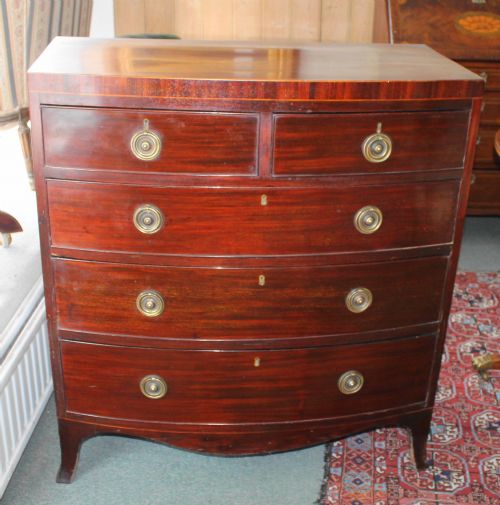
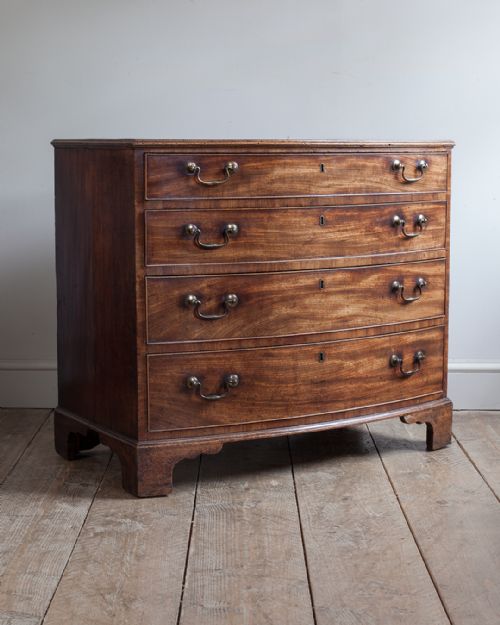
When you search for dark wood bowfront drawers, you encounter pieces designed with a projecting curved front that softens the geometry of a traditional rectangular chest. These items primarily date from the Georgian, Regency, and Victorian periods, constructed mainly as full-sized chests of drawers.
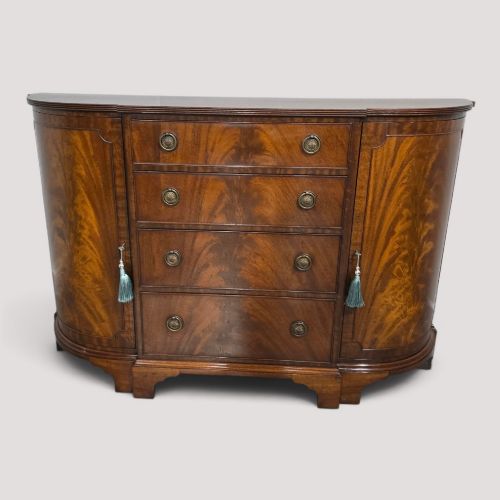
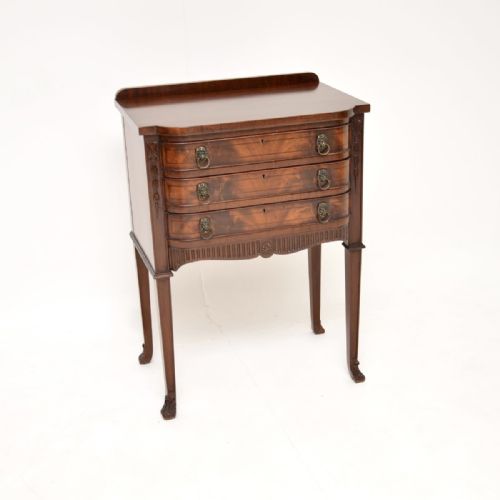
The selections span standard bedroom chests, smaller bedside tables, tallboys, and miniature examples or apprentice pieces. Alongside primary chests, you find associated forms like dressing table mirrors and sideboards sharing the characteristic curved profile.
Mahogany dominates the material record, often selected for its deep colour and grain pattern, sometimes enhanced by flame mahogany or satinwood banding. These pieces reflect stylistic shifts from the restraint of the late eighteenth century through to the heavier proportions of the Victorian era.
Judging quality and proportion
Quality rests in the choice of timber figure, particularly where symmetrical flame mahogany veneer is matched across successive drawer fronts. The crispness of the curved joinery and the harmonious proportion between the height, depth, and the sweep of the bow define a superior piece.
Object forms on this site range from full chests and tallboys down to miniature apprentice pieces and dressing table mirrors.
The Dark Wood Bowfront Drawers Glossary
- Bowfront
- A furniture front that curves outward in a convex arc. This shape gained popularity during the Georgian and Regency periods to soften room layouts.
- Flame mahogany
- A veneer cut from timber where the grain creates a flame-like or swirling pattern. It appears on the principal drawer fronts of finer pieces.
- Tallboy
- A tall chest of drawers standing upon another chest or a lower support stand. These pieces maximise vertical storage space.
- Satinwood banding
- A decorative strip of pale satinwood inlaid around the edges of drawer fronts or tabletops. This technique contrasts sharply with dark mahogany.
Dark Wood Bowfront Drawers: Frequently Asked Questions
How do I date a bowfront chest?
Dating relies on combining stylistic clues with construction methods, such as the shape of the feet, the type of drawer linings, and the style of handles. Earlier Georgian examples often display bracket feet and hand-cut dovetails, whereas Victorian versions tend to feature turned feet and heavier proportions.
Examining the secondary timbers like oak or pine inside the drawers also helps establish the period. Subtle shifts in decorative banding, such as satinwood inlay, point toward Regency or Sheraton Revival influences.
What is an apprentice piece?
An apprentice piece is a miniature version of a larger furniture item, created by a worker learning the trade. These smaller chests demonstrate the cabinet maker's mastery of complex curves and joinery on a reduced scale.
They were kept as portfolio pieces to secure employment or admission to a trade guild. Their compact dimensions make them popular decorative items today.
Where should I place a bowfront chest?
The curved profile makes these chests suitable for hallways, living rooms, and bedrooms where sharp corners would obstruct movement. Placing them against a flat wall allows the projecting bow to catch the light and display the grain of the timber effectively.
Smaller variations function well as bedside tables or lamp tables. Their versatile proportions complement both traditional and contemporary interiors.
Are all bowfront chests mahogany?
Mahogany represents the vast majority of surviving examples due to its strength and rich colour favoured by Georgian and Regency cabinet makers. Occasionally, alternative timbers or secondary woods like pine and oak appear within the internal structure.
The surface finish often relies on the natural warmth of the dark wood rather than applied paints or heavy stains. Variations in quality stem from the specific cut of the timber, such as flame mahogany.