

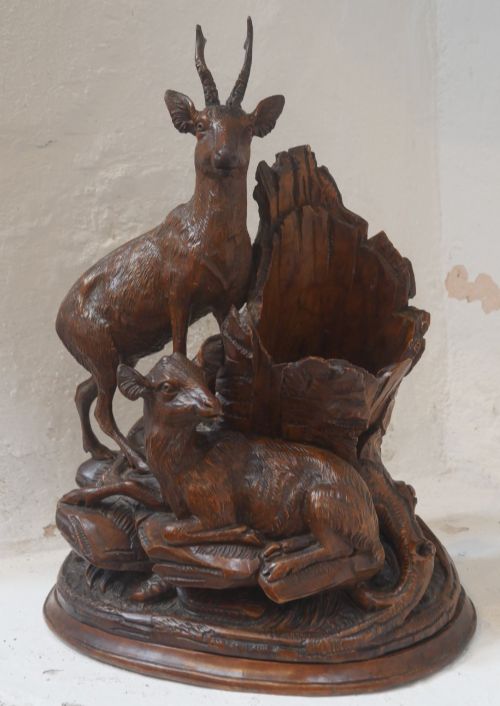
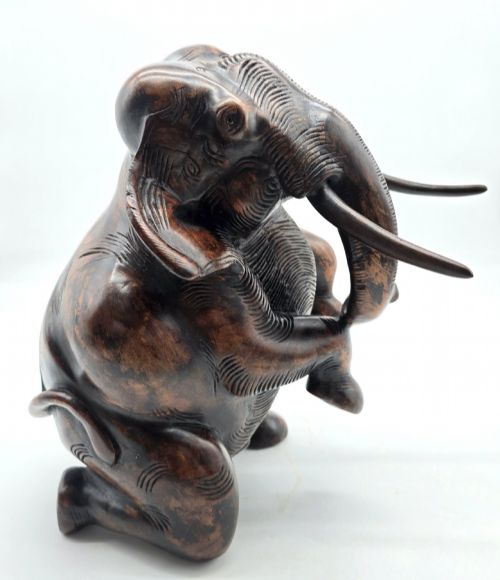

Dark Wood Animal Carving
A dark wood animal carving brings natural form and historic craft into a room, spanning rustic European bears to detailed Asian figures.
Dark Wood Animal Carving
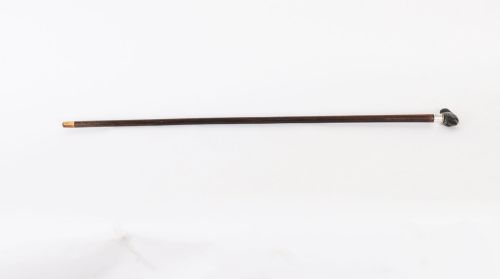
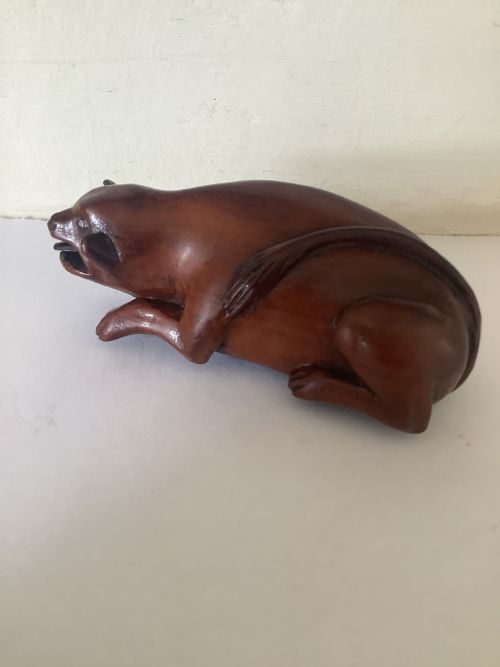
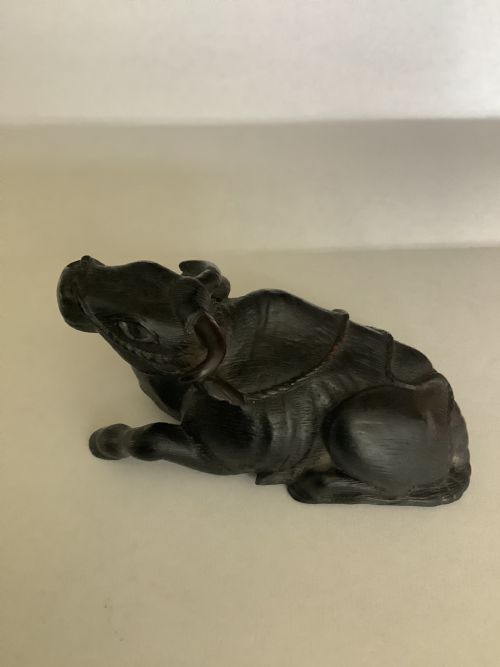
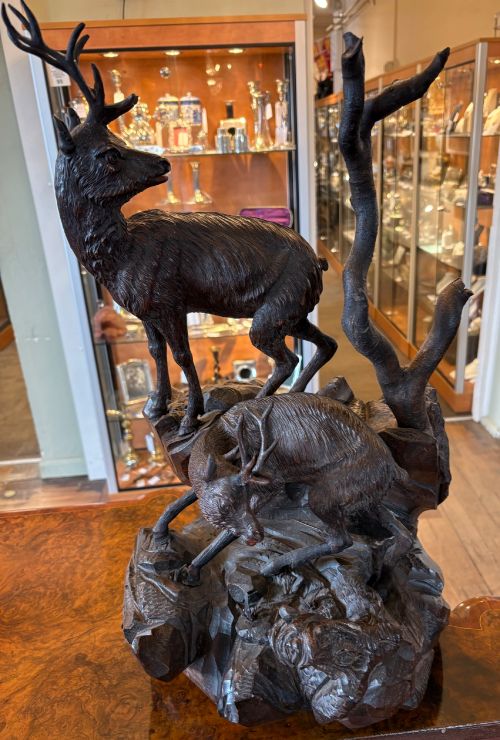
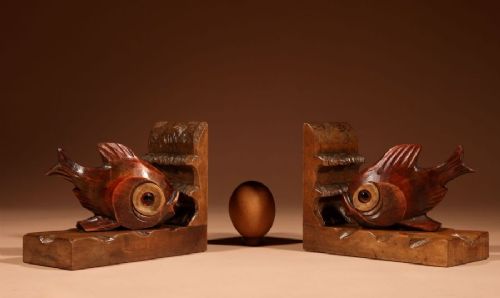
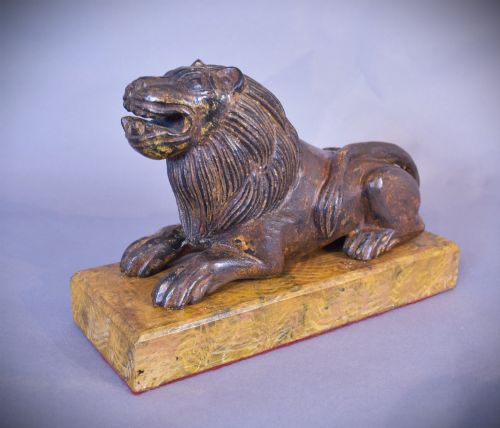
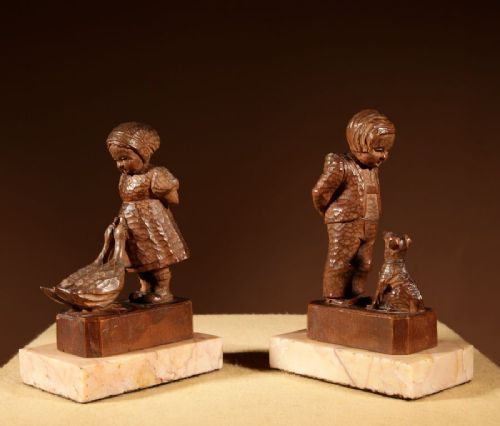
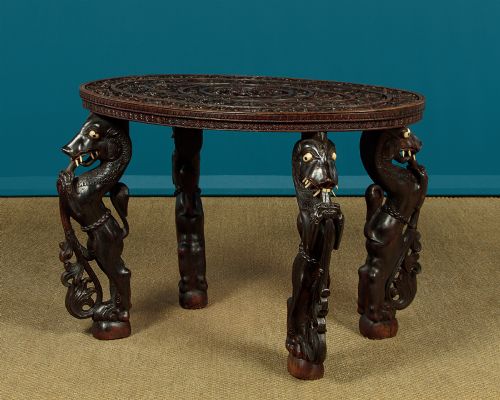
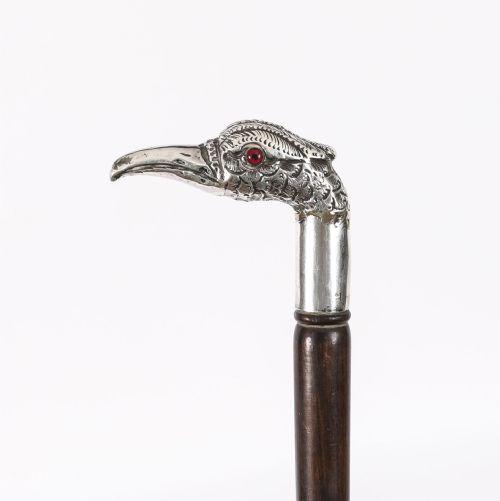
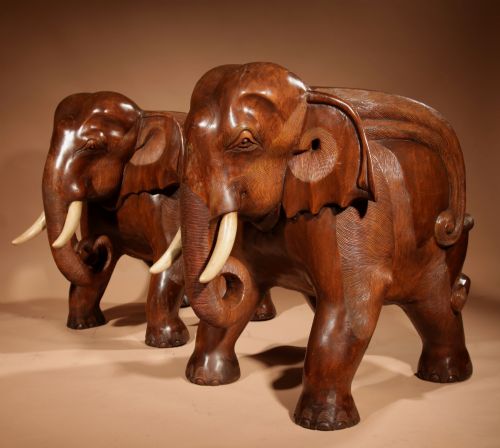
A dark wood animal carving captures creatures ranging from bears and elephants to deer and domestic animals in three dimensions. These pieces appear in forms such as free-standing sculptures, functional bookends, walking sticks, and occasional furniture integrated with animal motifs.
The selections span the nineteenth century through the art deco period, drawing heavily on European traditions like Black Forest production alongside Japanese folk art and Anglo-Indian craftsmanship. Buyers encounter both naive domestic works and highly detailed professional studies.
European regional workshops and Asian carving centres both contributed to this tradition, utilising native timbers to depict local wildlife and exotic fauna. Each object reflects the aesthetic priorities of its specific period of origin.
Materials and carving techniques
Carvers utilised dense timbers such as walnut, linden wood, oak, and general hardwoods that allowed for fine detail and stable preservation over centuries. Linden wood proved particularly popular in European alpine regions for its fine grain and ease of cutting complex fur and anatomical contours.
Artisans employed traditional hand chisels, gouges, and knives to shape the raw timber, frequently finishing surfaces with wax or polish to accentuate the grain. Inlaid glass eyes occasionally feature in naturalistic animal studies to enhance realism.
The documented materials range from conventional hardwoods and linden wood to organic additions like bone, horn, and inlaid glass eyes.
Evaluating sculptural quality
Anatomical proportion and vitality separate standard decorative items from superior works, as skilled carvers captured muscle tension and posture accurately. Pieces that convey distinct character in the animal's expression generally represent higher standards of execution.
The depth and cleanliness of the tool work dictate the visual success of the surface, with crisp rendering of fur, feathers, or hide distinguishing master carvers from routine production. Original surface patination accumulated through age also plays a primary role in the desirability of the wood.
The Dark Wood Animal Carving Glossary
- Black Forest
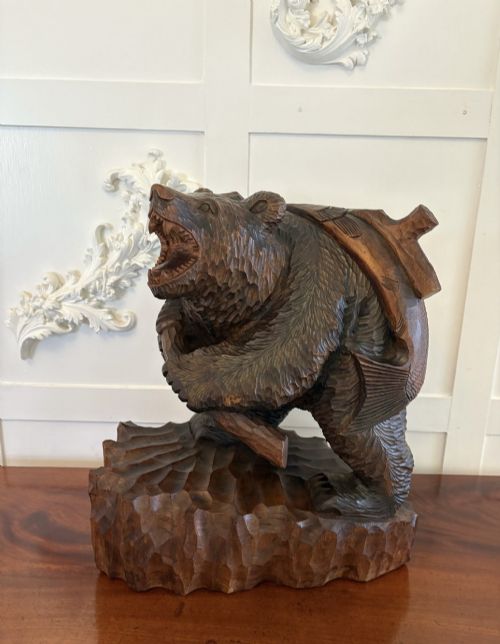
- A style of wood carving originating from the alpine regions of Switzerland and Germany, widely recognised for realistic animal studies, bears, and foliage. These works gained immense popularity during the Victorian era.
- Linden Wood
- A pale hardwood derived from lime trees, favoured by European carvers for its soft, even texture that resists splitting during intricate shaping. It accepts dark stains and polishes effectively.
- Netsuke
- A small Japanese miniature sculpture carved from wood or ivory, historically used as a toggle to secure small containers to traditional garments. They demonstrate extreme precision and miniaturisation.
- Kibori Kuma
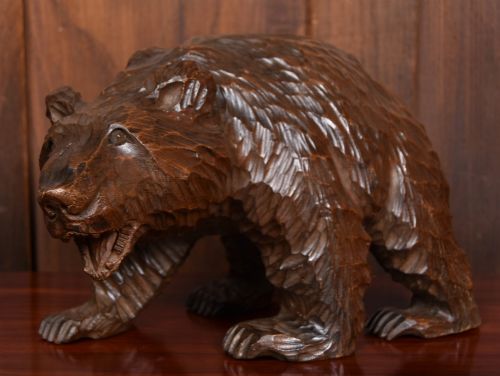
- A traditional Japanese wooden carved bear, typically associated with the folk art traditions of Hokkaido. These pieces frequently depict the bear holding a fish in its jaws.
- Folk Art
- Objects created by self-taught or traditional artisans outside the formal academic academies, often displaying a naive or charmingly direct aesthetic. These items prioritise functional utility or straightforward representation.
Dark Wood Animal Carving: Frequently Asked Questions
What periods do these carvings come from?
The pieces span the eighteenth, nineteenth, and early twentieth centuries, with a heavy concentration originating from the Victorian and Edwardian eras. Later examples extend into the art deco period.
Craft traditions shifted across these decades from regional folk art to more commercialised alpine and oriental production, altering the stylistic details found on individual sculptures.
How were Black Forest animal carvings used?
Many Black Forest animal pieces served practical domestic functions alongside their decorative appeal, appearing as umbrella stands, inkwells, and heavy bookends. Larger items functioned as architectural furniture elements or hall stands.
Carvers combined utility with whimsical naturalism, integrating bears, owls, and dogs into everyday household objects for middle-class Victorian interiors.
How do I care for antique wood carvings?
Antique wood carvings require stable environmental conditions away from direct heat sources and strong sunlight to prevent the timber from drying out and splitting. Dusting gently with a dry, soft brush preserves the carved details.
Occasional application of microcrystalline wax helps protect the surface patination without building up heavy residues that obscure fine tool marks.
How can I tell Japanese carvings apart from European ones?
Japanese animal carvings, such as kibori kuma bears or intricate netsuke, often employ distinct wood selections and local compositional conventions tied to Meiji or Edo aesthetics. Their subject matter frequently reflects specific indigenous wildlife traditions.
European Black Forest and folk art pieces generally display heavier, more rustic timber framing or alpine flora motifs that contrast with the sleeker, highly focused studies from Asian workshops.