


Antique Timber Lion Sculpture
These antique timber lion sculpture pieces bring centuries of carved majesty into a room, offering both traditional presence and striking historical detail.
Antique Timber Lion Sculpture
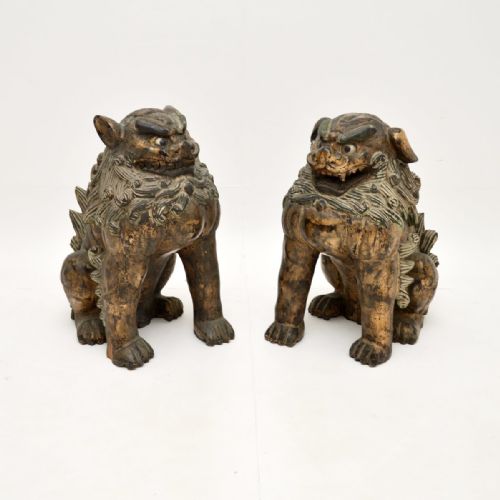
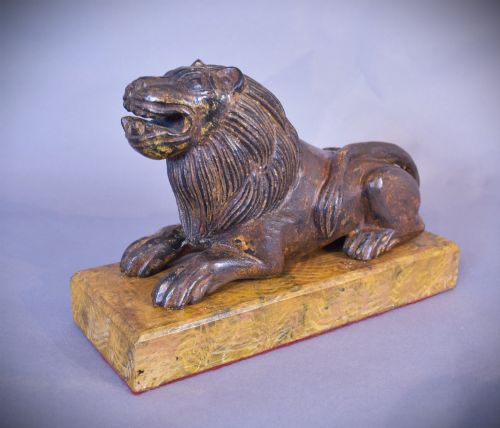
An antique timber lion sculpture encompasses carved figures, wall masks, newel post finials, and bookends spanning from the seventeenth century through to the Edwardian period. Buyers browsing this page encounter everything from monumental Medici lions and Grand Tour souvenirs to architectural salvage and temple guards originating from Chinese and European workshops.
How they were made
Surface treatments vary significantly across the selection, incorporating polychrome paint, gilt highlights, and exposed natural grain finished with dark patination. Some pieces retain traces of original paint or pigment applied to heighten the theatrical presence of temple figures and wall masks.
Listings span four centuries, featuring pieces from the 17th, 18th, and 19th centuries alongside Edwardian items.
What varies in quality
Depth of relief and the ambition of the original commission dictate the standing of a piece within its period. Architectural salvage and substantial furniture elements display an organic integration of sculpture and structure that sets them apart from smaller decorative ornaments.
Luigi Frullini
The Antique Timber Lion Sculpture Glossary
- Newel post finial
- A decorative carved ornament capping the primary vertical post at the start of a staircase. These architectural elements often depict heraldic beasts or lions.
- Medici lions
- Replicas or reinterpretations of the famous marble pair guarding the Villa Medici in Rome. They are typically depicted crouching with one paw resting upon a sphere.
- Grand Tour
- A cultural journey undertaken by wealthy young Europeans through the continent during the eighteenth and nineteenth centuries. Souvenirs included portable carved sculptures and architectural models.
- Polychrome paint
- The practice of decorating architectural elements or sculptures in multiple colours. This finish enhances the visual drama of historical carved timber.
Antique Timber Lion Sculpture: Frequently Asked Questions
Where were timber lions placed?
These carved figures served multiple architectural and decorative functions within historic interiors. Many originated as furniture elements, staircase finials, or wall masks mounted above panelling.
Others functioned as freestanding ornaments on plinths or acted as protective guardians flanking temple entrances and doorways.
How do I date an antique lion sculpture?
Dating relies heavily on tool marks, timber choice, and stylistic conventions associated with specific centuries. Seventeenth and eighteenth-century examples often exhibit heavier walnut construction with hand-cut joinery and high-relief carving.
Later nineteenth-century and Edwardian pieces frequently reflect revival styles like Gothic or Georgian, showing distinct patination and mechanical tool adaptation.
Are these sculptures solid wood?
The pieces recorded here are carved from solid timbers such as walnut, oak, and pine. Master carvers worked directly into blocks of wood to shape figures, wall masks, and bookends.
Construction methods reflect the traditions of the period, utilising heavy timber sections appropriate for architectural salvage and furniture mounts.
What is a Medici lion?
Medici lions are iconic sculptural representations modelled after the ancient marble pair at the Villa Medici in Rome. They portray a majestic lion with one paw resting on a sphere, gazing outwards.
Nineteenth-century workshops frequently reproduced these powerful beasts in carved timber as decorative ornaments or Grand Tour souvenirs.