



Dark Rosewood Whatnot
A dark rosewood whatnot brings tiered display space to a room, offering open shelving crafted for books, ornaments and plants.
Dark Rosewood Whatnot
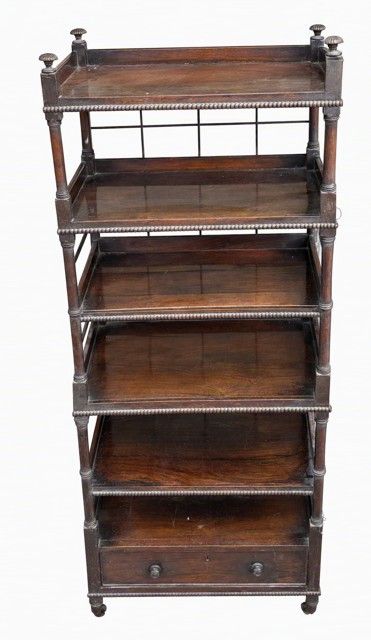
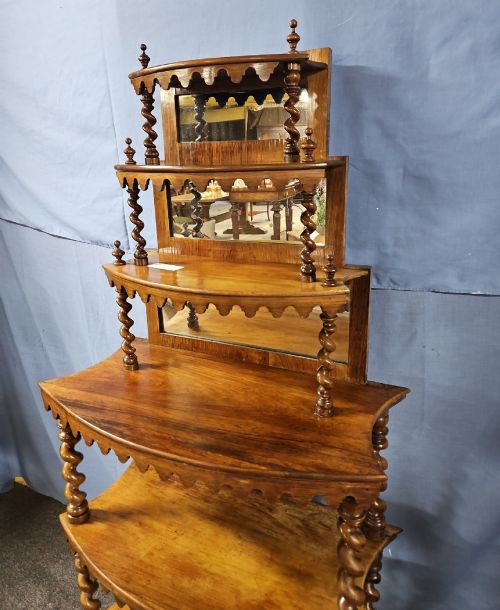
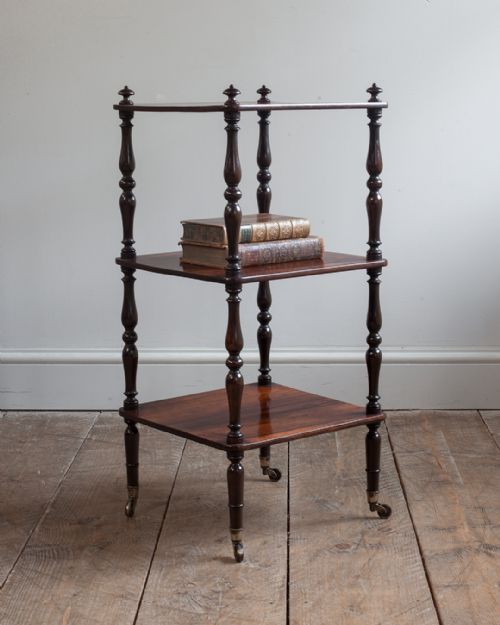
When you search for a dark rosewood whatnot, you encounter open tiered furniture designed for display and storage in nineteenth century interiors. These pieces appear in forms ranging from three tier open shelves and corner units to complex pieces combined with a Canterbury or a reading stand. Most examples on this page date from the Victorian and Regency periods, utilising rich dark timbers.
The objects function as etageres, display shelves, bookcases and dumb waiters, constructed to hold books, ceramics and decorative objects upon multiple graduated levels. They stand on upright supports, frequently fitted with castors, and include variations such as Chinese carved cabinets and plant stand tables. The majority are freestanding items designed to occupy corners or walls in principal reception rooms.
Materials and construction
Makers built these pieces primarily from rosewood, selecting dense timber with deep grain patterns and polishing the surfaces to a dark finish. Structural elements frequently incorporate brass fittings, castors for mobility, and sometimes ormolu mounts to accent the uprights and shelves.
Joinery techniques united turned columns or pillars with horizontal timber platforms to form multi-tiered shelving units. Selected examples integrate mirrored backs, glass panels, or carved hardwood details, particularly evident in pieces originating from Chinese export workshops.
Listings span the nineteenth century, encompassing Regency, George IV, William IV, and Victorian periods alongside Chinese export items.
What separates the tiers of quality
Quality in a dark rosewood whatnot rests upon the selection of timber and the precision of the turning on the upright columns. Superior pieces display figured grain across every shelf and sturdy joinery that maintains rigidity without excessive bulk.
Attribution to known makers like Gillows or Samson and Son elevates a piece, as does the integration of functional additions such as a Canterbury section, a reading stand, or castors that match the period. Simpler vernacular pieces serve the same display purpose but lack the refined proportions and carved detailing found at the top of the range.
Samson and Son London·Gillows
The Dark Rosewood Whatnot Glossary
- Whatnot
- A piece of furniture consisting of a set of open shelves for displaying small objects, popular in the nineteenth century. These tiers graduate in size from top to bottom.
- Etagere
- A piece of furniture with a set of open shelves for holding ornaments, synonymous with the whatnot. The term derives from the French word for a stage or shelf.
- Ormolu
- Gilded bronze or brass applied as a decorative mount on furniture. This material provides metallic contrast against dark rosewood surfaces.
- Dumb waiter
- A piece of tiered shelving used for serving or holding tableware and books. Examples in this category function alongside standard display shelves.
Dark Rosewood Whatnot: Frequently Asked Questions
What is a dark rosewood whatnot used for?
These pieces serve primarily as open display furniture for books, ceramics, plants and ornaments in living spaces.
Historically, they provided accessible surface space in nineteenth century rooms without the visual weight of enclosed cabinets.
How do I tell a Regency whatnot from a Victorian one?
Regency examples often display cleaner classical lines, simpler turned supports, and dates around the early decades of the nineteenth century.
Victorian pieces frequently introduce heavier carving, mirrored backs, or specialised combinations like incorporated Canuterbury sections and plant stands.
Are all these pieces freestanding?
Most items in this category stand independently on their own legs or castors, designed to sit against walls or within room corners.
Corner models utilise specialised triangular shelving specifically engineered to fit ninety degree room angles.
What variations exist in tier numbers?
Listings feature items ranging from three tiers up to six tier stand configurations.
The number of shelves affects the overall height and the specific utility of the piece for books versus smaller decorative objects.