

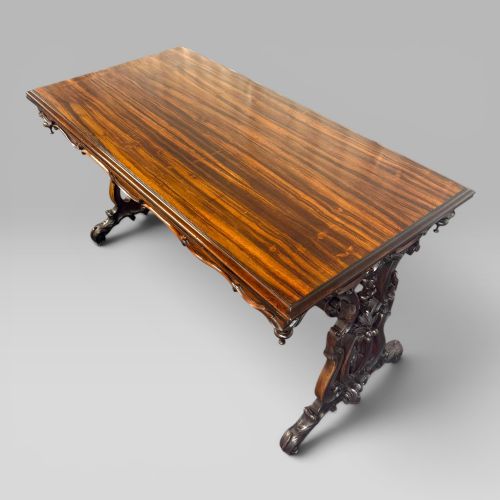
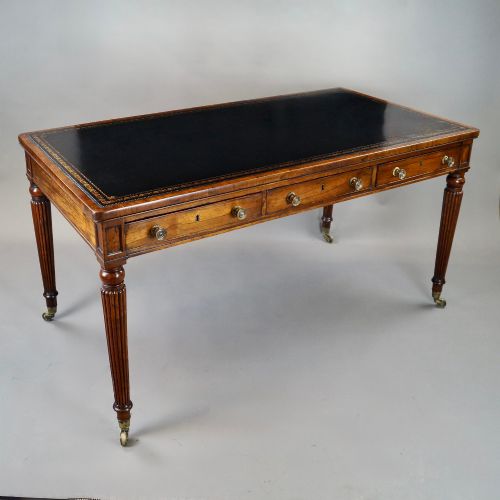
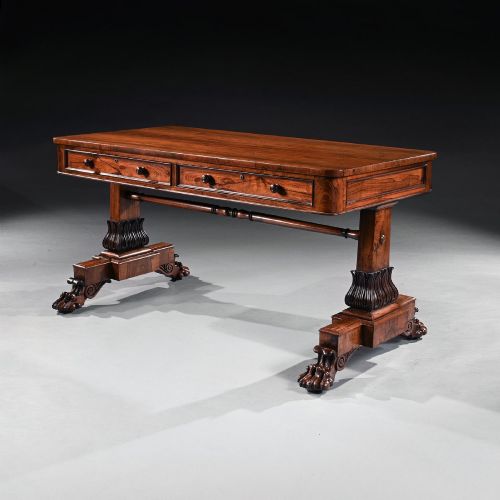

Dark Rosewood Library Table
A dark rosewood library table brings rich grain and solid weight to a room, offering a sturdy workspace shaped by nineteenth-century cabinetmakers.
Dark Rosewood Library Table
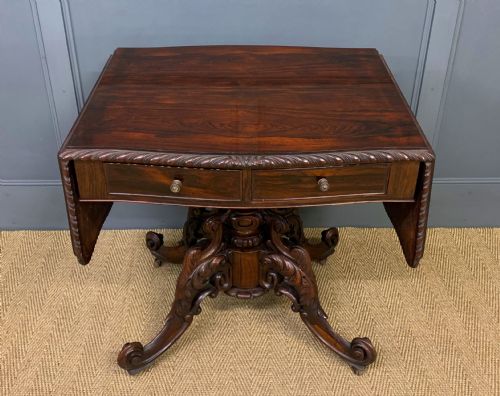
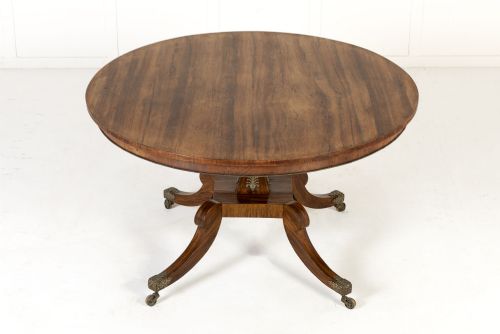
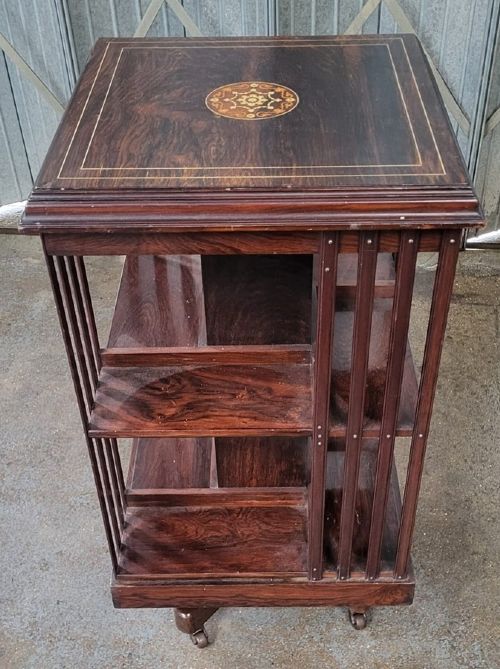
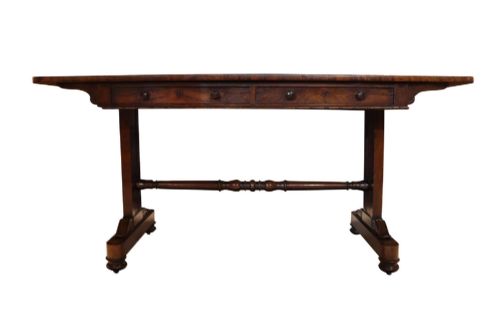
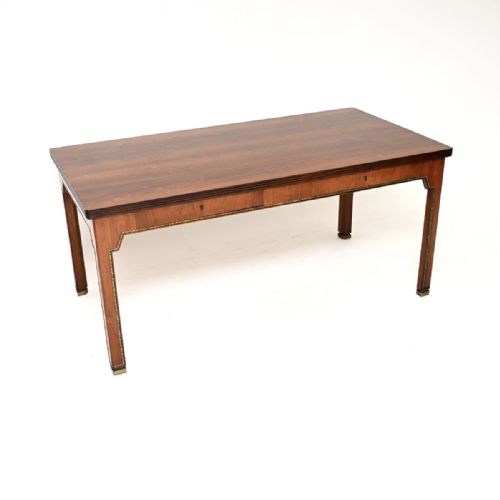
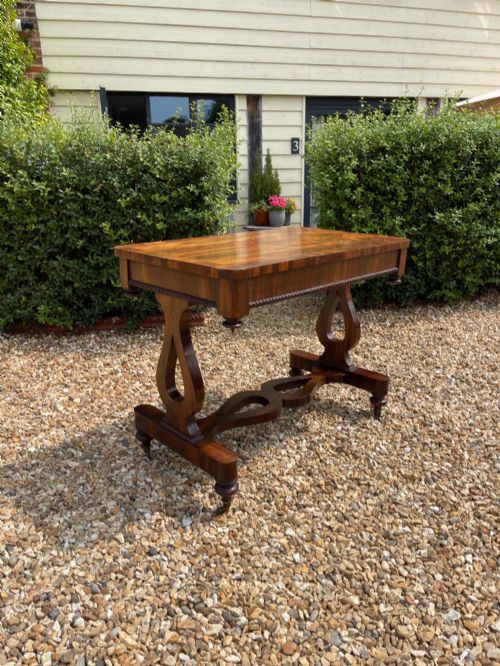
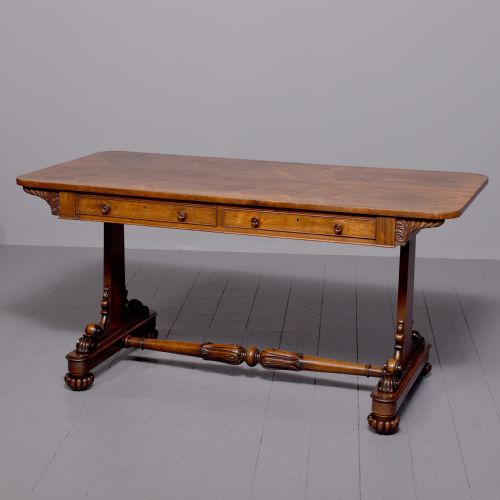
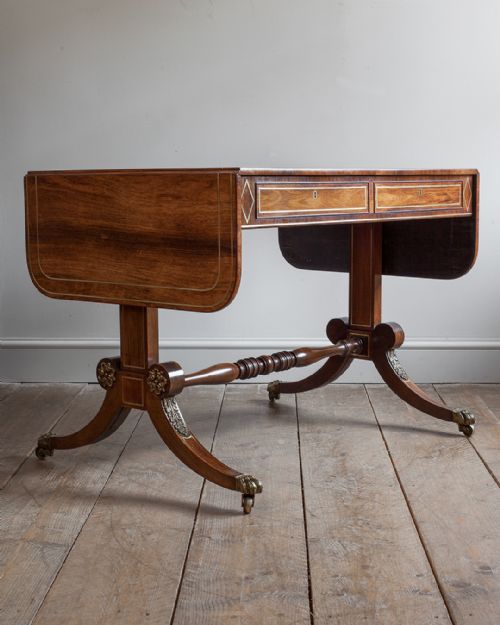
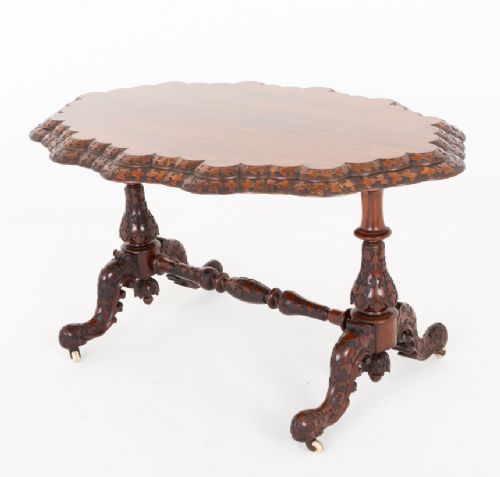
A dark rosewood library table is a substantial freestanding piece designed for working with books and papers in nineteenth-century interiors. These tables emerge primarily from Regency, William IV, and Victorian periods, often taking the form of rectangular desks or centre tables.
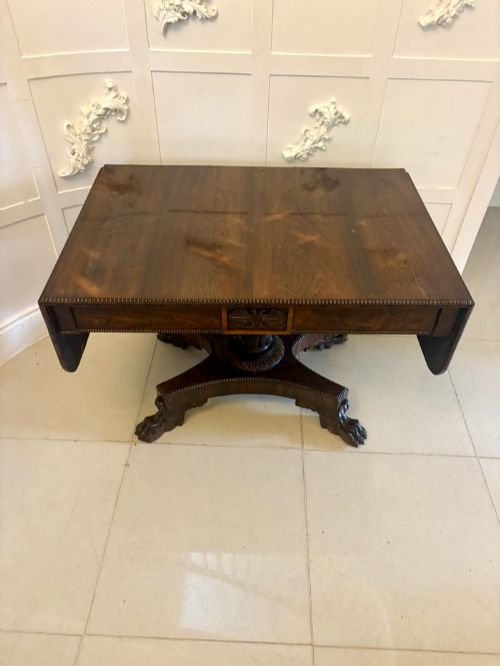
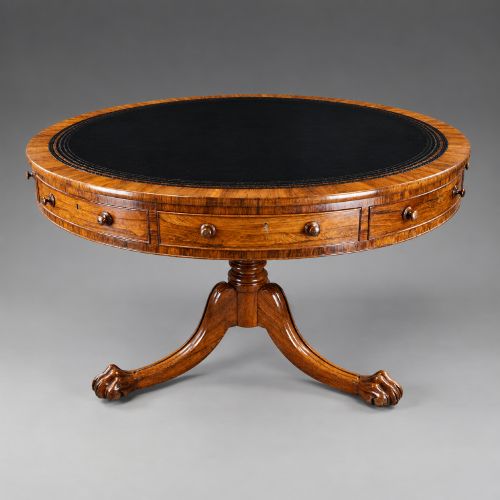
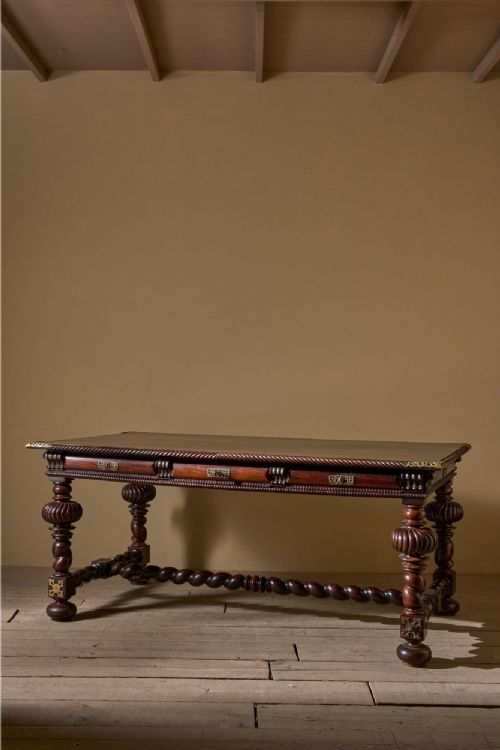
The versions most common here feature dark tropical timber bodies set upon central pedestals or carved legs. Many examples incorporate drawers for storage or leather-lined writing surfaces suited to daily use.
What varies in quality
The depth of the wood grain and the richness of the natural polish separate standard workshop pieces from superior examples. Finely figured rosewood displays complex patterning across the entire top surface rather than plain dark patches.
Carved details such as lion paws or pedestals show varying degrees of hand-chutting skill. Crisp execution in brass inlay and precise dovetailing in the drawer boxes indicate higher workmanship.
Dark Rosewood Library Table Retail Price Guide 2026
Typical asking prices for dark rosewood library table among the pieces listed under this phrase on Sellingantiques today, from the lower quarter to the upper quarter. They describe what is for sale here now, not the wider market.
Some nineteenth-century makers concealed secret locking mechanisms inside drawer frames to protect private correspondence.
Gillows·Mein of Kelso·Arnold and Frodsham
The Dark Rosewood Library Table Glossary
- Rosewood
- A dense, heavily figured tropical hardwood prized for dark heartwood and oily lustre. It takes a high polish and forms the primary material for high-status nineteenth-century tables.
- Library table
- A large freestanding desk designed to sit in the centre of a room rather than against a wall. These pieces typically feature finished backs and multiple drawers.
- Regency
- An English design style spanning the early nineteenth century defined by classical restraint and Grecian influence. Pieces from this era often incorporate brass mounts and saber legs.
- Centre table
- A freestanding table finished on all sides intended for placement in the middle of an apartment. They frequently share proportions with library desks.
- Dovetail
- A traditional interlocking joint used to connect drawer sides to drawer fronts. Fine nineteenth-century examples display tight, slender pins cut by hand.
Dark Rosewood Library Table: Frequently Asked Questions
Where do I put a library table?
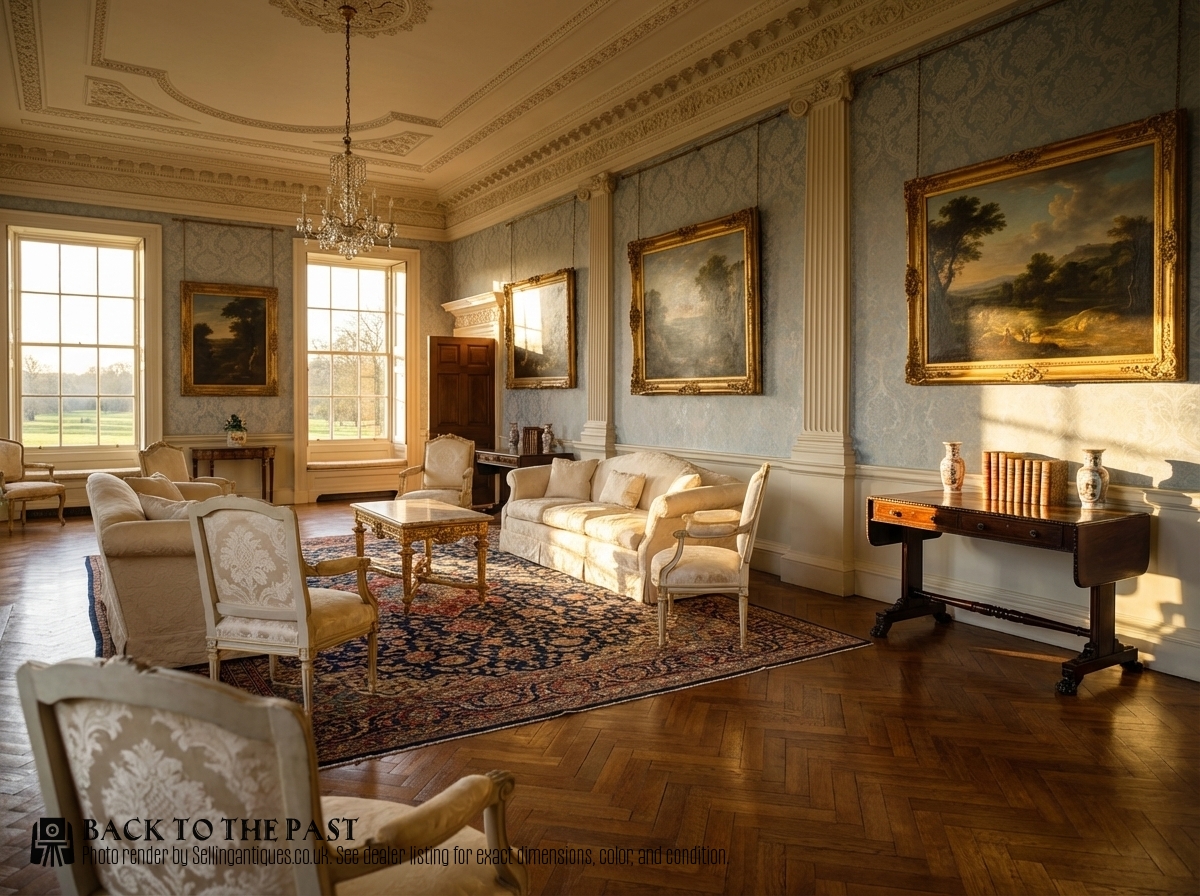
A library table works best freestanding in the middle of a study or living space where all four sides remain visible. Because these pieces are finished on the reverse, they do not need to rest against a wall.
Ensure there is enough clearance around the perimeter to pull out chairs or access any integrated drawers comfortably.
How do I care for rosewood?
Keep dark rosewood surfaces away from direct sunlight and heat sources to prevent the timber and underlying veneers from drying out. Dust regularly with a dry cloth and avoid silicone-based polishes.
Apply a microcrystalline wax occasionally to protect the finish and maintain the natural lustre of the wood.
How do I date a library table?
Examine the secondary woods inside the drawer boxes and the construction methods used for the joints. Regency and William IV pieces often display heavier brass mounts and distinct classical proportions compared to later Victorian iterations.
Turn the table over to inspect the underside for tool marks, screw types, and timber oxidation that indicate age.
What is the difference between a library table and a centre table?
Library tables generally prioritise writing surfaces, often including fitted drawers and leather inserts for practical study. Centre tables focus more on decorative presence within a room.
In practice, nineteenth-century cabinetmakers often used the terms interchangeably depending on the scale and finish of the piece.