


Dark Rosewood Drawers
Dark rosewood drawers bring deep grain and rich colour to domestic spaces, spanning periods from the Georgian era through to Edwardian designs.
Dark Rosewood Drawers
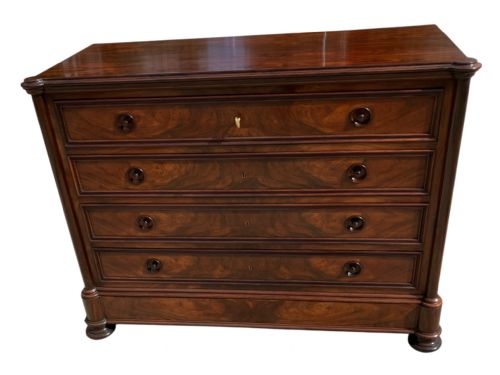
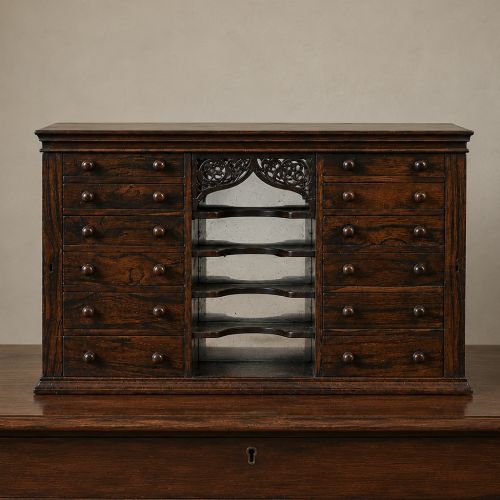
When you search for dark rosewood drawers, you encounter a variety of storage and writing furniture designed across the nineteenth century. The selection ranges from compact Wellington chests and miniatures to fitted Davenport desks and multi-drawer writing cabinets.
Victorian and Regency examples dominate the pieces seen here, often incorporating secret compartments, brass mounts, and integrated writing slopes. Smaller forms like bedside cabinets and side tables with single drawers also appear frequently alongside larger library tables.
The materials span several periods including Georgian, William IV, and Edwardian styles. Alongside solid or veneered rosewood, makers utilised mahogany, walnut, and kingwood to construct these functional domestic items.
How they were made
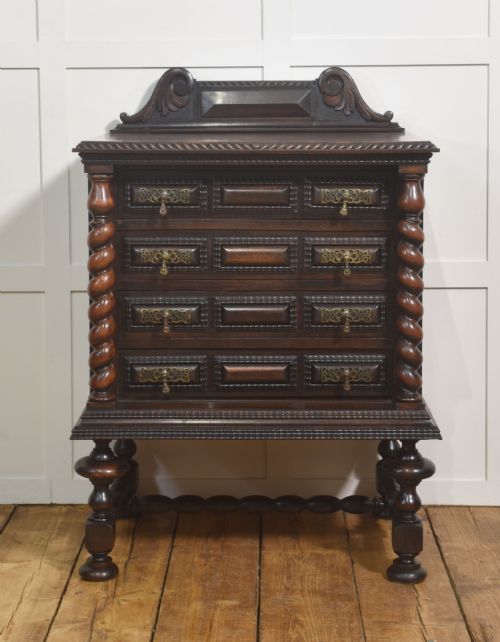
Cabinet makers utilised dense rosewood timber, often applied as veneers over secondary woods like mahogany to display striking grain patterns. Brass handles, gilt mounts, and inlay work provide structural contrast and decorative detail across drawers and cabinets.
Internal construction frequently involved secondary woods for drawer linings, complemented by leather writing surfaces and glass elements on specific display pieces. French polishing techniques enhanced the dark, reddish-brown tones characteristic of the timber.
Listings feature nineteen-century furniture styles including Regency, Victorian, William IV, and Edwardian periods.
What varies in quality
The articulation of brass mounts and the precision of marquetry inlay separate standard production from superior cabinet work. Finely figured grain on drawer fronts indicates careful timber selection by the maker.
Structural integrity relies upon the retention of original brass handles, functioning secret mechanisms, and stable secondary framing within each chest or desk.
Maison Krieger·Mein of Kelso·Samson and Son London
The Dark Rosewood Drawers Glossary
- Wellington chest
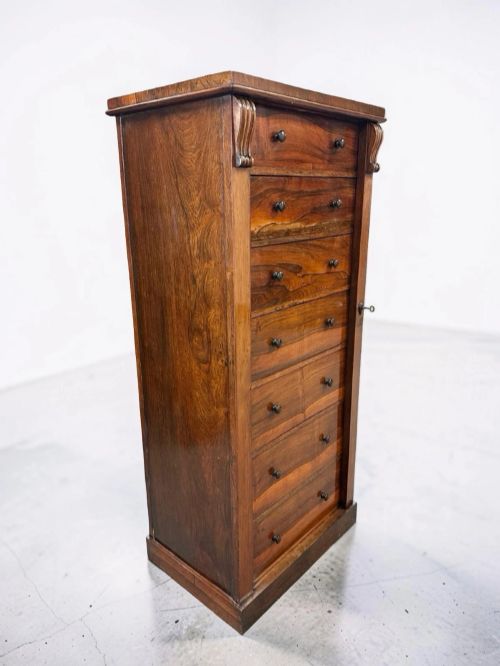
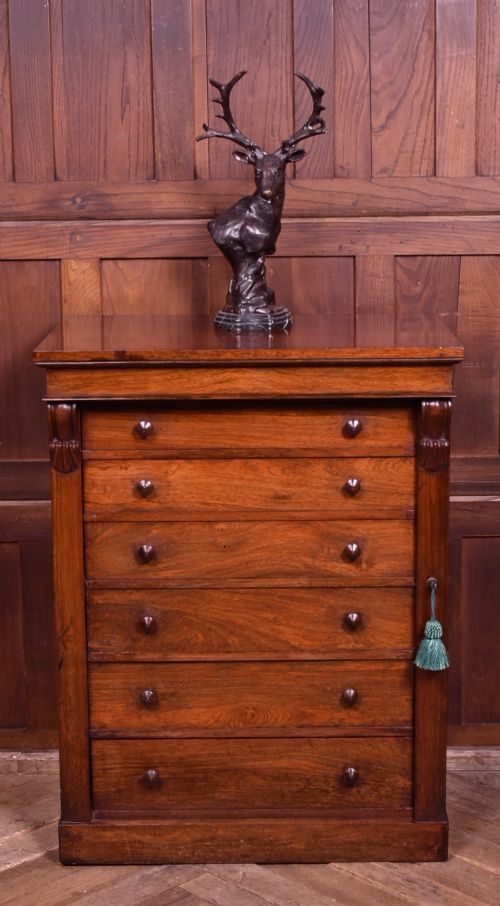
- A tall, slender chest of drawers secured by a hinged locking pilaster on one side. This form typically contains multiple shallow drawers.
- Davenport desk
- A compact small desk featuring a sloped, leather-inset writing surface above a set of side drawers. The design originated in the late eighteenth century.
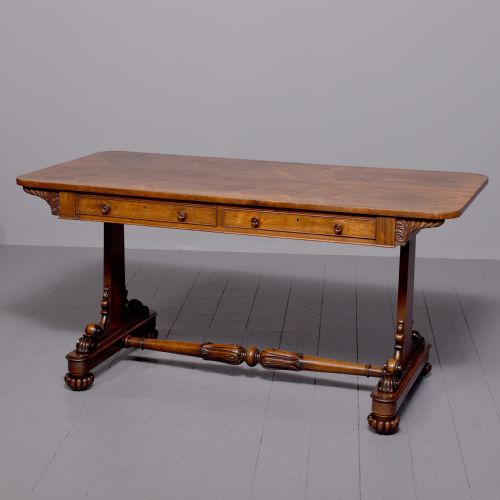
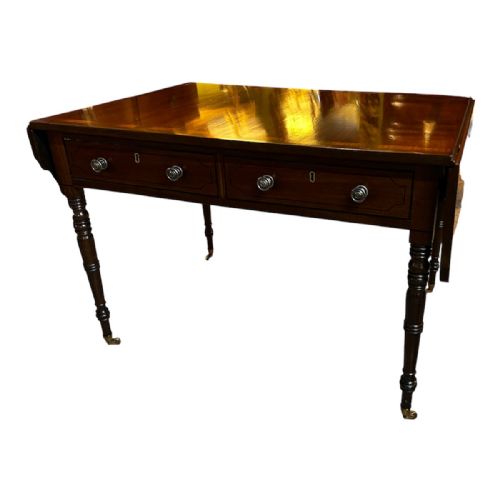
- Sofa table
- A rectangular occasional table designed to stand in front of a sofa, usually fitted with two small drop leaves and drawers.
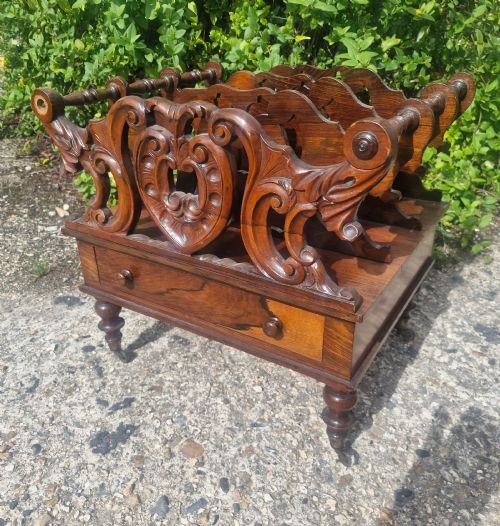
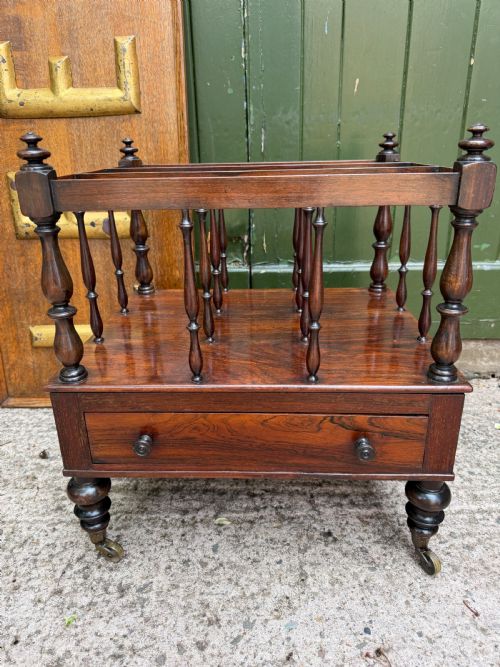
- Canterbury
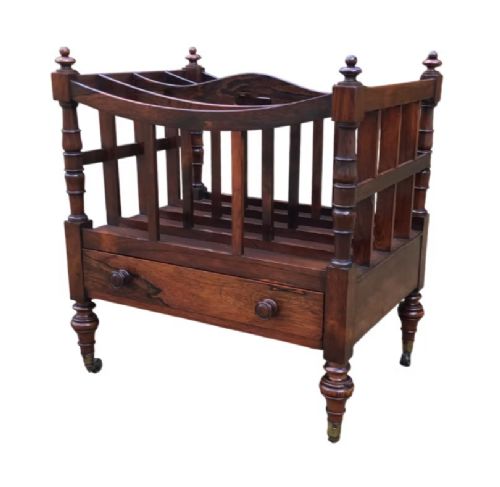
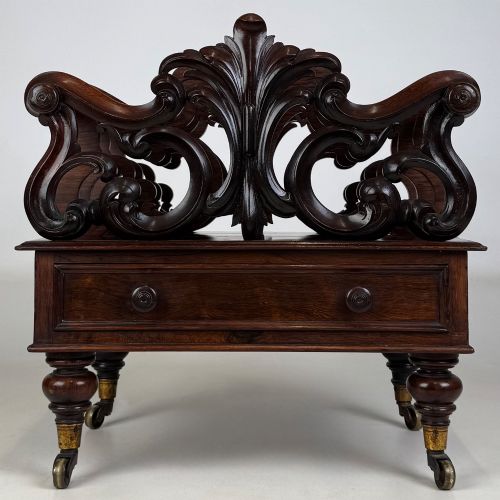
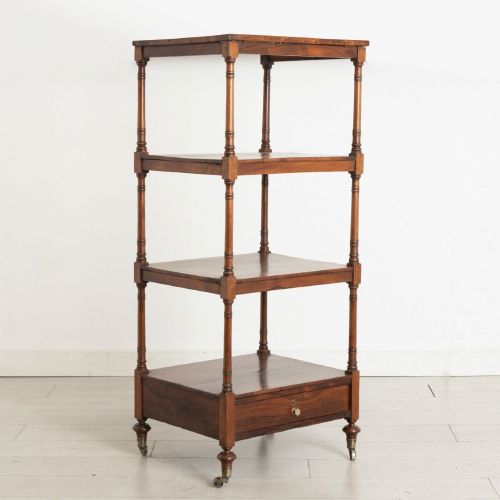
- A low stand with partitions used for holding sheet music or books, occasionally fitted with a single drawer at the base.
- Marquetry
- Decorative inlay work using various coloured woods to create pictorial or geometric patterns on furniture surfaces.
Dark Rosewood Drawers: Frequently Asked Questions
What is a Wellington chest?
A Wellington chest is a tall, narrow set of drawers held in place by a hinged locking stile on the right side. This clever design secured all the drawers simultaneously with a single key.
Cabinet makers produced these pieces primarily during the nineteenth century in rosewood and mahogany. They served as compact storage for linen, papers, or valuables in bedrooms and dressing rooms.
How do I identify a Davenport?
A Davenport is a small desk featuring an angled writing slope on top that lifts to reveal stationery storage. The writing surface is usually lined with leather.
Beneath the slope, a set of drawers opens to one side while dummy drawers balance the other. They were popular throughout the Victorian and Edwardian periods for writing letters in smaller drawing rooms.
What is a Canterbury used for?
A Canterbury is a low stand divided into upright compartments designed to hold sheet music, magazines, or folios. Many examples include a shallow drawer positioned beneath the partitions.
Introduced in the Regency period, these pieces stood beside pianos or in parlours to keep musical scores organised. They often feature castors for easy movement across carpets.
How do I date a rosewood piece?
Dating relies on stylistic markers, construction methods, and the specific characteristics of the rosewood timber used. Regency and William IV pieces display bolder classical mounts, while Victorian examples often feature heavier carving or Davenport forms.
Examining the secondary woods inside the drawers and the style of the brass handles helps narrow down the decade of manufacture. Grain patterns and polish types also shift between the Georgian era and the later Edwardian period.