
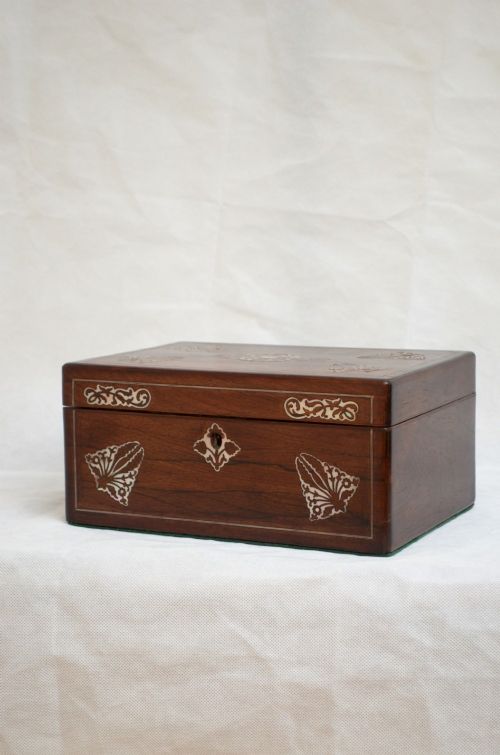


Dark Rosewood Casket
A dark rosewood casket is a dense, deeply grained container for valuables, prized for its dark timber and classic craftsmanship.

Dark Rosewood Casket
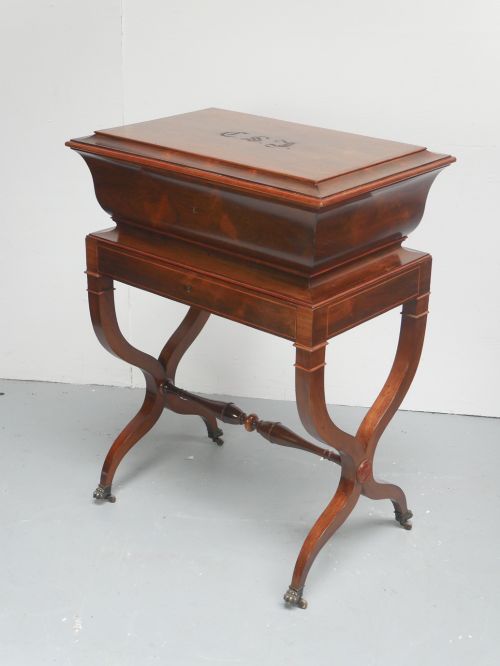
A dark rosewood casket is typically encountered as a jewellery box, work box, or document box dating from the Georgian, Regency, and Victorian periods. These pieces serve to store personal trinkets, documents, or sewing accessories on a table top.
The version most frequently met on this page is the Victorian or Regency box, constructed with a hinged lid and often fitted with internal trays, compartments, or velvet linings.
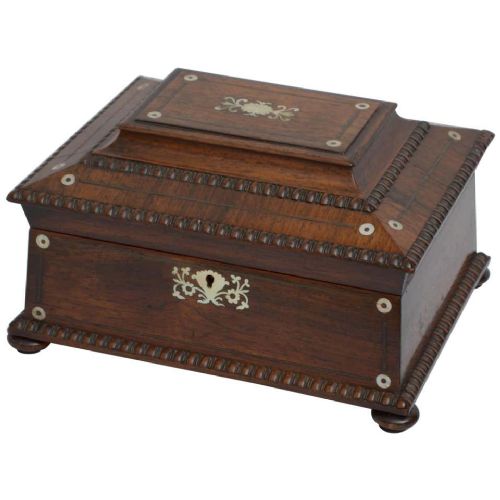
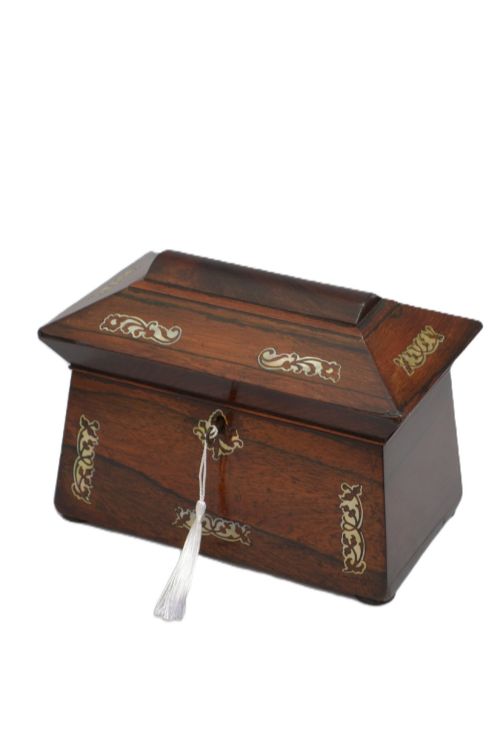
Examples range from plain brass-bound document cases to elaborately inlaid sarcophagus-shaped caskets decorated with mother of pearl and boxwood.
Materials and construction methods
Makers utilised solid rosewood or applied dense rosewood veneers over secondary timbers, exploiting the rich, dark grain of the wood. Surfaces frequently incorporate brass banding, brass stringing, and cut brass inlay.
Listings feature rosewood boxes spanning the Georgian, Regency, William IV, and Victorian periods, alongside Chinese Republic period hardwood pieces.
Judging execution and finish
Quality rests upon the precision of the joinery and the crispness of the brass inlay or marquetry. Superior pieces exhibit seamless mitred corners and securely seated decorative veneers that remain flush with the dark rosewood surface.
Internal fittings dictate distinction, with top-tier examples retaining original velvet linings, mirror panels, compartmentalised trays, and working locks with matching keys.
Edmund Nye·Lesage
The Dark Rosewood Casket Glossary
- Rosewood
- A heavy, dense tropical timber with a deep dark brown colour and contrasting dark grain markings. It provides a durable and polished exterior for fine boxes.
- Marquetry
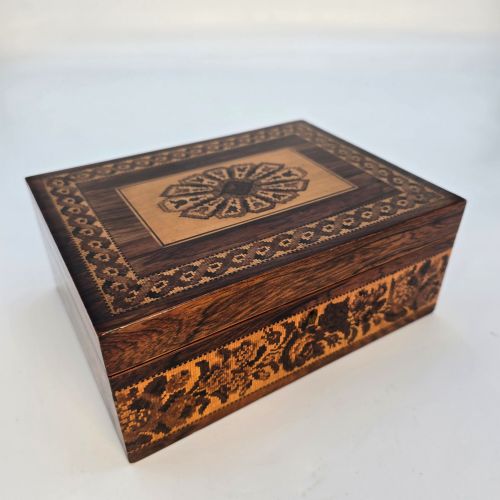
- The art of applying decorative veneer pieces in wood, shell, or metal to form geometric or pictorial designs. This technique decorates many lids and panels.
- Sarcophagus-shaped
- A box design featuring a sloping, stepped lid reminiscent of a stone coffin, popular during the Regency and William IV periods.
- Tunbridge Ware
- Woodworking characterised by mosaic veneers made from thousands of tiny contrasting wood squares to create pictorial motifs.
- Campaign Box
- A portable box fitted with recessed brass handles and reinforced corners designed for travel during the Georgian and Regency eras.
Dark Rosewood Casket: Frequently Asked Questions
What were dark rosewood caskets used for originally?
These caskets served to safeguard precious jewellery, personal letters, documents, and sewing implements. Wealthy owners kept them on dressing tables, desks, or parlour sideboards.
The fitted interiors with velvet and silk provided protection for delicate items while keeping them organised and accessible.
How do I identify a Regency period box?
Regency boxes often display architectural proportions, sarcophagus silhouettes, and precise brass stringing or Boulle-style inlay. The timber exhibits a deep, dark lustre typical of the early nineteenth century.
They frequently feature recessed brass ring handles and robust construction suited for portable document storage or writing.
Are mother of pearl inlays original?
Mother of pearl and abalone inlays were applied during the Victorian era to contrast against the dark rosewood background. Makers cut thin shell sections into floral or geometric shapes and set them flush into the wood.
Close inspection reveals the natural grain and iridescent shimmer characteristic of nineteenth-century shell work.
How should I clean a rosewood surface?
Maintenance requires only a soft, dry cloth to remove dust and preserve the polished timber. Avoid modern chemical sprays or excessive moisture which can damage the aged French polish.
Gentle application of microcrystalline wax occasionally helps protect the dark wood grain without dulling the historic finish.