






Dark Red Baluch Carpet
When you choose a dark red baluch carpet, you bring home a richly patterned piece of nomadic weaving rooted in nineteenth and early twentieth-century traditions.
Dark Red Baluch Carpet
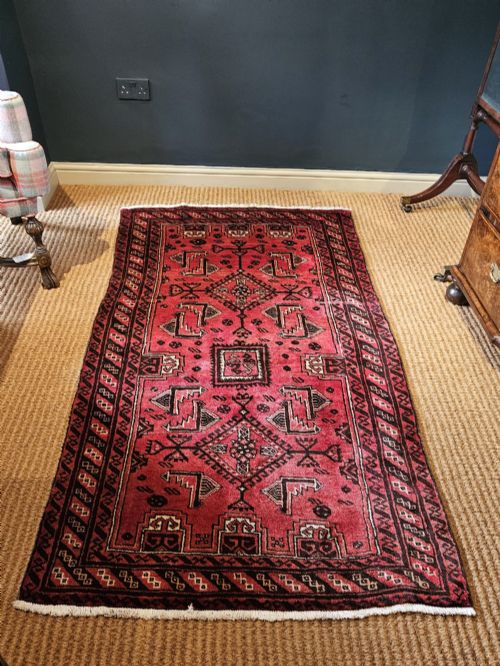
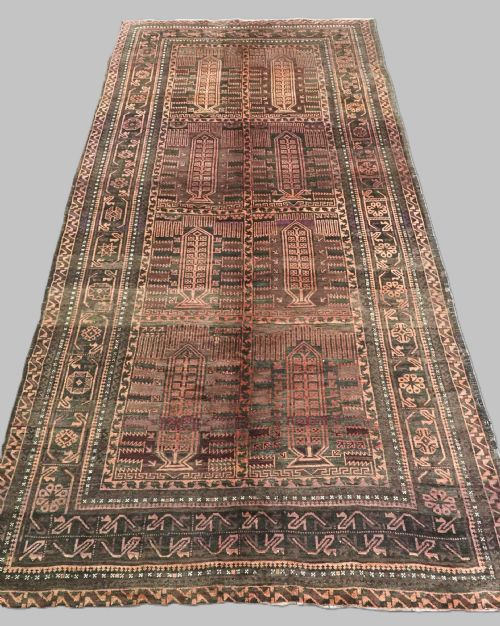
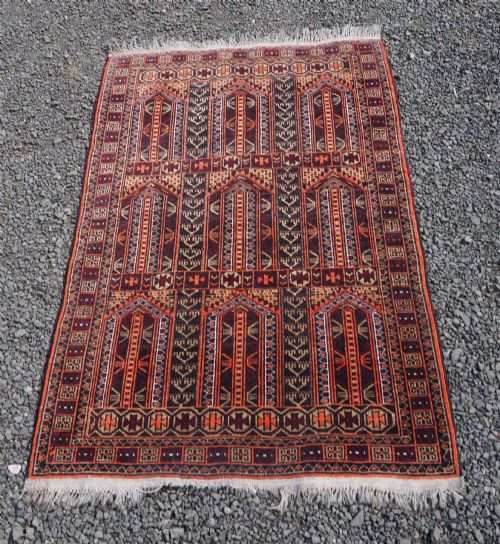
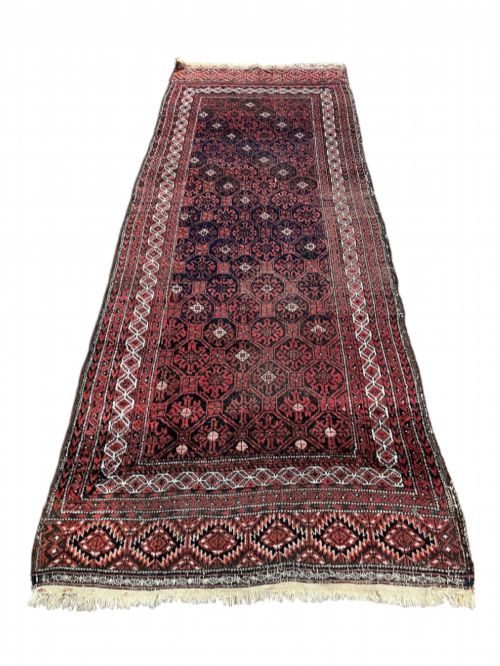
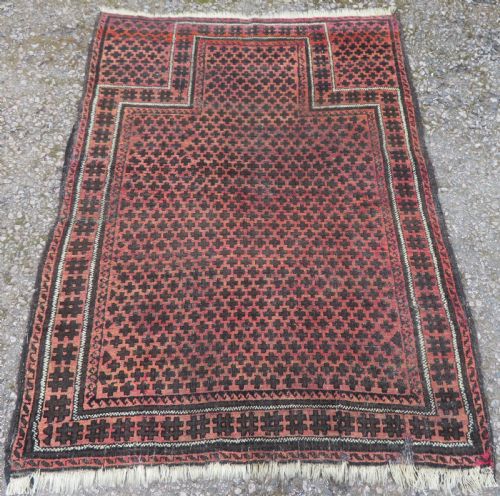
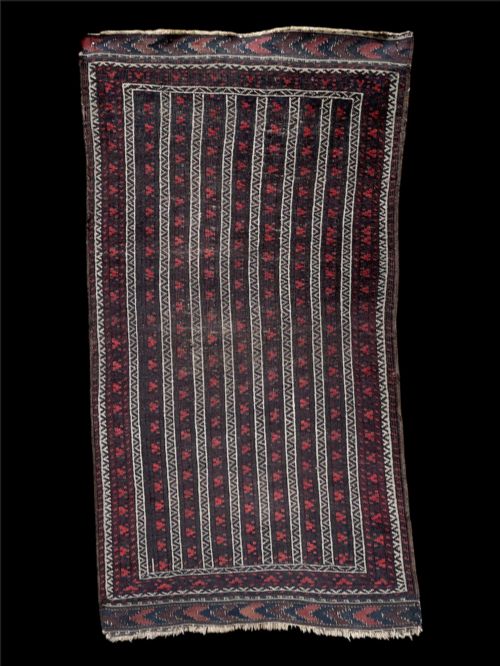
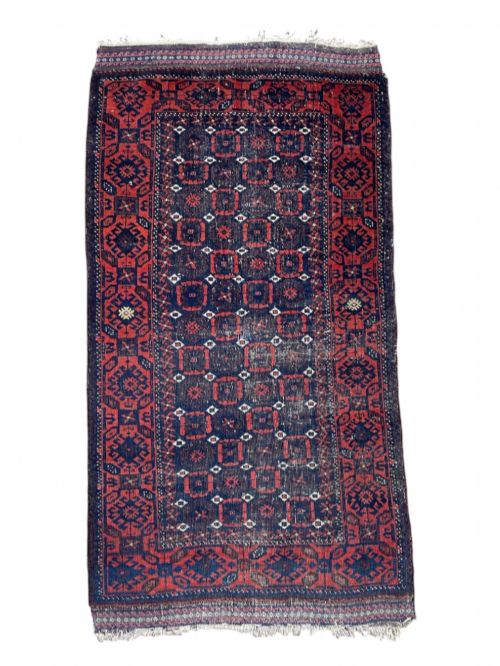
A dark red baluch carpet represents the weaving traditions of nomadic and village groups from regions spanning Afghanistan, Persia, and Khorasan. These floor coverings and runners frequently feature deep crimson and madder red grounds paired with geometric motifs, prayer mihrabs, and repeating octagons.
You are most likely to encounter pieces originating from the late nineteenth century up to the 1930s, encompassing formats from small prayer mats to larger main carpets and runners. The aesthetic draws on tribal designs such as the pencil box, mina khani lattice, and double mihrab configurations.
The grouping reflects diverse regional substyles, including Timuri, Mushwani, and Mahdad Khani attributions. Each variant displays distinct structural choices while maintaining the characteristic dark palette and dense wool construction associated with nomadic workshops.
How they were made
Weavers constructed these carpets using hand-spun wool and pure wool foundations, often incorporating goat hair for sturdy selvedges and structural durability. The natural dyes utilised in the process yield the deep madder and dark red tones that define the surface colouration.
The pile is hand-knotted onto cotton or wool warps and wefts, resulting in a dense, resilient textile suited to daily nomadic use. Supplementary elements and structural details reflect traditional tribal techniques passed down through generations.
Some weaver families tucked tiny rogue stars into unexpected corners of the field just to keep the evil eye guessing.
What varies in quality
The standard of an example depends heavily on the crispness of the knotting and the depth of the natural dyes used in the dark red fields. Finer specimens display precise geometric execution and well-balanced proportions across traditional motifs like the calyx lattice or repeating guls.
Preservation of the original wool pile and secure outer edges distinguishes superior survivals from pieces that have undergone heavy wear or structural intervention. The complexity of the specific tribal design, such as a scarce repeat star or multiple mihrabs, also influences the character of the piece.
The Dark Red Baluch Carpet Glossary
- Mihrab
- The arched niche design often found on prayer rugs, symbolising a doorway or directional focal point. This motif frequently appears in single, double, or triple variations across tribal weaving.
- Gul
- A repeating octagonal medallion motif used extensively in nomadic and tribal carpet designs. These medallions often contain geometric filler patterns unique to specific regional groups.
- Herati
- A classic floral trellis pattern featuring a central rosette enclosed by curved leaves. It forms a continuous repeating lattice across the field of the carpet.
- Mina Khani
- An all-over lattice design composed of daisy-like flowers linked by curved stems. This traditional Persian pattern appears in numerous regional variants on nineteenth-century rugs.
- Selvedge
- The finished side edges of a carpet formed by wrapping warp threads to prevent unravelling. Goat hair is commonly utilised here for added strength.
Dark Red Baluch Carpet: Frequently Asked Questions
What is a baluch carpet?
A baluch carpet is a traditional hand-knotted textile produced by nomadic and village weavers in regions encompassing modern-day Afghanistan, eastern Persia, and Baluchistan. They are distinguished by rich dark red or brown colour palettes and geometric tribal motifs.
These pieces range from small prayer rugs to larger main carpets and runners, created using hand-spun wool and natural dyes during the nineteenth and early twentieth centuries.
How were these rugs used?
Nomadic and village communities utilised these carpets as versatile floor coverings, bedding surfaces, and portable furnishings within tents or homes. Prayer rugs specifically served a devotional function, oriented towards Mecca during daily worship.
Because of their durable construction using pure wool and goat hair, they withstood heavy domestic foot traffic and the practical demands of a mobile lifestyle.
How do I care for an antique rug?
Living with an antique textile requires gentle maintenance, such as regular vacuuming without a rotating power brush to protect the hand-knotted wool pile. Keeping the piece out of direct, harsh sunlight helps preserve the integrity of the natural madder dyes.
Professional cleaning tailored to antique vegetable-dyed wool should be undertaken periodically rather than standard household washing methods.
How are different regional styles told apart?
Distinguishing regional styles involves examining the specific structural combinations, colour nuances, and motif arrangements unique to subgroups like the Timuri, Mushwani, or Khorasan weavers. Certain knotting habits and selvedge treatments provide further clues to precise origin.
Design elements such as box medallions, pencil box patterns, or specific mihrab arches help attribute a carpet to a particular district or tribal group.