


Dark Pine Table
A dark pine table brings useful surface space and rustic character to a room, spanning forms from farmhouse dining tables to smaller side and serving tables.
Dark Pine Table
A dark pine table covers a wide selection of practical wooden furniture intended for dining, serving, and occasional use across domestic spaces. These pieces emerge predominantly from the nineteenth century, including Victorian periods, alongside Georgian and Regency examples.
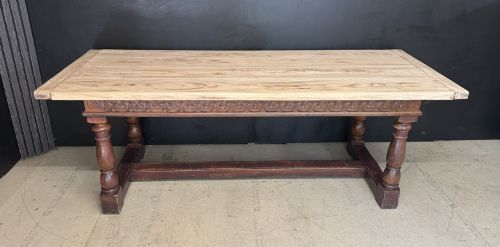
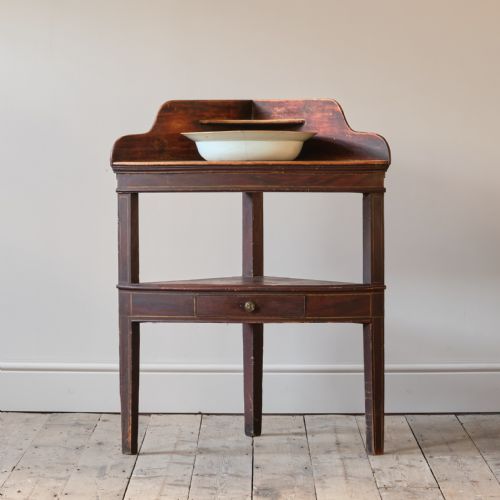
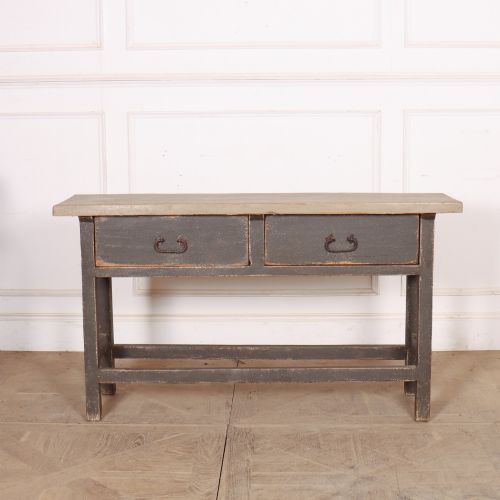
Buyers searching for a dark pine table will encounter various forms ranging from large kitchen and refectory dining tables to smaller side tables, washstands, and bedside cabinets. Regional variations such as English, French, and Swedish country pieces frequently appear on this page.
What varies in quality
Quality in these pieces depends upon the integrity of the original timber and the survival of early or original surface paint rather than uniform factory standards. Items retaining authentic patination and untouched construction details command greater interest among collectors.
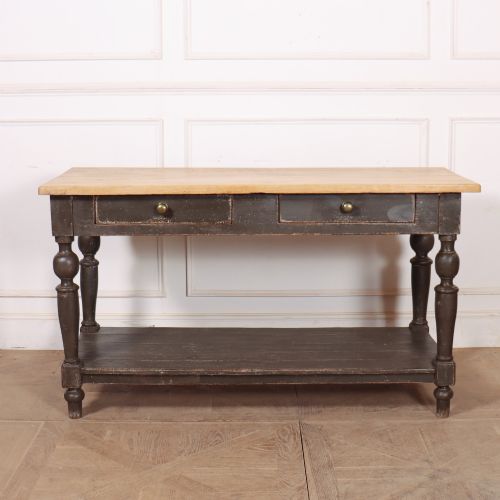
Proportion and functional design also distinguish better examples, such as tables with well-turned legs, balanced stretcher bases, or useful integrated drawers. The presence of regional characteristics or documented provenance further elevates the distinction of individual pieces.
Several bedside cabinets emerge in unexpectedly bright painted hues of blue and grey alongside more sombre dark tones.
The Dark Pine Table Glossary
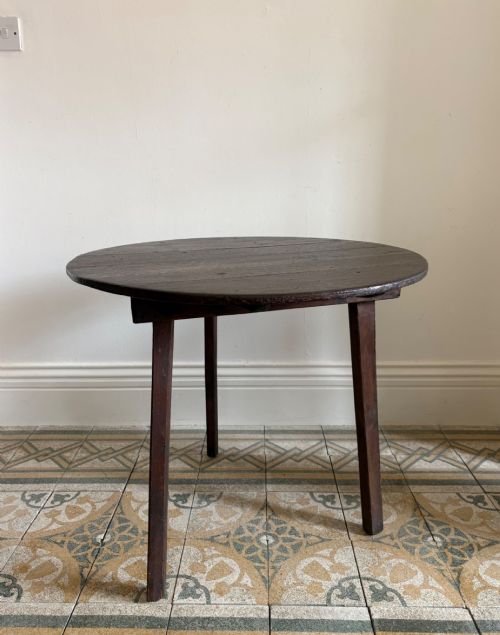
- Cricket table
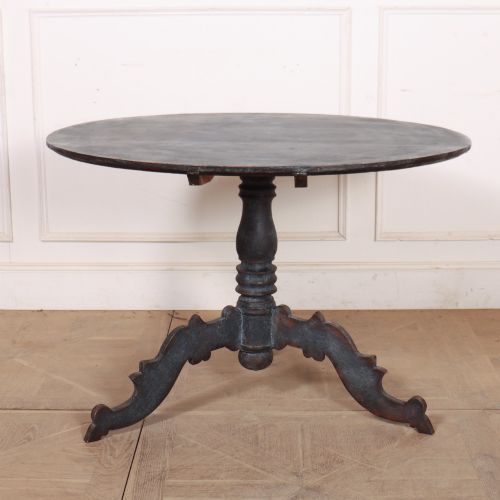
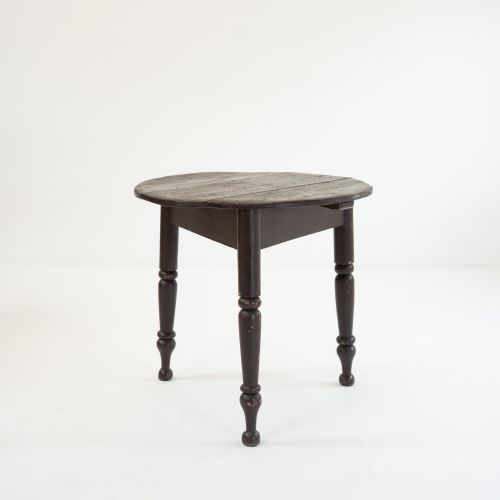
- A small three-legged table originating in Britain, often featuring a round wooden top supported by pegged legs and frequently constructed in pine or oak.
- Refectory table
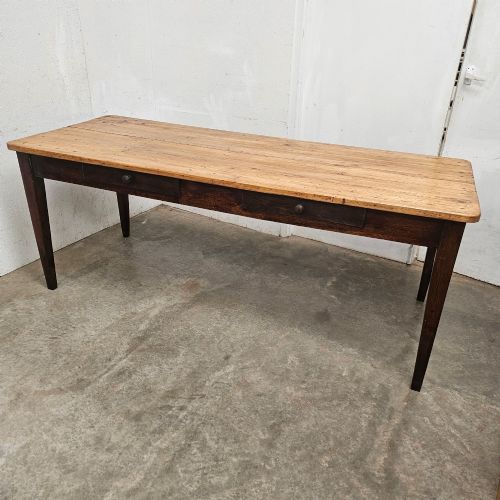
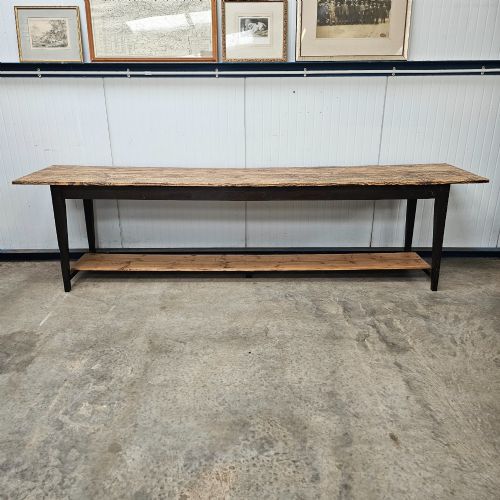
- A long dining table traditionally used for communal meals, adapted in later country houses and kitchens using sturdy pine boards.
- Washstand
- A dedicated piece of bedroom or dressing furniture designed to hold washbowls and ewers, often fitted with lower shelves or small drawers.
- Box stretcher
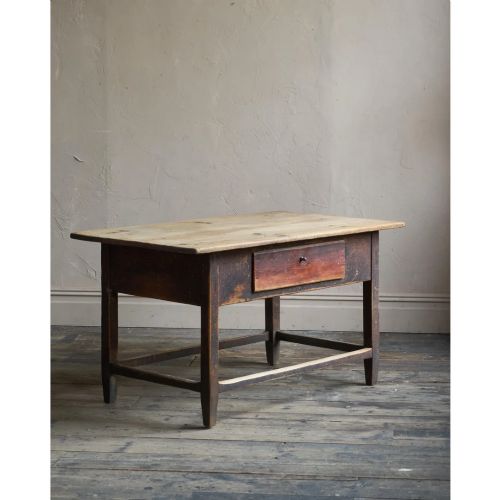
- An interconnecting framework of wooden rails running near the base of table legs to provide additional structural rigidity.
- Drapers table
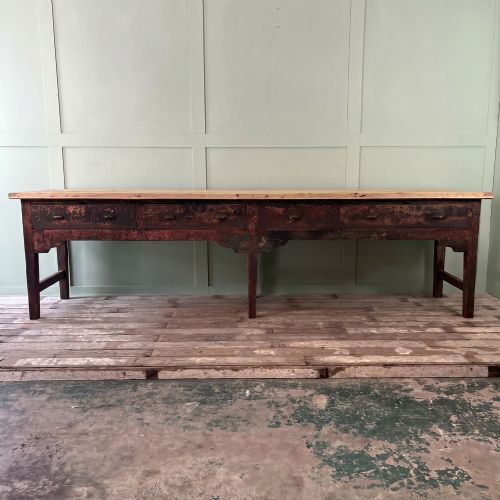
- A long, wide table historically utilised in textile shops for folding cloth, valued today for generous proportions and surface area.
Dark Pine Table: Frequently Asked Questions
How do I date a pine table?
Dating relies on construction methods, timber selection, and stylistic details associated with periods such as the Georgian, Regency, and Victorian eras. Hand-cut joints, original hardware, and historical wear patterns offer reliable indicators of age.
Makers often utilised pitch pine or incorporated oak planks in earlier periods, whereas later nineteenth-century pieces may display specific regional turning styles.
Are these tables suitable for daily dining?
Many pine tables were originally built for practical use in kitchens, farmhouses, and taverns, making them robust enough for everyday dining. Refectory, farmhouse, and trestle forms provide generous seating capacities and sturdy frames.
Care should be taken with antique surfaces, as original paintwork or historic timber requires gentle maintenance compared to modern factory-finished furniture.
What styles of pine tables exist?
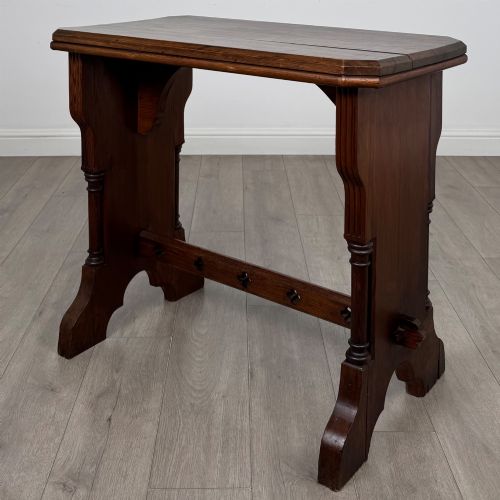
The selection includes English country house pieces, French farmhouse tables, and Scandinavian painted supper or writing tables. Stylistic variations span rustic farmhouse, Gothic revival, and regional vernacular designs.
Some feature turned legs and box stretchers, while others incorporate drop leaves or multiple drawers for added utility.