

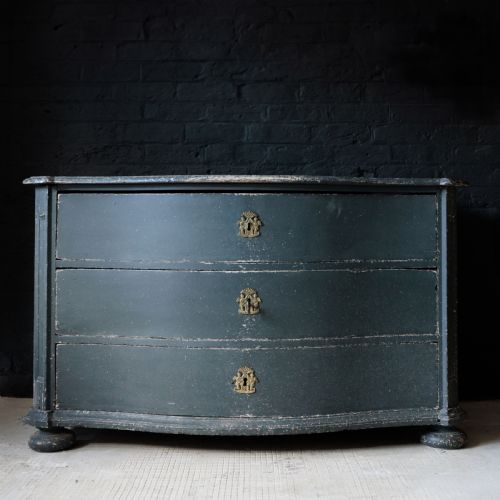


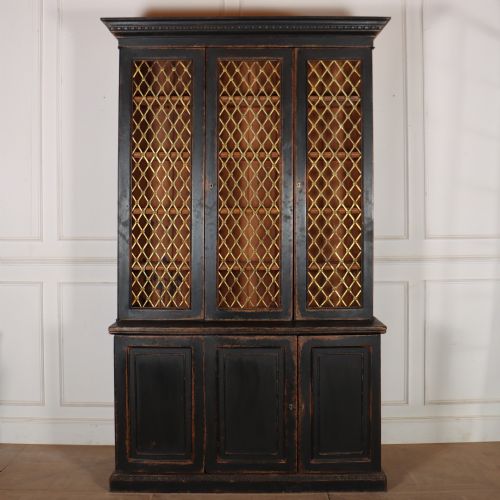


Dark Painted Storage Cabinet
A dark painted storage cabinet anchors a room with dense colour and utility, offering deep interior space beneath historic painted surfaces.
Dark Painted Storage Cabinet
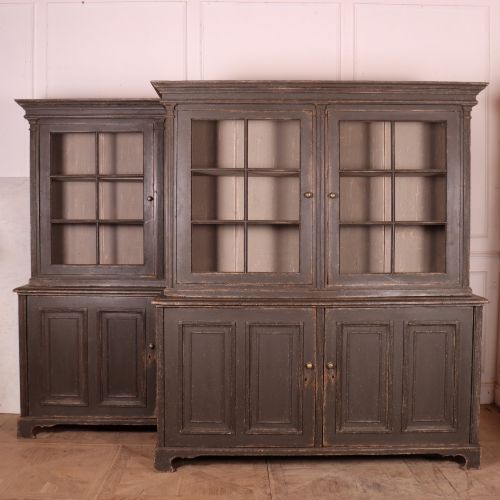
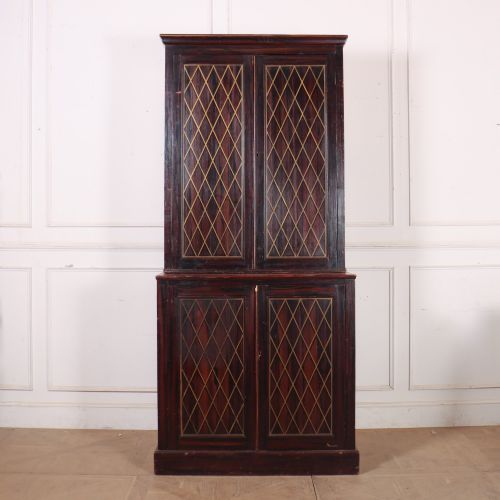
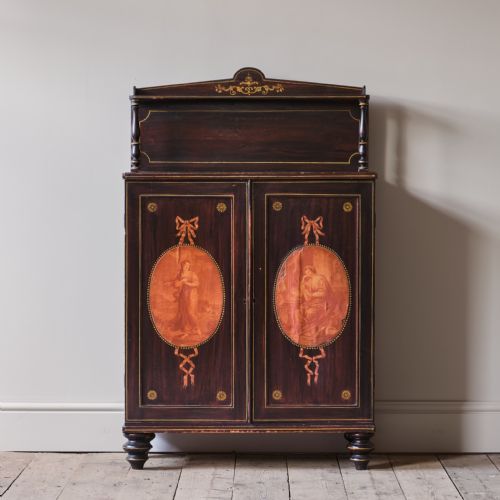
When searching for a dark painted storage cabinet, you encounter vernacular country cupboards, institutional banks of drawers, and refined Chinoiserie armoires spanning from the eighteenth century through the twentieth. These pieces combine utilitarian shelving or compartmentalised drawers with dark decorative schemes, ranging from simulated rosewood graining to dense layers of original dark pigment.
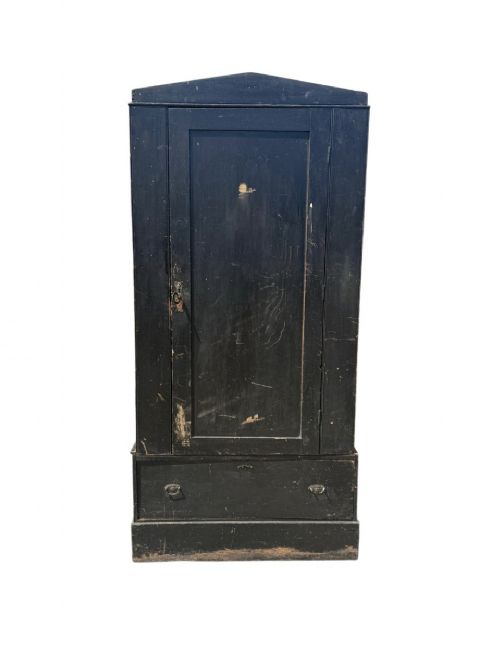
The version you are most likely to meet on this page is the nineteenth-century pine cupboard or kitchen dresser, often retaining its worn dark surface finish. Such examples demonstrate how domestic and institutional furniture relied on heavy coats of paint to seal softer timbers while providing a sober aesthetic.
Alongside simple pine storage units, the selection encompasses specific regional forms like Welsh vernacular dressers, French food cupboards, and Regency dwarf bookcases. Each object utilises enclosed storage to hide everyday domestic goods behind heavy panelled doors or multi-drawer banks.
How they were made
Makers constructed these cabinets primarily using pine, walnut, and mahogany, selecting timber based on regional availability and the intended function of the storage piece. Softer woods like pine received thick coats of oil-based paint, sometimes manipulated with graining combs to mimic exotic hardwoods such as rosewood.
Surface decoration frequently involved layers of lead-based or oil paints applied over decades of use, occasionally incorporating hand-painted Chinoiserie motifs or gilt detailing over dark lacquer grounds. Iron and brass hardware, including strap hinges and drop handles, secured the heavy doors and drawer banks.
Dark Painted Storage Cabinet Retail Price Guide 2026
Typical asking prices for dark painted storage cabinet among the pieces listed under this phrase on Sellingantiques today, from the lower quarter to the upper quarter. They describe what is for sale here now, not the wider market.
Listings feature pine, walnut, and mahogany cabinets finished with paint, lacquer, gilt, iron, and brass.
What varies in quality
The distinction between ordinary utility pieces and exceptional examples rests upon the integrity of the surface finish and the subtlety of the original paint layer. Cabinets retaining untouched historic dark paint or deliberate simulated graining command greater interest than those stripped or subjected to unsympathetic modern refinishing.
Construction methods also separate standard vernacular boxes from finer workshop output, evident in the joinery of drawer linings, the weight of brass or iron fittings, and the proportion of cornice and plinth moulding. Pieces bearing documented maker attributions or institutional provenance demonstrate superior structural joinery alongside distinctive decorative execution.
Maples and Co·Melissa White
The Dark Painted Storage Cabinet Glossary
- Chinoiserie
- European decorative style imitating Chinese artistic traditions, often executed in gold motifs over dark painted or lacquered grounds. This aesthetic appears on early twentieth-century wardrobes and Georgian corner cupboards.
- Graining
- A decorative painting technique used to simulate the appearance of expensive timbers like rosewood or oak upon cheaper woods such as pine. Regency dwarf bookcases frequently utilise this method.
- Vernacular
- Architecture and furniture built by local craftsmen using traditional regional methods and materials, without academic design influence. Welsh and Tuscan examples illustrate this localized tradition.
- Linen Press
- A tall storage cabinet historically used for storing folded linens, featuring sliding trays or shelves behind upper doors and deep drawers below. Victorian pine examples provide substantial vertical capacity.
- Commode
- A low chest of drawers or cabinet on legs, originating in France during the eighteenth century. Serpentine forms utilise curved drawer fronts to create sculptural presence.
Dark Painted Storage Cabinet: Frequently Asked Questions
What is a dark painted storage cabinet used for?
These cabinets serve as practical storage furniture for concealing books, tableware, linens, or dry goods behind solid panelled or glazed doors. Their deep interiors and compartmentalised drawer banks accommodate varied domestic items while maintaining a solid visual weight in a room.
The dark painted exteriors allow the furniture to ground interior spaces, contrasting with lighter walls or blending into panelled rooms. Historically, they functioned in kitchens, chemist shops, schools, and parlours to keep supplies protected from dust and light.
How do I identify original paint?
Original paint surfaces display natural wear patterns, minor craquelure, and subtle variations in tone accumulated through decades of cleaning and exposure. Inspecting edges, corners, and behind hardware reveals underlying layers that confirm the age of the decorative scheme.
Simulated graining or dark ground coats applied during the Regency or Victorian periods often exhibit a dry, matte texture rather than the uniform gloss of modern synthetic paints. Traces of early brushstrokes and minor imperfections separate authentic historic finishes from subsequent overpainting.
How do I care for a painted antique cabinet?
Maintain these cabinets by dusting gently with a dry, soft cloth and avoiding harsh chemical cleaning agents that can degrade historic paint layers. Keeping them away from direct sunlight and extreme humidity fluctuations protects the underlying timber from warping and the paint from flaking.
Wax finishes, where present on painted or grained surfaces, require occasional buffing with appropriate conservation-grade paste wax. Allowing the historic surface to breathe preserves the patina developed over centuries of use.