

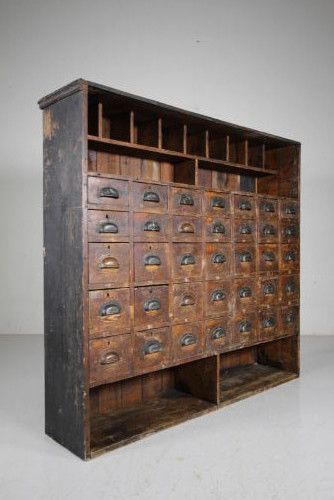


Painted Pine Apothecary Chest
These painted pine apothecary chest pieces offer practical multi-drawer storage and original character derived from nineteenth century utility.
Painted Pine Apothecary Chest
A painted pine apothecary chest serves as a multi-drawer storage unit or shop fitting originating from the nineteenth century, including specific regional examples from Hungary, France, and England. These pieces take the form of banks of drawers, pharmacy chests, wall cupboards, and shop counters.
Buyers encounter Victorian items featuring numerous small drawers, ranging from sixteen up to fifty drawers, alongside larger banks of drawers and sideboards. The forms derive from commercial and domestic storage uses, built in pine and finished with original painted surfaces in white, cream, green, or other colours.
How they were made
Construction relies primarily on pine and painted wood, assembled with metal, cast iron, or iron hardware such as handles and drawer pulls. Carcases and multi-drawer banks are built to withstand heavy daily use in commercial or apothecary settings.
Surfaces receive paint treatments, including originally painted finishes in various colours, while other examples remain prepared for waxing or painting. The integration of numerous drawers requires precise joinery to ensure smooth operation within the pine framework.
Painted Pine Apothecary Chest Retail Price Guide 2026
Typical asking prices for painted pine apothecary chest among the pieces listed under this phrase on Sellingantiques today, from the lower quarter to the upper quarter. They describe what is for sale here now, not the wider market.
The listings show nineteenth century items constructed from pine, paint, and iron, taking forms such as banks of drawers and wall cupboards.
What varies in quality
Quality depends upon the originality of the painted surface, with period-correct and untouched paint finishes holding greater interest than later repainting. The scale and complexity of the piece, such as fifty-drawer configurations versus simpler banks, also influence the character of the object.
The integrity of the pine structure and the presence of original metal or cast iron hardware distinguish superior examples. Regional provenance, from Hungarian shop fittings to English pharmacy chests, adds further distinction to the construction.
The Painted Pine Apothecary Chest Glossary
- Bank of drawers
- A large cabinet containing numerous stacked or adjacent drawers, commonly utilised in commercial shops and pharmacies for sorting small items.
- Shop fitting
- Fixtures and furniture built specifically for commercial retail premises during the nineteenth century, designed for display and storage.
- Collectors chest
- A specialised cabinet housing multiple shallow drawers intended for organising specimens or small objects.
- Wall cupboard
- A storage cabinet designed to be mounted on a wall rather than standing on the floor, frequently constructed in pine during the nineteenth century.
Painted Pine Apothecary Chest: Frequently Asked Questions
What is an apothecary chest?
An apothecary chest is a multi-drawer storage unit historically used by chemists and pharmacists to organise dried herbs, powders, and medical ingredients.
Today, these pieces function as striking storage furniture in domestic settings, offering numerous small drawers for sorting household items.
How do I date a pine chest?
Dating relies on examining construction methods, timber characteristics, and hardware such as iron or cast iron pulls.
Pieces originating from the nineteenth century often exhibit specific regional painted finishes and utilitarian joinery typical of shop fittings.
Where were these chests made?
Surviving examples originate from various European countries including England, France, and Hungary during the Victorian era.
Each region produced distinct variations in drawer counts, paint colours, and overall proportions suited to local commercial needs.
How do I care for painted pine?
Maintenance involves dusting with a soft cloth and avoiding excessive moisture that might damage the historic painted wood surface.
Keeping the furniture away from direct heat sources helps preserve the pine timber and prevents paint flaking.