


Dark Painted Pine Table
These dark painted pine table pieces bring rustic utility and enduring character, offering solid wood construction covered in historic pigment.
Dark Painted Pine Table
When you search for a dark painted pine table, you encounter a robust selection of utilitarian furniture spanning the Georgian, Regency, and Victorian eras alongside continental country pieces. These items serve multiple domestic functions, appearing as side tables, washstands, servers, writing desks, and substantial dining or tavern tables.
The version you are most likely to meet on this page is a nineteenth-century or Victorian example, often featuring painted surfaces in shades of grey, blue, or black. Many of these pieces originate from English country houses or Scandinavian and French provincial workshops where pine and oak served as the primary timbers for everyday furniture.
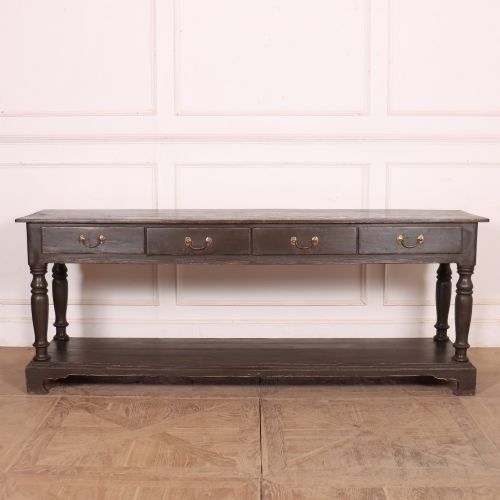
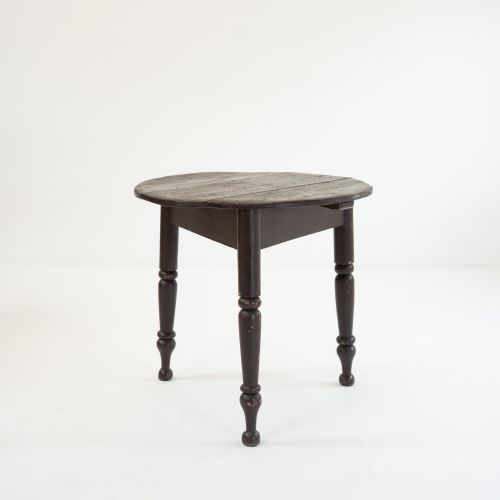
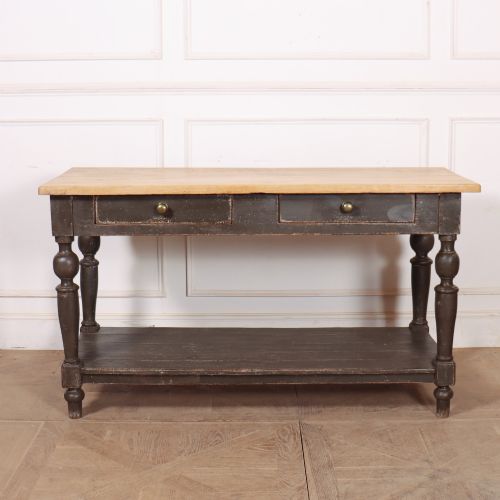
Beyond standard dining formats, the selection includes specialised forms such as cricket tables with box stretchers, drapers tables, and bedside cabinets with marble tops or ceramic accents. Each piece reflects regional vernacular traditions, from Welsh farmhouses to Swedish domestic interiors.
Materials and construction methods
Makers built these tables primarily using solid pine, occasionally combining it with oak for structural components or table tops. Secondary materials such as brass, iron, and ceramic appear on hardware, handles, and washstand fittings.
Workers applied layers of paint directly to the wooden surfaces, often retaining original pigmented finishes that developed distinct patinas over decades of use. Joinery techniques relied on traditional vernacular carpentry, accommodating the natural movement of softwood timber.
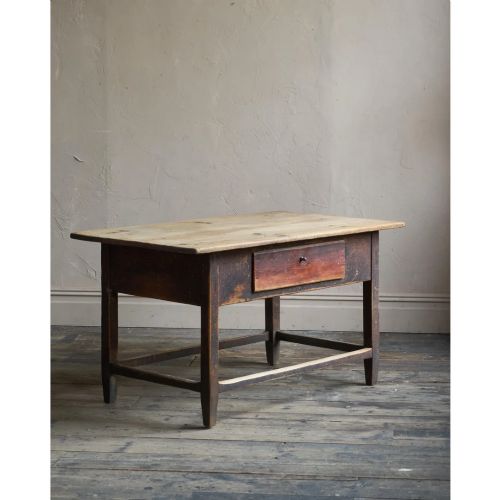
The furniture forms range from side tables and writing desks to Welsh tavern tables and French drapers tables.
Factors that separate quality tiers
The distinction between standard utility items and finer examples lies in the survival of original painted surfaces and the integrity of the timber. Tables retaining untouched early pigment finishes carry greater historical interest than those stripped or repeatedly recoated.
Construction details such as dovetailed drawers, turned legs, carved ornamentation, and integrated marble or ceramic inserts elevate certain pieces above basic workshop production. The balance between the proportion of the table and the depth of the painted patina dictates its visual presence.
The Dark Painted Pine Table Glossary
- Cricket table
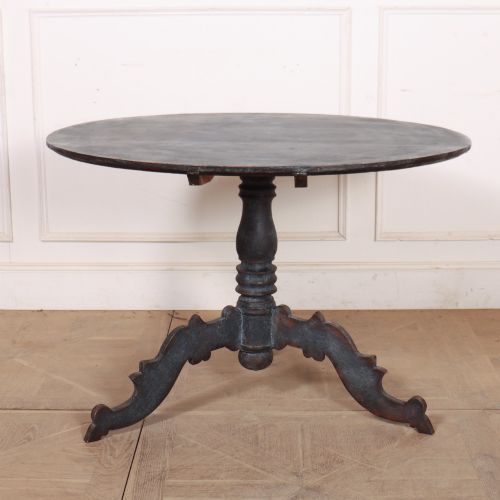
- A small, lightweight three-legged table originating in vernacular English interiors, typically featuring a round top and pegged construction. This form provided stability on uneven flagstone floors.
- Dresser base
- A low utilitarian sideboard or cabinet featuring drawers and cupboards, designed for storing and serving food in domestic kitchens and dining rooms. These pieces often display heavy pine and oak construction.
- Washstand
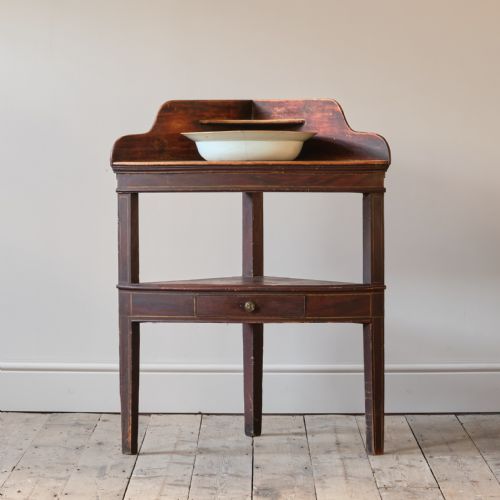
- A dedicated piece of bedroom furniture designed to hold a basin, jug, and washing accessories, frequently equipped with marble tops or tiled splashbacks. They date predominantly from the Victorian period.
- Box stretcher
- Horizontal wooden rails connecting the lower legs of a table to add structural rigidity, sometimes fashioned into a small enclosed shelf or box. This element is common in regional European tables.
- Vernacular furniture
- Domestic objects made by local tradesmen using regional materials and traditional designs rather than high-style academic patterns. These pieces prioritise practical function over fashionable ornamentation.
Dark Painted Pine Table: Frequently Asked Questions
What is a dark painted pine table used for?
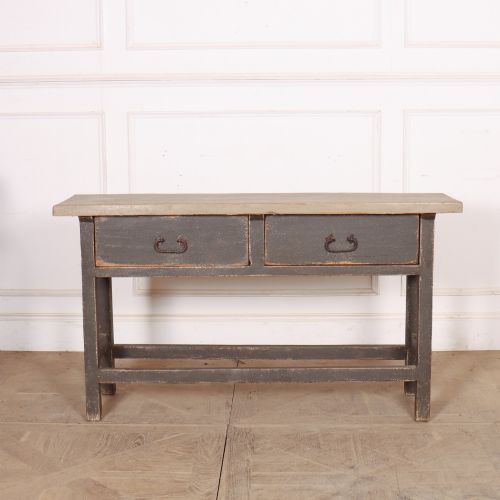
These tables function across domestic spaces as dining surfaces, side tables, writing desks, and server units in kitchens or hallways. Their sturdy construction suits daily practical use.
Smaller formats like bedside cabinets and washstands provide surface space and storage in bedrooms while displaying traditional painted finishes.
How do I care for original painted pine?
Preserve the historic surface by dusting with a dry cloth and avoiding modern chemical solvents or silicone polishes that can soften old paint layers. Keep the timber away from direct heat sources and extreme humidity fluctuations.
Use coasters and felt pads beneath objects placed on the surface to protect the vintage pigment from moisture rings and scratches.
How do I tell Georgian and Victorian pine apart?
Georgian pine furniture generally exhibits simpler, more restrained proportions and earlier construction methods like hand-cut dovetails and pegged joints. The paint surfaces on these pieces often show deeper craquelure.
Victorian examples frequently incorporate machine-sawn elements, denser mouldings, and decorative additions like turned columns, ceramic fittings, or inset marble slabs.
Are these tables made from solid wood?
The pieces utilise solid pine and oak timbers throughout their primary frames, tops, and structural supports rather than modern composite boards. This solid construction allows the wood to respond naturally to environmental conditions.
Secondary woods may appear in hidden structural areas such as drawer linings and interior framing.