
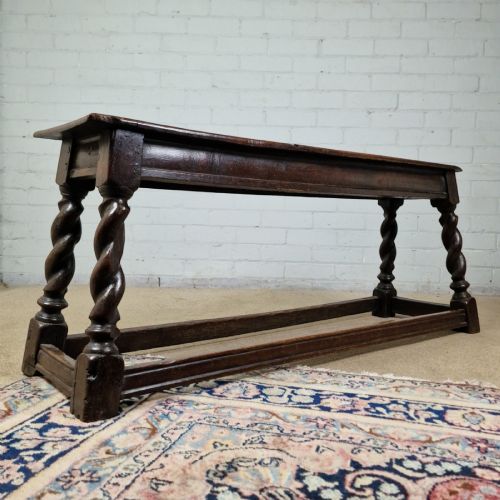
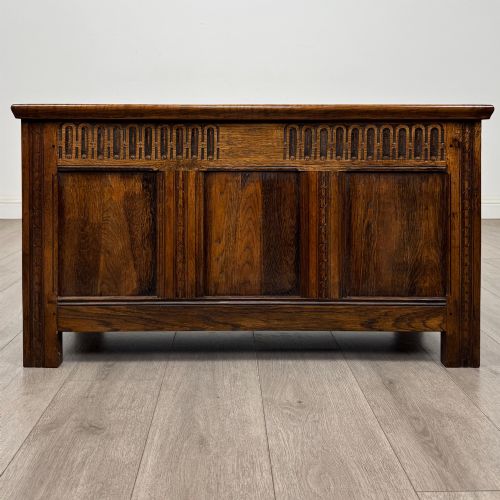
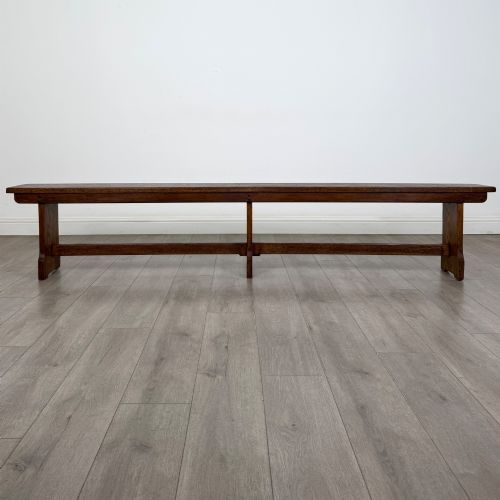
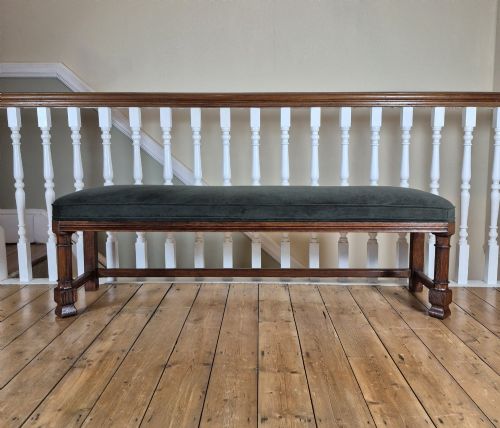
Dark Oak Wooden Bench
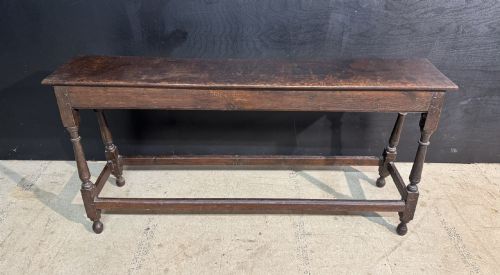
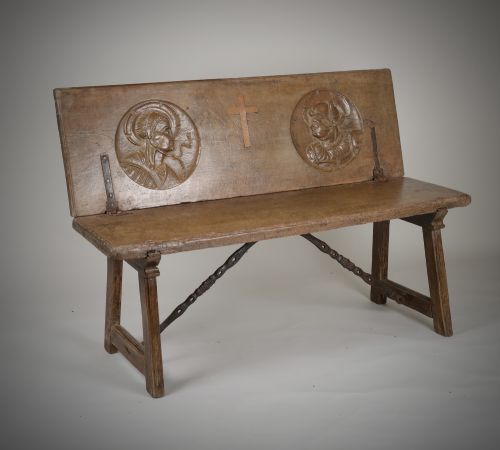
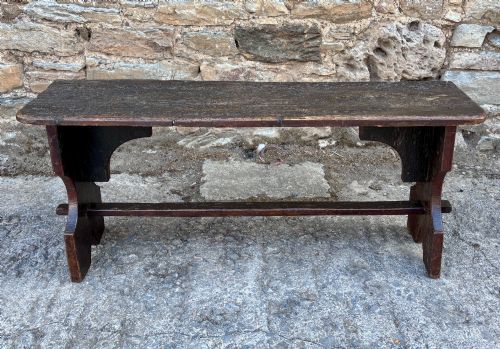
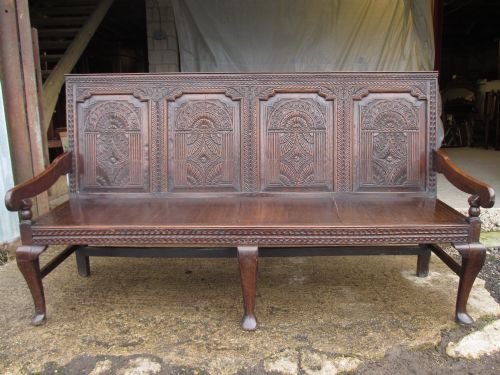
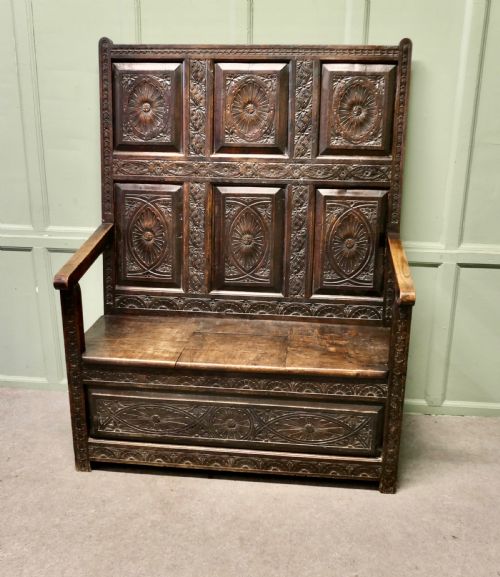
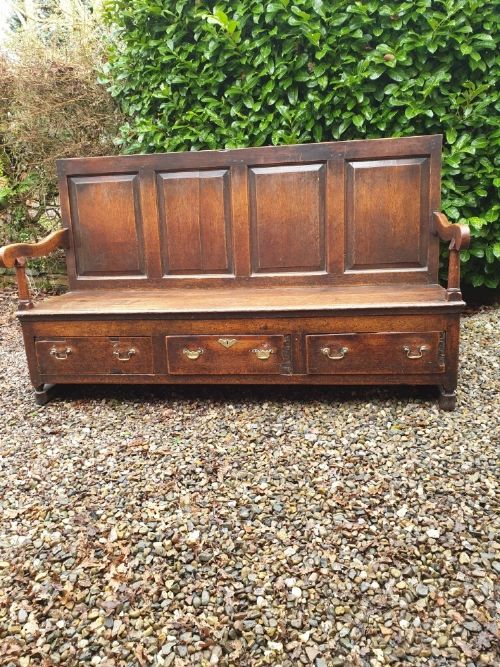
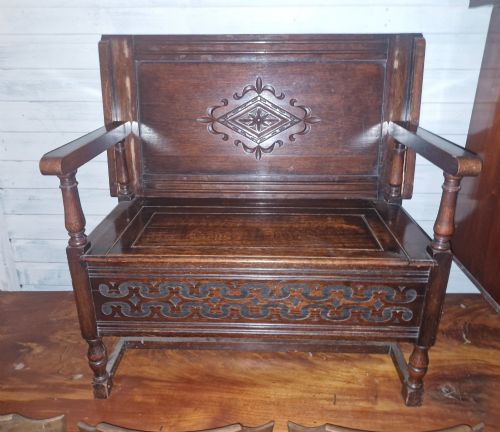
A dark oak wooden bench brings substantial timber and deep grain into a hallway, sitting room or country kitchen.
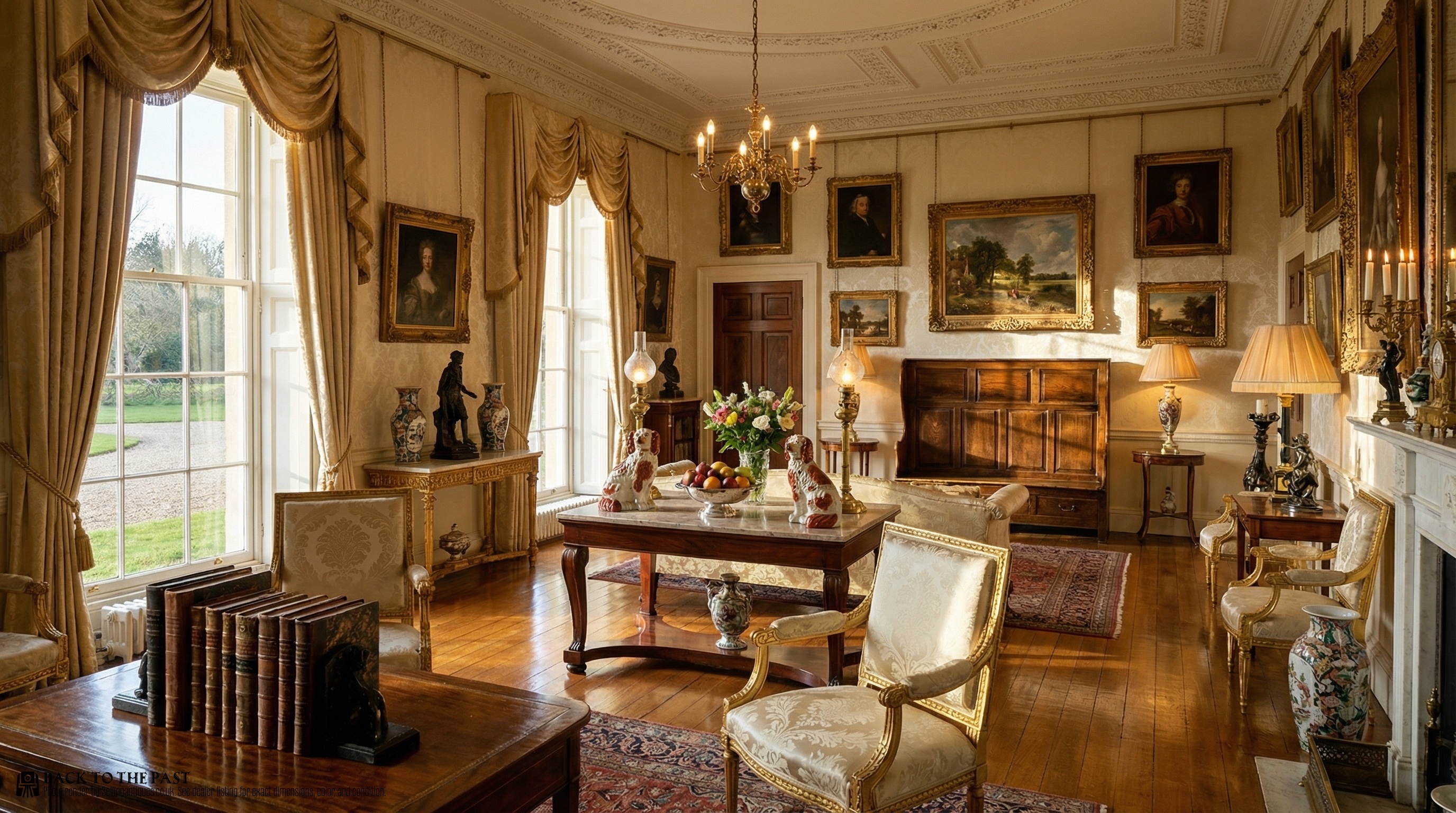
Dark Oak Wooden Bench
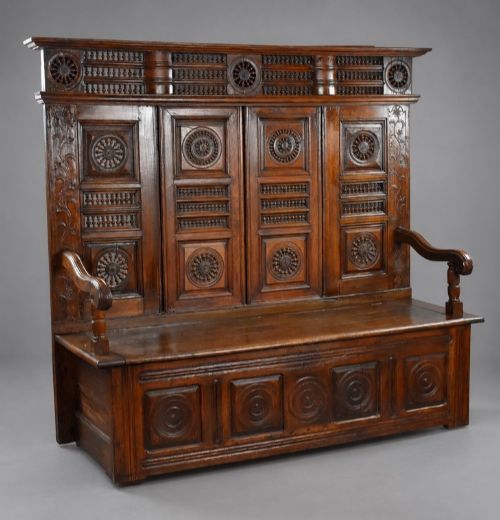
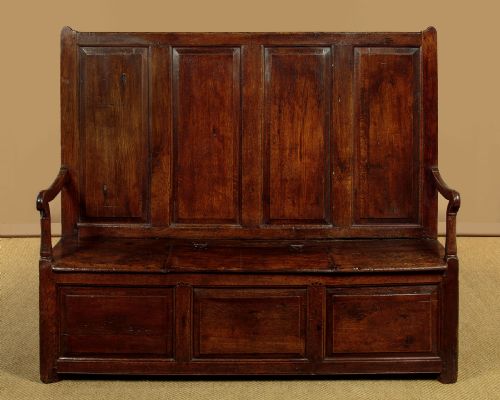
When you search for a dark oak wooden bench, you encounter solid timber seating spanning centuries of British domestic life, from tavern benches to high-backed hall settles and luggage stands.
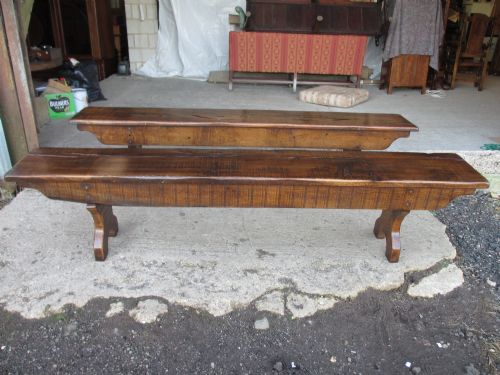
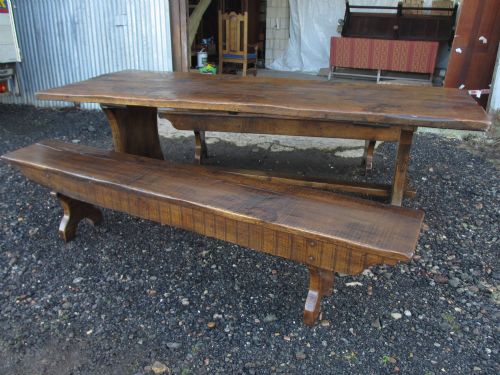
The most common examples on this page date from the eighteenth and nineteenth centuries, alongside Edwardian revivals and sturdy country pieces featuring panelled backs, lift-up storage boxes and trestle ends.
These forms served practical household functions in hallways and dining spaces, constructed to withstand daily use while developing a rich surface patina over generations.
How they were made
Cabinet makers and country joiners worked primarily with solid oak, frequently combining it with secondary timbers like ash or elm, and securing joints with wooden pegs and mortise-and-tenon construction.
Decoration relied on hand-carved panels, geometric mouldings and architectural framing, supplemented occasionally by brass mounts, wrought iron brackets or upholstered seats in leather, fabric and velvet.
Several box settles include hidden compartments beneath the seat, originally designed for stashing valuables away from tavern guests.
What varies in quality
The distinction between ordinary utility seating and superior examples lies in the depth of timber selection, the crispness of hand-carved panelling and the architectural ambition of the overall form.
Proportion and structural integrity dictate value, with pieces retaining their original joined bases, untouched surface patination and uncompromised box storage commanding greater appreciation than heavily restored equivalents.
James Shoolbred & Co.
The Dark Oak Wooden Bench Glossary
- Settle
- A wooden bench with a high back, solid armrests and often a box compartment beneath the seat for storage. This form kept draughts away from inhabitants in older houses.
- Joint stool
- A sturdy wooden stool constructed with mortise and tenon joints rather than turned legs. These items preceded chairs in many households and provided flexible seating.
- Trestle
- A horizontal beam supported by two flared or framed feet at each end. This structural support appears frequently on refectory tables and matching benches.
- Box settle
- A settle featuring a hinged seat lifting to reveal a deep storage chest. It combined seating with household storage in compact living areas.
- Panelling
- Flat wooden sections fitted within a framework of stiles and rails. Eighteenth and nineteenth-century pieces utilised this technique for decorative strength on backs and sides.
Dark Oak Wooden Bench: Frequently Asked Questions
Where did people use oak settles?
Oak settles stood primarily in farmhouse kitchens, draughty hallways and tavern taprooms where solid, heavy seating was required near the hearth to block cold air.
Their high backs and enclosed box bases offered shelter from drafts before central heating existed, while the integrated storage held blankets or household goods.
How do I date an antique oak bench?
Dating relies on observing construction methods, such as hand-cut peg joints, tool marks, timber shrinkage and the style of the carved panelling. Eighteenth-century pieces typically show more irregular hand-planing and pegged joinery.
Later Victorian and Edwardian revivals often incorporate machine-cut elements, tighter symmetry and characteristic period hardware like brass or iron mounts.
Can I use a hall bench daily?
These benches were built from dense native hardwoods specifically for heavy, continuous domestic service. Their robust mortise and tenon frames easily accommodate daily sitting and use in modern hallways.
Applying appropriate wax polish maintains the protective surface layer and prevents the timber from drying out over time.