


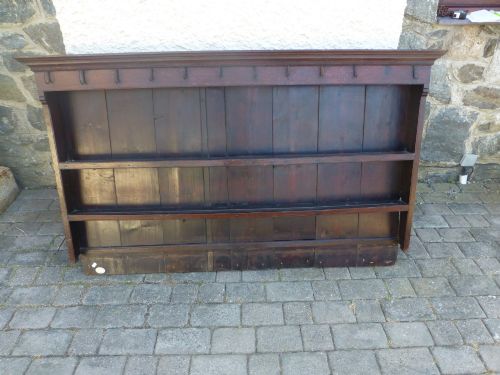
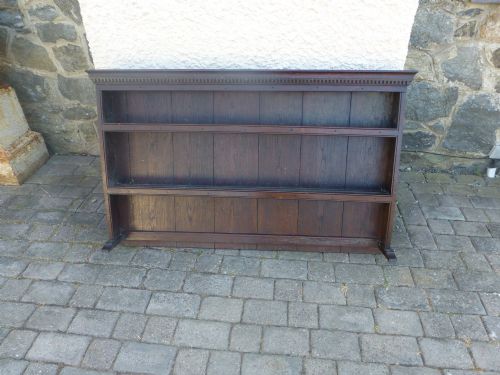
Dark Oak Wall Hanging
A dark oak wall hanging brings substantial timber and deep grain into a room, offering practical storage or display while anchoring the wall space.
Dark Oak Wall Hanging
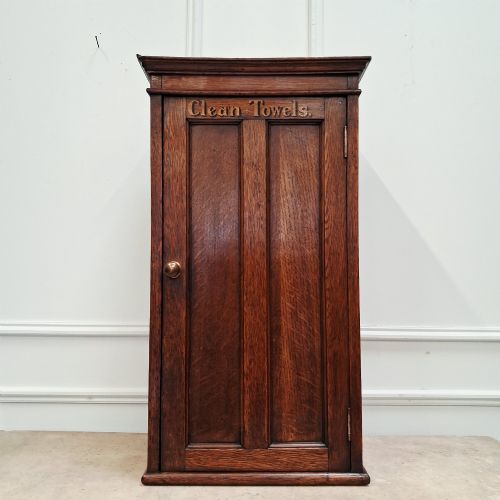
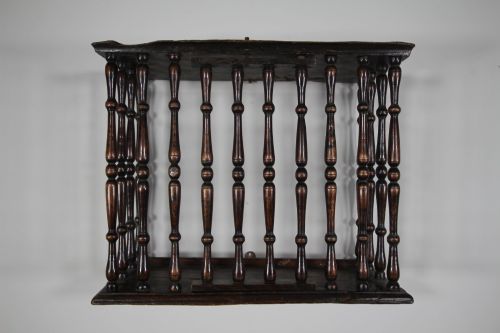
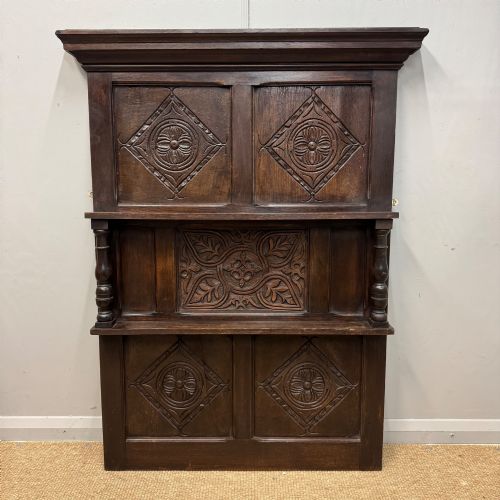
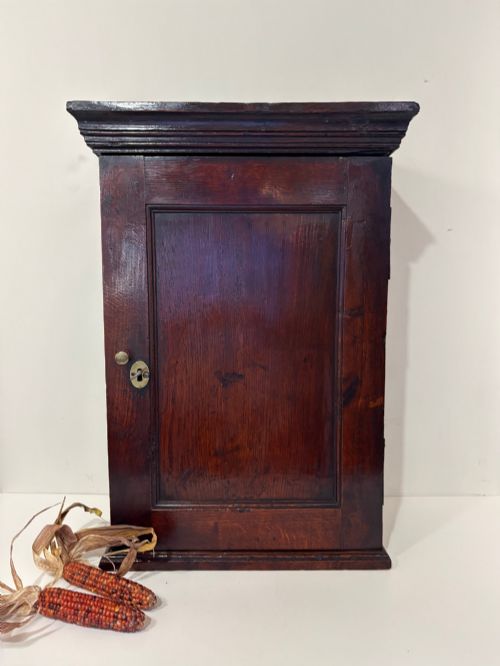
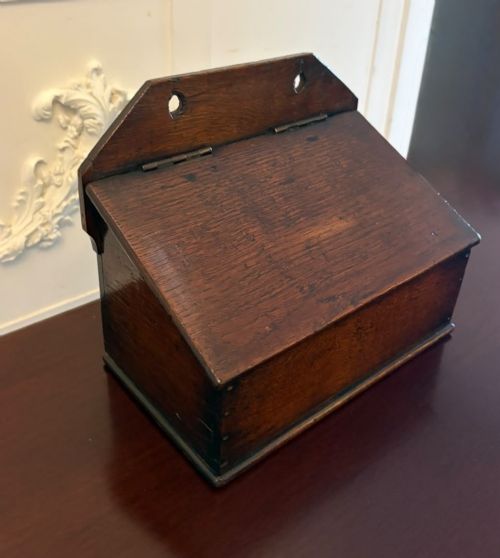
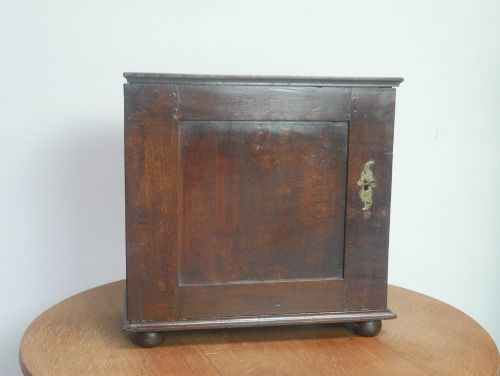
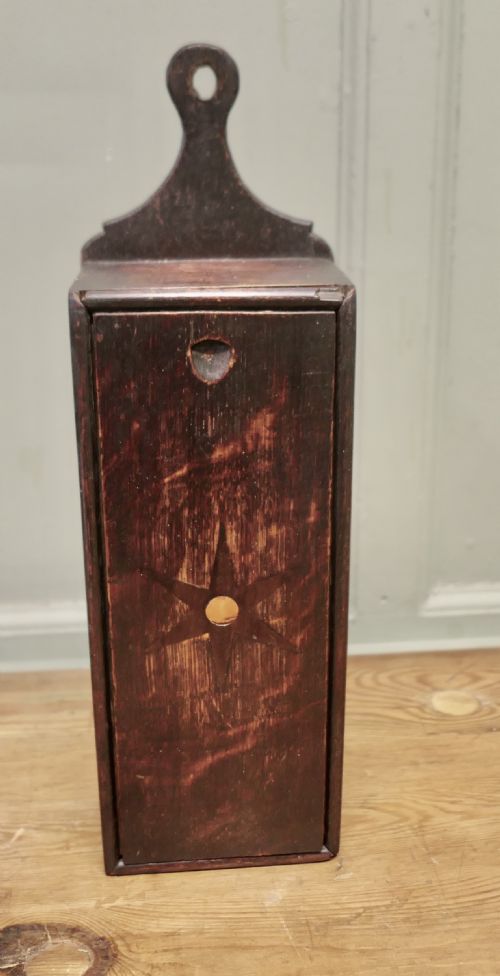
A dark oak wall hanging spans several centuries of domestic utility, appearing most frequently as spice cupboards, corner cabinets, plate racks, and candle boxes from the Georgian and Victorian eras.
These items were designed to keep domestic goods off damp floors and within easy reach, utilising vertical wall space in kitchens, hallways, and living chambers.
The pieces on this page lean heavily into seventeenth, eighteenth, and nineteenth-century forms, where sturdy timber construction met everyday household needs.
Materials and construction methods
Makers relied primarily on solid oak, complemented by brass or iron hinges, latches, and occasional glass panels.
Joinery techniques ranged from traditional pegged mortise and tenon frames to chip carving and raised panel doors, ensuring the timber could handle daily use without twisting.
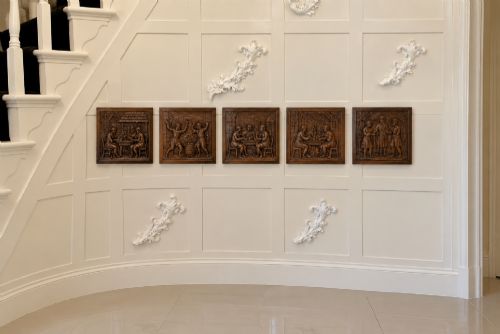
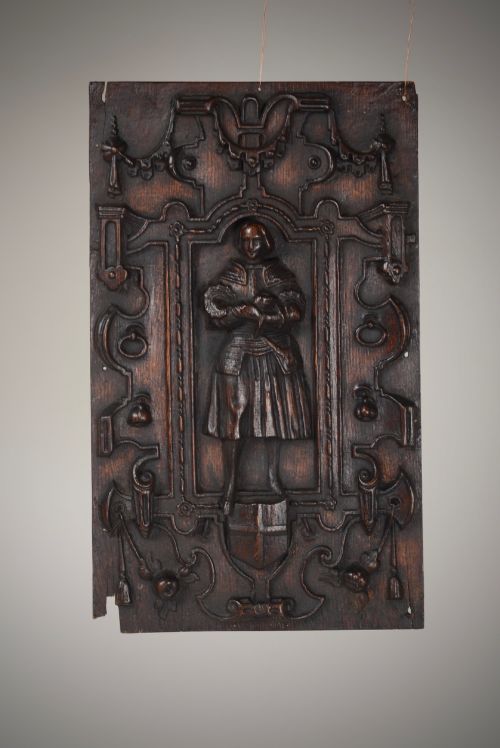
A heavily carved Dutch Frisian mangle board bearing the date 1734 proves that doing the laundry once involved considerable artistic ambition.
Assessing quality and craftsmanship
Quality rests in the depth of the carving, the integrity of the original hardware, and whether the timber retains its honest surface rather than a heavy modern varnish.
Finer examples display careful proportions, hand-cut dovetails on small drawers, and minimal replacement to the hinges or backboards.
Waring & Gillow·Hyde & Sons Sleaford
The Dark Oak Wall Hanging Glossary
- Spice cupboard
- A small wall-mounted cabinet fitted with internal small drawers for storing expensive dry goods and herbs.
- Candle box
- A hanging wooden receptacle with a hinged lid, shaped to keep tallow candles safe from household pests.
- Plate rack
- A wall fixture designed to hold ceramic plates vertically on edge for drying or display.
- Mangle board
- A flat wooden board with a handle, used historically with a roller to smooth linen, often heavily carved.
Dark Oak Wall Hanging: Frequently Asked Questions
How do I hang a heavy oak wall cabinet safely?
Check the condition of the original backboards and mounting points before installation. Transfer the weight to solid wall studs using appropriate fixings.
Older timber is heavy, so ensure the wall brackets match the historical hanging loops or secure internal battens properly.
What rooms suit a dark oak wall hanging?
Kitchens and dining spaces suit hanging cupboards and plate racks best. They hold ceramics and dry goods just as they did centuries ago.
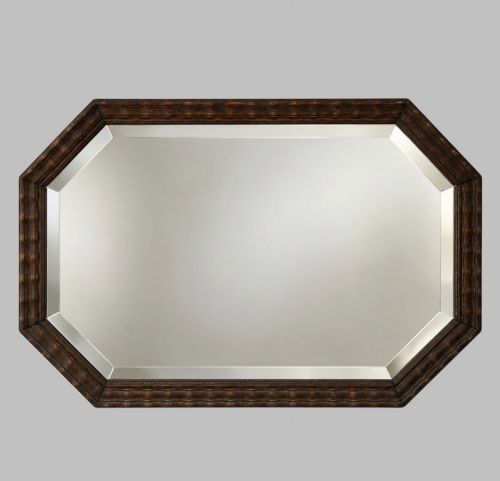
Smaller items like candle boxes or mirrors fit well in hallways or studies where floor space is limited.
How do I distinguish eighteenth-century oak from later copies?
Examine the tool marks, the oxidation of the wood, and the nature of the iron or brass fixings. Hand-forged nails and shrinkage cracks indicate age.
Later Victorian and Edwardian revivals often feature more uniform machine sawing and lighter internal secondary woods.
How should I clean and maintain old oak?
Dust the timber regularly with a dry cloth and apply a traditional beeswax polish sparingly to nourish the grain. Avoid modern silicone sprays.
Keep the piece away from direct heat sources and strong sunlight to prevent the timber from splitting or warping.