
Carved Oak Relief Carving
These pieces of carved oak relief carving bring three-dimensional timber artistry into rooms, showing centuries of hand-chiselled figures, panels and architectural elements.
Carved Oak Relief Carving
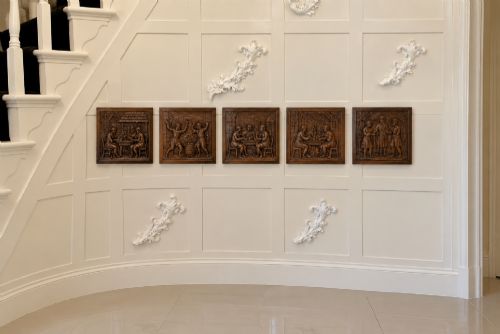
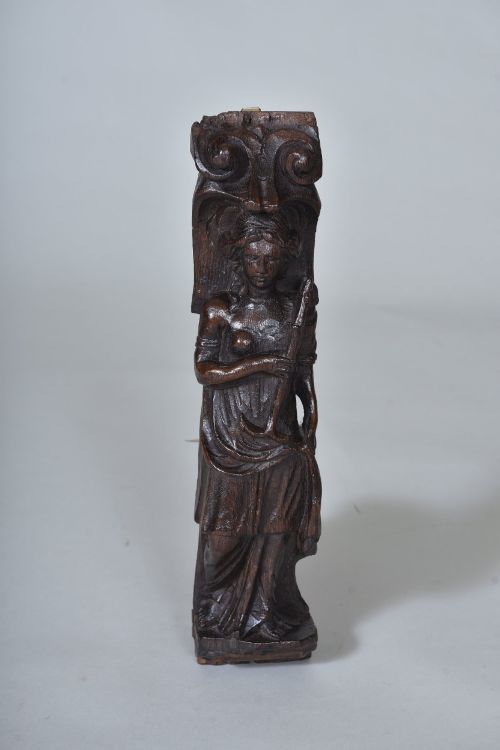
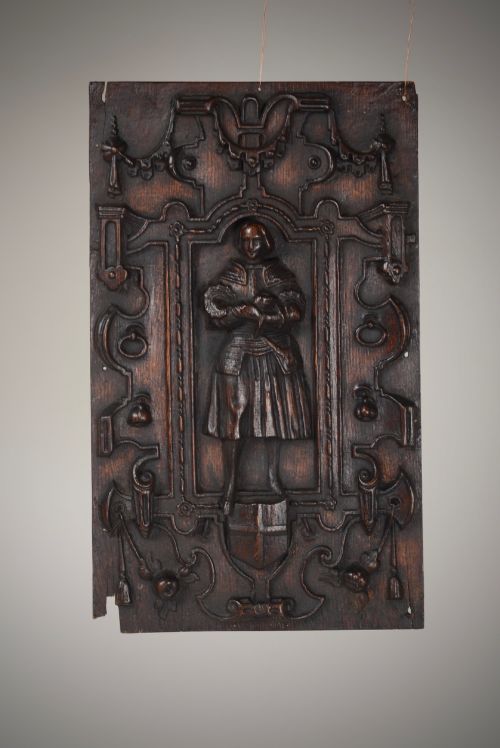
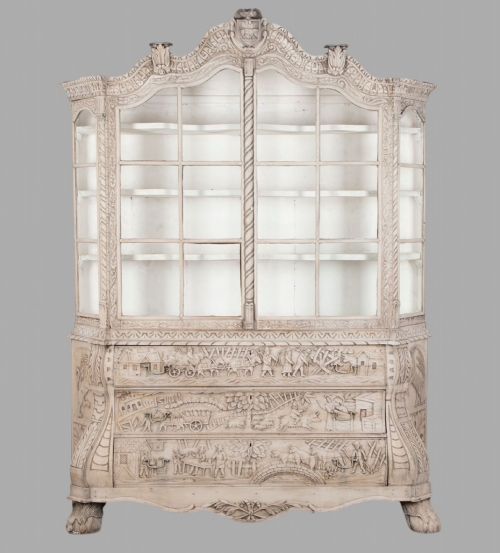
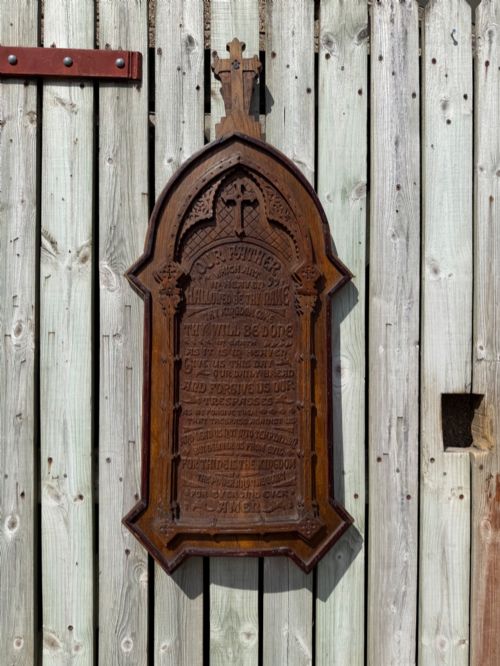
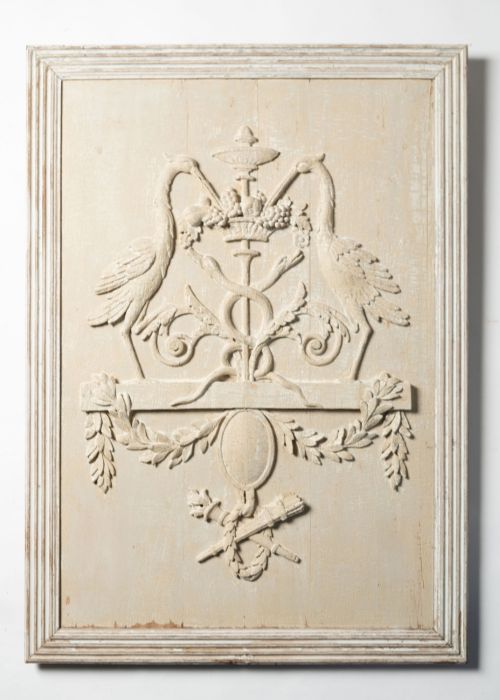
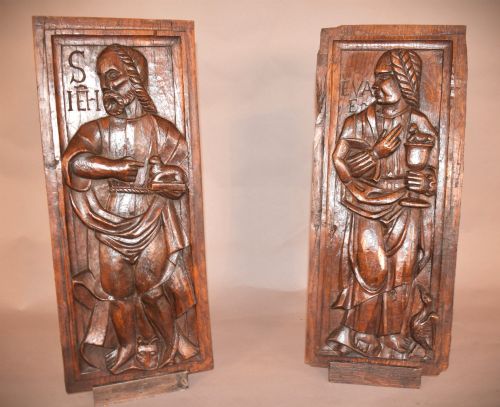
When searching for carved oak relief carving, buyers encounter historical timber elements designed for architectural salvage, wall panels, wall sculptures and furniture integration. These items range from early domestic linenfold panels and medieval altarpiece fragments to larger Baroque plaques, overdoor panels and nineteenth-century revival schemes.
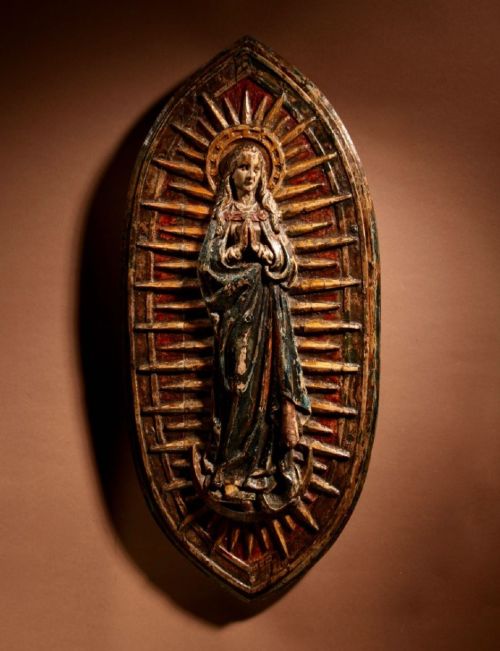
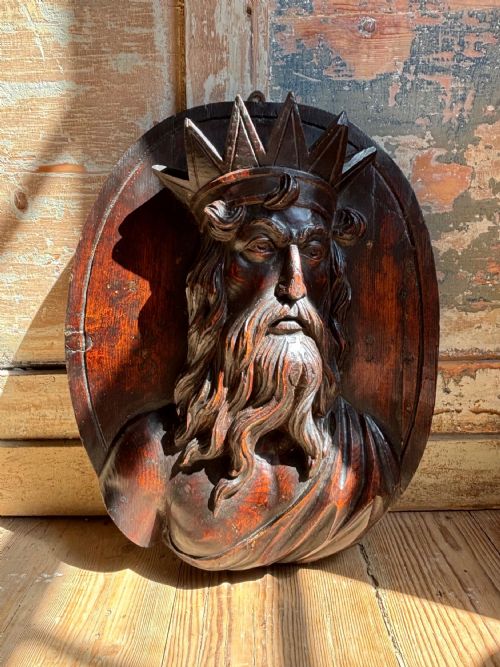
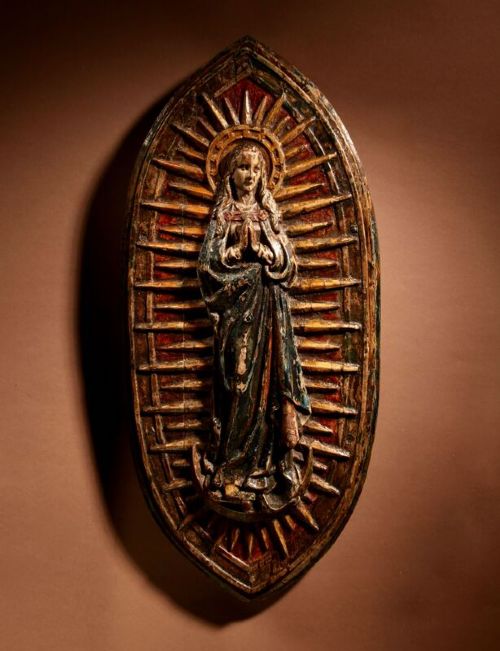
The objects most frequently met on this page span the sixteenth century through to the Victorian era, manifesting as single panels, cupboard doors, overmantles and figurative wall plaques. Subjects run from religious narratives such as the Virgin on the half moon and Joan of Arc to mythological figures like Neptune, heraldic coats of arms and traditional Green Man motifs.
Origins stretch across England, France, Germany, the Netherlands and Flanders, reflecting distinct regional woodcarving traditions. Pieces often originate as fragments rescued from larger interior schemes, ecclesiastical settings or dismantled furniture before being mounted for display as standalone artworks.
How they were made
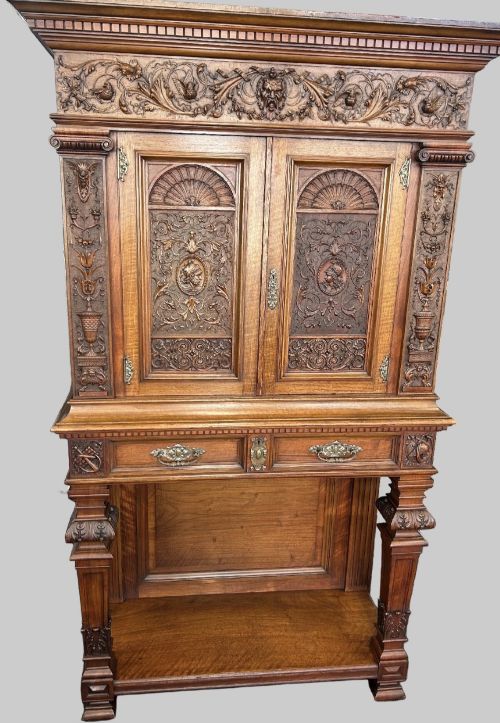
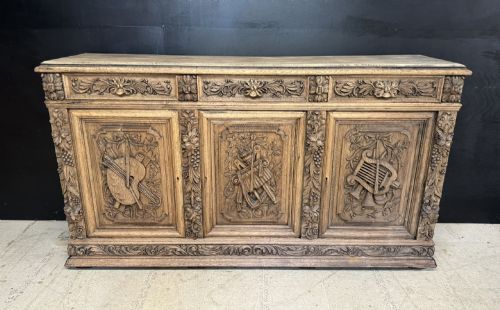
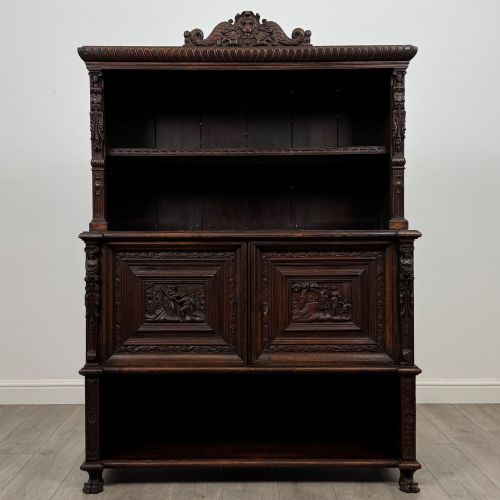
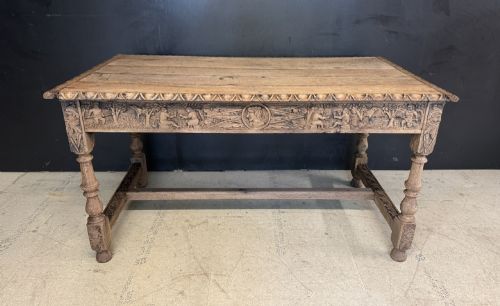
Construction techniques combine traditional joinery with surface carving, where panels were rebated into frames or integrated directly into structural furniture like sideboards, settles and cupboards. Tool marks left by the carver remain visible across the timber surfaces, demonstrating the manual dexterity required to shape dense oak without modern machinery.
Some oak panels stare back with leafy green smiles, quietly hiding forest spirits inside formal nineteenth-century rooms.
What varies in quality
Quality rests upon the sculptural ambition and anatomical precision of the carving, distinguishing stiff, repetitive geometric cutting from fluid, expressive handwork. The depth of the relief and the crispness of the undercutting separate standard decorative panels from masterworks attributed to named carvers.
The integrity of the timber and the preservation of the original surface patination dictate the standing of a piece. Items retaining their untouched historic finish or early polychromy possess greater visual coherence than those stripped or overly restored in later centuries.
Master Carver Edward Pearce
The Carved Oak Relief Carving Glossary
- Relief carving
- A sculptural technique where figures or patterns project from a flat background timber surface. High-relief examples stand out significantly from the plane, creating deep shadows and strong three-dimensional forms.
- Linenfold
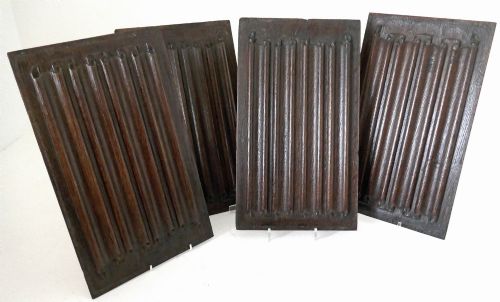
- A style of wood panel carving popular in the Tudor period that imitates folded linen cloth. This geometric linenfold design appears frequently on early domestic panels and cupboard doors.
- Green Man
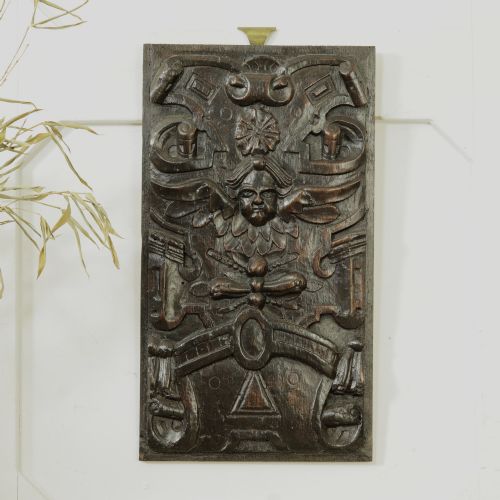
- A sculptural motif depicting a human face carved with leaves, vines or branches emerging from the mouth. These foliate heads symbolize rebirth and spring across medieval and later architectural woodwork.
- Ceiling boss
- A decorative projecting block of wood placed at the intersection of ribs in a timber ceiling or vault. These carved bosses frequently feature heraldic emblems, foliage or figurative scenes.
- Overmantle
- A large decorative panel, mirror or carving placed directly above a fireplace mantelpiece. They often incorporate elaborate hunting scenes, coats of arms or architectural framing.
Carved Oak Relief Carving: Frequently Asked Questions
How were these panels originally used?
These carved panels served as structural wall panelling, altarpiece components, furniture embellishments and architectural fittings inside grand domestic and ecclesiastical interiors. They formed part of larger decorative schemes within churches, hunting lodges and civic buildings.
Over subsequent centuries, many of these elements were salvaged when buildings were dismantled, transforming functional architectural woodwork into independent wall art.
How do I distinguish sixteenth-century panels from nineteenth-century revivals?
Early sixteenth-century panels exhibit dense, heavy heartwood with hand-tool marks and patination consistent with centuries of exposure. The timber grain, joint construction methods and distinct regional carving styles provide clear indicators of period authenticity.
Nineteenth-century Gothic Revival and Renaissance Revival pieces often display machine-assisted precision, softer secondary timbers or standardised repeating motifs that reflect Victorian historical interests.
Can these heavy wooden carvings be hung on walls?
Most wall plaques, panels and reliefs are substantial pieces of solid oak that require secure mechanical fixings into masonry or wall studs. Professional brackets or custom French cleats are typically employed to support the considerable weight of the timber safely.
Checking the rear construction of the panel determines the most appropriate method for stable wall mounting without stressing the historic wood.