


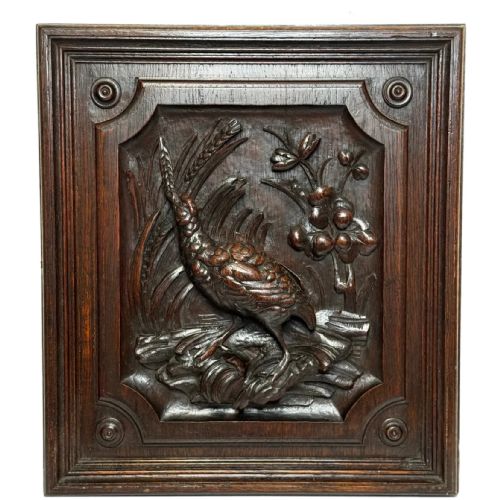


Victorian Gothic Oak Plaque
These victorian gothic oak plaque pieces bring heavy carved timber and ecclesiastical character straight into a modern interior.
Victorian Gothic Oak Plaque
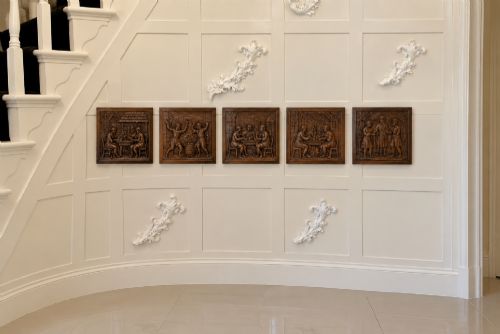
A victorian gothic oak plaque represents nineteenth-century woodcarving rooted in ecclesiastical design and architectural ornament. Buyers seeking these items usually encounter wall carvings, panels, crests, and portrait plaques shaped by the Gothic Revival movement.
Most pieces on this page originate from the Victorian period, utilising quarter-sawn oak alongside fruitwood and brass frames. These works often translate church architecture and heraldic motifs into domestic wall decor.
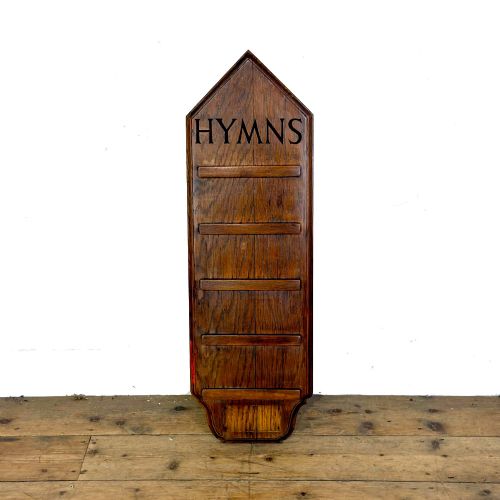
While wall plaques dominate the selection, related forms such as hymn boards, carved panels, and shield crests appear alongside the core plaque designs. Each object displays the deep relief work and architectural framing typical of nineteenth-century revival craftsmanship.
How they were made
Makers relied on solid timber, frequently selecting oak and quarter-sawn oak for its durability and prominent grain pattern. Some works incorporate secondary woods like fruitwood or mount carved oak crests directly into brass frames.
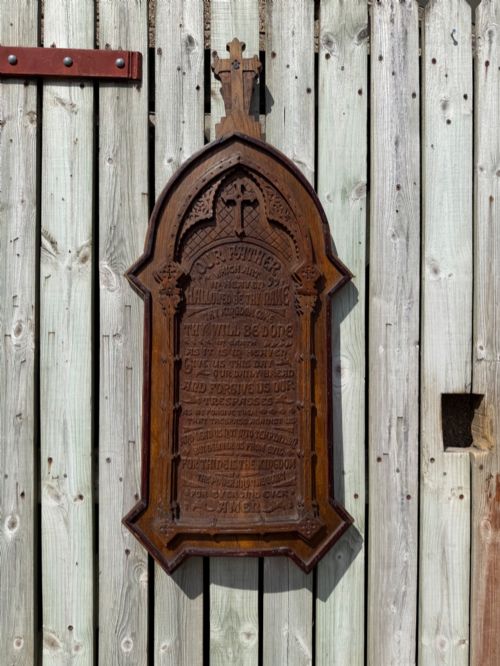
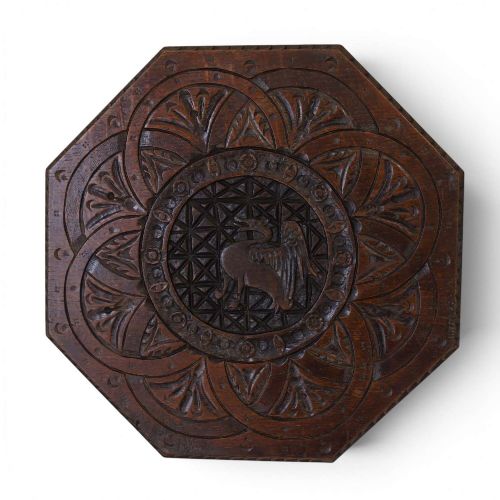
Carvers employed hand chisels and gouges to create high-relief ornamentation, rendering heraldic lions, portraits, and religious texts with sharp architectural precision. This labor-intensive subtractive method produced deep undercut shadows that defined the Gothic Revival aesthetic.
What varies in quality
The standard of carving defines the distinction between ordinary work and exceptional pieces. Sharp, deeply undercut details in the timber show a confident hand, whereas shallow or mechanical incisions lack the true spirit of nineteenth-century craftsmanship.
Material selection also separates individual items. Plaques utilising quarter-sawn oak with clear medullary rays or combining timber with brass elements demonstrate superior original design ambitions.
The Victorian Gothic Oak Plaque Glossary
- Gothic Revival
- An architectural and decorative style that revived medieval forms, pointed arches, and ecclesiastical motifs during the nineteenth century. It heavily influenced Victorian furniture and wall decor.
- Quarter-sawn oak
- Timber cut radially to the growth rings, producing a distinctive decorative figure known as medullary rays. This cut offers superior stability and visual depth for carved wall plaques.
- Heraldic lion
- A traditional symbol of courage and nobility depicted in various heraldic poses. It frequently appears as a carved subject on Victorian shield crests and panels.
- Pugin design
- Ornamentation inspired by the architectural theories of Augustus Pugin, a major pioneer of the Gothic Revival style. This work emphasises structural honesty and medieval ecclesiastical detailing.
Victorian Gothic Oak Plaque: Frequently Asked Questions
How were these plaques originally displayed?
These carved timber pieces were generally mounted directly onto interior walls of libraries, halls, and dining rooms as architectural enrichment. Some items began as functional architectural elements or furniture components before being adapted for wall display.
Their heavy timber construction required secure fixing to lath and plaster or timber paneling. They served to project historical legitimacy and scholarly taste in Victorian domestic spaces.
What is tiger oak?
Tiger oak is a term used to describe quarter-sawn oak timber displaying prominent, dark medullary rays that resemble tiger stripes. This figuring becomes especially striking when polished or finished with traditional waxes.
Carvers often selected this specific cut of wood to enhance the visual texture of heraldic shields and portrait panels. The natural grain pattern adds depth to deep relief carvings.
Are all these items strictly from the Victorian era?
The listings span the nineteenth century, encompassing standard Victorian production alongside pieces dating directly to around nineteen hundred. While the Gothic Revival style dominated this period, exact manufacturing years vary from mid-century church furnishings to later decorative panels.
Stylistic markers such as Pugin-inspired motifs and heraldic subjects help contextualise the timeline. Material choices like brass integration also assist in dating individual items.
How should I care for an antique oak plaque?
Maintain the timber by applying natural beeswax sparingly to preserve the dry or polished finish without attracting dust. Keep the plaque away from direct heat sources and dramatic humidity fluctuations to prevent wood splitting.
Dust the deep relief carvings gently with a soft brush to protect fragile edges. Avoid modern liquid cleaners that can strip historic patination from the oak.