
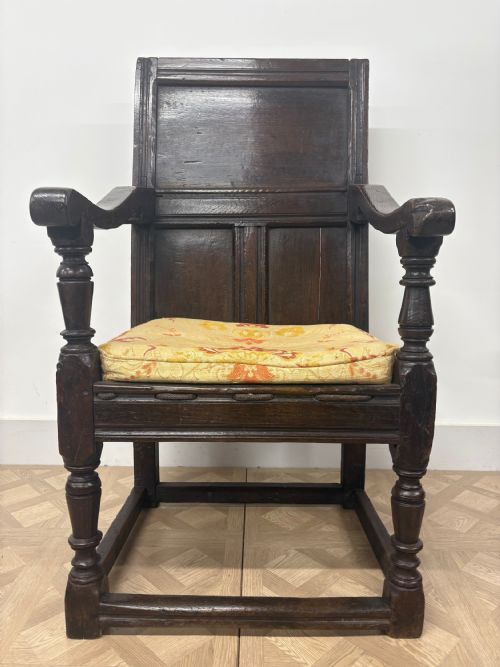
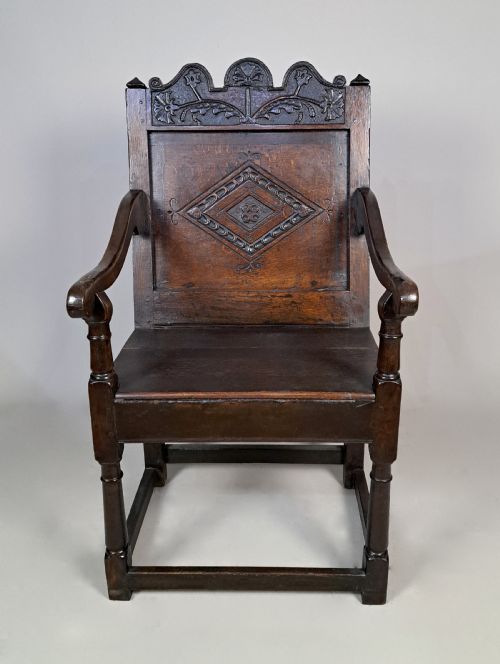
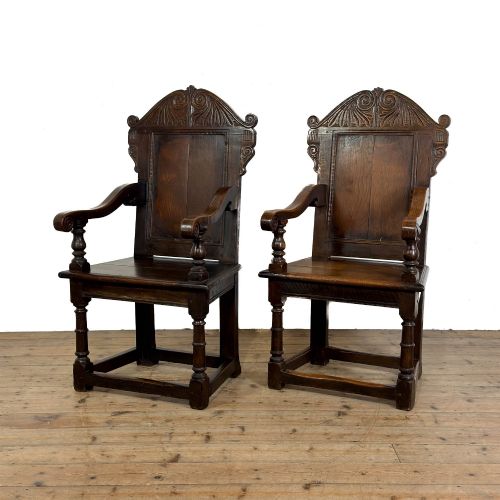
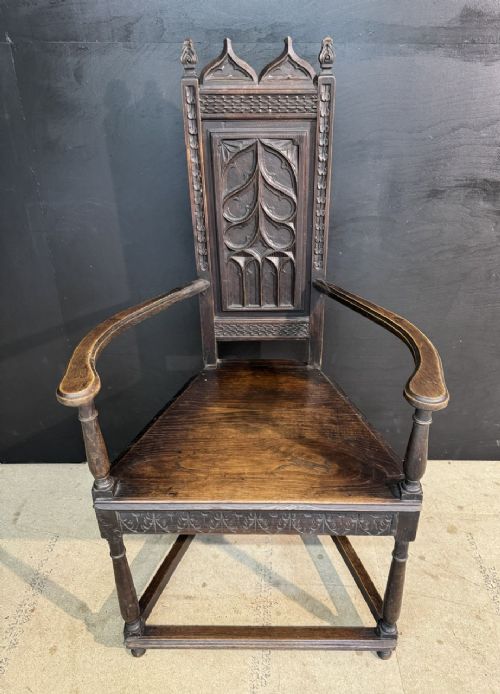

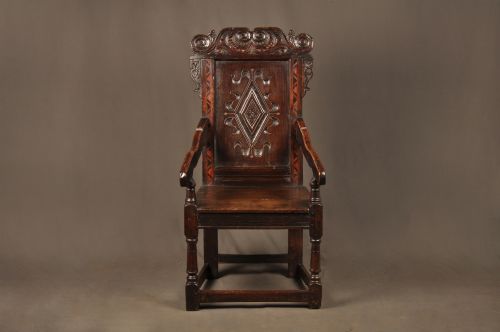
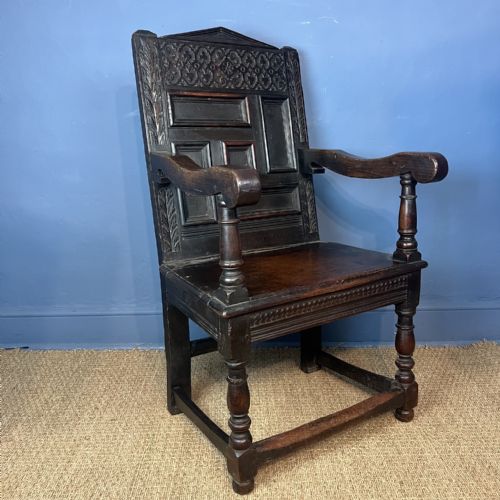
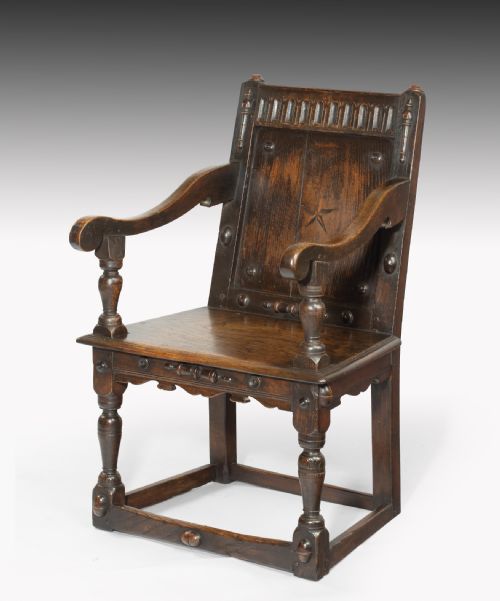
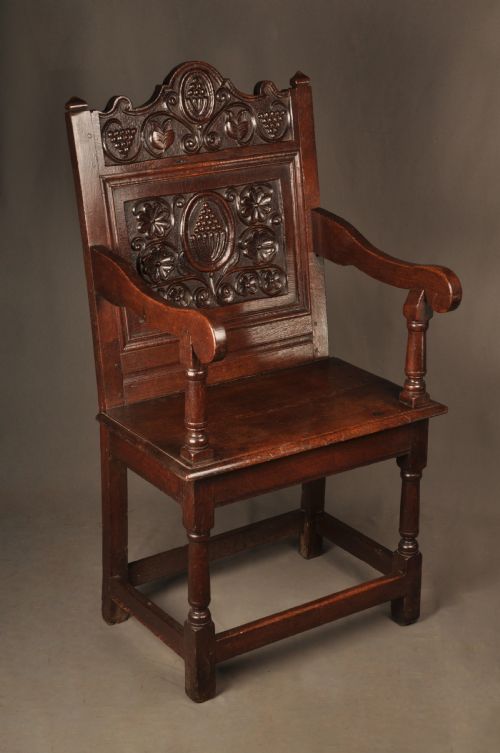
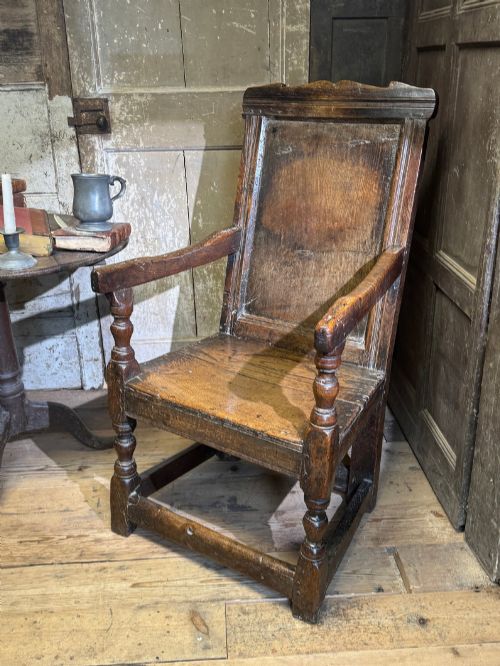

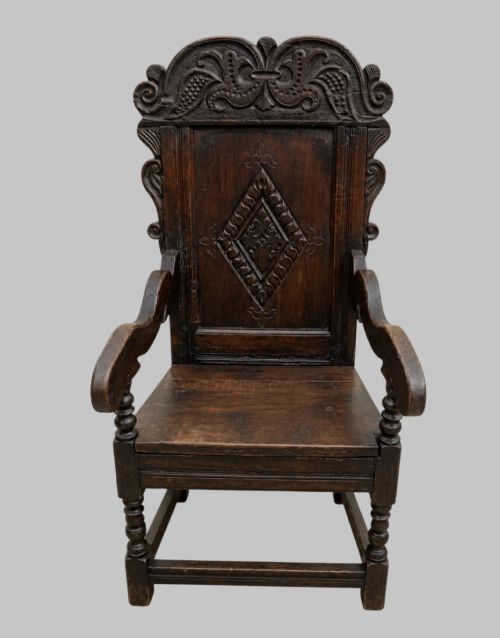
Dark Oak Wainscot Armchair
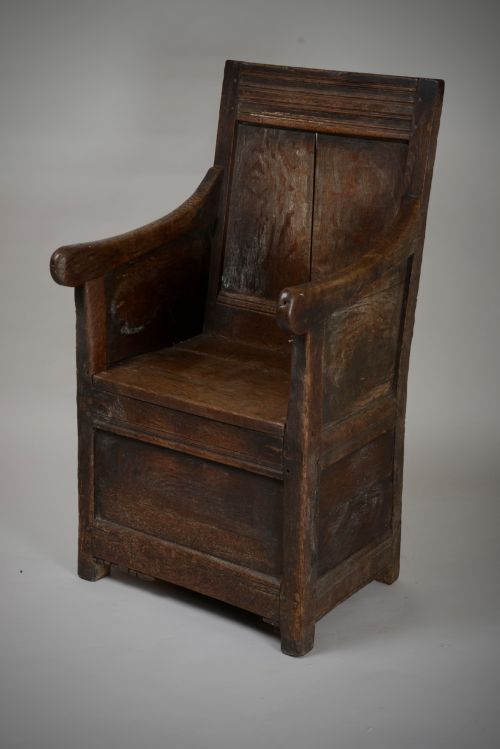
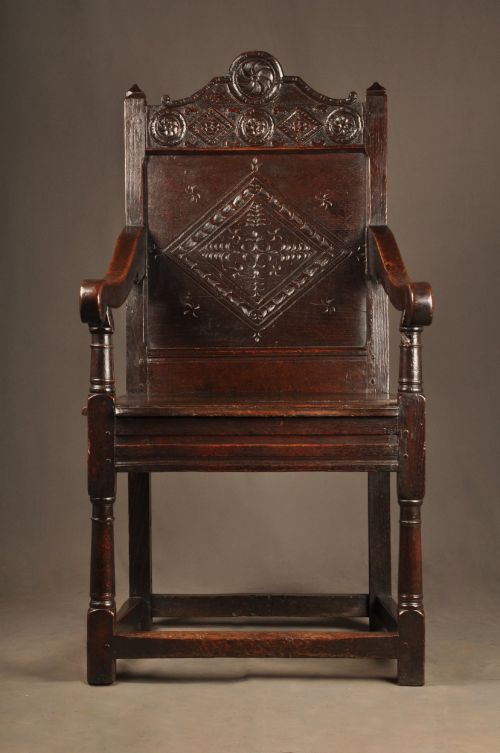
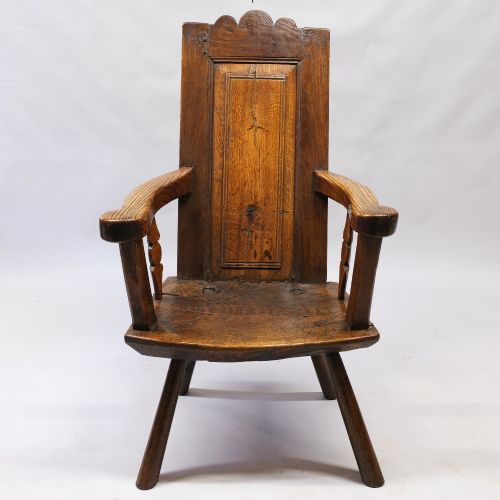
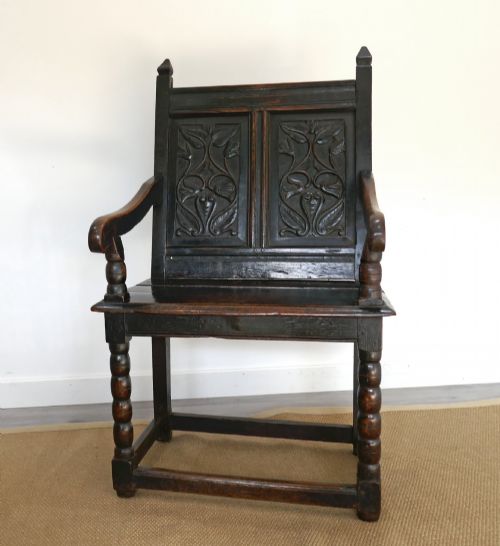
A dark oak wainscot armchair is a solid timber seat from earlier centuries, offering panelled backrests and sturdy arms for daily use.
Dark Oak Wainscot Armchair
A dark oak wainscot armchair is a rigid, panelled seat built predominantly from solid timber during the sixteenth, seventeenth, and eighteenth centuries. These regional pieces emerge from English, Welsh, and Scottish workshops, spanning periods from the Elizabethan era through the Jacobean and Georgian years.
Buyers frequently meet seventeenth-century examples featuring high panelled backs, solid wooden seats, and robust armrests supported by turned legs. Later nineteenth-century revivals and twentieth-century interpretations also appear, replicating the heavy proportions and architectural joinery of earlier periods.
Regional variations define these chairs, with specific forms originating in Yorkshire, Lancashire, Cheshire, and the West Country. The typology includes standard seating as well as smaller dimensions described as ladies or children's variants.
How they were made
Joiners constructed these seats using solid oak planks, frequently combined with secondary timbers like elm for seating boards. Construction relied heavily on mortise and tenon joints secured with wooden pegs rather than metal nails.
Surface enrichment involved hand carving, panel moulding, and occasional wood inlay to accentuate the flat wooden surfaces of the backrest and crest rail. Certain variants incorporated squab cushions upholstered in velvet or leather fastened with metal studs.
Joiners occasionally left visible tool marks on the underside of solid wooden seats, offering a direct touch from the distant past.
What varies in quality
The depth and crispness of the hand-carved decoration on the crest rail and panel back distinguish standard examples from finer outputs. Relief work executed with sharp chisels demonstrates higher workshop competency than shallow or worn surface incisions.
Proportion and structural integrity dictate the standing of a piece, particularly where original timber thickness and untouched surface patination remain intact. Chairs retaining their initial boarded seats and unblemished joinery represent the pinnacle of surviving stock.
The Dark Oak Wainscot Armchair Glossary
- Wainscot
- A term originally denoting fine oak panelling, applied to heavy wooden armchairs featuring panelled backs.
- Joined oak
- Furniture constructed using interlocking mortise and tenon joints fitted together by cabinet makers rather than simple nailed boards.
- Crest rail
- The horizontal top member of a chair back, frequently shaped, carved, or inscribed with dates.
- Elm
- A dense native timber commonly utilised for chair seats due to its resistance to splitting under heavy use.
- Stretcher
- The horizontal wooden member connecting the lower legs of a chair to provide structural rigidity.
Dark Oak Wainscot Armchair: Frequently Asked Questions
What is a wainscot armchair?
A wainscot armchair is a heavy wooden seat constructed from solid timber with a panelled backrest. These heavy chairs originate primarily from sixteenth and seventeenth-century domestic interiors.
They function as rigid, formal seating pieces rather than comfortable lounging chairs, often positioned at the head of a table.
Were these chairs used outdoors?
These seats were designed entirely for interior domestic environments, specifically principal rooms and halls of substantial houses. Solid oak construction provided durability against heavy indoor use.
Exposing them to damp or changing exterior conditions harms the timber and deteriorates the original surface patination.
What regions made these chairs?
English, Welsh, and Scottish workshops produced these seating forms with distinct regional characteristics. Lancashire, Yorkshire, Cheshire, and the West Country generated notable local variations.
Regional differences appear in the carving motifs, proportions, and specific framing details applied by local joiners.