

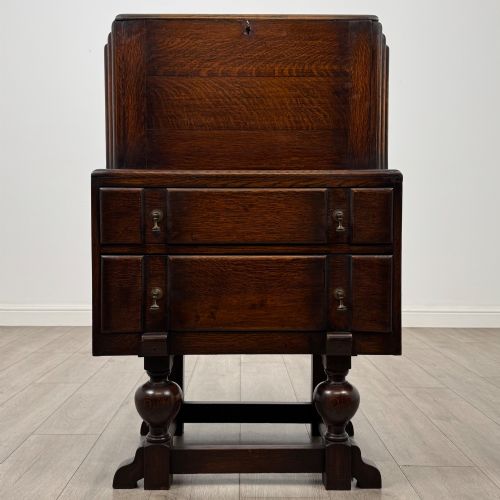
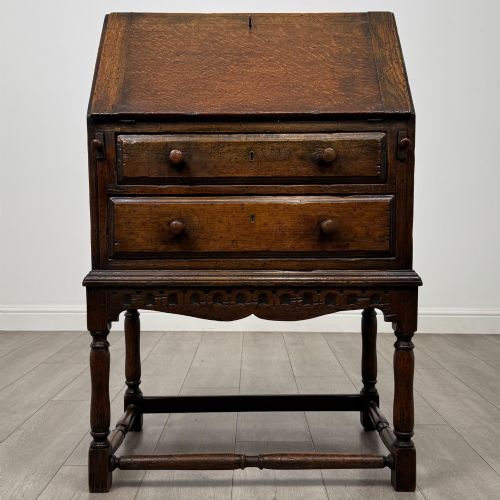

Dark Oak Slant Front Bureau
A dark oak slant front bureau brings substantial timber and a fitted interior to a room, offering a practical writing surface that conceals your papers when closed.
Dark Oak Slant Front Bureau
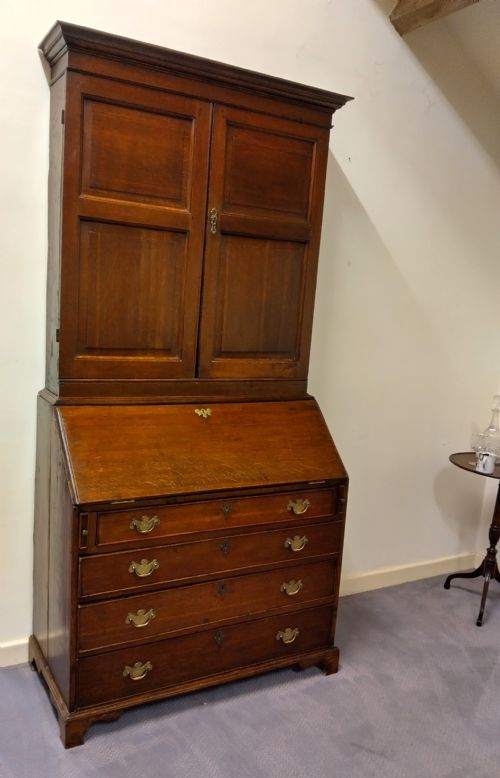
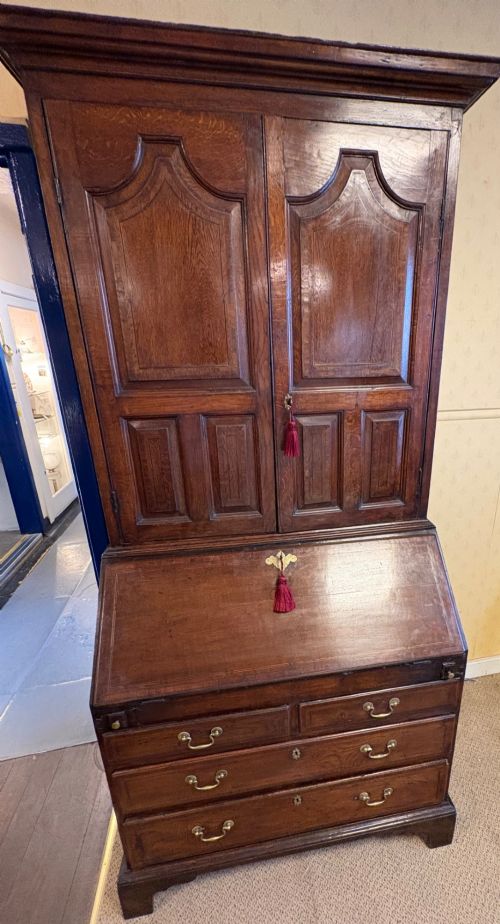
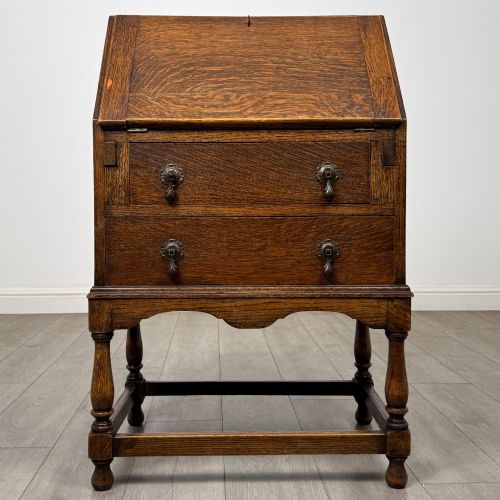
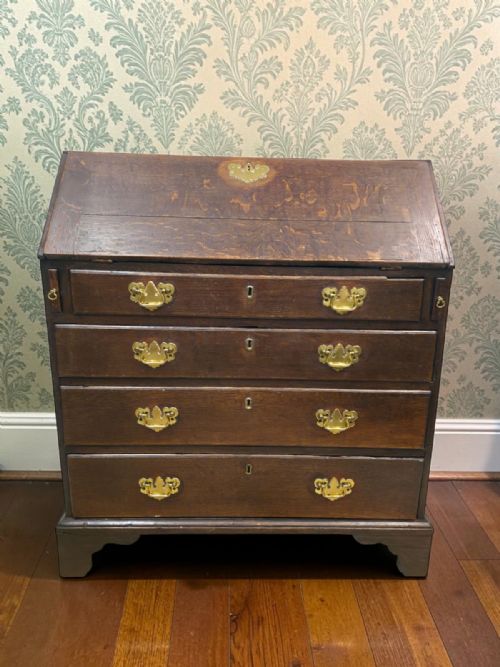
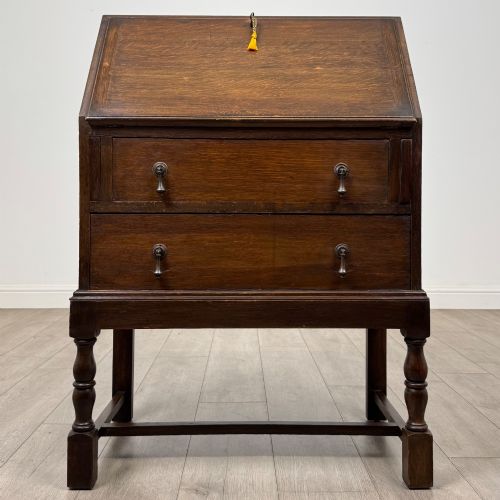
A dark oak slant front bureau is a practical writing desk featuring an angled flap that drops down to create a writing surface. When you search for this phrase, you find pieces designed for correspondence and storage, ranging from compact writing desks to towering bureau bookcases.
The versions you meet most often on this page date from the eighteenth century and the Edwardian period, alongside later revivals. These pieces utilise sturdy timbers and often incorporate internal compartments, drawers, and pigeonholes behind the fall front.
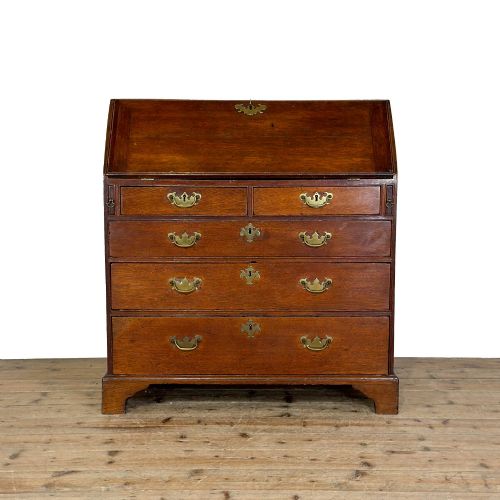
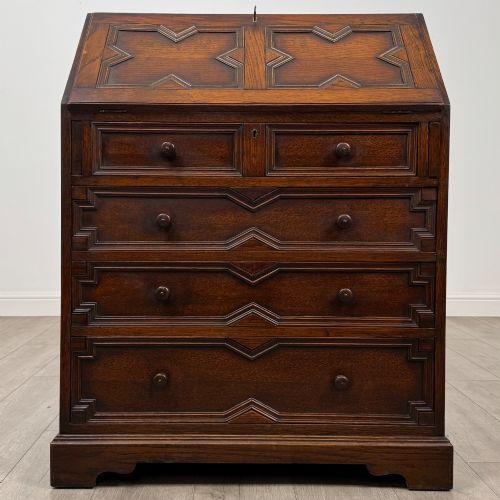
Makers shaped these forms across different eras, producing vernacular early examples as well as formal Georgian iterations and later Jacobean style revivals. Each piece reflects the functional requirements of its period, from simple clerks' desks to glazed bookcase combinations.
Judging Quality and Character
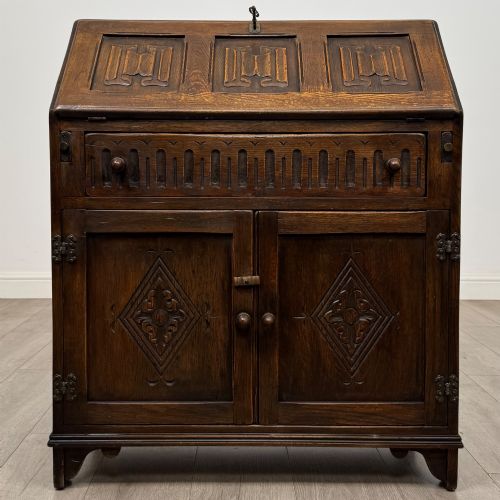
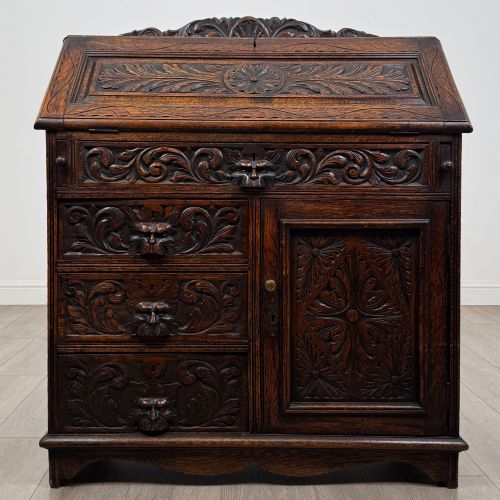
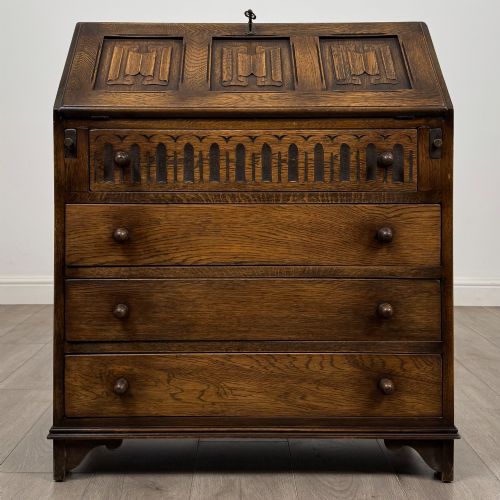
Quality rests in the depth of the timber's colour, the crispness of any carved details such as linenfold or green man motifs, and the complexity of the stepped interior. Superior examples exhibit finely fitted small drawers and secret compartments within the bureau desk.
The integrity of the construction and the proportional balance between the upper bureau and the lower drawers dictate a piece's standing. Early vernacular pieces derive their appeal from untouched surfaces and vernacular charm, whereas formal Georgian items rely on proportion and refined joinery.
One early bureau has been adapted for television, proving that seventeenth century timber can happily host modern screen time.
The Dark Oak Slant Front Bureau Glossary
- Fall front
- The hinged angled panel that pulls down to form a writing surface and lifts up to conceal the interior. It is the defining feature of any bureau.
- Stepped interior
- An internal arrangement where pigeonholes and small drawers rise in tiers towards the back. This configuration adds complexity and utility to the writing compartment.
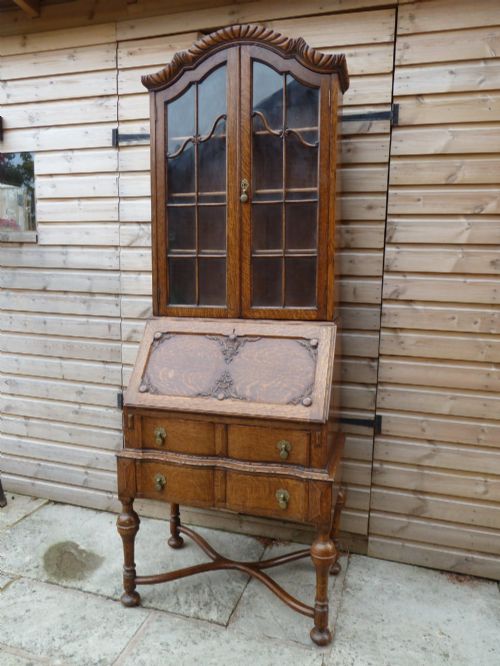
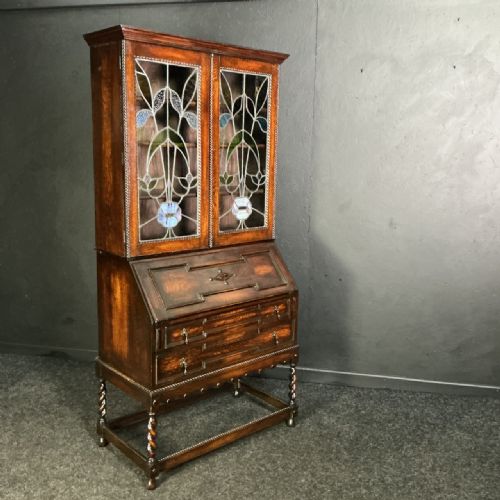
- Bureau bookcase
- A combined form featuring a writing bureau base with an enclosed shelving unit or glazed cabinet mounted on top. These tall pieces maximise storage capacity in a room.
- Linenfold
- A style of carved wooden panelling that resembles folded vertical folds of linen. Makers frequently applied this decorative motif to Edwardian and revival furniture.
- Vernacular
- Furniture made by local craftsmen for regional use rather than high urban workshops. These pieces often display simpler construction and distinctive local character.
Dark Oak Slant Front Bureau: Frequently Asked Questions
How do I use a bureau desk?
Lower the angled front flap to reveal the writing surface and interior compartments. This provides a designated spot for correspondence with storage space tucked directly beneath.
Close the flap when finished to hide your papers and maintain a tidy room. The surface remains sturdy for daily writing tasks.
Where should I place a bureau bookcase?
Position your bureau bookcase against a sturdy wall in a study, living room, or hallway where the tall timber presence anchors the space. Ensure you leave adequate clearance in front of the piece for the fall front to drop down fully.
Keep the cabinet away from direct heat sources and strong sunlight to protect the oak timber and any glazed panels from damage.
How do I tell an eighteenth century bureau apart from a revival piece?
Examine the construction methods, timber patination, and internal configuration of the drawers. Eighteenth century pieces typically show hand-cut dovetails, genuine age-related wear, and vernacular touches specific to their era.
Revival pieces often display machine-made elements or stylised carvings that imitate earlier periods. Makers during the Edwardian era frequently produced these Jacobean style and linenfold variations.