

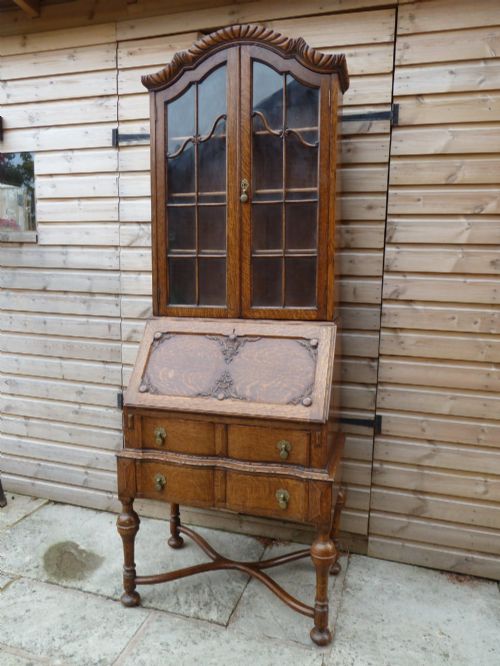
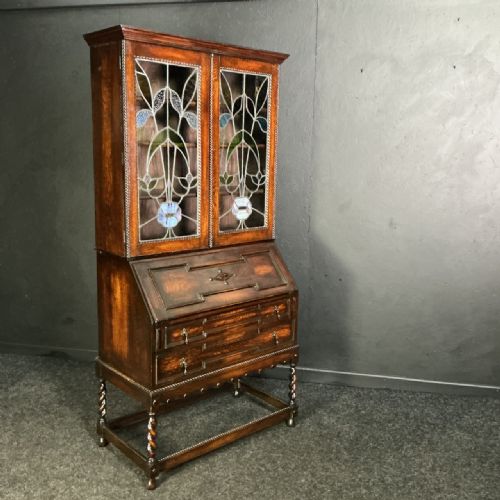
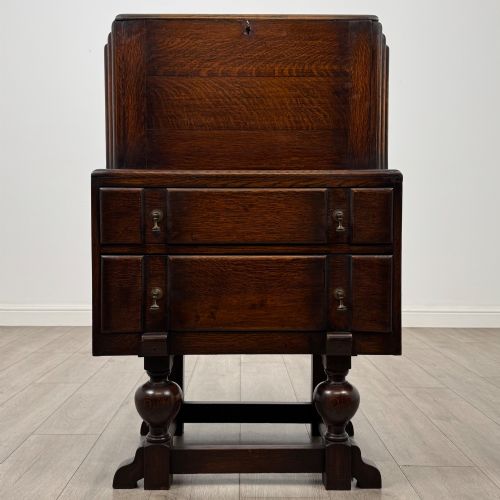
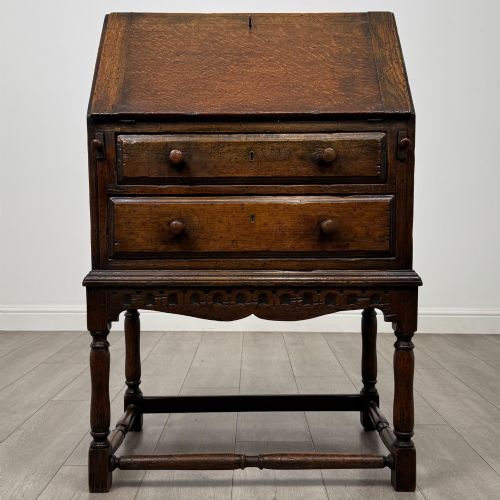
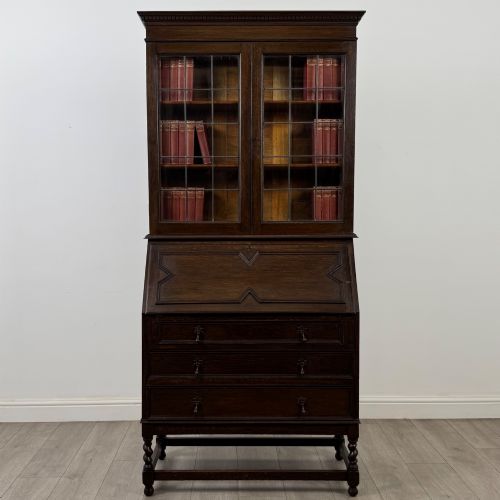
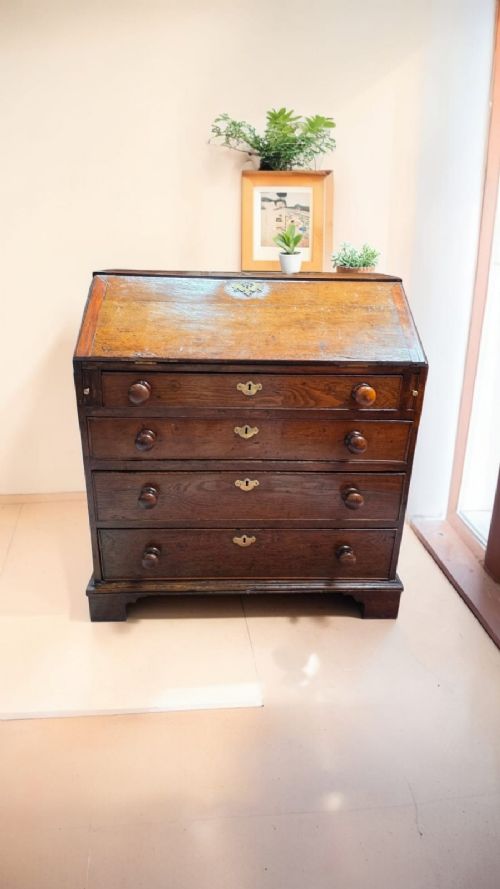
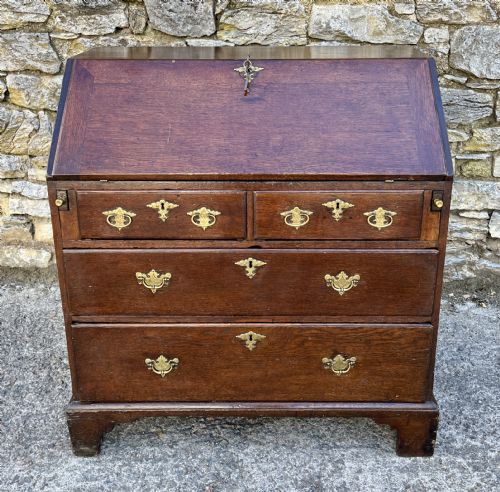
Dark Oak Secretary
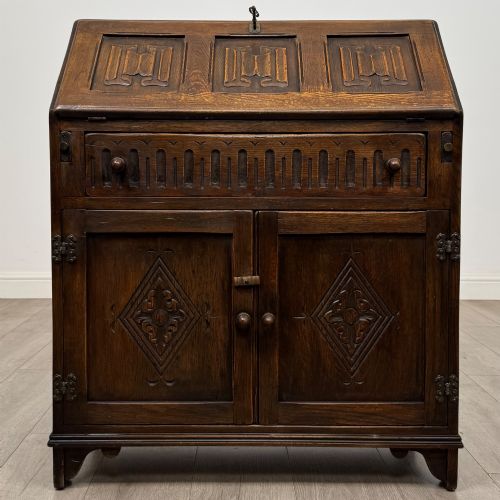
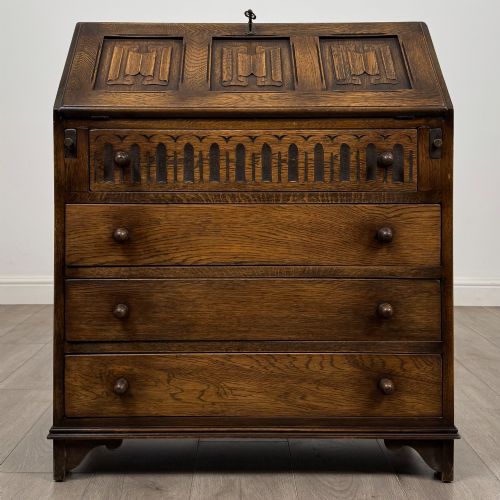
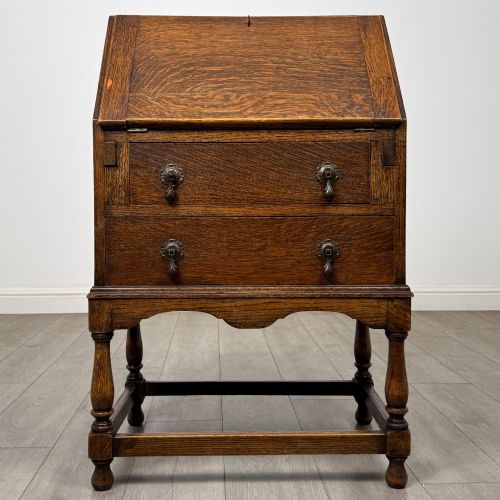
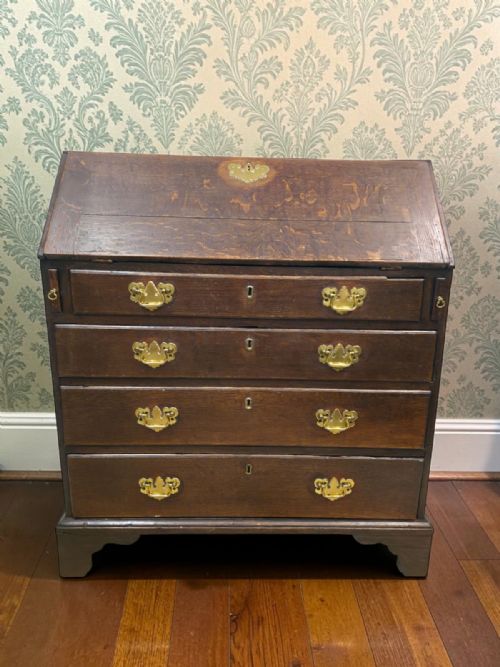
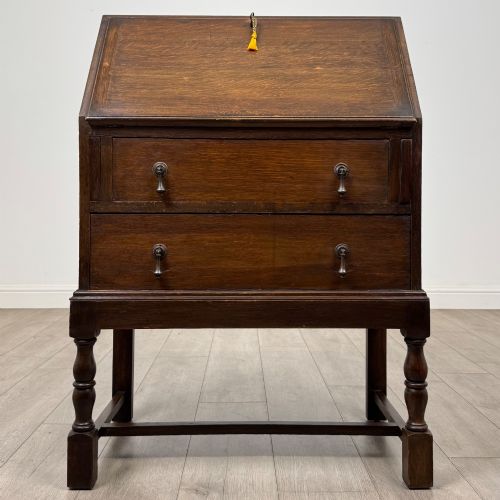
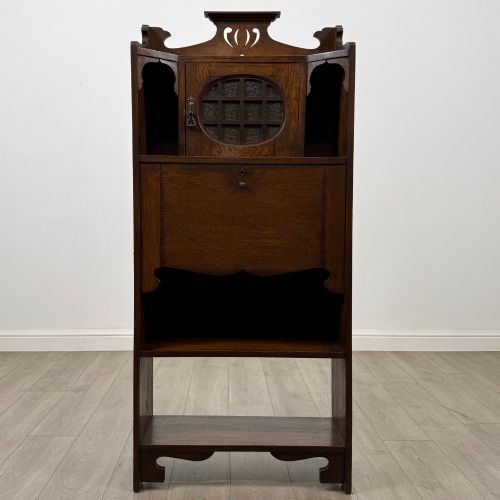
A dark oak secretary brings grounded utility and rich grain to a room, offering a sloping fall front that conceals fitted writing compartments.
Dark Oak Secretary
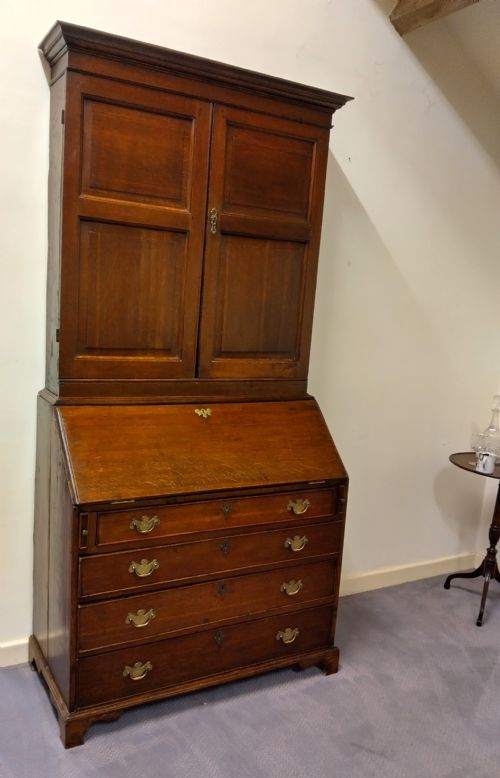
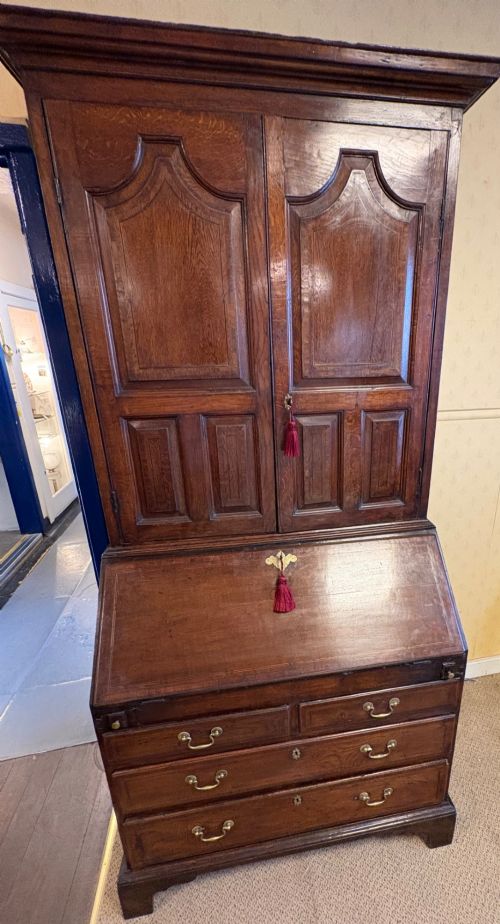
When you search for a dark oak secretary, you are looking at practical writing furniture built to organise correspondence and papers behind a folding desk flap. The pieces gathered here span centuries of craftsmanship, ranging from compact Edwardian and 1920s iterations to substantial 18th century and Georgian bureau bookcases.
You will most commonly encounter Edwardian and 1920s examples on this page, often showing Jacobean revival carving, linenfold panels, or simple arts and crafts lines. Earlier Georgian and 17th century pieces appear less frequently, offering stepped pigeonholes, secret drawers, and solid timber construction designed for daily use.
Distinctions in quality
The architectural ambition of the interior separates standard writing desks from exceptional bureau bookcases. Pieces featuring stepped internal compartments, secret compartments, and finely panelled upper bookcase doors demonstrate a higher level of cabinetmaking skill.
The choice of timber and the crispness of surface carving dictate the visual weight of the piece. Well-figured oak grain and deeply carved mouldings elevate an ordinary desk into a substantial focal point.
One early 18th century oak bureau bookcase arrives adapted specifically for television.
The Dark Oak Secretary Glossary
- Fall front
- The hinged writing flap that pulls down to create a horizontal surface for writing. It conceals the internal pigeonholes and small drawers when closed.
- Bureau bookcase
- A combination piece comprising a sloping writing desk below and glazed or panelled shelving doors above. It unifies storage and display in a single tall item.
- Linenfold
- A style of relief carving used on wooden panels to imitate folded linen cloth. It appears frequently on Edwardian and revival pieces.
- Secretaire
- An alternative term for a writing cabinet or desk, sometimes integrated into the top drawer of a chest.
- Pigeonhole
- A small, open compartment inside the desk interior used for sorting letters and documents.
Dark Oak Secretary: Frequently Asked Questions
How do I use a bureau desk today?
The fold-down writing flap provides a compact, concealed workspace for laptops and paperwork. Internal compartments keep stationery organised while closing the flap instantly hides the clutter.
Many examples include bookshelves above or drawer space below, making them practical for living rooms or home studies where floor space is limited.
How do I tell an 18th century bureau apart from a 1920s revival piece?
Earlier pieces from the 17th and 18th centuries typically display hand-cut dovetails, pegged joints, and timber shrinkage that reflects age. The oak develops a deep, mellow patina over generations of polishing.
Revival pieces from the Edwardian era and the 1920s often utilise machine-sawn components, standardised brasses, and crisper, stylised carving inspired by earlier Jacobean or Tudor designs.
What is the difference between a bureau and a secretary?
Both terms describe furniture designed for writing with a sloping or folding writing surface. In British usage, these pieces are traditionally called bureaux or writing desks.
The term secretary often implies a more elaborate cabinet structure with fitted internal drawers and compartments for correspondence.
Where should I place an oak secretary in my home?
An oak secretary suits studies, living rooms, or quiet corners where the dark timber adds warmth and traditional character. Placing the piece away from direct heat sources protects the solid wood and veneers from drying out.
Ensure there is sufficient clearance in front of the unit for the fall front to drop fully horizontal and allow space for a chair.