
Edwardian Slant Bureau
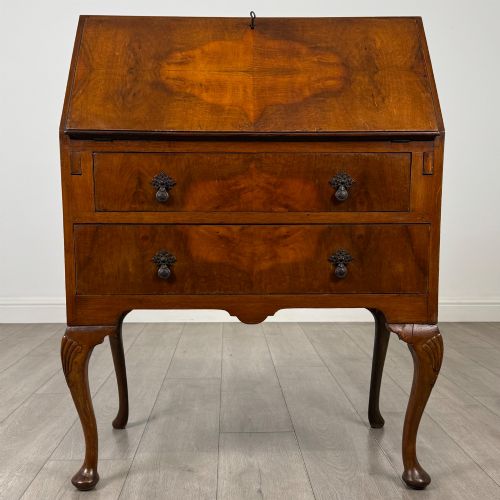
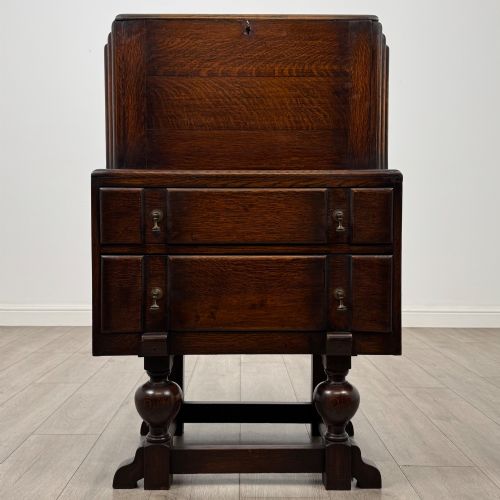
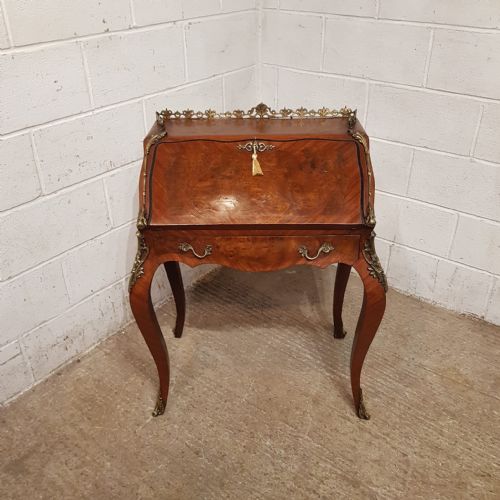
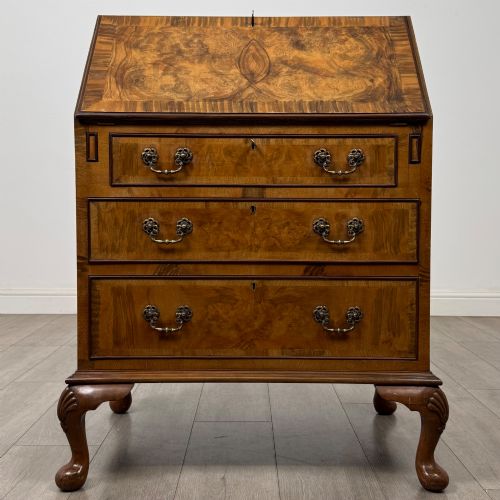
An edwardian slant bureau offers a sloping fall-front desk space above practical drawers, combining compact proportions with fitted interior compartments.
Edwardian Slant Bureau
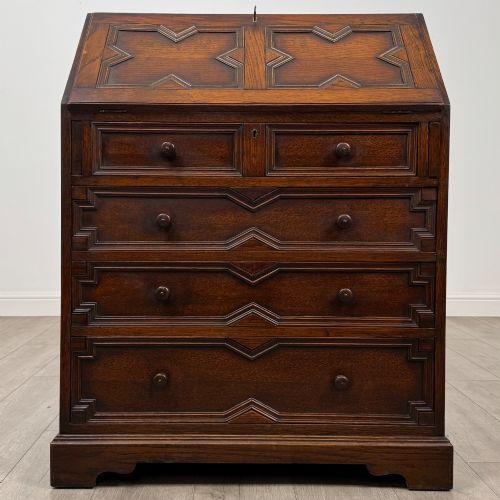
When you examine an edwardian slant bureau, you are looking at a traditional writing form adapted for early twentieth-century domestic interiors. These pieces appear primarily as freestanding writing desks with hinged fall-front lids that conceal pigeonholes and small drawers.
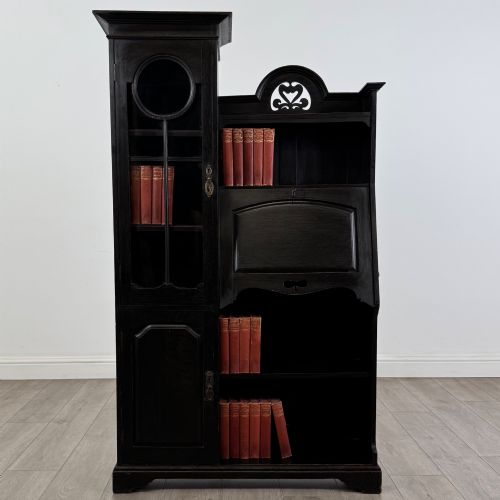
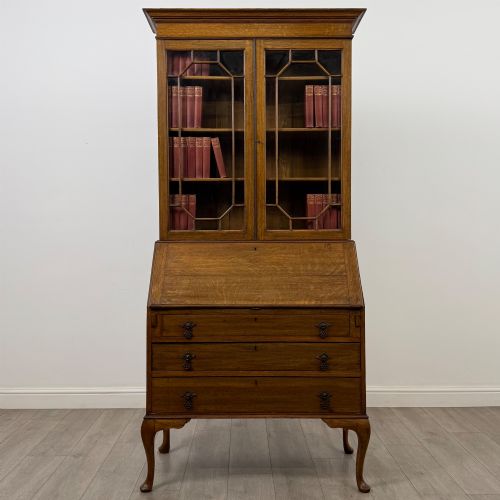
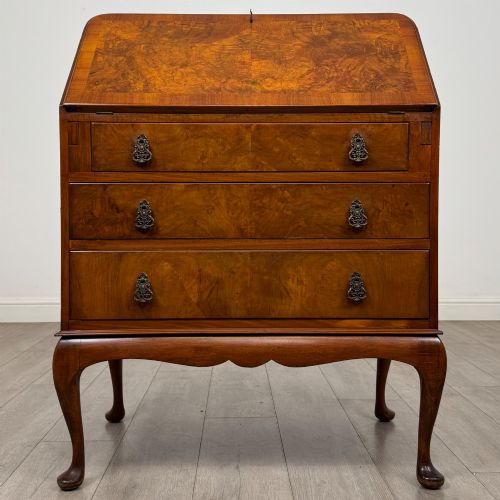
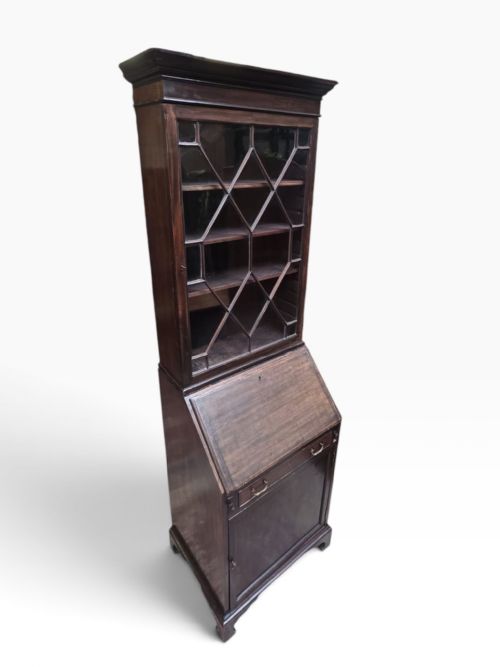
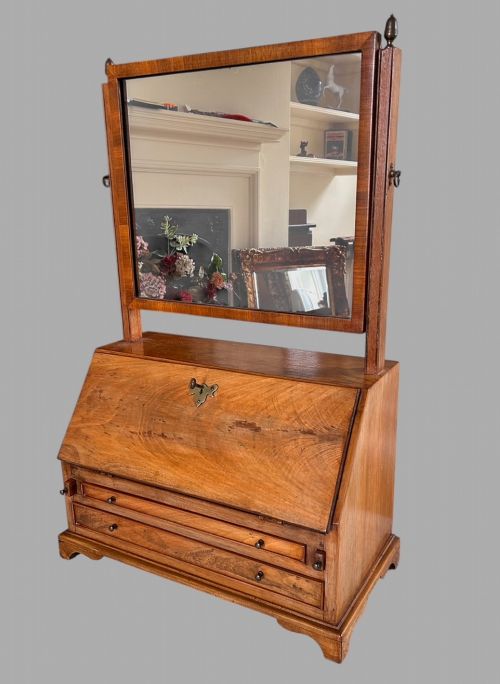
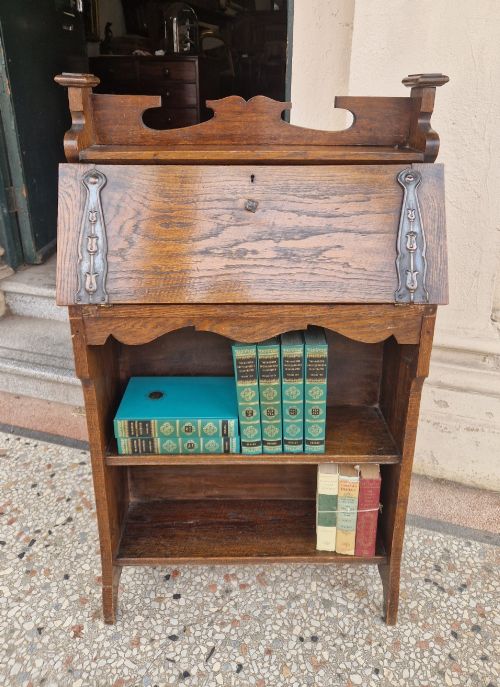
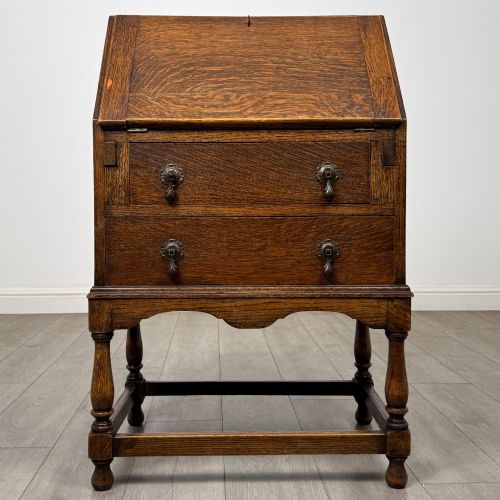
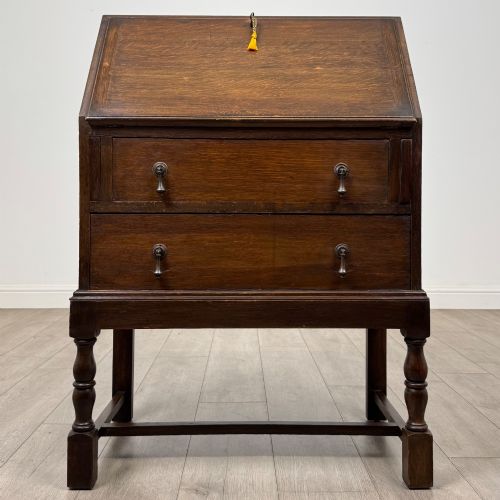
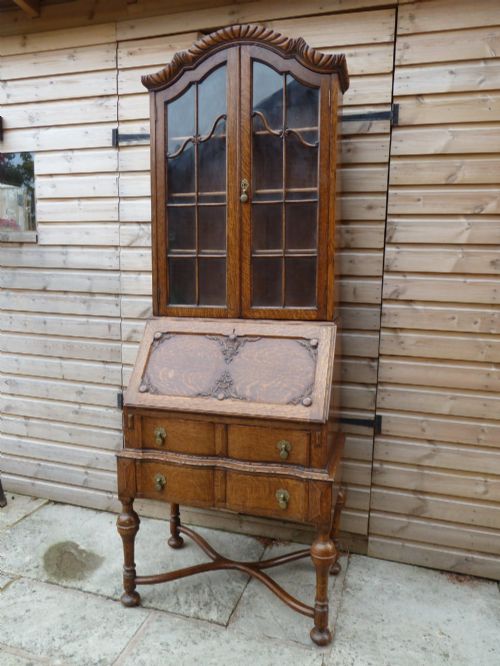
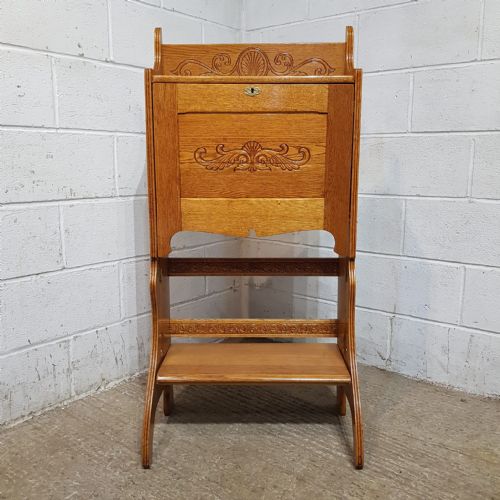
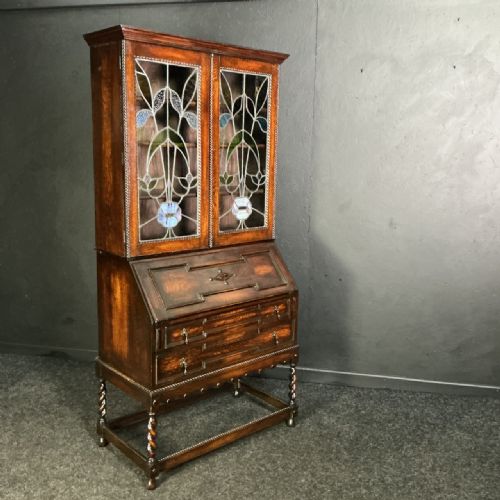
The selection on this page includes variants such as bureau bookcases with upper glazed shelving units, compact tabletop versions, and larger cabinet forms. Oak and mahogany serve as the primary woods, often complemented by walnut, satinwood, and decorative marquetry work.
Materials and Construction
Cabinet makers constructed these desks using solid timbers like oak and mahogany, frequently applying figured walnut, burr walnut, or satinwood veneers to the fall-fronts and drawer faces. Brass fittings, including escutcheons and drop handles, secure the compartments and drawers.
Joinery techniques involve dovetailed drawer construction and panelled fall-fronts designed to support the writing surface when lowered. Certain examples feature painted finishes, intricate inlay, or glass panels fitted into upper bookcase doors.
Some slant desks hide secret compartments behind tiny drawers, designed for stashing private letters or missing postage stamps.
The Spectrum of Quality
Excellence in these desks rests on the selection of timber veneers and the precision of the interior fittings. Pieces utilising highly figured burr walnut, satinwood, or detailed marquetry sit at the upper end of the scale.
Simpler oak variations rely on sturdy construction and functional proportions rather than decorative elaboration. The complexity of the internal stationary compartments and the integration of upper bookcase sections also separate standard examples from finer works.
The Edwardian Slant Bureau Glossary
- Slant bureau
- A writing desk featuring an angled hinged lid that drops forward to create a writing surface. This design conceals internal compartments for paper and ink.
- Bureau bookcase
- A combination furniture piece consisting of a slant desk base surmounted by a glazed or panelled cabinet for books. These tall items provide both workspace and storage.
- Fall-front
- The hinged sloping panel on a bureau that lifts to close the desk or lowers to form the writing surface.
- Marquetry
- Decorative veneer patterns formed by fitting together thin pieces of wood, shell, or ivory to create pictorial or geometric designs.
- Pigeonhole
- A small, open compartment within a desk interior used for sorting letters and documents.
Edwardian Slant Bureau: Frequently Asked Questions
How do I use an edwardian slant bureau?
Lower the hinged sloping front to create a compact writing surface supported by built-in pigeonholes and small interior drawers.
Store stationery inside the fitted compartments and utilise the lower drawers for household paperwork or correspondence.
What materials were used?
Cabinet makers utilised solid woods such as oak and mahogany for the primary frames and structural elements.
Finer decorative examples incorporate veneers of burr walnut, satinwood, and ebonised timber alongside brass hardware and glass doors.
How do I tell periods apart?
Edwardian and early twentieth-century examples frequently display lighter woods, satinwood painting, or revival styles like Jacobean and Sheraton.
Earlier Victorian and Georgian pieces generally feature heavier timber scantries, darker polished mahogany, and different internal drawer configurations.
Are bureau bookcases practical?
These dual-purpose items combine a functioning writing desk with upper shelving for book storage within a single footprint.
They require adequate ceiling height and floor space, particularly variants with deep bookcase tops and heavy drawer bases.