





Dark Oak Religious Figure
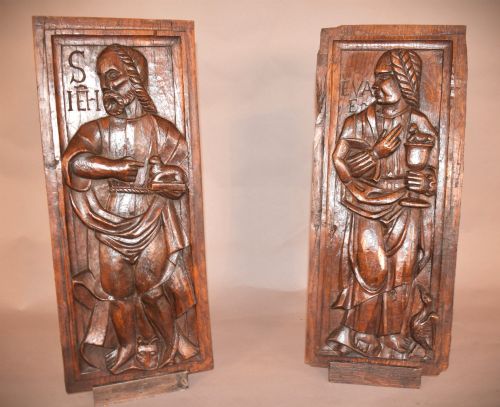
A dark oak religious figure brings centuries of devotion into a room through deep grain and patient hand chiselling.
Dark Oak Religious Figure
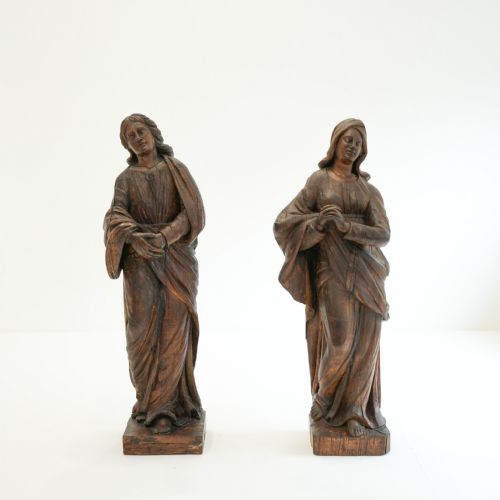
A dark oak religious figure represents saints, donors, angels, and holy scenes carved from dense timber during periods spanning the medieval era to the nineteenth century. These sculptures take the form of wall art, freestanding statues, and architectural fragments originating from workshops across Europe, particularly the Low Countries, Germany, and Italy.
The pieces on this page lean heavily towards sixteenth-century Gothic and Renaissance interpretations, alongside later nineteenth-century revivals and seventeenth-century devotional carvings. Buyers encounter representations of the Pieta, cherubs, and specific saints executed in solid oak and related hardwoods with patinas deepened by age.
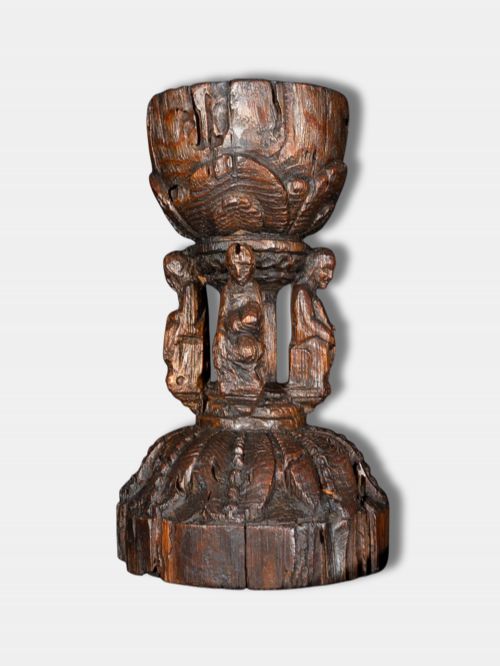
Forms range from intimate statuary and chalices to large wall sculptures and panel fragments that once formed parts of altarpieces or church furnishings. Each dark oak religious figure holds a solemnity rooted in ecclesiastical function and traditional craftsmanship.
What varies in quality
Quality rests upon the anatomical confidence of the carving and the expressive power held within the face and hands of the figure. Master carvers captured movement and emotion in heavy timber, whereas lesser workshop pieces rely on stiff symmetry and repetitive chisel marks.
The integrity of the original wood block and the depth of the surviving relief separate standard decorative carvings from significant sculptural works. Retained traces of early polychrome or gilding add another layer of distinction to the finest examples.
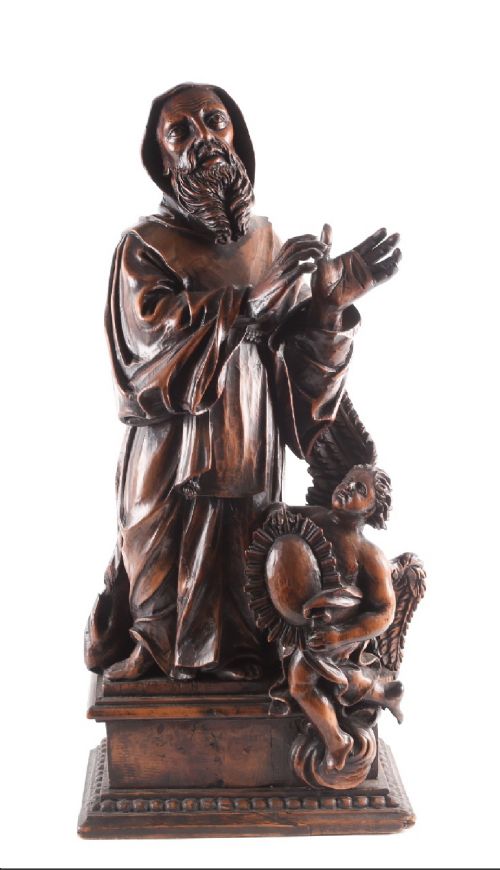
A tiny cherub lurks near the feet of one saint, keeping watch while the holy figure maintains a solemn gaze.
The Dark Oak Religious Figure Glossary
- Gothic
- A style of European art prevalent from the twelfth to the sixteenth century characterised by pointed arches and vertical emphasis. In sculpture, it manifests in elongated figures and complex, cascading drapery.
- Pieta
- A subject in Christian art depicting the Virgin Mary cradling the dead body of Jesus. These sculptures appear frequently in medieval and Renaissance ecclesiastical woodcarvings.
- Polychrome
- The practice of decorating architectural elements, sculpture, or pottery in a variety of colours. Many medieval wooden figures were originally painted before losing their pigment over time.
- Donor figure
- A portrait of the person who commissioned a religious work, often shown kneeling in prayer alongside saints. These figures provide reliable clues to the dress and status of the period.
Dark Oak Religious Figure: Frequently Asked Questions
How old is this dark oak religious figure?
Age is determined by the tool marks left on the timber, the style of the carving, and the oxidation of the oak over time. Earlier pieces from the fifteenth and sixteenth centuries display hand-split grain and deep, dry patination.
Later nineteenth-century revival pieces often utilise machine-sawn backing or show more uniform surface wear. Comparing the anatomical proportions and drapery style to documented regional examples helps narrow down the century of creation.
Where were these religious figures displayed?
Original locations included church altarpieces, private domestic chapels, and monastic reading rooms where they aided daily contemplation. Many larger pieces formed part of architectural tabernacles or choir stalls.
Smaller carvings functioned as portable devotional objects or central elements in household shrines. Today, collectors mount them on walls or place them on heavy furniture as standalone sculptures.
Why is the wood so dark?
Oak naturally contains high levels of tannic acid, which reacts with iron and oxygen over centuries to turn the timber deep brown or near black. Centuries of handling, wax application, and exposure to smoke in candlelit churches accelerated this darkening process.
This rich, shadowed tone is a natural hallmark of genuine age and distinguishes historic timber from newly stained reproductions.
How do I care for a carved oak figure?
Keep the sculpture away from direct heat sources, radiators, and strong sunlight to prevent the dry oak from splitting or warping. Maintaining a stable indoor humidity preserves the structural integrity of the timber and any remaining historic finish.
Dust the deep recesses gently with a soft, dry brush and avoid applying modern polishes or oils that can seal moisture into the ancient grain.