
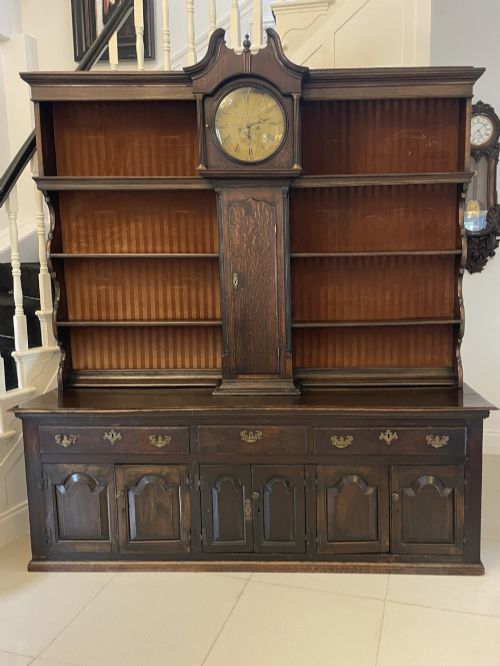
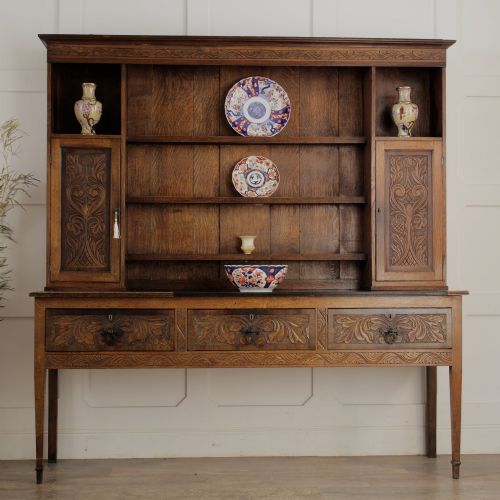
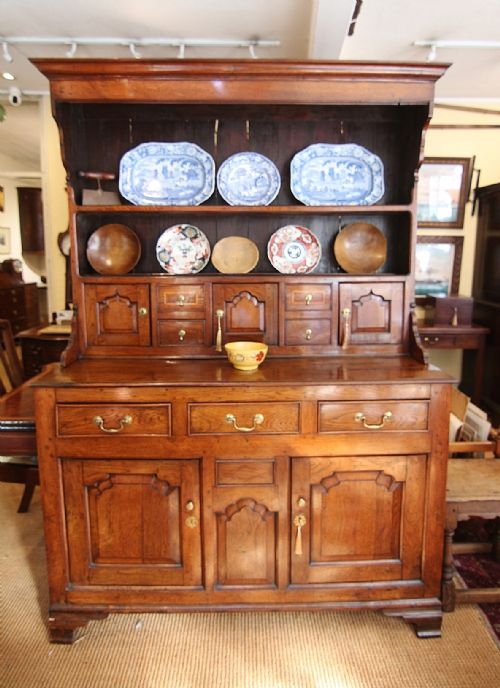
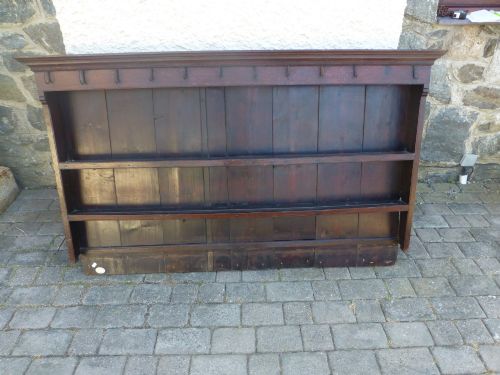
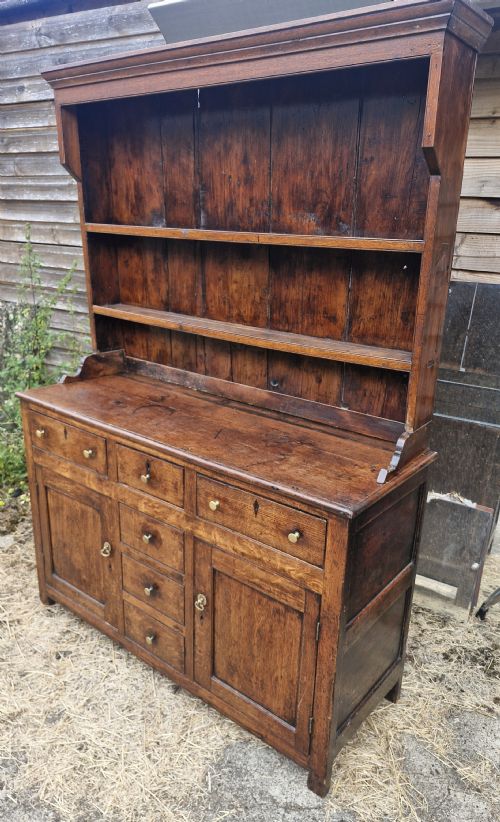
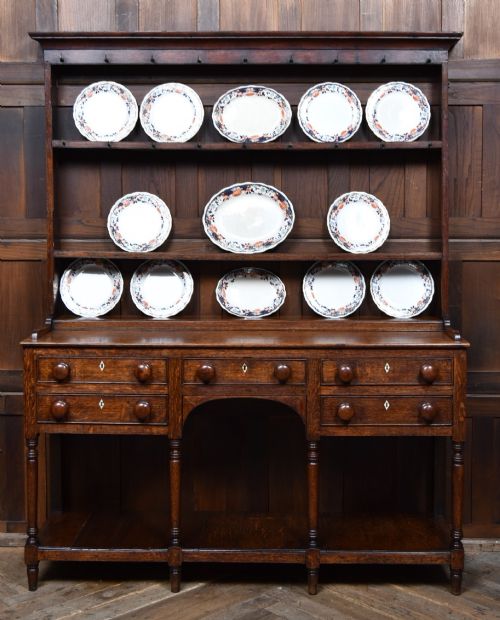
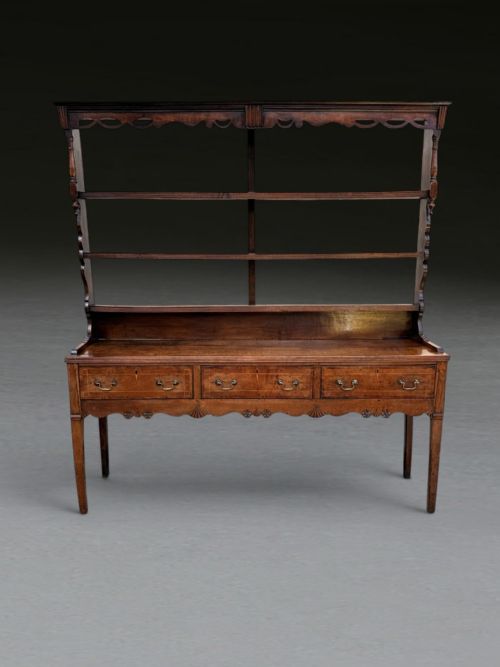
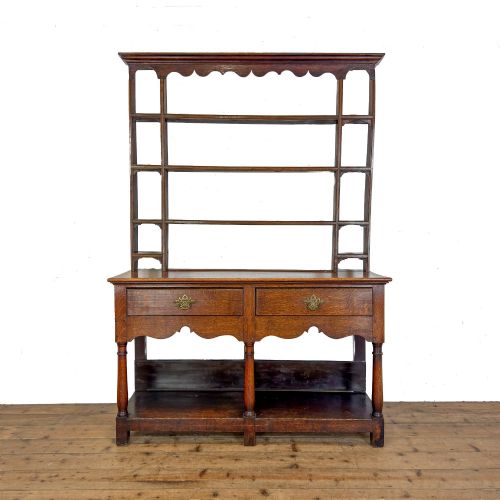
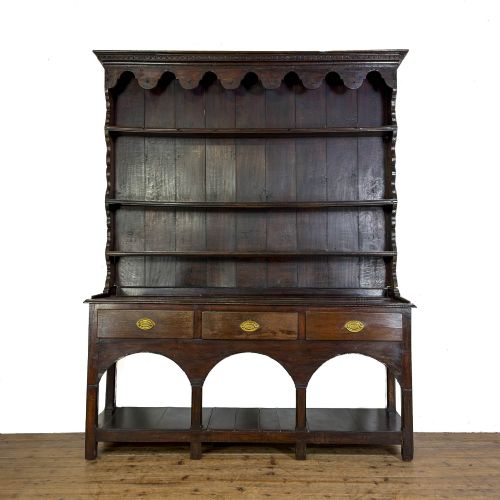
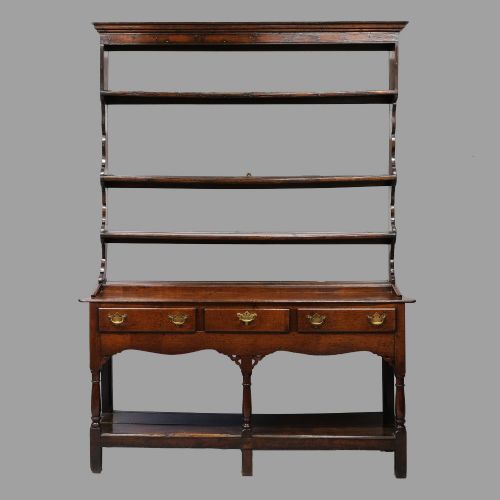
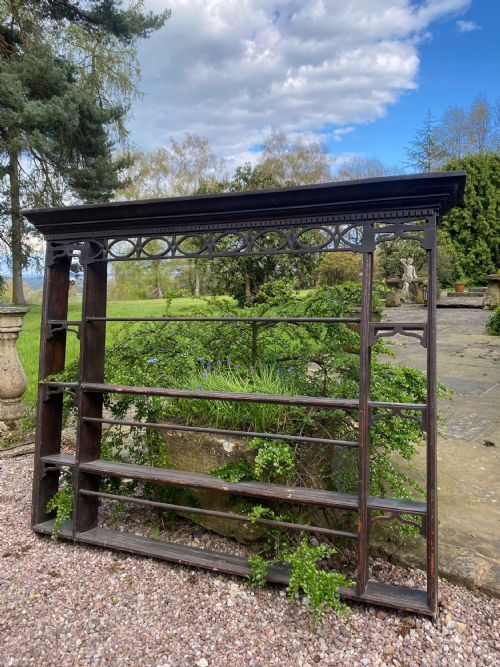
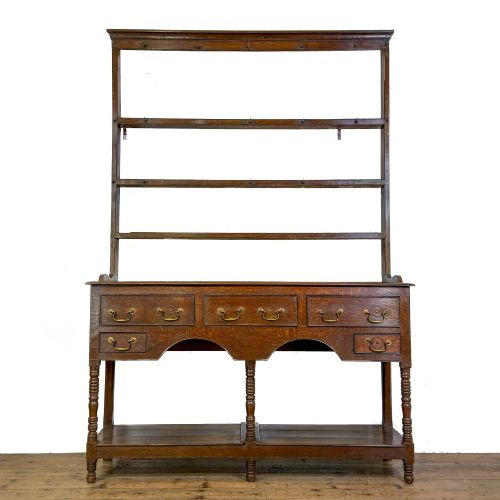
Dark Oak Plate Dresser
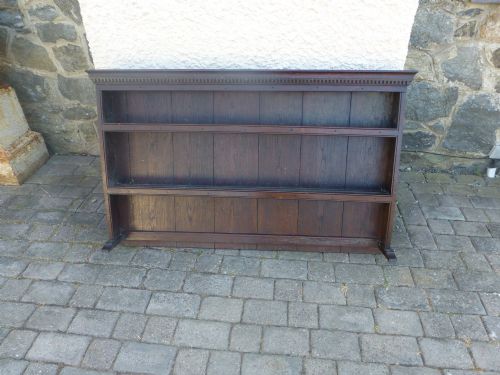
A dark oak plate dresser grounds a room with deep timber grain and open shelves built to display pottery.
Dark Oak Plate Dresser
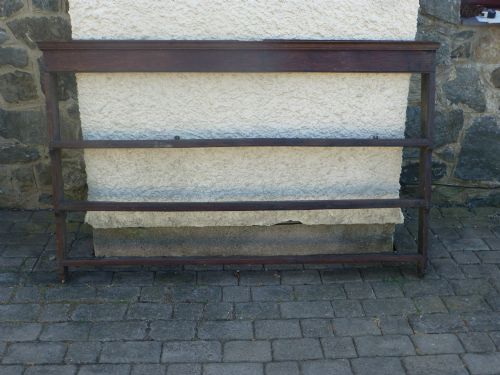
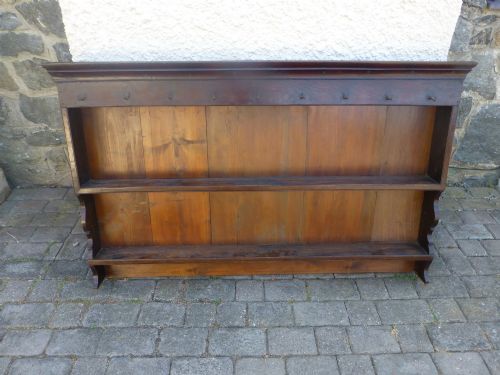
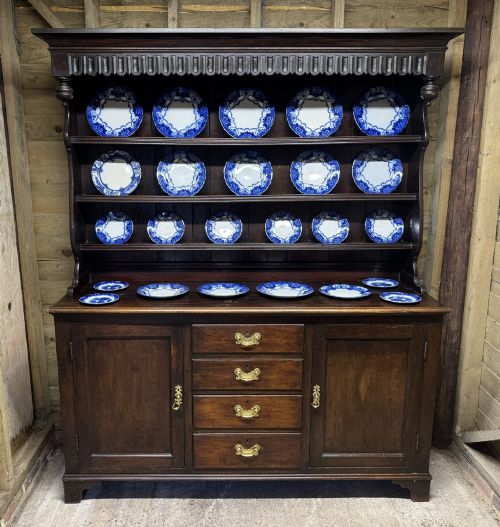
A dark oak plate dresser combines a lower storage base of drawers or cupboards with an upper plate rack designed to display ceramics. These pieces originate from regional traditions across Britain, notably through Welsh and English country workshops.
The pieces appearing here span the eighteenth and nineteenth centuries, taking forms such as potboard bases, cottage dressers, and wall-mounted plate racks. Buyers encounter examples ranging from simple provincial work to detailed George III formats with integrated clock cases or inlaid details.
Materials and construction
Makers built these pieces primarily using solid oak, often supplemented with secondary woods like pine for internal partitions and drawer linings. Iron hinges, brass handles, and occasional bone escutcheons complete the hardware.
Joinery relied on traditional pegged mortise and tenon joints for the structural frames, while plate racks utilised open shelving supported by vertical grooved boards or shaped friezes.
Current listings feature oak as the primary timber, complemented by brass and iron hardware across eighteenth and nineteenth-century periods.
Markers of quality
Quality rests in the proportion of the timber, the depth of the oak colour, and the integrity of the original plate rack structure. Superior examples maintain untouched surface patination and retain their original boarded backs.
Construction details differentiate the output, such as hand-cut dovetailing in the drawers, well-proportioned cornices, and regional carving styles like Green Man motifs or crisp cockbeading.
The Dark Oak Plate Dresser Glossary
- Potboard
- An open slatted lower shelf fitted to the base of certain dressers. This platform allowed heavy earthenware and metal pots to dry off the floor.
- Delft rack
- An upper wall-mounted shelving unit featuring narrow plate grooves and wooden retaining rails. It served specifically to display imported tin-glazed earthenware and local ceramics.
- Breakfront
- A cabinet configuration where the central section projects forward from the flanking cupboards or drawers. This arrangement creates visual depth and varied storage volumes.
- Cockbeading
- A narrow rounded wooden strip fitted around the perimeter of drawer fronts. It protects the drawer edges from impact and frames the individual panels.
- Escutcheon
- A decorative plate surrounding a keyhole. It protects the surrounding timber from wear caused by the insertion of the key.
Dark Oak Plate Dresser: Frequently Asked Questions
What is a Welsh dresser?
A Welsh dresser traditionally integrates a lower storage cabinet with an upper plate rack designed to showcase household ceramics. These regional pieces often feature characteristic planked backs and distinct local proportions.
They served as the central functional furniture in rural kitchens, storing everyday dining ware while displaying decorative platters.
How do I date an oak dresser?
Dating relies on examining construction methods, timber movement, hardware types, and stylistic details such as bracket feet or moulding profiles. Eighteenth-century pieces frequently show hand-planed surfaces and pegged joinery.
Later nineteenth-century examples introduce machine-sawn timber components, standardised brasses, and heavier applied carvings.
Are the plate racks original?
Many surviving lower dresser bases and upper racks became separated over generations and were later reunited by dealers or collectors. Inspecting the timber species, wear patterns, and mounting points helps determine if the rack belongs to the base.
Matching patination and compatible proportions strongly suggest an original pairing.
How should I care for dark oak?
Maintain dark oak surfaces by applying occasional traditional beeswax rather than modern silicone polishes. Keep the timber away from direct heat sources and strong sunlight to prevent splitting.
Allowing the wood to breathe preserves the historical patination accumulated over centuries of use.