

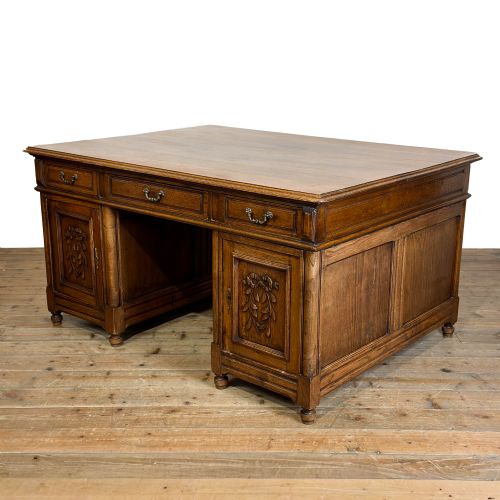
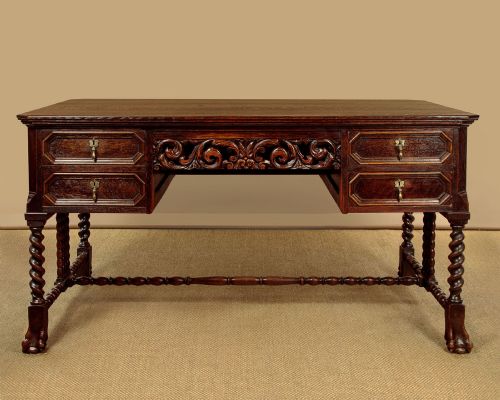
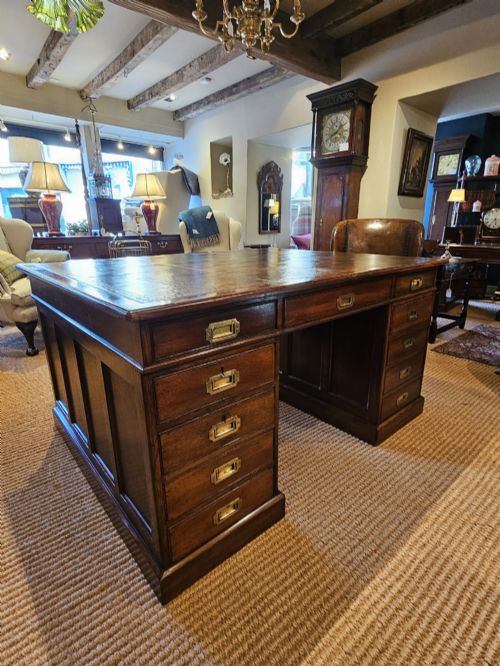
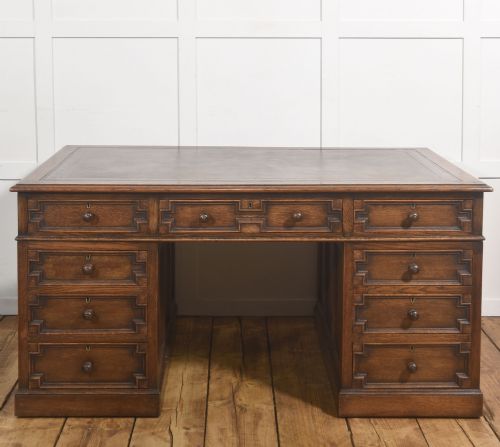


Dark Oak Partners Desk
A dark oak partners desk is a substantial double-sided workspace designed for two people, offering deep timber tones and enduring practicality.
Dark Oak Partners Desk
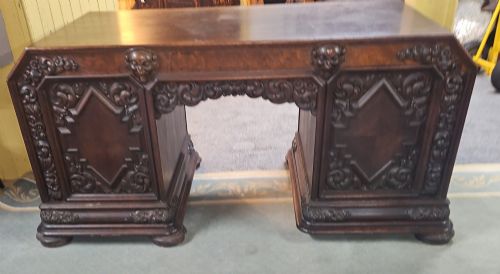
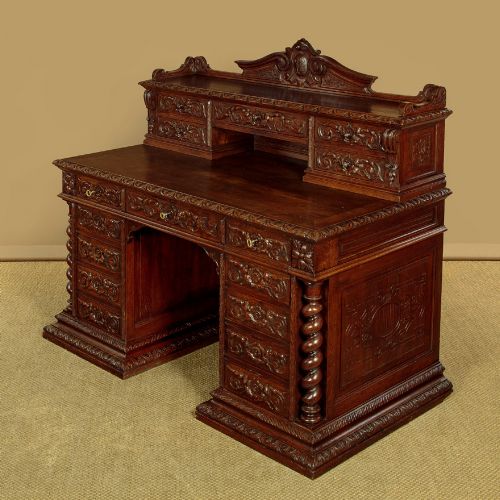
A dark oak partners desk provides opposing drawers and cupboards beneath a generous writing surface, built to stand independently in the middle of a room. These pieces appear in forms such as pedestal desks, kneehole desks, and writing tables spanning the Victorian era through the early twentieth century.
The versions most common here date from the nineteenth century, including Victorian examples with carved detailing and sturdy oak construction. Alongside standard desks, related library tables and sideboards occasionally share the inventory.
Makers and periods recorded in the evidence range from 1850 to 1930, capturing styles from Jacobean Revival to Art Deco. Each item reflects the substantial proportions and dark wood finishes typical of traditional institutional and domestic studies.
How they were made
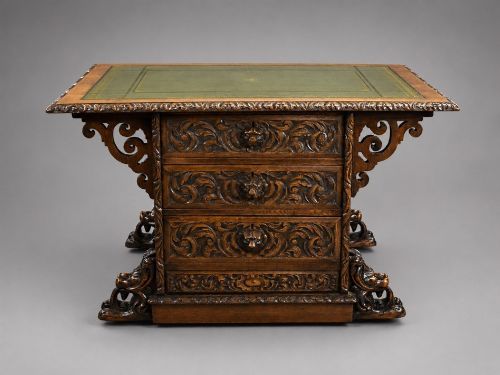
Construction relies heavily on solid oak timbers, often enriched with hand-carved panels, geometric mouldings, and structural framing. Surfaces frequently feature inset leather writing panels that provide a contrasting texture to the surrounding dark wood.
Hardware details such as brass handles and drawer pulls complement the heavy timber construction. Cabinetmakers utilised traditional joinery techniques to ensure stability across large pedestal and kneehole formats.
Dark Oak Partners Desk Retail Price Guide 2026
Typical asking prices for dark oak partners desk among the pieces listed under this phrase on Sellingantiques today, from the lower quarter to the upper quarter. They describe what is for sale here now, not the wider market.
Periods represented span from the nineteenth century through the 1930s.
What varies in quality
Quality separates standard utilitarian office furniture from exhibition pieces through the depth and complexity of hand carving on the oak panels and drawer fronts. Superior examples display refined proportions, integrated architectural details, and timber selection that exhibits rich grain patterns.
The inclusion of documented workshop attribution or specific period characteristics, such as Jacobean Revival motifs or hand-carved religious panels, distinguishes exceptional items from simpler commercial desks.
Edwards & Roberts·Étienne Kohlmann
The Dark Oak Partners Desk Glossary
- Partners desk
- A large double-sided desk built with drawers and cupboards facing both directions so two people can work opposite each other. These tables typically sit in the centre of a room rather than against a wall.
- Pedestal desk
- A form comprising two independent pedestals of drawers supporting a single top writing surface. This layout provides substantial storage beneath the main work area.
- Kneehole desk
- A desk featuring a central recess for the user's legs, flanked by banks of drawers. It offers a compact alternative to larger double-sided pedestal formats.
- Jacobean Revival
- A nineteenth-century style imitating seventeenth-century English furniture design. Pieces display heavy turning, deep relief carving, and dark finishes.
- Library table
- A large freestanding table used for reading and writing, often sharing the heavy oak construction and proportions of a partners desk.
Dark Oak Partners Desk: Frequently Asked Questions
What is a partners desk?
A partners desk is a large, double-sided piece of furniture featuring drawers and cupboards on both opposing faces. It allows two people to work opposite one another across the same central surface.
These desks were traditionally used in administrative offices, libraries, and large studies. Their freestanding design means they are finished on all sides to sit proudly in the middle of a room.
How do I date an oak desk?
Dating relies on examining construction methods, hardware types, and stylistic revival motifs present in the woodwork. Period indicators range from Victorian Gothic carving to early twentieth-century proportions.
Secondary woods, drawer linings, and the style of brass handles offer further clues to the decade of manufacture. Comparing the piece against documented examples from makers helps narrow the timeline.
Where should I place a large desk?
These large desks require significant floor space and work best positioned away from walls so both sides remain accessible. Placing the piece in the centre of a study or library highlights its double-sided configuration.
Adequate clearance around the pedestals ensures comfortable seating for daily use. The dark oak tones pair well with traditional rugs and leather seating.
What wood was used?
Oak serves as the primary structural and visible timber for these pieces, offering a dark and durable finish. Secondary materials like mahogany and walnut occasionally appear in internal framing or related tables.
Inlerts of leather provide the writing surface on top of the timber base. Brass hardware is standard for pulls and handles across the drawers.